
6CNC · Custom steel parts
Stainless Steel 316
CNC Machining
Corrosion-resistant stainless steel for marine, chemical, and fluid-handling parts
Stainless Steel 316 is chosen when general stainless corrosion resistance is not enough. Its molybdenum content improves resistance to chlorides and pitting compared with 304, which is why 316 and 316L are commonly specified for marine equipment, chemical-processing hardware, pharmaceutical systems, medical equipment, pumps, valves, and fluid components.
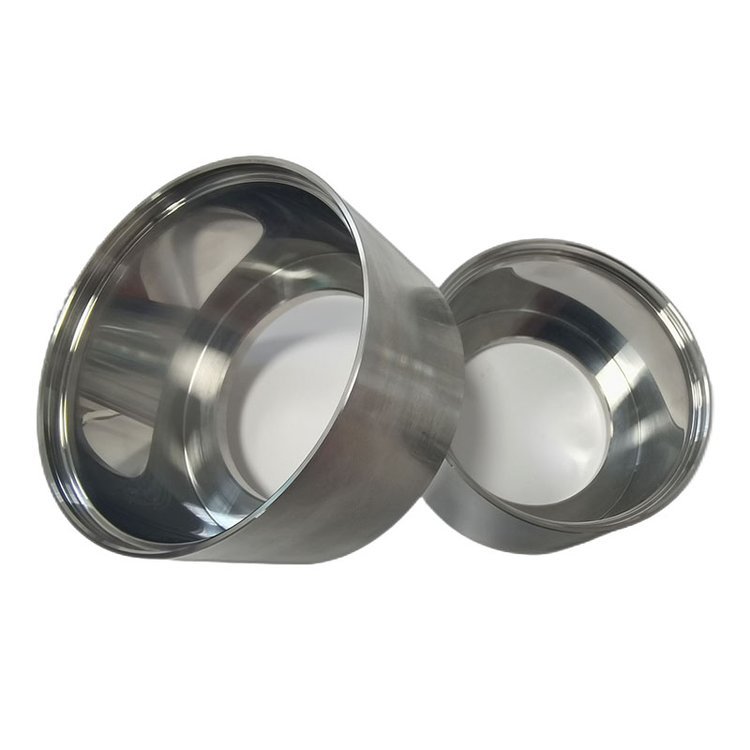
Custom Stainless Steel 316 Parts with 6CNC
That corrosion performance comes with a machining tradeoff. 316 is tough, ductile, prone to work hardening, and can generate long chips and high cutting temperatures.
6CNC machines custom 316 and 316L stainless parts from prototype through small-batch production using milling, turning, mill-turn, multi-axis machining, and controlled finishing.
What molybdenum changes in 316 stainless
316 is an austenitic chromium-nickel-molybdenum stainless steel. The molybdenum addition is the key reason engineers choose it over 304 in more aggressive environments.
| Property | Typical reference value |
|---|---|
| Density | ~8.0 g/cm³ |
| Ultimate tensile strength | ~515–620 MPa |
| Yield strength | ~205–290 MPa |
| Elastic modulus | ~193 GPa |
| Hardness | commonly around 75–95 HRB in annealed condition |
| Elongation | commonly 40%+ |
| Corrosion resistance | Very good, especially relative to 304 in chloride environments |
| General machinability | Moderate to difficult |
Actual values depend on stock condition, product form, specification, and cold work.
Material values are typical references, not design allowables. Confirm the governing specification, stock form, material certificate and heat-treatment condition for your part.
316 vs. 316L
316L has lower carbon content and is commonly selected for welded components because it reduces the risk of sensitization in heat-affected regions.
For many machined components, cutting behavior is similar. The selection is usually driven by welding, customer specification, corrosion requirements, hygienic service, pressure-system rules, or traceability requirements.
Why 316 machining needs discipline
316 work-hardens quickly and has relatively low thermal conductivity compared with many engineering metals. Heat remains near the cutting edge, which can accelerate tool wear, built-up edge, work-hardened surface layers, burr formation, and dimensional drift.
A successful process keeps tools sharp and engaged. The objective is to cut beneath the previously deformed surface rather than making repeated light rubbing passes.
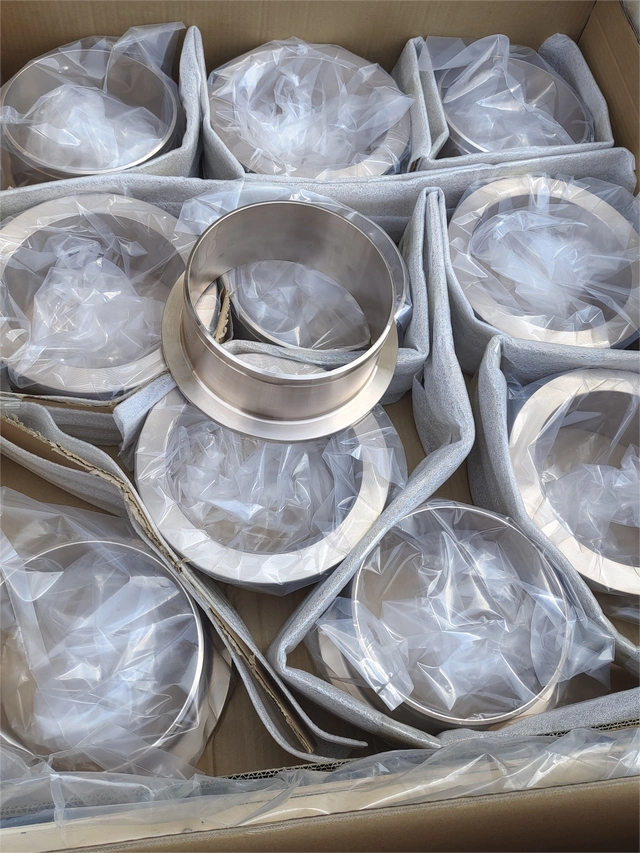
Milling 316 stainless steel
316 is frequently milled for valve bodies, pump components, manifolds, marine equipment, chemical-processing hardware, medical equipment, pharmaceutical machine parts, sensor housings, and fluid-system components.
For pocketing, stable tool engagement matters. Deep cavities may require staged machining and multiple tool lengths to keep the tool rigid. 5-axis machining can reduce setups on parts with angled ports or multi-face features.
Turning 316 and 316L
Typical turned parts include fittings, nozzles, sleeves, valve stems, shafts, bushings, couplings, threaded adapters, sanitary components, and instrument connections.
Chip control is a major concern because 316 can form long continuous chips. Insert geometry and cutting data should produce controlled chip breaking without excessive rubbing.
Marine-grade stainless machining
316 is commonly called marine grade, but that phrase should not be treated as a universal guarantee. 316 has better chloride resistance than 304, but it is not immune to pitting or crevice corrosion.
Real performance depends on chloride concentration, temperature, crevices, oxygen availability, surface condition, welding condition, galvanic contact, cleaning, and maintenance. For continuously submerged or highly aggressive environments, duplex stainless, nickel alloys, titanium, or other materials may need evaluation.
Surface finish and corrosion performance are connected
Common post-machining options include passivation, electropolishing, mechanical polishing, and controlled bead blasting.
For hygienic or pharmaceutical systems, required surface roughness should be specified numerically rather than described only as “polished.” Critical sealing faces should also have explicit flatness and roughness requirements.
Typical 316 stainless steel parts
- Marine fittings
- Pump bodies
- Valve components
- Fluid manifolds
- Pharmaceutical equipment parts
- Medical equipment hardware
- Food-processing components
- Chemical dosing parts
- Sanitary connections
- Laboratory equipment
- Sensor housings
- Heat-exchanger hardware
304 vs. 316: when the extra cost is justified
Use 304 when general corrosion resistance is adequate and significant chloride exposure is not expected. Use 316 when saltwater, coastal atmosphere, chloride cleaning solutions, chemical process fluids, or customer specifications demand the added corrosion resistance.
Design guidance for 316 parts
Avoid excessively thin unsupported walls, give deep features realistic radii, separate sealing requirements from cosmetic requirements, define threaded port standards clearly, and specify passivation/electropolishing rather than assuming it is included.
Quality control for fluid and medical components
6CNC can support CMM measurement, image measurement, bore and pin gauges, surface roughness measurement, material verification, FAI, SPC, COC, drawing revision control, and material traceability where specified.
For pressure- or flow-related parts, critical dimensions often include port position, sealing surfaces, bore diameter, flatness, and thread condition.
Why 6CNC for 316 stainless machining?
6CNC supports CNC milling, CNC turning, mill-turn, 5-axis machining, prototype and small-batch production, passivation and polishing coordination, 9+ quality engineers, 20+ inspection tools, and CMM/image measurement.
Send your 316 or 316L CAD file, drawing, quantity, and finish requirements for review.
Stainless Steel 316 CNC Machining FAQs
Is 316 harder to machine than 304?
It is often somewhat more demanding because of its toughness and work-hardening behavior.
What is the difference between 316 and 316L?
316L contains less carbon and is commonly preferred for welded parts or applications where sensitization resistance matters.
Is 316 stainless steel rust-proof?
No stainless steel is completely rust-proof. 316 offers very good corrosion resistance but severe environments can still cause attack.
Can 316 stainless be polished?
Yes. Mechanical polishing and electropolishing are common.
Can 316 be passivated?
Yes. Passivation is commonly used after machining.
Is 316 suitable for saltwater?
It is widely used in marine environments, but performance depends on temperature, exposure, crevices, chloride concentration, and other design conditions.
From Drawing to Finished Part
01
Share your files
Send your CAD model, controlled drawing, quantity and specified steel condition.
02
Confirm the route
Review stock, machining, heat treatment, finishing and inspection together.
03
Machine and finish
Produce the part to the agreed drawing, allowing for any heat-treatment movement.
04
Inspect and deliver
Verify the required dimensions and supply the agreed inspection documentation.
Compare Steel Grades
Also compare: 1018 Carbon Steel · 1045 Carbon Steel · 4140 Alloy Steel · D2 Tool Steel
Start your project with 6CNC
Let’s review your Stainless Steel 316 part.
Share the drawing and service conditions for a project-specific machining and quotation review.
Include with your enquiry
- 3D CAD and controlled PDF drawing
- Steel grade, stock condition and applicable specification
- Quantity and delivery target
- Heat treatment, hardness and critical dimensions
- Surface finish and inspection requirements