
Precision CNC Machining for Robotics
Custom Joints, Grippers & Motion Components
Made-to-print precision parts for industrial robots, collaborative robots, robotic end effectors, mobile platforms and automation prototypes. 6CNC focuses on accurate interfaces, weight-conscious geometry, repeatable assembly and agile small-batch manufacturing.
ISO 9001
ISO 13485
ISO 14001
3/4/5-Axis CNC




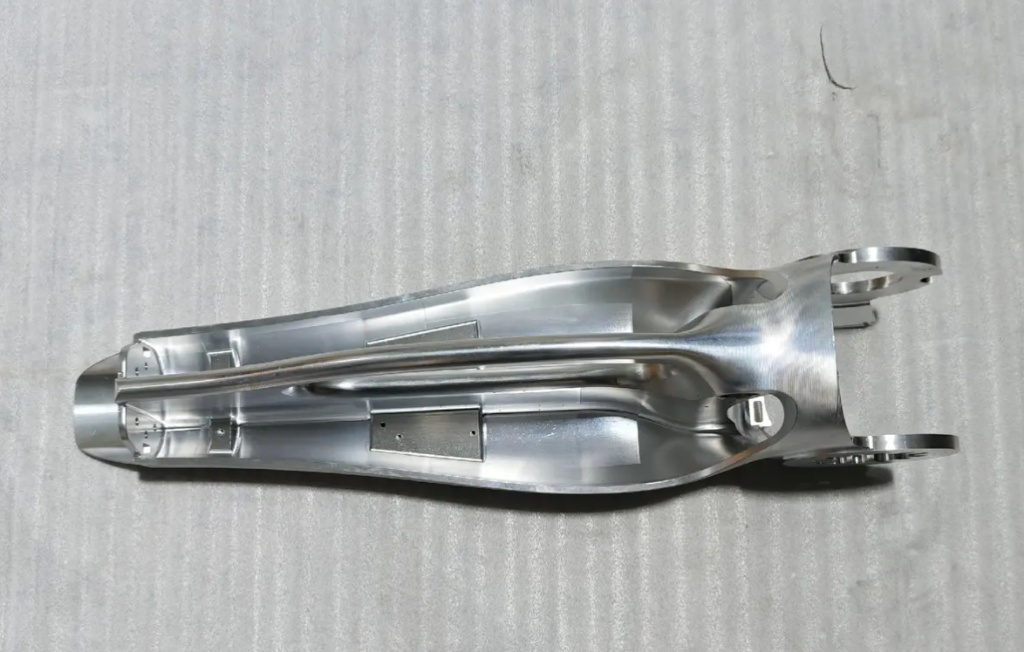
Building a robot or end effector that needs custom machined parts?

Motion-Interface DFM
Review bearing seats, joint datums, cable clearance and motor/gearbox interfaces.

Complex Machining Routes
Combine 3–5-axis milling, turning, mill-turn and grinding for robotic geometry.

Fit & Alignment Inspection
Check coaxial bores, hole positions, datum faces and repeatable tool-mount interfaces.

Fast Design Iteration
Support robot prototypes, gripper variants, pilot assemblies and replacement batches.
CNC Machining for Robotic Arms and Joint Housings

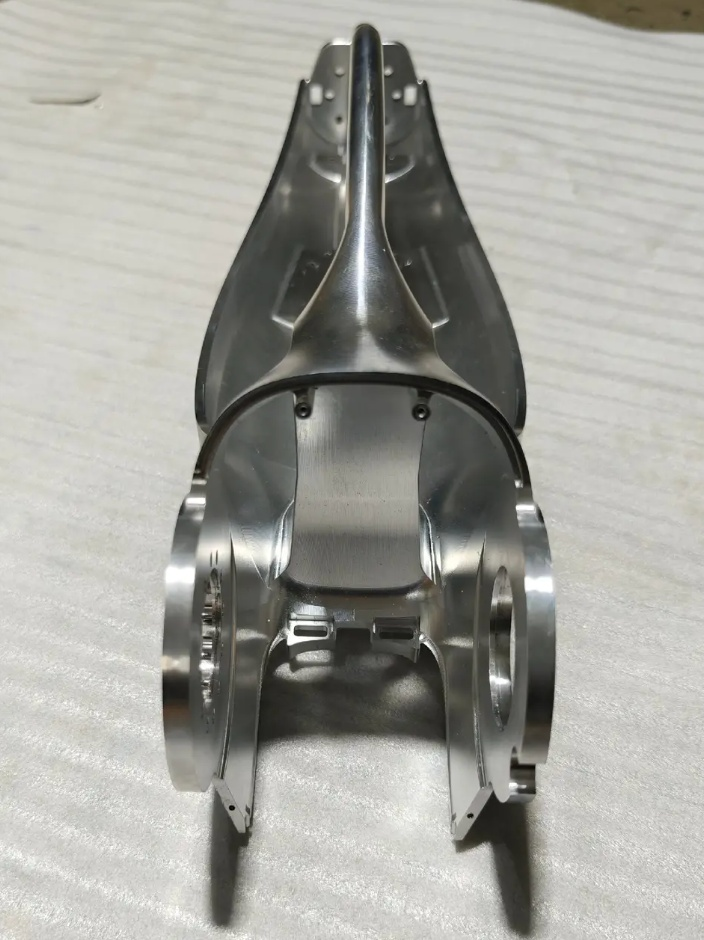
Robot joint structures, actuator adapters and bearing housings require stable fits and low assembly variation. We plan machining around load paths, alignment features and shaft or bearing interfaces.
Lightweight Metals and Wear-Resistant Materials
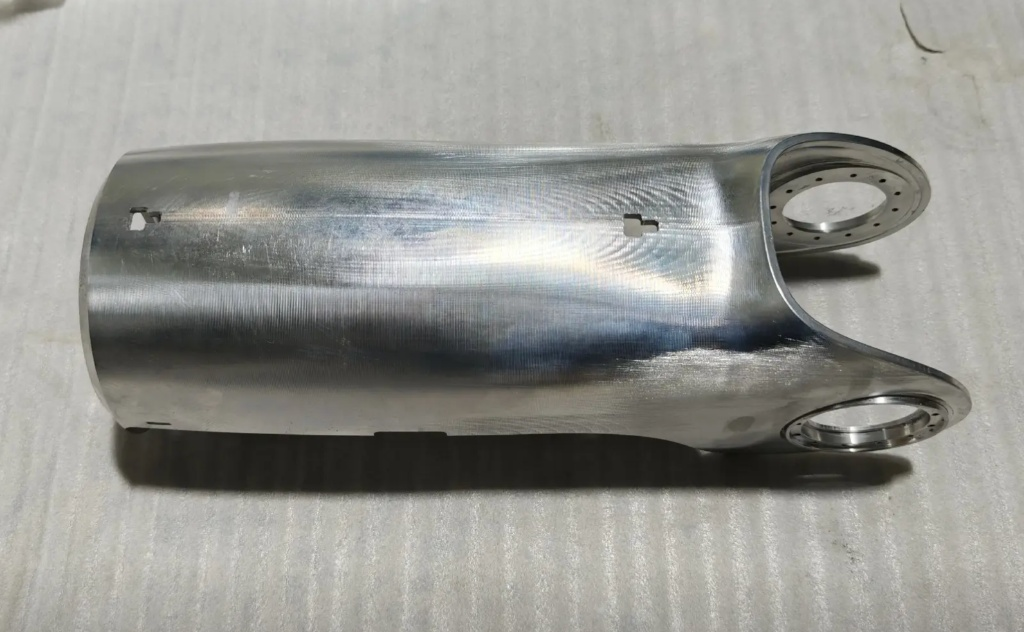
6061/7075 aluminum helps control moving mass; stainless steel and alloy steel support shafts, pins and load-bearing parts; POM and PEEK suit selected wear or insulating components. Material selection follows load and operating duty.
5-Axis Machining for Grippers and End Effectors
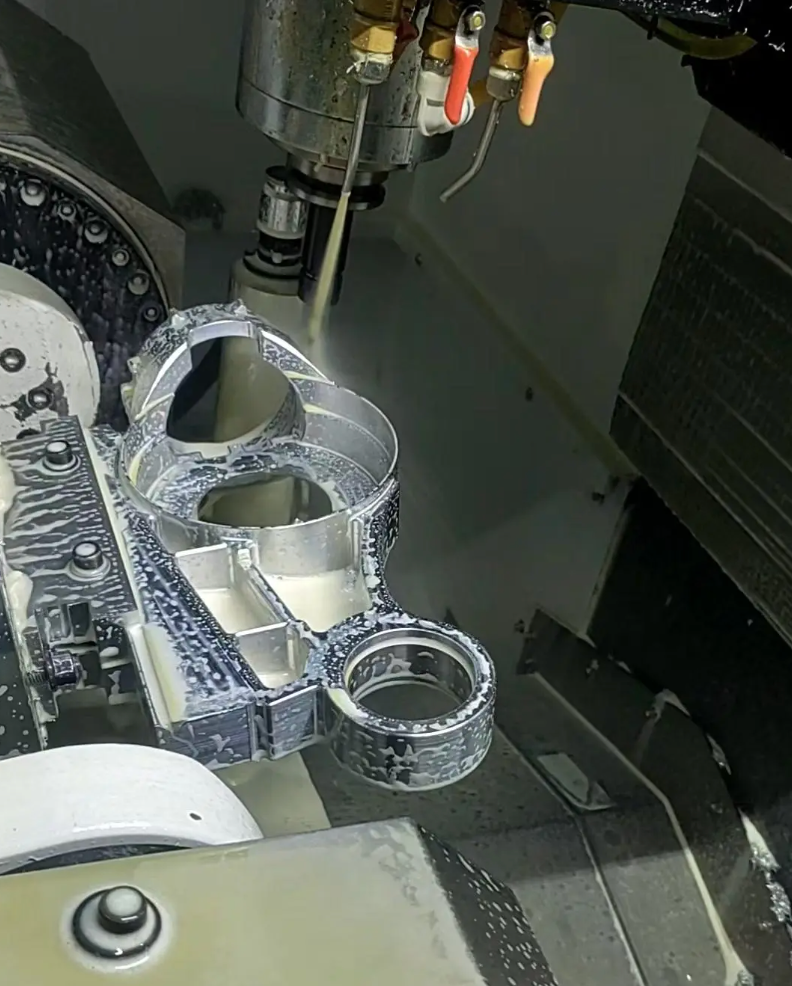
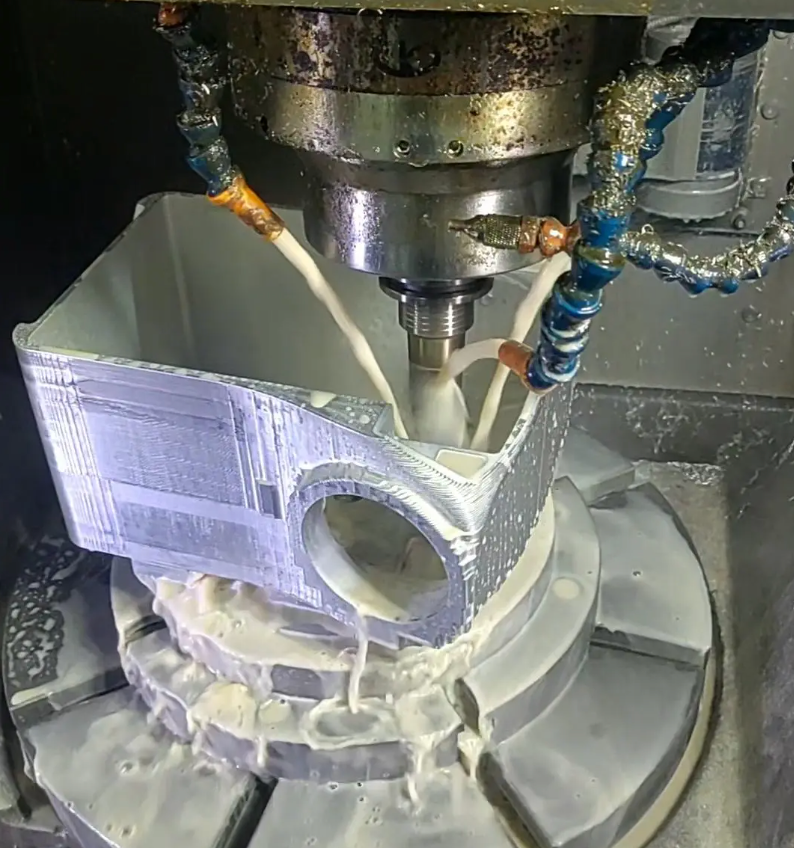
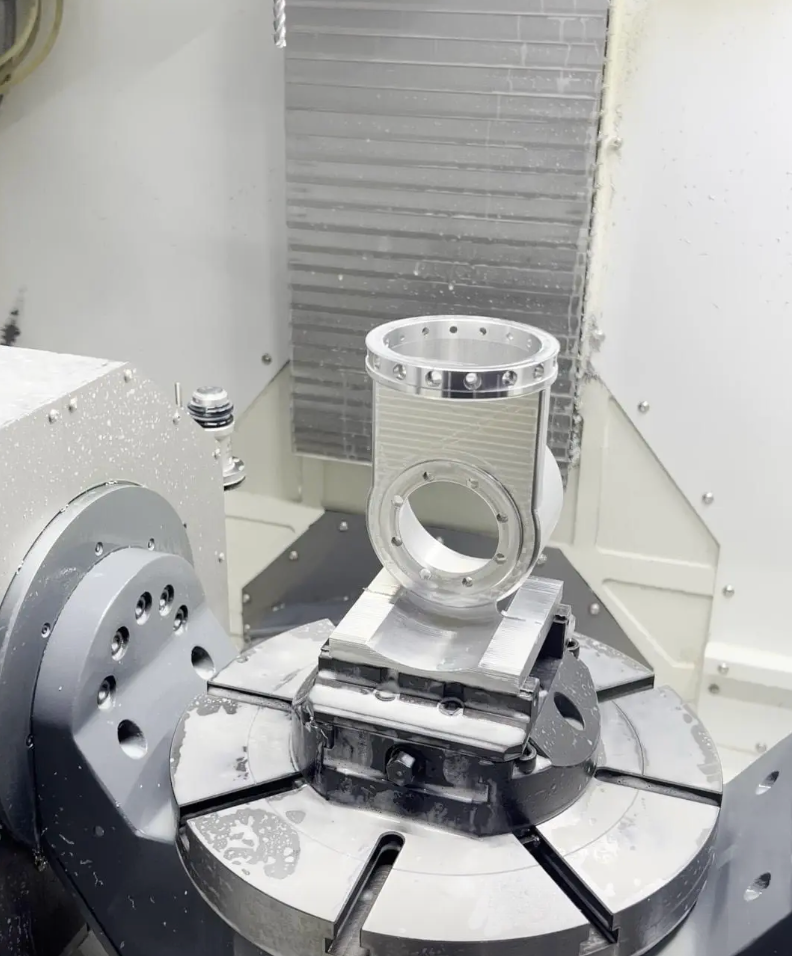
Complex gripper bodies, wrist brackets and tool-changer adapters may need angled holes and precisely related locating faces. Five-axis access can reduce repeated clamping and support multi-face accuracy.
Robotics Engineering: Motion Accuracy, Weight and Repeatability
See how robotics hardware is machined for joint alignment, tool-center repeatability, development testing and cost-effective low-volume production.
Joint Alignment, Bearing Fits & Inspection
Robotic mechanisms amplify small mechanical errors through several linked axes. Misaligned bearing seats may increase friction and wear; an inaccurate motor adapter can introduce coupling runout; misplaced gripper datums can shift the tool-center position after reassembly.
We review bore alignment, perpendicularity, concentricity, hole position and critical mounting faces against the specified datum scheme. Suitable selected features may be machined down to ±0.003 mm under appropriate process conditions. CMM inspection, precision bore gauges and other measurements are planned around functional characteristics.
- Joint housings: bearing-seat diameter, coaxiality and perpendicularity
- Drive components: shaft fit, runout and mating flange location
- End effectors: tool-center locating holes and repeatable mounting surfaces
- Requested FAI, dimensional reports and material certificates
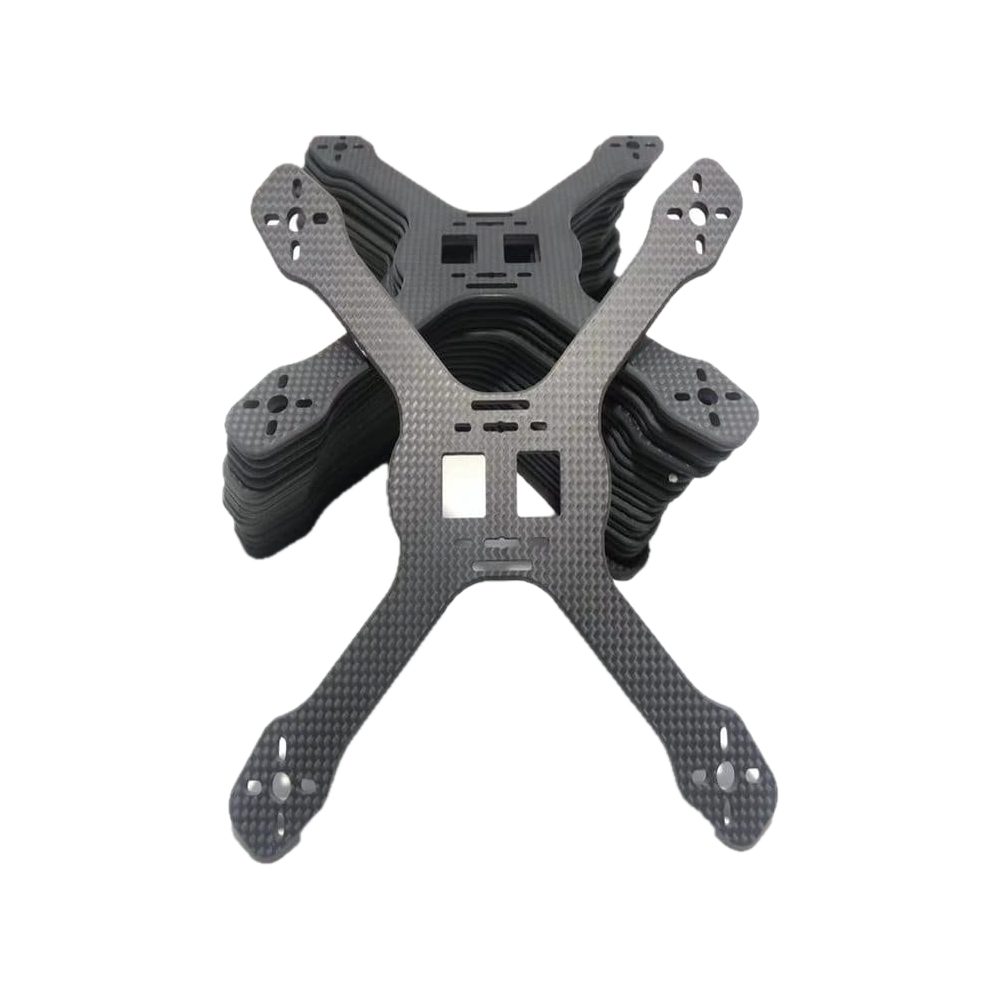
Robot Components & Real Manufacturing Challenges
Robot development requires a different balance of stiffness, mass and precision at each mechanical interface.
Arm joints and wrist housings: hollow structures and bearing pockets may need stable workholding to prevent deformation while maintaining coaxial load paths.
Grippers and end effectors: fingers, jaws and tool plates require repeatable contact geometry, cable or pneumatic routing and easy replacement after wear or product changeover.
Actuator, motor and gearbox mounts: accurate pilot diameters and bolt patterns reduce misalignment between drive components.
Mobile and service robotics: sensor brackets, wheel hubs and lightweight structural adapters balance mass, stiffness and installation access.
- Weight reduction without compromising critical stiffness
- Interchangeable jaws and repeatable tool offsets
- Concentric bearing and drive interfaces
- Service and cable-routing access within compact joints
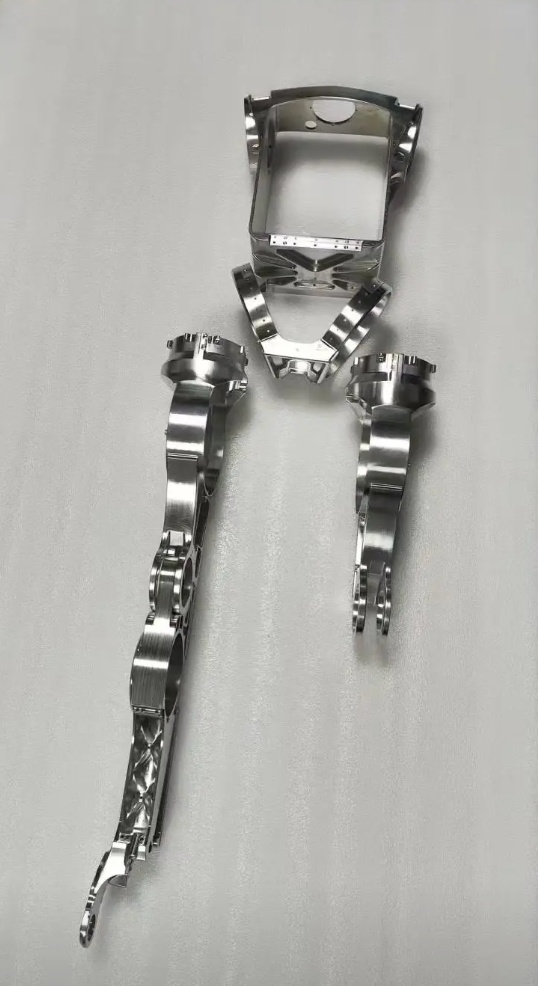
Prototype Robotics Parts and Pilot Assemblies
Robotic hardware evolves through kinematic testing, payload trials and end-effector iterations. An arm bracket may need reinforcement after deflection tests; a gripper finger may change shape after contact trials; a motor mount may need a revised cable exit. CNC machining supports these changes without specialized dies.
6CNC handles one-off parts and small batches, commonly 1–600 pieces depending on complexity. We can retain critical datums and inspection checks as designs move from functional samples to pilot robot builds and repeat spares.
- Alpha prototype: verify range of motion, fit and mechanical clearances
- Functional validation: test payload, stiffness, cycle performance and wear
- Pilot assembly: confirm repeatability of joint and tool-mount interfaces
- Repeat parts: maintain approved revisions and inspection requirements
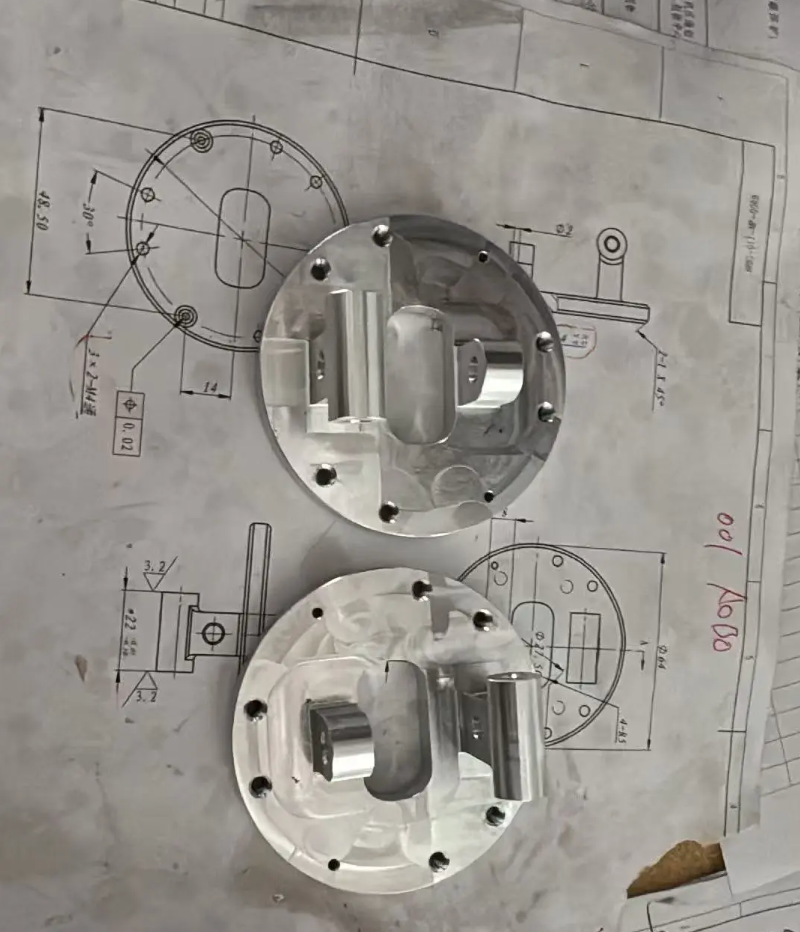
Delivery Planning for Robotics Development Cycles
Robotics programs are often synchronized around integration tests and demonstrations. A delayed gearbox adapter or tool-changer plate can block mechanical and software work on an entire robot. We review stock, CNC program, fixturing, machining, surface finishing, inspection and shipment before committing to delivery.
Simple prototypes can be available in 1–7 days when materials and capacity permit. Precision grinding, hard anodizing or multi-operation parts require a confirmed route-specific schedule.
- Provide build milestone, quantity and drawing revision for each part
- Flag critical-path joints and matching parts for priority inspection
- Agree first-article release for pilot assemblies
- Plan surface protection and part labels for kit-based robotic assemblies
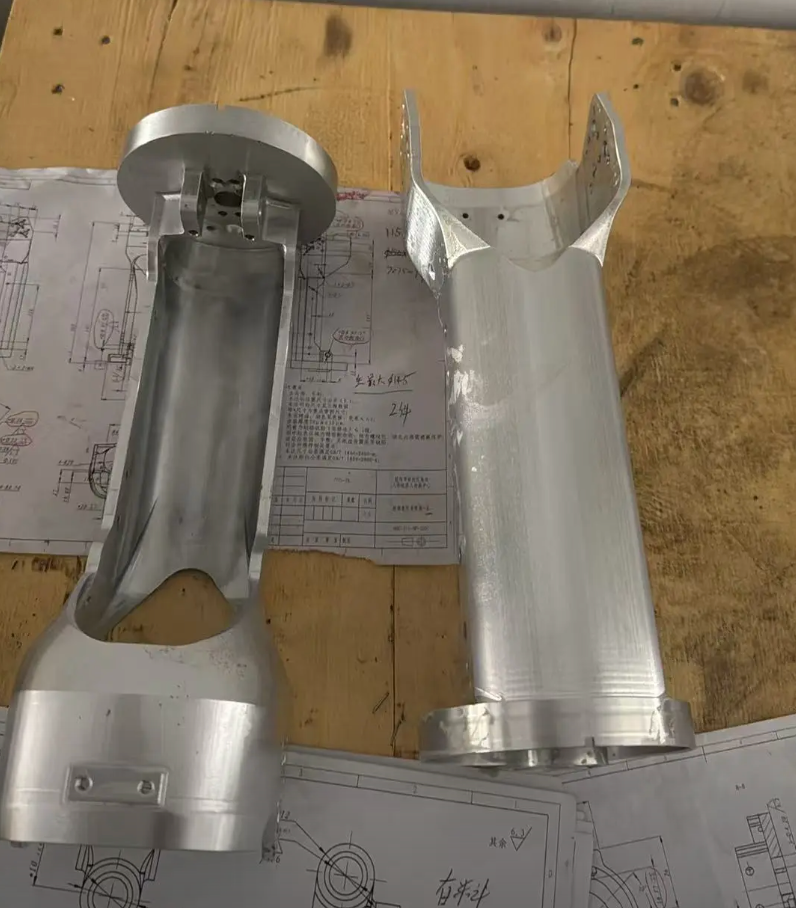
Robotics DFM: Reduce Mass, Setups and Cost
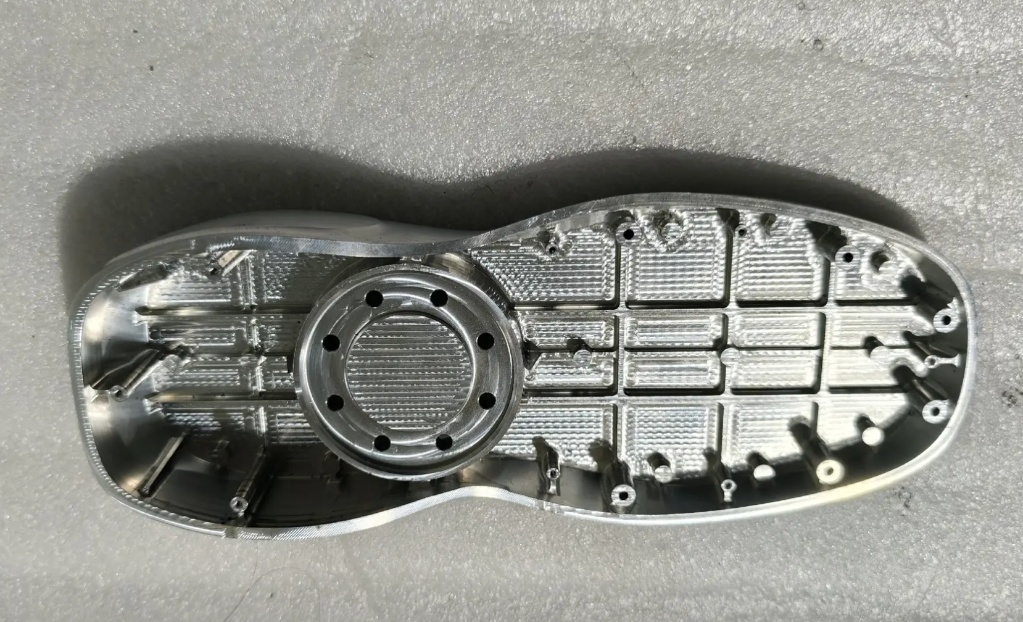
A lightweight robot component still needs to survive the intended mechanical duty. Deep pockets in a wrist housing may reduce mass but create distortion, tool access and inspection problems. Thin gripper fingers may chatter during machining and deflect in use. We review these constraints together with functional fit tolerances.
DFM options include practical corner radii, wall thickness adjustments, fewer setups, accessible tool paths and separating precision bearing features from general structural surfaces.
- Identify load-bearing and alignment-critical features before pocketing
- Evaluate stiffness versus mass in arm brackets and gripper bodies
- Review shaft fits, bearing-seat finishing and post-anodize allowances
- Compare prototype quantity breaks and interchangeable part families
Robotics CNC Machining FAQs
Can 6CNC make custom robotic grippers and end effectors?
Yes. We machine fingers, jaw carriers, tool plates, brackets and adapter components to customer drawings.
Can you machine bearing housings and precision shafts?
Yes. CNC milling, turning, mill-turn and grinding can be combined where needed for bearing seats and aligned features.
Do you accept low-volume robot development orders?
Yes. We handle one-off prototypes and small batches, commonly 1–600 pieces depending on geometry.
How do you verify robot joint alignment?
Critical bore fits, coaxiality, perpendicularity and hole positions are reviewed and measured according to the drawing.
What files are needed for a quote?
Provide 3D CAD, a 2D drawing with datums and tolerances, material, finish, quantities and relevant assembly requirements.
Why Robotics Engineers Work With 6CNC
Prototype-to-Pilot Flexibility
Produce joint samples, gripper iterations and pilot assembly parts as designs evolve.
Support revision-managed repeat orders without high-volume tooling.

Machining for Motion Geometry
Multi-axis milling, turning and grinding address bearing seats, shafts and complex robotic mounts.
Critical datum relationships drive the selected process and setup sequence.
Inspection Around Assembly Fit
Specify measurements on locating faces, coaxial bores and tool-center interfaces.
CMM, FAI and material reports are available by agreed scope.
Get in Touch
Tell us about your project, material, quantity, and delivery requirements. Our team can review the next steps with you.