
6CNC · Custom steel parts
Stainless Steel 304
CNC Machining
General-purpose stainless steel for corrosion-resistant precision parts
Stainless Steel 304 is one of the most widely specified austenitic stainless steels for machined components. It combines good corrosion resistance, useful mechanical strength, cleanability, weldability, and broad stock availability.
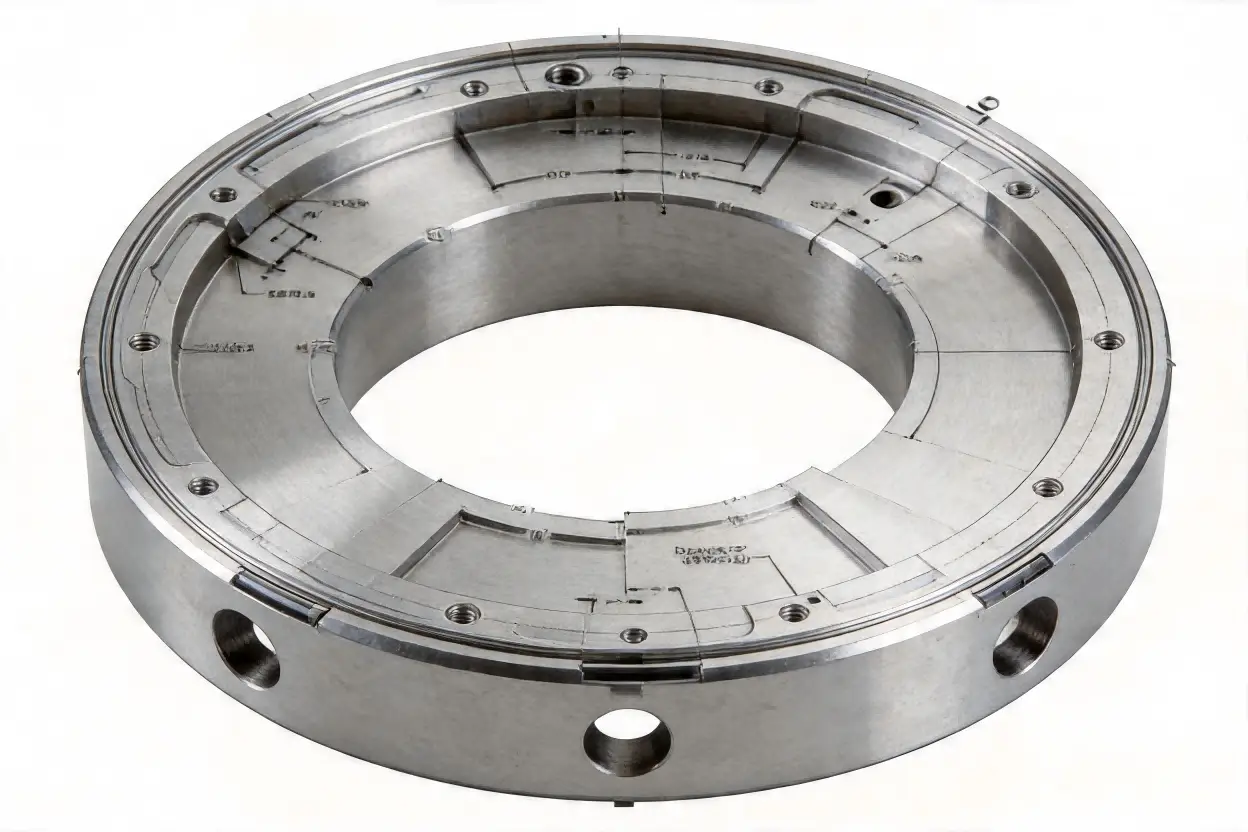
Custom Stainless Steel 304 Parts with 6CNC
It is a practical material for food-processing equipment, medical equipment, automation hardware, valves, fittings, housings, sensor components, laboratory equipment, and general industrial parts that need better corrosion resistance than carbon steel.
304 is not as easy to machine as free-machining stainless grades. It work-hardens rapidly, generates more heat at the cutting edge, and can produce stringy chips. Good results therefore depend on process control rather than simply using the same strategy as aluminum or mild steel.
6CNC machines custom 304 and 304L stainless steel parts from prototype quantities through small-batch production using CNC milling, turning, mill-turn, multi-axis machining, secondary finishing, and dimensional inspection.
Typical 6CNC fit
- Precision housings and brackets
- Valve and fluid-handling components
- Medical and laboratory equipment parts
- Food-processing hardware
- Automation and sensor components
- Shafts, spacers, sleeves, and fittings
- Parts requiring passivation, polishing, or bead blasting
- Prototype to small-batch production
Why 304 stainless steel is so widely used
304 is an austenitic chromium-nickel stainless steel. The chromium supports formation of a passive oxide layer that improves corrosion resistance, while nickel helps stabilize the austenitic structure.
| Property | Typical reference value |
|---|---|
| Density | ~8.0 g/cm³ |
| Ultimate tensile strength | ~515–620 MPa |
| Yield strength | ~205–290 MPa |
| Elastic modulus | ~193 GPa |
| Hardness | commonly around 70–90 HRB in annealed condition |
| Elongation | commonly 40%+ |
| Magnetic behavior | generally non-magnetic when annealed; may become slightly magnetic after cold work |
| Corrosion resistance | Good in many general environments |
Actual properties depend on specification, stock form, cold work, thickness, and supplier certification.
Material values are typical references, not design allowables. Confirm the governing specification, stock form, material certificate and heat-treatment condition for your part.
304 vs. 304L
304L contains lower carbon than standard 304. The main reason to choose 304L is improved resistance to sensitization during welding or other thermal exposure. For parts that will be welded after machining, 304L is frequently preferred.
From a CNC perspective, 304 and 304L machine in broadly similar ways. Actual hardness, bar versus plate stock, feature geometry, tool reach, surface finish requirements, and interrupted cutting often matter more than the L designation.
304 machinability: the real challenge is work hardening
304 has lower machinability than free-machining grades such as 303. When a cutting tool rubs instead of cleanly shearing material, the surface ahead of the tool can become harder. If the next pass cuts into that hardened layer, tool wear and cutting forces can rise quickly.
Good 304 machining favors rigid setups, sharp cutting tools, positive geometry, consistent chip load, adequate coolant, reliable chip evacuation, and avoiding unnecessary dwell or rubbing.
CNC milling Stainless Steel 304
304 is commonly milled into housings, manifolds, brackets, flanges, base plates, instrument bodies, medical-equipment parts, sensor mounts, vacuum components, and food-processing hardware.
Deep pockets and narrow slots require special attention because the material retains heat near the cutting edge and chips can be difficult to clear. For thin walls, finishing passes should be designed to control both tool pressure and residual stress.
Multi-axis machining can reduce repeated setups when features exist on several faces, helping maintain positional relationships between holes, bores, slots, and mating surfaces.
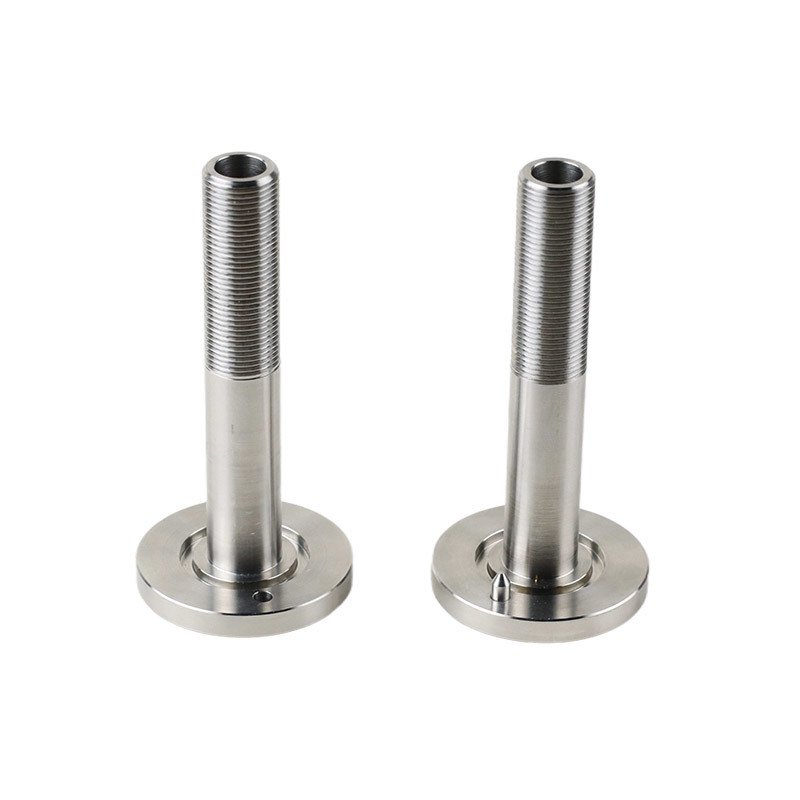
CNC turning Stainless Steel 304
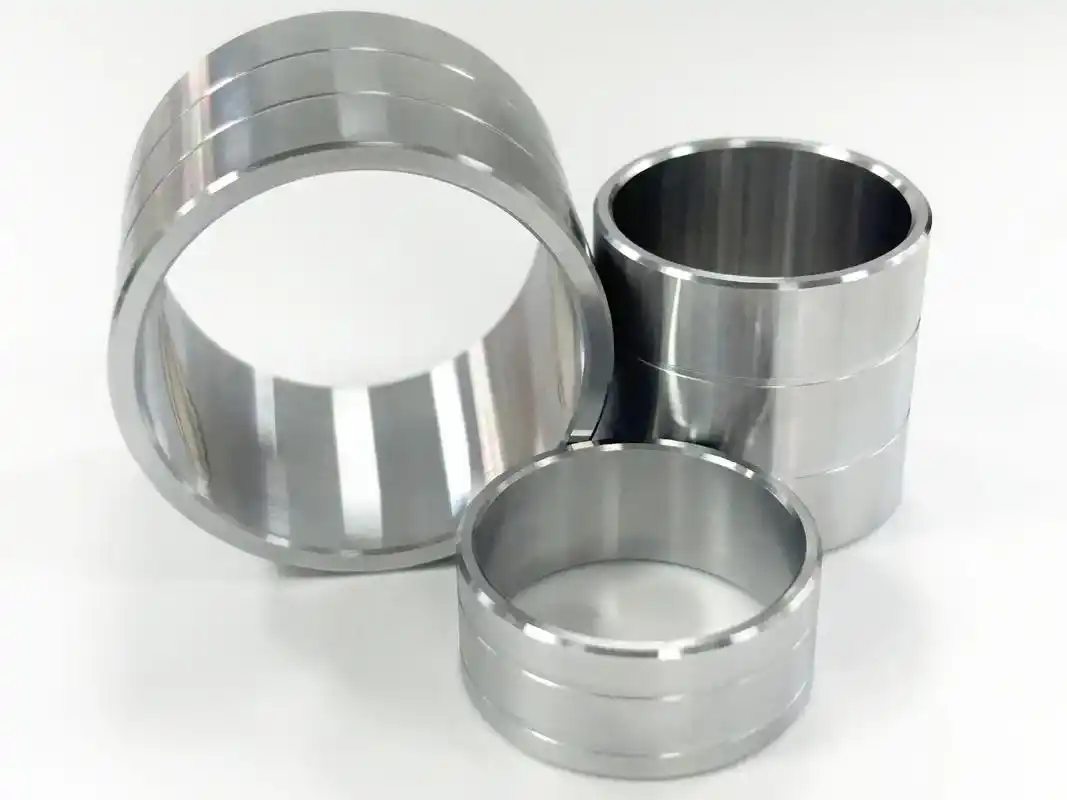
Typical turned parts include shafts, sleeves, bushings, threaded adapters, valve stems, fittings, nozzles, spacers, couplings, and instrument components.
Chip control is especially important because long continuous chips can interfere with the part, tool, or finished surface. Insert geometry, feed, depth of cut, and coolant delivery should encourage predictable chip breaking.
Drilling, tapping, and threading 304
A drill that dwells or rubs can work-harden the hole. Pecking strategy, coolant, drill geometry, and feed must be appropriate for depth and diameter.
Tapping torque can also be high. Thread milling may be a better option for larger critical threads because it reduces the risk associated with a broken tap and allows better control of thread size.
For precision bores, enough stock should remain after roughing so the finishing tool cuts below any work-hardened surface.
Surface finishes for 304 parts
Common choices include as-machined, bead blasting, brushing, mechanical polishing, passivation, and electropolishing.
Passivation is widely specified after machining to remove free iron contamination and support the passive surface. Electropolishing can improve smoothness and cleanability. Finishing requirements should be stated on the drawing because polishing and electropolishing can affect edges, surface texture, and dimensions.
304 vs. 316 stainless steel
Both are austenitic stainless steels, but 316 contains molybdenum and generally provides better resistance to chlorides and aggressive corrosion.
Choose 304 when general corrosion resistance is sufficient, cost matters, and chloride exposure is limited. Choose 316 when saltwater, chloride cleaning solutions, chemical service, or customer specifications demand stronger corrosion resistance.
Design guidance for lower-cost 304 CNC parts
Use realistic internal corner radii, avoid unnecessary deep narrow pockets, and apply tight tolerances only where they affect fit, sealing, bearing location, alignment, or datum relationships. Specify surface roughness only on functional areas and identify cosmetic surfaces separately.
Inspection and quality control
6CNC can support CMM inspection, image measurement, micrometers, calipers, pin and bore gauges, surface roughness measurement, material verification, FAI, SPC, COC, and traceability where specified.
Critical stainless features should be controlled during machining, with final inspection confirming conformance rather than being the first time dimensional drift is discovered.
Why machine Stainless Steel 304 with 6CNC?
6CNC focuses on custom precision machining from prototypes through small-batch production. Relevant capabilities include CNC milling and turning, multi-axis and mill-turn machining, surface finishing coordination, 9+ quality engineers, 20+ types of inspection tools, and CMM/image measurement.
Send your 304 or 304L drawing and 3D model for a manufacturability and quotation review.
Stainless Steel 304 CNC Machining FAQs
Is 304 stainless steel difficult to machine?
It is more difficult than mild steel or free-machining stainless because it work-hardens and retains heat near the cutting edge. With rigid setups, sharp tooling, correct feeds, and adequate coolant, it can be machined reliably.
Is 304 stainless steel magnetic?
Annealed 304 is generally considered non-magnetic, although cold working or machining can introduce some magnetic response.
What is the difference between 304 and 304L?
304L has lower carbon content, which improves resistance to sensitization during welding.
Can 304 be passivated?
Yes. Passivation is commonly specified after machining.
Is 304 suitable for medical parts?
It is widely used in medical equipment and instruments, but actual material and regulatory requirements depend on the specific application.
Is 304 easier to machine than 316?
304 is often somewhat easier to machine than 316, but both require stainless-specific tooling and process control.
From Drawing to Finished Part
01
Share your files
Send your CAD model, controlled drawing, quantity and specified steel condition.
02
Confirm the route
Review stock, machining, heat treatment, finishing and inspection together.
03
Machine and finish
Produce the part to the agreed drawing, allowing for any heat-treatment movement.
04
Inspect and deliver
Verify the required dimensions and supply the agreed inspection documentation.
Compare Steel Grades
Also compare: 1018 Carbon Steel · 1045 Carbon Steel · 4140 Alloy Steel · D2 Tool Steel
Start your project with 6CNC
Let’s review your Stainless Steel 304 part.
Share the drawing and service conditions for a project-specific machining and quotation review.
Include with your enquiry
- 3D CAD and controlled PDF drawing
- Steel grade, stock condition and applicable specification
- Quantity and delivery target
- Heat treatment, hardness and critical dimensions
- Surface finish and inspection requirements