
6CNC · Custom precision parts
C145 Tellurium Copper
CNC Machining
High conductivity with far better machinability than pure copper
C145 tellurium copper is designed for applications that need both electrical or thermal conductivity and substantial machining.
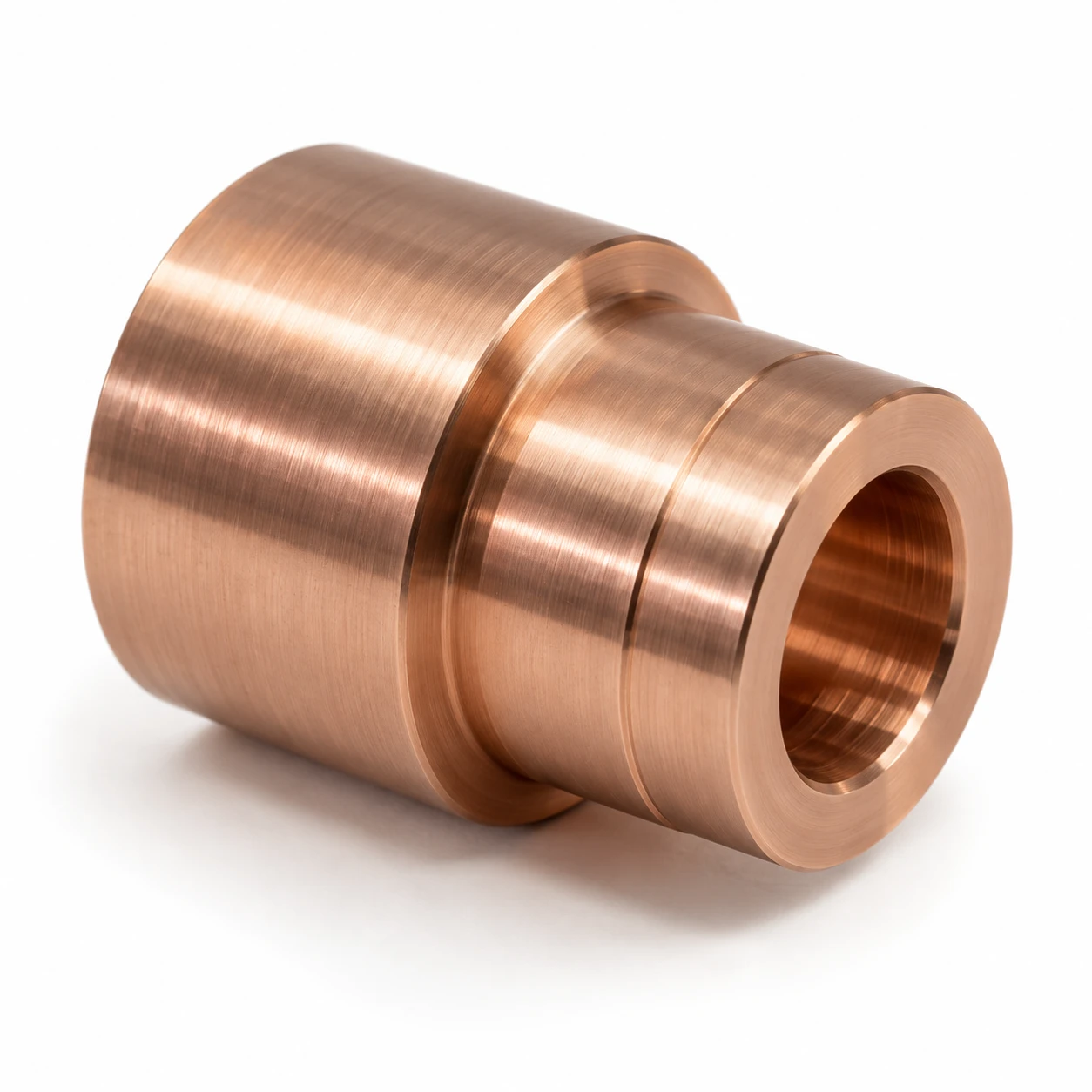
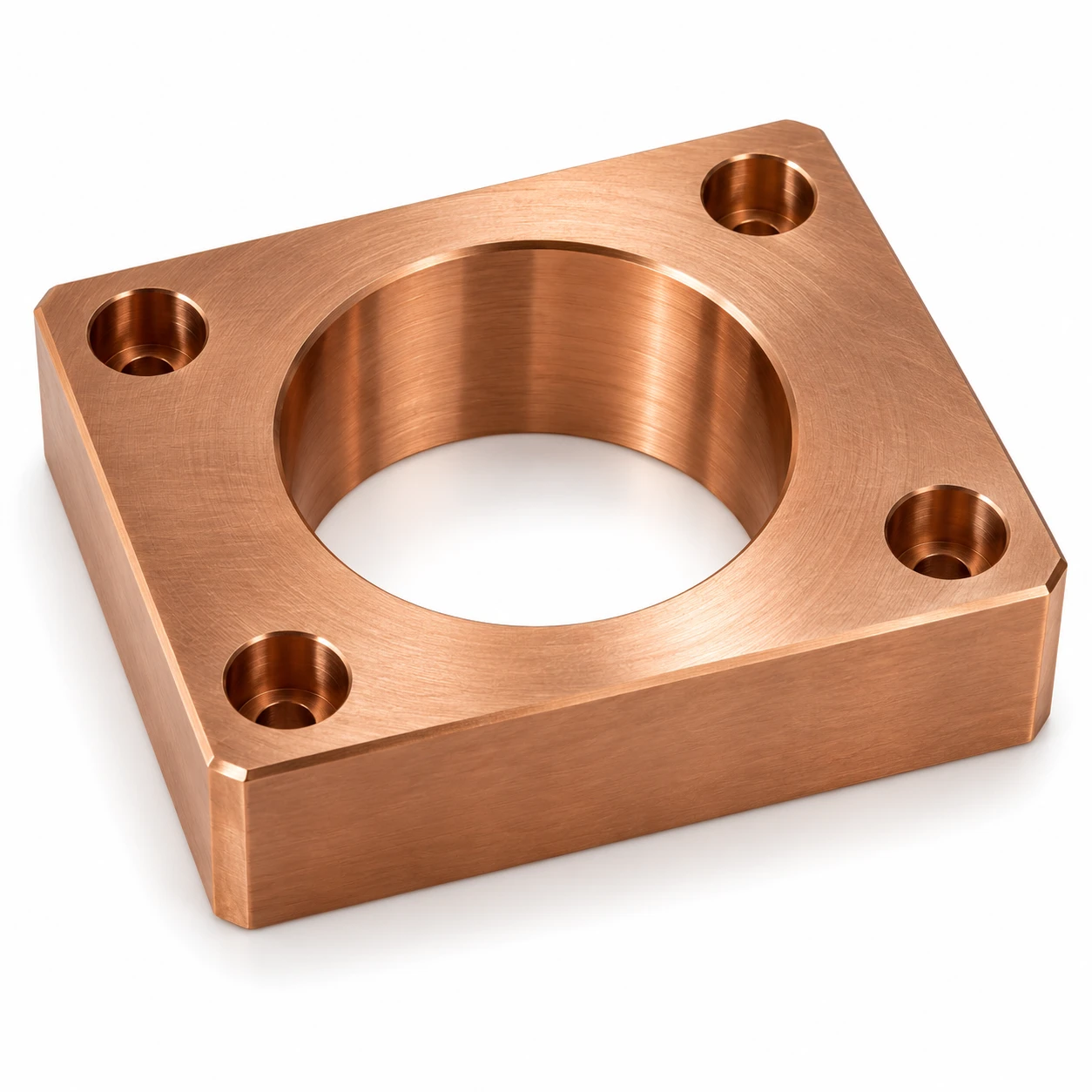
Reference component geometry; alloy grade is confirmed by material certification.
Custom C145 Tellurium Copper Parts with 6CNC
A small tellurium addition improves chip breaking and reduces the gummy cutting behavior associated with high-purity copper.
This makes C145 a strong choice for detailed electrical parts with threads, grooves, small diameters, holes, flats, and complex turned geometry.
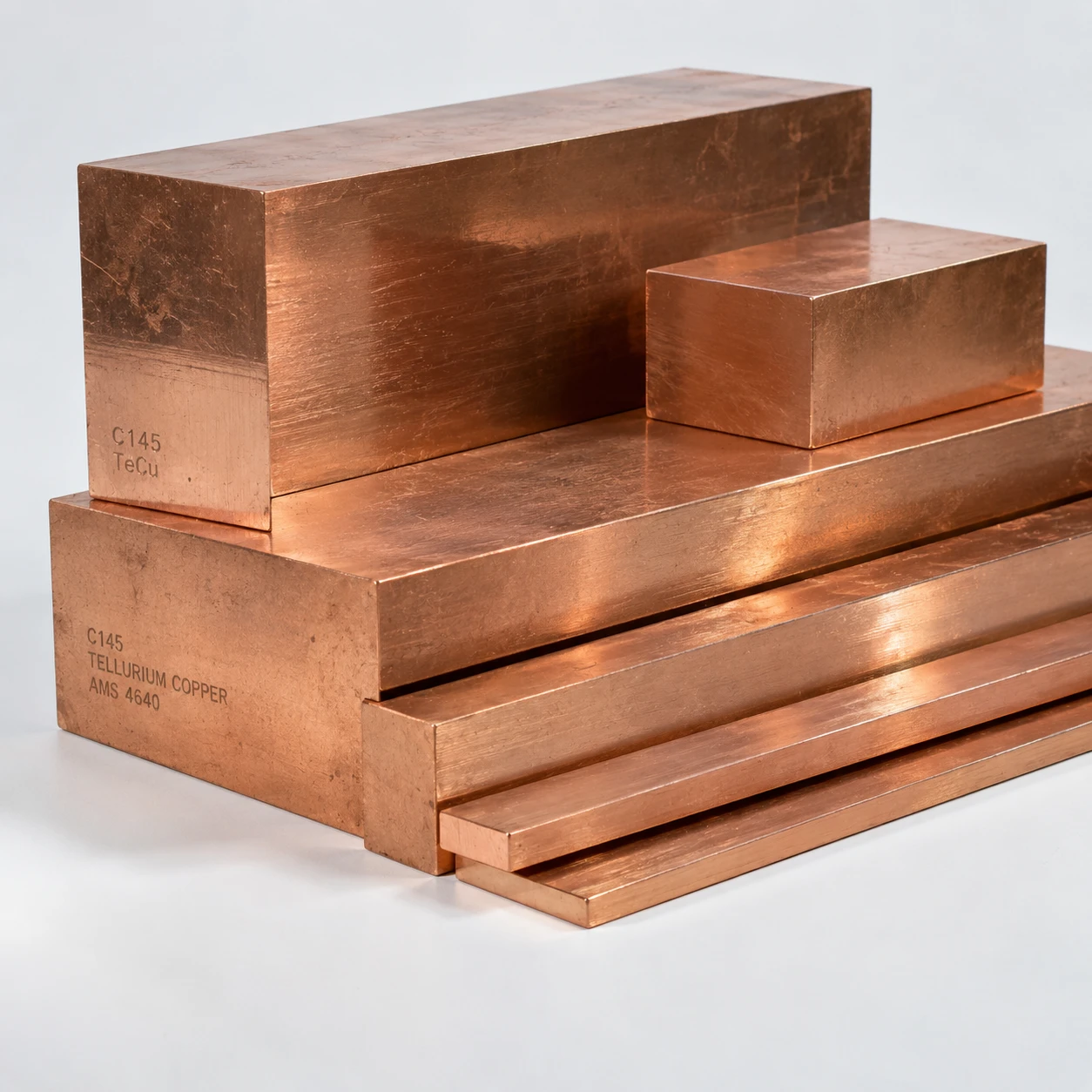
Where C145 fits
Typical applications include:
- Electrical contacts
- High-current pins
- Connectors
- Terminals
- Electrode components
- RF hardware
- Conductive fittings
- Switchgear components
- Power-distribution hardware
Material values are typical references, not design allowables. Confirm the governing specification, stock form, material certificate and heat-treatment condition for your part.
C145 machinability
Compared with C110, C145 generally provides better chip breaking, easier turning, easier drilling, cleaner threading, lower burr tendency, and more stable cycle times.
This can make a large difference in total part cost when the design contains many machined details.
Conductivity tradeoff
C145 retains high conductivity but is not chosen when the absolute maximum conductivity of high-purity copper is required.
The design logic is straightforward:
Choose C110 when electrical or thermal performance is dominant.
Choose C145 when the part must remain highly conductive but machining productivity is also important.
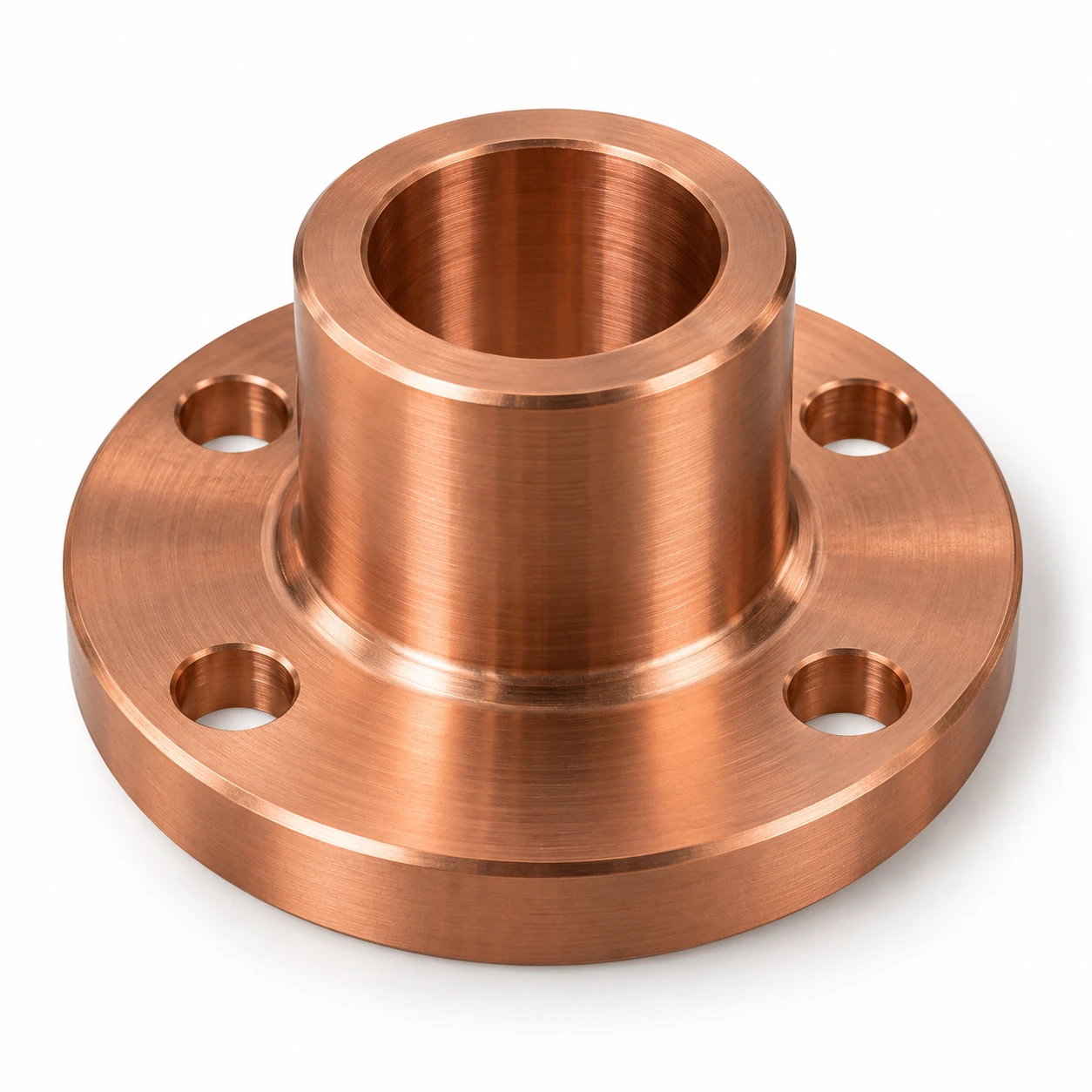
CNC turning C145
C145 is particularly suitable for terminals, pins, threaded contacts, connector bodies, bushings, electrode holders, sleeves, and conductive instrument parts.
Its chip behavior makes it a much more natural material for complex turned geometry than C110.
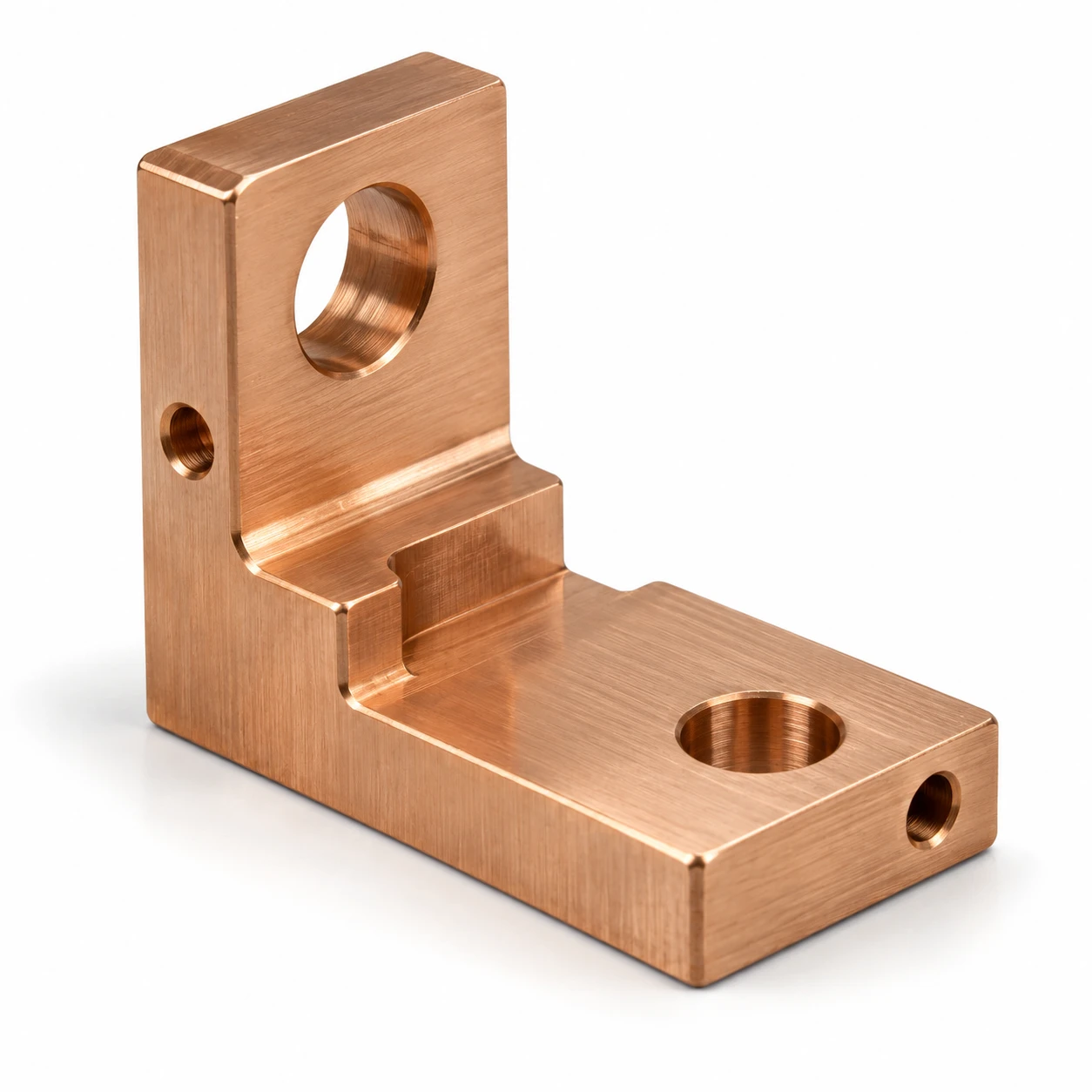
CNC milling C145
Milled applications include conductive blocks, RF hardware, electrical mounts, electrode components, thermal interfaces, and precision contacts.
Surface finishing
C145 can be tin plated, nickel plated, silver plated, gold plated for selected contacts, polished, or protected with anti-tarnish treatments.
Selective plating may be preferable when only contact areas need a precious-metal finish.
Typical C145 parts
- Electrical contacts
- Terminals
- RF connectors
- Conductive pins
- Switchgear parts
- Electrode holders
- Threaded electrical fittings
- Sensor contacts
- Power electronics hardware
Design guidance
Specify minimum conductivity if it is a functional requirement. Include plating thickness in final dimensional tolerances. Identify burr-sensitive electrical interfaces and protect critical contact surfaces during handling.
Why 6CNC
6CNC focuses on custom precision manufacturing from prototype through small-batch production. Depending on the part, we can combine CNC milling, CNC turning, 5-axis machining, mill-turn, grinding, EDM, finishing coordination, and dimensional inspection.
Our quality capability includes CMM, image measurement, surface-roughness measurement, material analysis, gauges, micrometers, calipers, and other inspection tools. FAI, SPC, PPAP, COC, material traceability, and customer-specific inspection records can be supported when specified.
Send your 3D CAD model, controlled drawing, quantity, material condition, finish, and inspection requirements for a manufacturability and quotation review.
From Drawing to Finished Part
01
Share your files
Send your CAD model, controlled drawing, quantity and specified material condition.
02
Confirm the route
Review stock, machining, heat treatment, finishing and inspection together.
03
Machine and finish
Produce the part to the agreed drawing, allowing for any heat-treatment movement.
04
Inspect and deliver
Verify the required dimensions and supply the agreed inspection documentation.
Technical reference: Copper Development Association — C14500. Values depend on stock form, specification and condition; use certified material data for final design.
Material Selection at a Glance
| Material | Primary selection driver | Typical part focus |
|---|---|---|
| C145 Tellurium Copper | Conductivity with improved chip breaking | Detailed conductive fittings and connectors |
| C110 Copper | Electrical and thermal conductivity | Busbars, contacts and thermal interfaces |
| C360 Brass | Free machining and detailed turned geometry | Fittings, inserts and threaded hardware |
Define the operating conditions
Specify loads, temperature, corrosion exposure, conductivity or weight requirements before selecting the material.
Confirm the manufacturing condition
State the exact grade, stock form, heat treatment, finish and inspection requirements on the controlled drawing.
Compare Materials & Grades
Also compare: Titanium Grade 2 · Titanium Grade 5 · C360 Brass · C932 Bronze · Magnesium AZ31B · Inconel 625 · Inconel 718
Materials library · Aluminum grades · Stainless steel grades
FAQs
What is tellurium copper?
Copper alloyed with a small amount of tellurium to improve machinability while retaining high conductivity.
Is C145 easier to machine than C110?
Yes. That is one of the main reasons to use it.
Is C145 conductive?
Yes. It is widely used for conductive machined components.
Can C145 be plated?
Yes. Tin, nickel, silver, and gold plating are all used depending on the application.
Is C145 suitable for threaded copper parts?
Yes. It is much more practical than pure copper for detailed threaded geometry.
Start your project with 6CNC
Let’s review your C145 Tellurium Copper part.
Share the drawing and service conditions for a project-specific machining and quotation review.
Include with your enquiry
- 3D CAD and controlled PDF drawing
- Material grade, stock condition and applicable specification
- Quantity and delivery target
- Heat treatment, hardness and critical dimensions
- Surface finish and inspection requirements