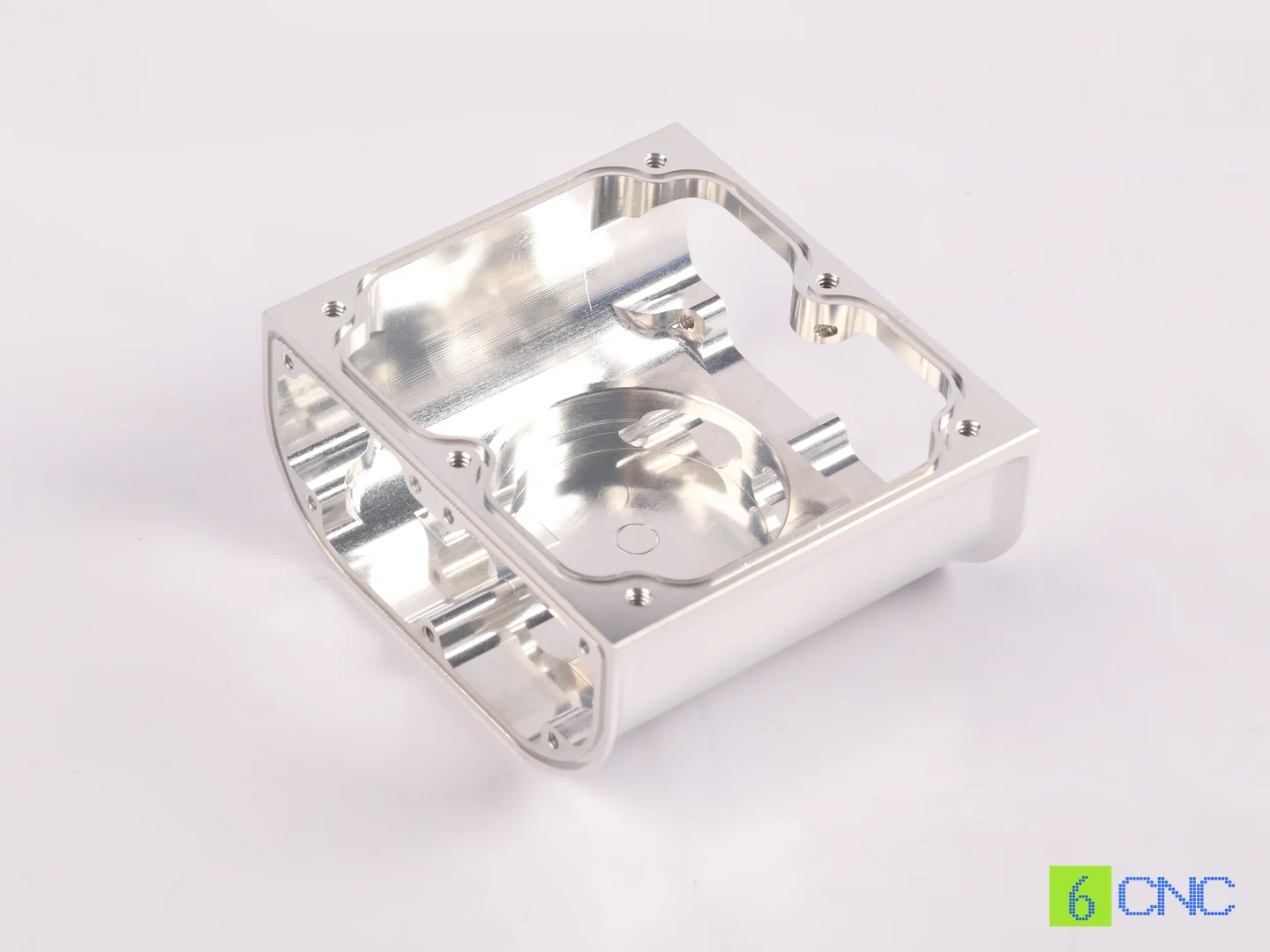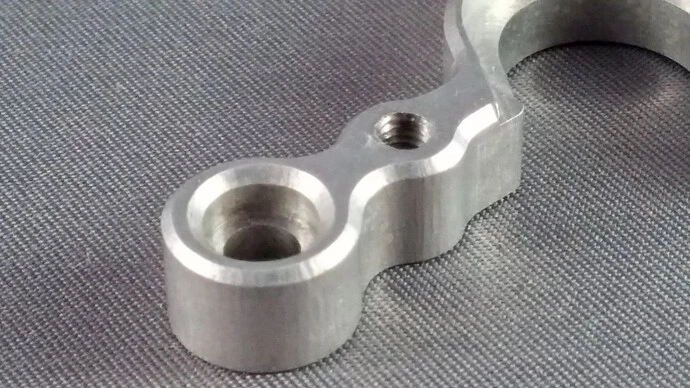
3D printing has become an increasingly useful manufacturing method for medical tools, surgical guides, laboratory equipment, diagnostic-device components, and patient-specific healthcare products. Its biggest advantage is not simply that parts can be produced quickly. It is that engineers can manufacture complex or customized geometries without investing in dedicated molds or tooling, making additive manufacturing particularly useful during medical-device development and low-volume production.
That flexibility matters in healthcare because many medical tools are not standard mass-produced components. A surgical guide may be designed for one patient’s anatomy. A laboratory fixture may be needed only for a specific diagnostic workflow. A medical-device development team may need several housing or instrument iterations before completing verification testing.
3D printing allows these parts to move from CAD to physical hardware much faster than many traditional manufacturing routes. Processes such as SLA, SLS, MJF, and metal powder-bed fusion can produce everything from detailed anatomical models and durable nylon fixtures to stainless steel or titanium medical instruments. However, the manufacturing method still needs to match the actual clinical or engineering requirement. Sterilization, biocompatibility, dimensional accuracy, mechanical strength, surface condition, and process validation can all influence whether a printed part is suitable for its intended use. 6CNC identifies surgical tools, patient-specific guides, fixtures, and hospital equipment as key current applications of medical additive manufacturing.
What Are 3D-Printed Medical Tools and Equipment?
3D-printed medical tools are parts manufactured layer by layer from a digital 3D model using an additive manufacturing process. They can include both direct-use components and supporting equipment used during product development, surgery, laboratory testing, diagnostics, training, and hospital operations.
The category is much broader than implants. In many cases, the most practical uses of medical 3D printing are relatively ordinary components that would otherwise be expensive or slow to manufacture conventionally.
Examples include:
- surgical cutting and drilling guides;
- instrument handles and ergonomic prototypes;
- forceps, clamps, retractors, and specialized surgical tools;
- anatomical models used for planning or training;
- diagnostic-device housings;
- laboratory sample holders and racks;
- test fixtures and alignment tools;
- customized positioning aids;
- fluid-handling prototypes;
- replacement covers, brackets, adapters, and equipment accessories.
A hospital may need a custom fixture that holds an existing instrument at a particular angle. A medical-device company may need twenty housing prototypes with slightly different connector positions. An orthopedic development team may need a patient-specific drilling guide based on CT data. These are all examples where additive manufacturing can provide more flexibility than traditional tooling-based production.
The important distinction is that a part being manufacturable by 3D printing does not automatically make it appropriate for clinical use. Medical-device requirements still depend on the application, regulatory classification, contact type, sterilization method, mechanical loading, and intended use. FDA guidance on additive-manufactured medical devices specifically addresses both design/manufacturing considerations and device testing considerations, rather than treating additive manufacturing as a separate shortcut around normal device requirements.
Why 3D Printing Works So Well for Medical Tools
Medical manufacturing often involves combinations of low volume, high complexity, and frequent customization. Those characteristics align closely with the strengths of additive manufacturing.
Traditional machining and injection molding remain extremely important in healthcare, but both processes impose different economic and geometric constraints. CNC machining removes material from stock and works particularly well for high-precision metal and plastic components. Injection molding becomes highly economical when thousands or tens of thousands of identical plastic parts are required, but molds can require significant time and investment.
3D printing avoids dedicated tooling. That makes it possible to modify a CAD file, manufacture a new version, evaluate it, and repeat the process without producing another mold or complex fixture.
For example, imagine a surgical instrument handle under development. The engineering team may want to test several grip diameters, thumb positions, finger contours, and cable-routing configurations with surgeons. Producing every version using machined tooling or injection molds would be unnecessarily expensive. SLA, SLS, or MJF can produce several ergonomic variations quickly, allowing the clinical team to evaluate them physically before finalizing the design.
The same logic applies to patient-specific products. Once imaging data has been converted into a validated design, additive manufacturing can produce a geometry that would not make economic sense to tool conventionally for a quantity of one.
1. Patient-Specific Surgical Guides
Patient-specific surgical guides are one of the most recognizable applications of medical 3D printing.
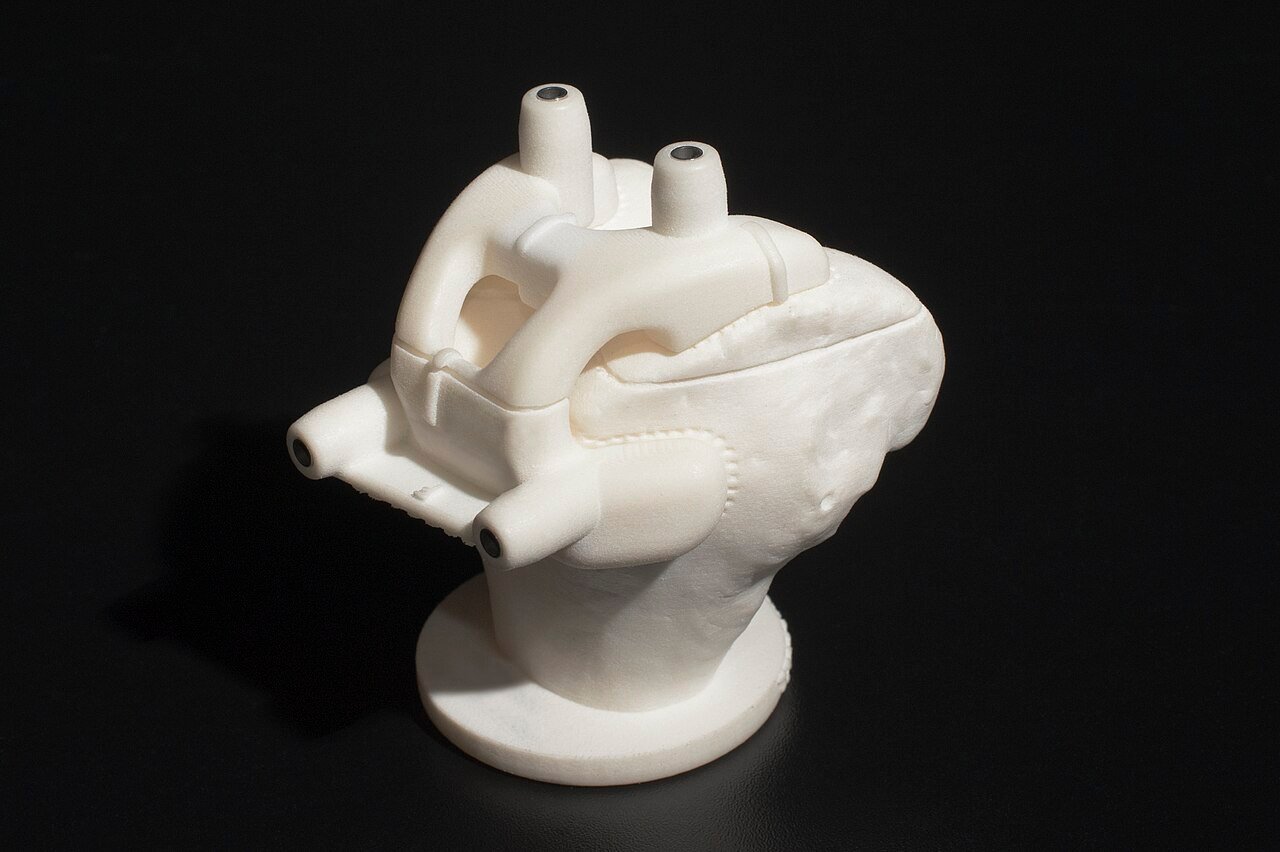
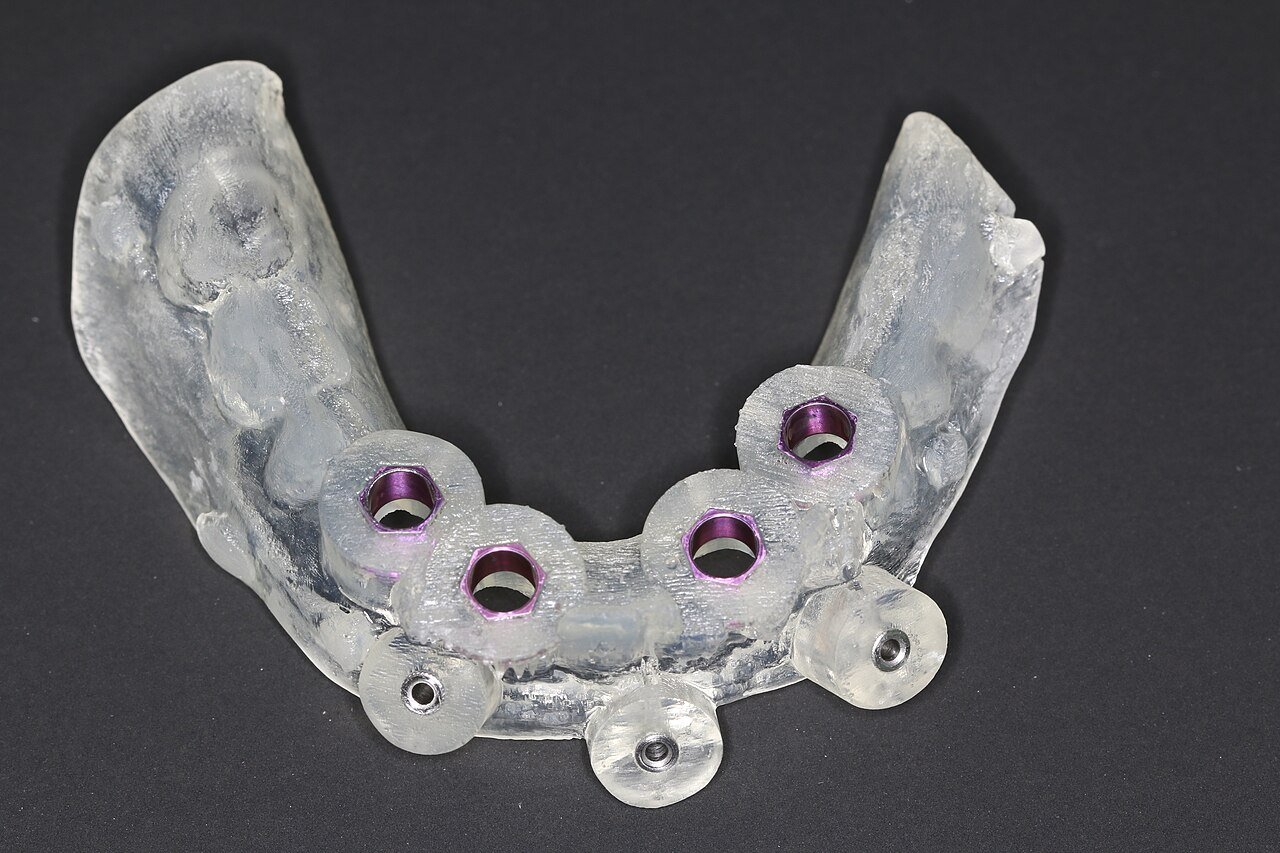
A surgical guide is typically designed using patient anatomy derived from CT, MRI, or other medical imaging data. The digital anatomy is converted into a 3D model, and the guide is designed to reference a specific anatomical surface. It may contain drill holes, cutting slots, alignment features, or other geometry that helps the surgeon position an instrument according to the preoperative plan.
Orthopedic and dental procedures are common examples. A knee surgery guide may help control drilling or bone-cutting location. A maxillofacial guide may help position hardware relative to a patient’s bone geometry. Dental surgical guides can assist with implant placement.
This type of part is particularly well suited to additive manufacturing because every patient may require a different geometry. Traditional mass-production tooling provides little advantage when every part is unique.
However, the geometry still needs careful engineering. Guide-to-anatomy fit, dimensional accuracy, guide thickness, sleeve position, sterilization method, material suitability, and post-processing can all influence clinical performance.
The manufacturing team also needs to understand that a visually accurate guide is not necessarily dimensionally adequate. Critical guide surfaces and drill locations may require inspection or verification before clinical use.
2. Surgical Instrument Prototypes and Specialized Tools
Surgical instruments are another area where additive manufacturing provides significant design freedom.
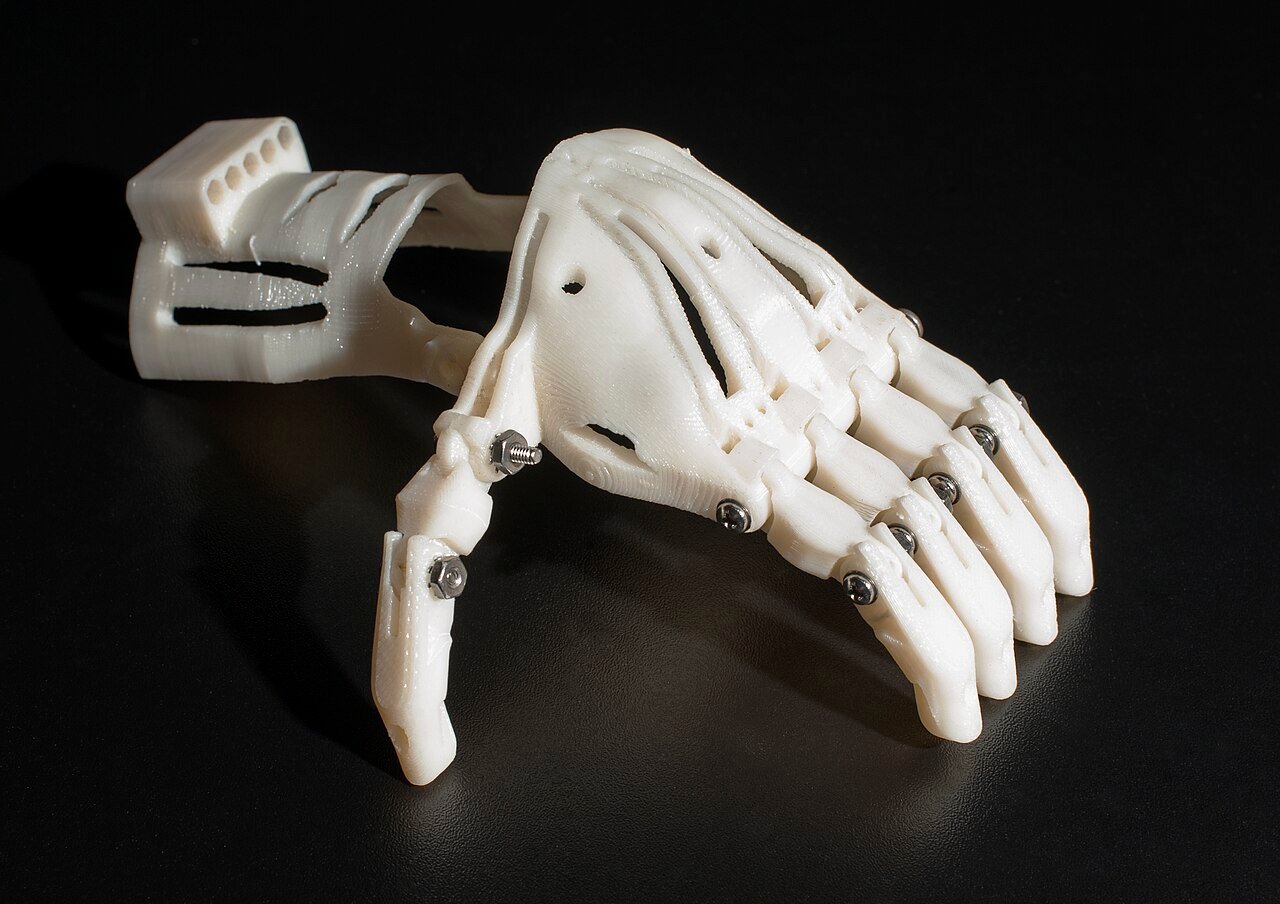
Conventional surgical tools often contain relatively simple forged, machined, or molded geometry because those processes are well established and economical for production. During development, however, designers may want to evaluate more complex ergonomic shapes, integrated features, or procedure-specific modifications.
A printed prototype can help answer questions that CAD alone cannot easily resolve:
- Is the handle comfortable during prolonged use?
- Can the surgeon operate the mechanism while wearing gloves?
- Does the tool interfere with nearby anatomy?
- Is the balance correct?
- Can the tool reach the intended surgical site?
- Are controls positioned correctly?
For example, a laparoscopic instrument development team might print multiple handle shapes while using the same metal shaft and working end. Surgeons can compare the physical designs and provide feedback before expensive production tooling is created.
Metal additive manufacturing can go further and produce functional stainless steel, titanium, or cobalt-chrome tools with complex geometry. This may be useful for specialized instruments produced in small quantities, although surface finishing, dimensional machining, cleaning, and qualification may still be required after printing.
The printed geometry is therefore often the beginning of the manufacturing process rather than the end.
3. Anatomical Models for Surgical Planning
Anatomical models are among the most practical healthcare applications of 3D printing because the printed part normally does not need to function as an implanted or load-bearing device.
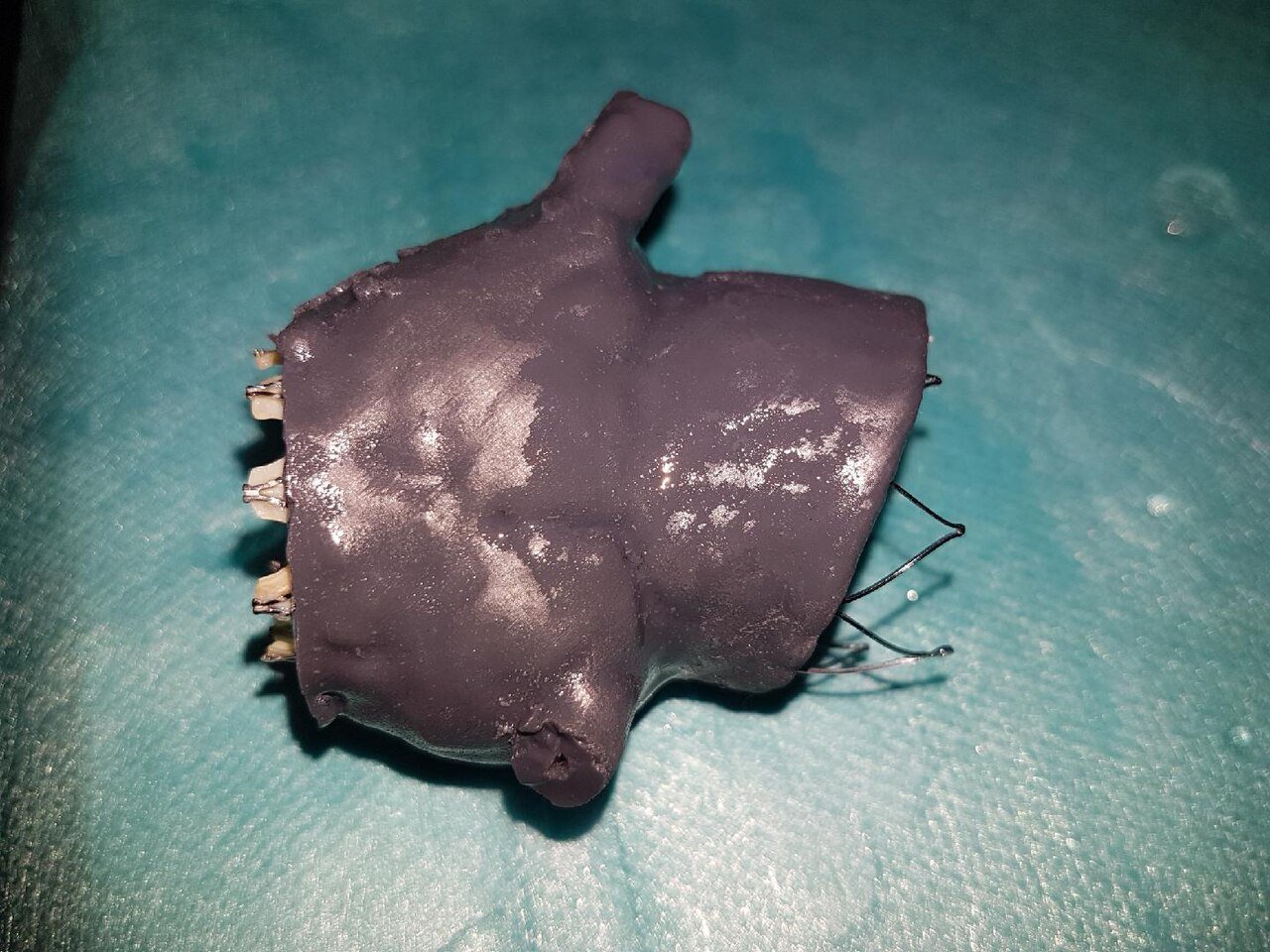
Patient imaging data can be segmented into 3D geometry representing bone, vascular structures, organs, tumors, or other anatomy. That model can then be printed so surgeons can physically examine complex anatomy before a procedure.
This can be valuable in cases where two-dimensional medical images do not communicate spatial relationships clearly. A surgeon preparing for a difficult craniofacial, orthopedic, cardiac, or tumor-related procedure may be able to understand access paths and geometric relationships more intuitively using a physical model.
Transparent SLA materials can also be useful when internal structures need to remain visible. Multi-material or differently colored models may represent different anatomical regions.
The value here is not necessarily manufacturing precision at the level required for an implant. The value is communication and planning. A physical model can also help explain a procedure to patients, train clinicians, or prepare operating-room teams.
Patient-specific anatomical models are a major medical 3D-printing application, especially where intricate structures need to be reproduced from imaging data.
4. Medical Device Housings and Enclosures
Diagnostic and medical electronic equipment frequently requires custom housings during development.
Examples include:
- portable diagnostic instruments;
- wearable medical devices;
- handheld scanners;
- monitoring devices;
- laboratory analyzers;
- robotic surgical equipment;
- rehabilitation devices.
During early development, internal electronics may change repeatedly. PCB layouts move, connectors are relocated, screens change size, cooling requirements evolve, and user-interface controls are revised.
Producing injection molds at this stage would make little economic sense.
3D printing allows engineers to manufacture complete enclosure prototypes that can be assembled with real electronics. They can evaluate connector access, screw locations, wall thickness, button feel, battery replacement, cable routing, and serviceability.
SLA is often useful when fine cosmetic detail or smooth surfaces are important. SLS and MJF may be more appropriate for durable functional housings because nylon parts generally offer better toughness than standard prototype photopolymers.
Once the design stabilizes, the final process may change. A low-volume medical instrument might remain 3D printed, while a product expected to reach higher annual volumes may transition to injection molding or CNC machining.
5. Laboratory Fixtures, Holders, and Test Equipment
Some of the highest-value medical 3D-printing applications are not devices that ever reach a patient.
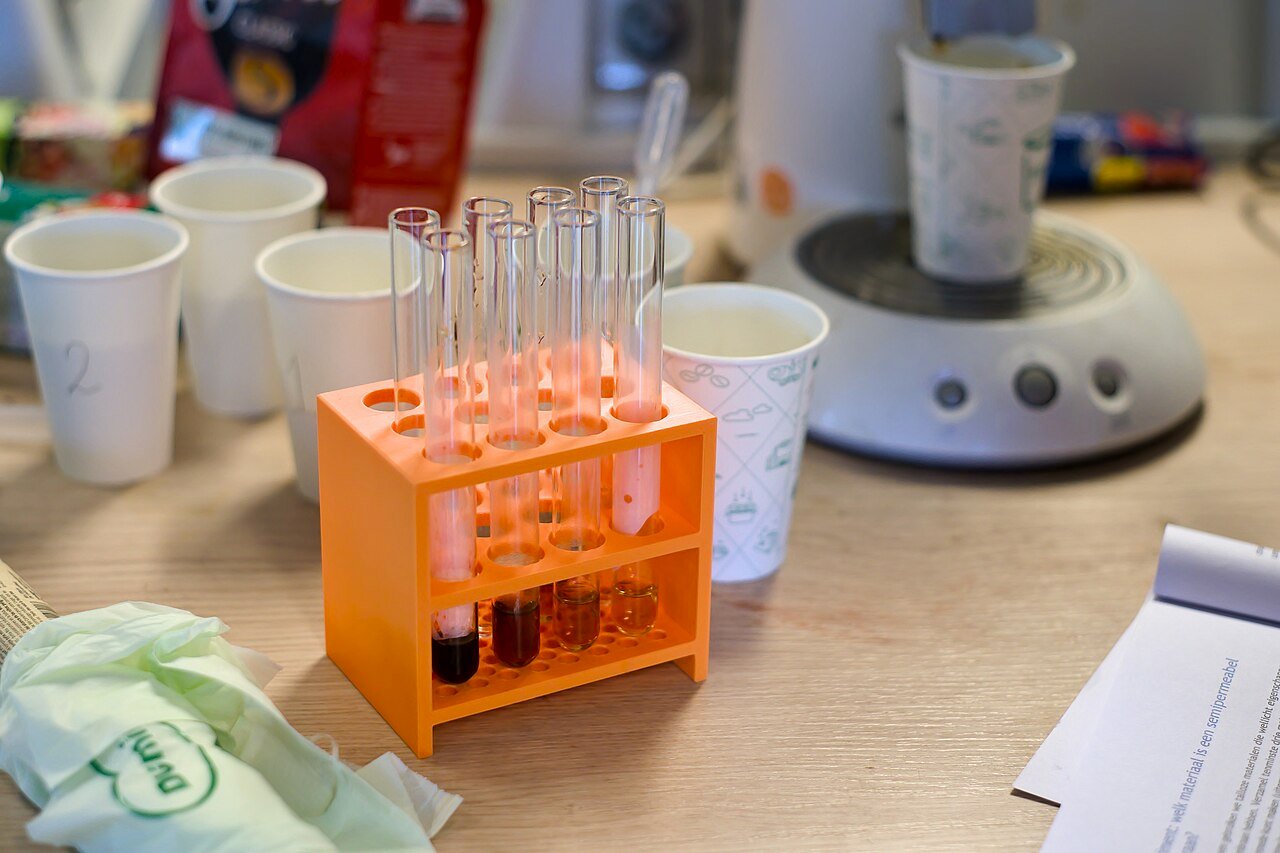
Medical manufacturers, diagnostic laboratories, and research teams constantly need custom fixtures, holders, adapters, test jigs, racks, and positioning tools.
These parts are often highly specific to one workflow and required in very small quantities.
For example, a diagnostic-equipment manufacturer may need a fixture that holds ten molded cartridges at a precise orientation during optical testing. A laboratory may need an adapter that positions sample tubes inside an existing machine. A medical-device company may need a repeatable fixture to hold a prototype housing during functional testing.
Conventionally machining such equipment is entirely possible, but complex shapes may require considerable programming and setup time. Printing can often reduce lead time and allow the fixture geometry to be optimized for the task rather than for machining simplicity.
Useful design features may include:
- integrated labels;
- part numbers;
- cable-routing channels;
- finger access;
- snap-fit retaining features;
- conformal support surfaces;
- lightweight internal lattice structures.
If the fixture wears or the product design changes, the CAD file can simply be updated and another version printed.
6. Positioning Aids and Custom Hospital Equipment
Healthcare environments use many pieces of equipment that are neither implants nor regulated instruments in the traditional sense.
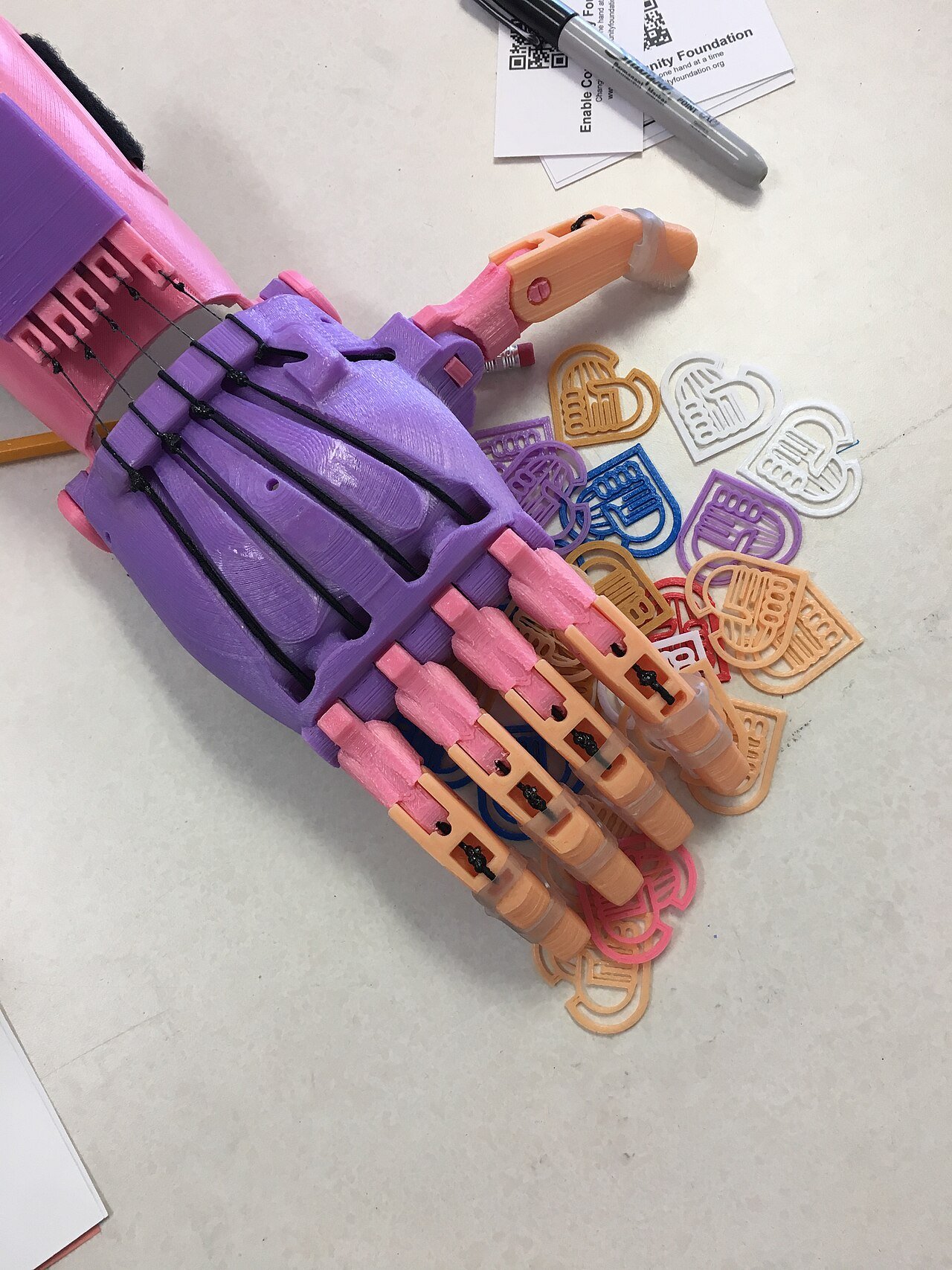
Custom positioning aids, equipment mounts, protective covers, organizers, brackets, and adapters may all benefit from additive manufacturing where quantities are low.
Imagine a rehabilitation clinic using a particular sensor to monitor patient movement. The sensor may not have been designed to attach to the clinic’s existing equipment. Instead of modifying the commercial device, a custom printed mounting bracket can connect the two systems.
Similarly, a hospital engineering team might require a custom holder for tubing, a positioning fixture for an imaging accessory, or a protective housing around a sensitive component.
These are exactly the types of parts where conventional mass production offers little advantage. The design may be needed only for one facility, one machine model, or one specific clinical workflow.
The engineering challenge is ensuring that the material and design still match the environment. Cleaning chemicals, repeated handling, mechanical load, heat, UV exposure, and sterilization procedures can all affect material selection.
7. Medical Training and Simulation Tools
Medical training requires clinicians to practice procedures before performing them on patients. 3D printing can create patient-specific or representative anatomical structures for simulation and education.
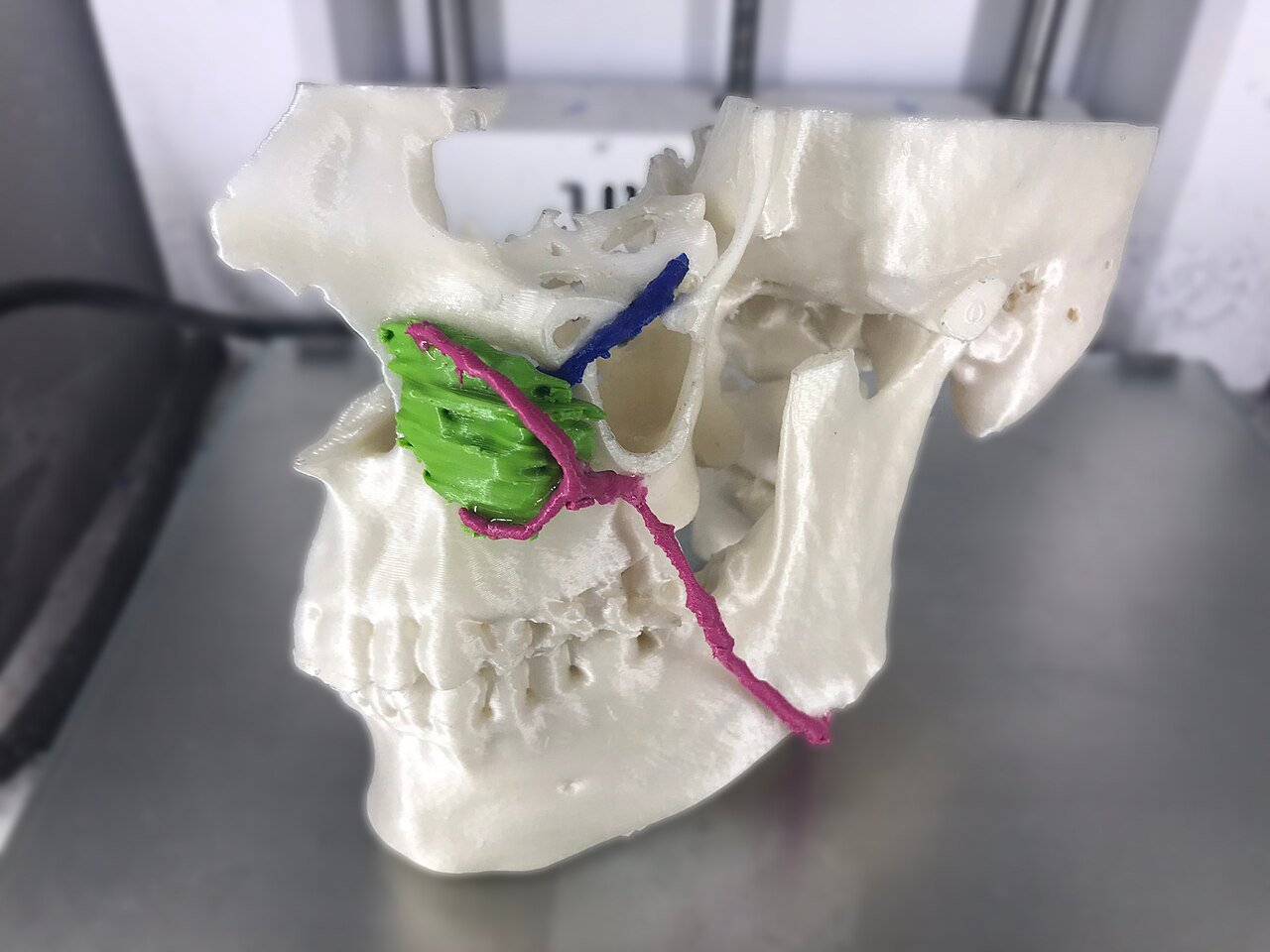
Rigid bone models are relatively straightforward. More advanced applications may combine flexible printed materials, silicone casting, or several manufacturing methods to simulate soft tissue.
A training model can also contain deliberately designed pathologies. Instead of simply reproducing normal anatomy, the manufacturer can create examples of fractures, deformities, tumors, or unusual anatomical conditions.
This makes it possible to repeat a training scenario across several students or institutions.
Simulation equipment does not always require the same regulatory pathway as a clinical device, but dimensional realism, tactile response, and durability may still matter depending on the training objective.
8. Prototypes for Fluid Handling and Diagnostic Devices
Medical diagnostic products frequently contain channels, manifolds, reservoirs, ports, and fluid-routing geometry.
Some of these features are difficult to prototype using traditional machining because internal channels may be inaccessible to cutting tools.
Additive manufacturing can build complex internal passages directly.
For example, a diagnostic-fluid cartridge prototype might contain several channels connecting sample chambers and reagent ports. SLA can produce detailed geometry that helps engineers evaluate fluid routing before committing to injection-molded tooling.
However, printing internal channels introduces its own engineering issues. Uncured resin, powder, or support material must be removable from the geometry. Surface roughness inside the channel may influence fluid behavior. Dimensional tolerances can also differ depending on channel orientation and printing process.
For extremely precise microfluidic devices, additional manufacturing processes may eventually be required, but 3D printing remains valuable during early development because design revisions can be evaluated quickly.
Common 3D Printing Processes for Medical Tools
There is no single “medical 3D-printing process.” Different additive technologies create different material properties, tolerances, surface conditions, and economics.
| Process | Typical materials | Common medical uses | Main strengths | Main limitations |
|---|---|---|---|---|
| SLA | Photopolymer resin, clear/resin systems | Anatomical models, detailed prototypes, guides, fluid-handling prototypes | Fine detail and smooth surface | Material properties and sterilization depend strongly on resin |
| SLS | Nylon, TPU | Functional fixtures, housings, durable prototypes, positioning tools | Strong geometry, no support structures for most features | Grainier surface and moderate dimensional variation |
| MJF | Nylon | Functional housings, production fixtures, small-batch equipment | Good repeatability and productivity | Limited material range compared with conventional molding |
| Metal powder-bed fusion / DMLS | Titanium, stainless steel, cobalt chrome | Surgical instruments, specialized tools, implants, high-strength components | Complex metal geometry and high strength | Higher cost, post-processing and validation requirements |
The selection should begin with the application rather than the machine.
An anatomical demonstration model may prioritize visual detail. A surgical guide may prioritize fit and sterilization compatibility. A reusable instrument may require strength, corrosion resistance, fatigue performance, and repeatable sterilization resistance.
The best manufacturing process can therefore differ even when two components belong to the same medical product.
Choosing Materials for 3D-Printed Medical Equipment
Material selection is one of the most important decisions in medical additive manufacturing.
Engineers sometimes begin by asking which materials are “medical grade,” but that question is too broad. A material suitable for a non-contact diagnostic-device housing may not be appropriate for a surgical guide or an implant.
The actual requirements may include:
- mechanical strength;
- impact resistance;
- chemical resistance;
- sterilization resistance;
- skin or tissue contact;
- dimensional stability;
- transparency;
- flexibility;
- wear resistance.
Nylon
Nylon is widely used in SLS and MJF because it combines relatively good strength with complex geometric capability. It works well for fixtures, housings, positioning aids, brackets, and functional prototypes.
However, nylon can absorb moisture and may not suit every sterilization method or clinical use.
Photopolymer resins
SLA resins can provide excellent detail and smoother surfaces than many powder-bed polymer processes. Clear resins can also help engineers observe internal fluid paths or optical geometry.
Different formulations have very different mechanical and biological characteristics. A general-purpose prototype resin should not be assumed to be appropriate for patient contact simply because it was printed on a medical-development project.
Stainless steel
Stainless steel can be used for durable tools and instrument components where corrosion resistance and mechanical strength matter. Metal-printed parts may still require CNC machining or grinding on critical interfaces after printing.
Titanium
Titanium alloys are attractive for medical applications because of their strength-to-weight ratio, corrosion resistance, and established use in medical devices.
Metal additive manufacturing also allows porous or lattice structures to be produced that are difficult to create conventionally. These geometries are especially important in implant development, although implant manufacturing involves much more extensive regulatory, material, validation, and process-control requirements than ordinary medical tooling.
Material options for medical additive-manufacturing applications include nylon, silicone-related systems, stainless steel, titanium, and other materials, depending on the process and project.
Sterilization Is a Material and Process Question
A component being printable does not mean it can survive sterilization.
Healthcare products may be exposed to methods such as:
- steam autoclaving;
- ethylene oxide (EtO);
- gamma irradiation;
- electron-beam irradiation;
- chemical disinfection.
Each process places different thermal, chemical, or radiation stresses on the material.
A polymer that performs well at room temperature may soften or distort during repeated autoclave cycles. Another resin may become brittle or change color after radiation exposure. Geometry can also influence sterilization because narrow passages or trapped volumes may be difficult to clean or expose uniformly.
This is particularly important for reusable instruments.
The engineering team should therefore define the intended sterilization method before selecting the printing process and material, rather than printing a finished design and investigating sterilization compatibility afterward.
Sterilization compatibility varies with material and process, and not every printable material is suitable for every medical environment.
Biocompatibility Depends on the Intended Use
Biocompatibility is another area where oversimplification can cause problems.
A material does not become universally “biocompatible” because it passed one biological test.
Requirements depend on how the device contacts the body, where it contacts the body, and for how long. A temporary skin-contact part has very different requirements from a long-term implant.
The manufacturing process can also matter. Additive parts may contain residues from resin, powder, cleaning chemicals, support-removal processes, or post-processing. The finished device therefore needs to be evaluated in its final manufactured condition.
This is one reason medical additive manufacturing requires closer process control than ordinary visual prototyping.
FDA guidance specifically treats material controls, printing processes, post-processing, and final device testing as part of the overall additive-manufacturing considerations for medical devices.
Accuracy and Surface Finish Still Need to Be Engineered
3D printing is sometimes presented as a manufacturing method that can create “any geometry.” That is misleading.
Additive manufacturing removes many geometric constraints, but every process still has dimensional limitations.
Hole diameter, wall thickness, build orientation, support structures, thermal distortion, layer thickness, post-curing, and post-processing can all affect the final geometry.
Consider a patient-specific drilling guide. The outside shape may be complex but relatively forgiving, while the guide sleeve position may control surgical accuracy. The sleeve location therefore deserves much tighter process and inspection control than the rest of the printed surface.
One solution is hybrid manufacturing.
The overall geometry can be printed, while critical holes, bearing surfaces, locating faces, or threads are CNC machined afterward.
This allows engineers to use additive manufacturing where geometric freedom matters and subtractive machining where tighter tolerances are required.
3D Printing vs CNC Machining for Medical Components
3D printing and CNC machining are often described as competing technologies, but in medical manufacturing they frequently complement one another.
| Requirement | 3D printing | CNC machining |
|---|---|---|
| Patient-specific geometry | Excellent | Possible, but may be less economical for complex shapes |
| Complex internal channels | Excellent | Limited by cutting-tool access |
| Fast design iteration | Excellent | Very good |
| Tight machined tolerances | Moderate to good depending on process | Excellent |
| Precision bores and fits | Usually requires post-processing for demanding tolerances | Excellent |
| Metal surface finish | Often requires secondary finishing | Generally better directly from machining |
| Small complex quantities | Excellent | Excellent |
| Simple prismatic components | Sometimes unnecessary | Usually efficient |
| Very high repeatability on precision features | Process-dependent | Strong |
| Integrated lattice structures | Excellent | Usually impractical |
For example, a titanium surgical instrument may have a complex lightweight printed body but require CNC-machined pivot holes. A diagnostic housing may be printed during development and later injection molded when annual volume increases. A surgical guide may be printed entirely but use a separately manufactured precision metal drill sleeve.
The best process is therefore determined feature by feature rather than by insisting that an entire product must be made using one technology.
3D Printing vs Injection Molding for Medical Production
Injection molding becomes increasingly attractive as quantities rise.
A printed medical housing may be ideal for twenty prototype units or a few hundred specialized devices. If the design eventually requires tens of thousands of identical components, injection molding can normally achieve a much lower unit cost and more consistent production cycle once tooling has been developed.
The transition point depends on part size, material, complexity, tooling cost, required volume, and how frequently the design is expected to change.
This is one reason 3D printing is so valuable during development. The engineering team can refine the design without repeatedly modifying expensive molds.
Once the geometry and product requirements stabilize, production can move into the process that provides the best economics and quality at the required quantity.
Quality Control for 3D-Printed Medical Tools
Medical additive manufacturing needs more than a printer and a CAD file.
Build orientation, machine settings, material batch, powder reuse, resin handling, post-curing, heat treatment, support removal, surface finishing, cleaning, and inspection can all affect the finished part.
For development parts, the level of documentation may be relatively simple. For regulated production devices, process controls can become much more rigorous.
The FDA’s additive-manufacturing guidance discusses considerations around device design, software workflow, material controls, printing, post-processing, process validation, and final device testing. FDA also recognizes ASTM F3434-20, which addresses installation, operation, and performance qualification considerations for laser-beam powder-bed-fusion equipment used in production manufacturing.
From a practical manufacturing perspective, engineers should consider whether the project requires:
- dimensional inspection;
- first article inspection;
- material certification;
- surface roughness verification;
- build documentation;
- lot traceability;
- mechanical testing;
- cleaning validation;
- sterilization validation;
- biocompatibility testing.
The exact requirements depend on what the part does and how it is regulated.
When 3D Printing Is Not the Best Choice
3D printing is powerful, but it should not be forced into every medical manufacturing project.
A simple aluminum equipment bracket with tight hole positions may be easier and more accurate to CNC machine.
A disposable plastic component required in millions of units will normally favor injection molding.
A precision shaft, bearing interface, valve component, or sealing surface may need machining or grinding to achieve the required geometry and finish.
Likewise, a printed polymer may not survive the required sterilization conditions even if the geometry prints perfectly.
The best manufacturing engineers are therefore not trying to maximize the number of printed components. They are trying to choose the process that creates the lowest technical and production risk.
From Prototype to Small-Batch Medical Production
Medical-device development rarely moves directly from the first CAD model into mass production.
The process may involve concept models, ergonomic prototypes, functional prototypes, verification builds, clinical evaluation components, pilot production, and eventually commercial manufacturing.
Different manufacturing methods can be appropriate at different stages.
An SLA model may be sufficient to evaluate appearance. An SLS or MJF version may then be used for functional testing. A metal-printed or CNC-machined version might be necessary for mechanical evaluation. Production may eventually move to injection molding, CNC machining, metal additive manufacturing, or a combination of processes.
This is particularly relevant for low-volume medical products. Not every medical device reaches traditional mass-production quantities. Specialized surgical equipment, laboratory tools, robotics, research instruments, and procedure-specific devices may remain in small-batch production throughout their commercial life.
In these applications, flexible manufacturing capability becomes valuable because the process needs to support repeated production without forcing the company into unnecessary tooling investment.
How 6CNC Supports Medical 3D Printing and Precision Manufacturing
At 6CNC, medical-device projects can be approached using the manufacturing process that best matches the geometry and production stage rather than forcing every part into one technology.
3D printing can support rapid prototypes, complex polymer components, fixtures, housings, models, and low-volume parts. When tighter tolerances or precision interfaces are required, CNC milling, CNC turning, 5-axis machining, mill-turn, grinding, or Wire EDM can be incorporated into the manufacturing route.
For example, a medical robotic component may use a printed cover together with precision-machined aluminum structural parts. A metal additive component may require CNC finishing on locating surfaces and holes. A diagnostic-device prototype may begin as a printed enclosure before later transitioning to injection molding.
This combination is particularly useful during prototype-to-small-batch production, where product design, quantity, and manufacturing requirements may continue to evolve.
For medical manufacturing projects, quality planning can also include dimensional inspection, CMM measurement, optical measurement, material verification, first article inspection, traceability, and additional documentation according to project requirements.
Final Thoughts
3D printing has become valuable in healthcare because medical manufacturing frequently involves exactly the conditions where additive manufacturing performs best: complex geometry, low quantities, frequent design changes, and patient-specific requirements.
Surgical guides, instrument prototypes, anatomical models, diagnostic housings, laboratory fixtures, positioning aids, and specialized equipment can all benefit from faster iteration and reduced tooling requirements.
However, medical 3D printing should not be treated as a shortcut around normal manufacturing engineering. Material suitability, dimensional accuracy, sterilization, biocompatibility, surface condition, post-processing, inspection, and regulatory requirements still need to be considered according to the intended use.
In many successful medical products, the final solution is not purely additive. 3D printing, CNC machining, precision finishing, and injection molding may all play different roles as a product moves from early development into validated small-batch or production manufacturing.
If you are developing medical tools, diagnostic equipment, surgical devices, laboratory components, or other healthcare hardware, 6CNC can support prototype and small-batch manufacturing using 3D printing, CNC machining, and complementary precision processes.
Send your CAD files, engineering drawings, material requirements, and expected quantities for manufacturing review and quotation.
Frequently Asked Questions
What medical tools can be 3D printed?
Common examples include surgical guides, anatomical models, instrument prototypes, diagnostic-device housings, laboratory fixtures, positioning aids, sample holders, custom adapters, and some specialized metal instruments.
Which 3D printing process is best for medical tools?
It depends on the application. SLA is useful for detailed models and smooth prototypes, SLS and MJF are commonly used for durable nylon parts, and metal powder-bed fusion can produce titanium, stainless steel, or cobalt-chrome components.
Can 3D-printed medical tools be sterilized?
Some can, but sterilization compatibility depends on the exact material, printing process, geometry, post-processing, and sterilization method. Autoclave, EtO, gamma, and other methods affect materials differently.
Are all medical 3D-printing materials biocompatible?
No. Biocompatibility depends on the material, manufacturing process, final surface condition, type of patient contact, and duration of contact. A general-purpose printed material should not automatically be considered suitable for clinical use.
Are 3D-printed parts accurate enough for surgical guides?
They can be, provided the printing process, material, design, post-processing, and inspection method can meet the guide’s required accuracy. Critical guide features may need dedicated dimensional verification or machined components such as drill sleeves.
Why use 3D printing instead of CNC machining for medical parts?
3D printing is particularly useful for complex internal geometry, patient-specific designs, rapid iteration, and low-volume components. CNC machining is usually stronger for tight tolerances, precision fits, machined surfaces, and conventional metal parts.
Can CNC machining and 3D printing be combined?
Yes. Hybrid manufacturing is common. A component can be 3D printed to create complex geometry and then CNC machined on critical holes, mounting faces, sealing surfaces, or other tight-tolerance features.
Is 3D printing suitable for mass-produced medical devices?
Sometimes, but not always. It is strongest for customized, complex, or low-volume production. For large quantities of identical plastic parts, injection molding is often more economical once tooling has been developed.
What information should I provide when requesting a quote for a medical 3D-printed part?
Provide the 3D CAD model, drawing if available, intended material, required quantity, dimensional requirements, surface requirements, intended use, sterilization requirements, and any inspection or documentation requirements.