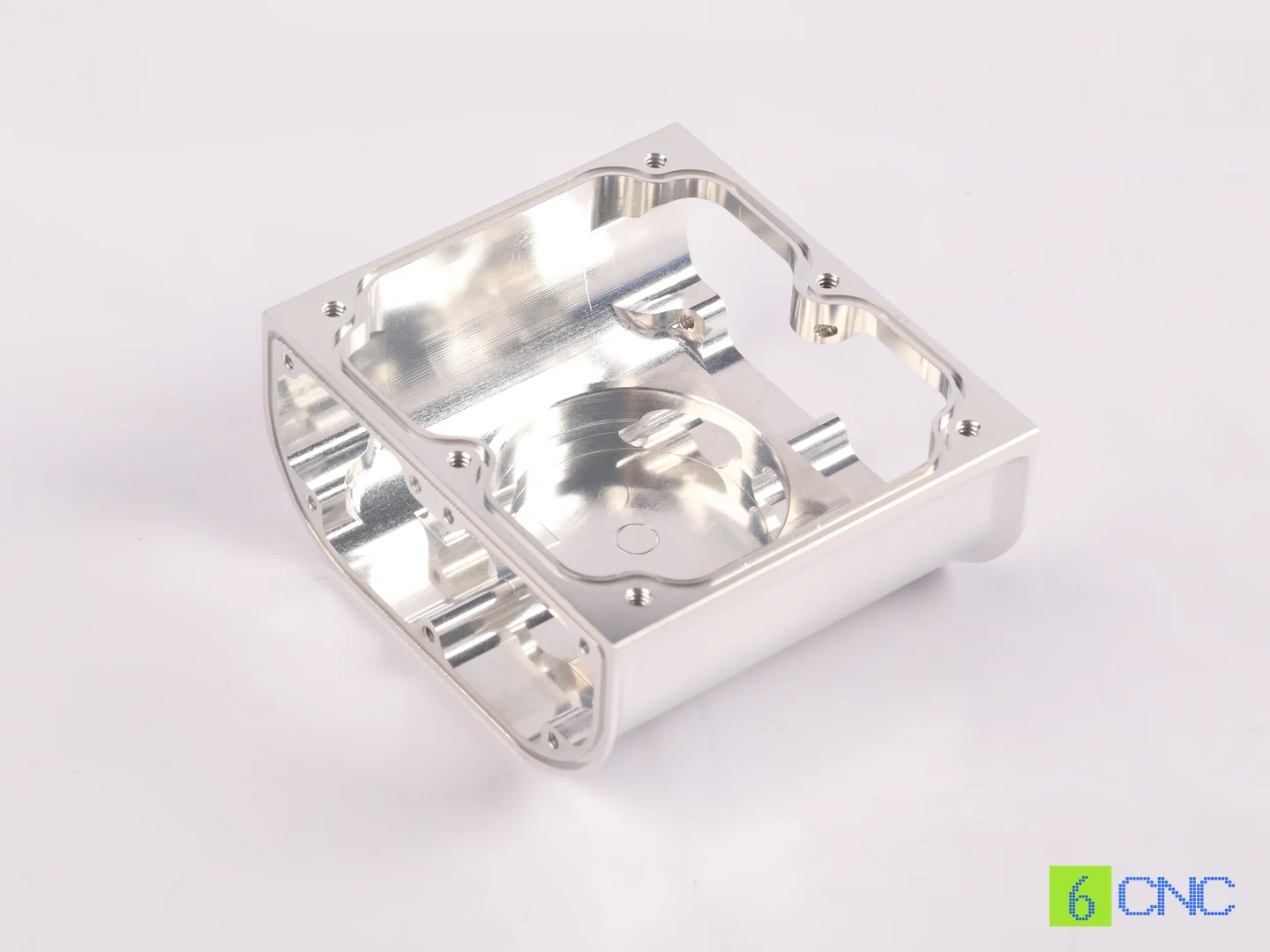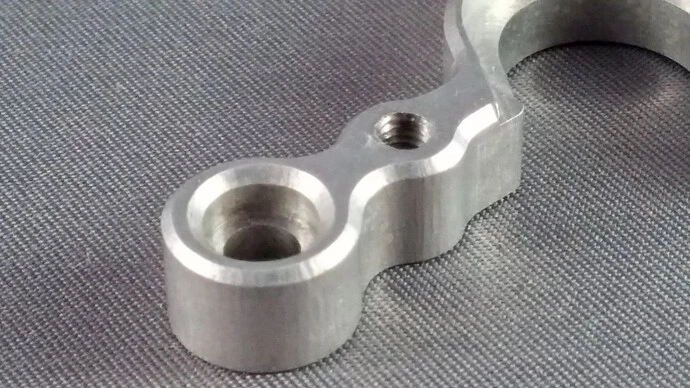
Buying a CNC machine can look like the obvious next step once a company begins ordering machined parts regularly.
Instead of sending drawings to a supplier, waiting for quotations, and depending on an outside production schedule, why not bring machining in-house? You gain direct control over priorities, design changes, urgent parts, and engineering experiments.
That logic can be correct.
But owning a CNC machine and operating a reliable CNC manufacturing process are two very different things.
The machine itself is only one part of the investment. A usable in-house machining capability also requires tooling, workholding, CAM software, inspection equipment, operators, programmers, maintenance, floor space, power, coolant management, raw-material inventory, and enough recurring work to keep the equipment economically productive.
For a company producing the same families of parts every week, building an internal machining department can make excellent business sense. For another company making prototypes, changing designs frequently, or needing occasional 5-axis, titanium, grinding, EDM, and precision inspection capability, outsourcing may remain far more economical.
The right question is therefore not:
“Is owning a CNC machine cheaper than paying a supplier?”
It is:
“Which option gives us the lowest total manufacturing cost and risk at the volume, complexity, and utilization we actually expect?”
This guide compares buying CNC equipment with using a professional CNC machining service from the perspective of capital investment, labor, tooling, quality control, machine utilization, flexibility, lead time, technical capability, and long-term production strategy.
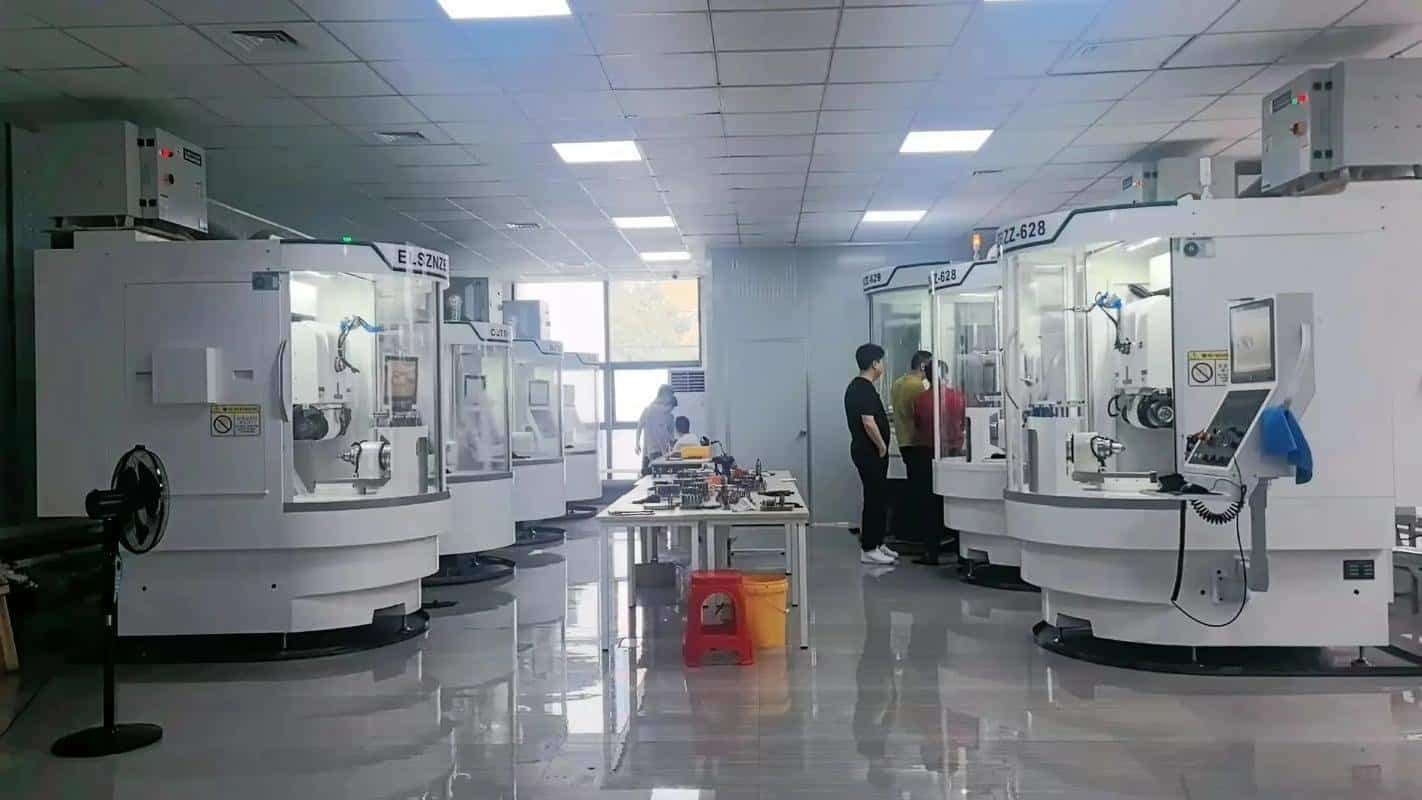
The Difference Between Buying a CNC Machine and Building a CNC Capability
It is easy to look at the advertised price of a machining center and treat that number as the cost of bringing CNC machining in-house.
That is rarely realistic.
A machine cannot produce a finished engineering component by itself.
A functioning machining operation also needs to answer questions such as:
- Who will create the CAM program?
- Who will design the fixture?
- Which cutting tools and holders are required?
- How will tool offsets be managed?
- How will the part be inspected?
- Who maintains the spindle, way covers, lubrication system, coolant, probes, and tool changer?
- What happens when the job requires a process the machine cannot perform?
A company therefore needs to distinguish between owning a machine tool and having a manufacturing system capable of producing repeatable parts.
The second is substantially more expensive and more difficult.
What Does Buying a CNC Machine Really Cost?
The purchase price is only the most visible cost.
Total in-house CNC cost usually includes several categories.
CNC Machine Purchase
This can range from relatively inexpensive compact equipment to large industrial 5-axis machining centers costing many times more.
Price depends on:
- machine size;
- spindle capability;
- axis configuration;
- accuracy;
- automation;
- probing;
- tool capacity;
- controller;
- brand.
A 3-axis vertical machining center and a high-end simultaneous 5-axis machine should not be viewed as equivalent investments.
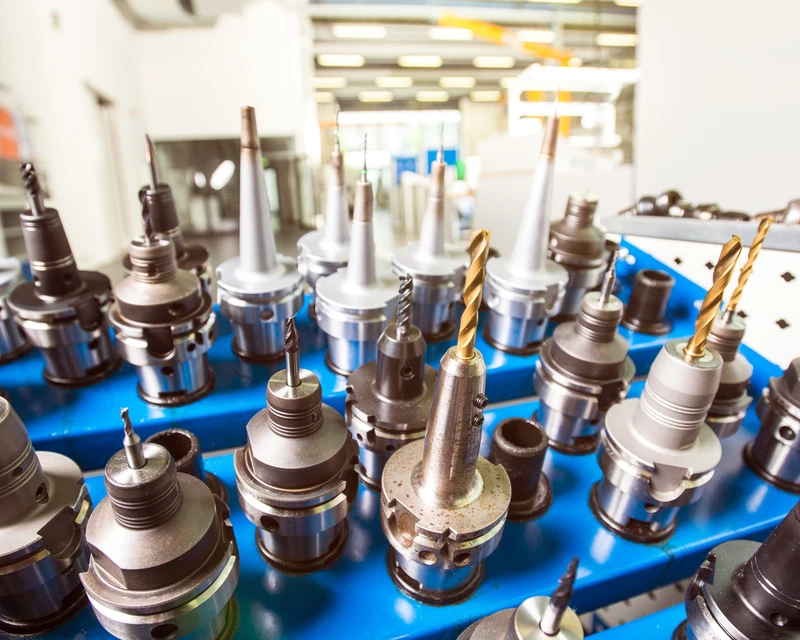
Toolholders and Cutting Tools
A machining center without tooling is not productive.
A practical tooling package may include:
- end mills;
- drills;
- taps;
- thread mills;
- face mills;
- boring tools;
- chamfer tools;
- collet holders;
- hydraulic holders;
- shrink-fit holders;
- probes.
Tooling cost grows quickly when the company machines several different materials.
The cutters used for aluminum may not be the best tools for stainless steel, titanium, PEEK, or hardened steel.
Workholding and Fixtures
Workpieces must be held accurately and rigidly.
Common equipment includes:
- machine vises;
- soft jaws;
- fixture plates;
- chucks;
- rotary fixtures;
- zero-point systems;
- vacuum fixtures;
- custom fixtures.
A company making many changing custom parts may spend substantial engineering time simply creating workholding solutions.
CAM Software
Most modern CNC machining relies on CAM software.
Advanced capabilities such as simultaneous 5-axis programming, collision checking, rest machining, toolpath simulation, and machine kinematics may require more expensive software licenses and postprocessors.
The software also needs someone who knows how to use it.
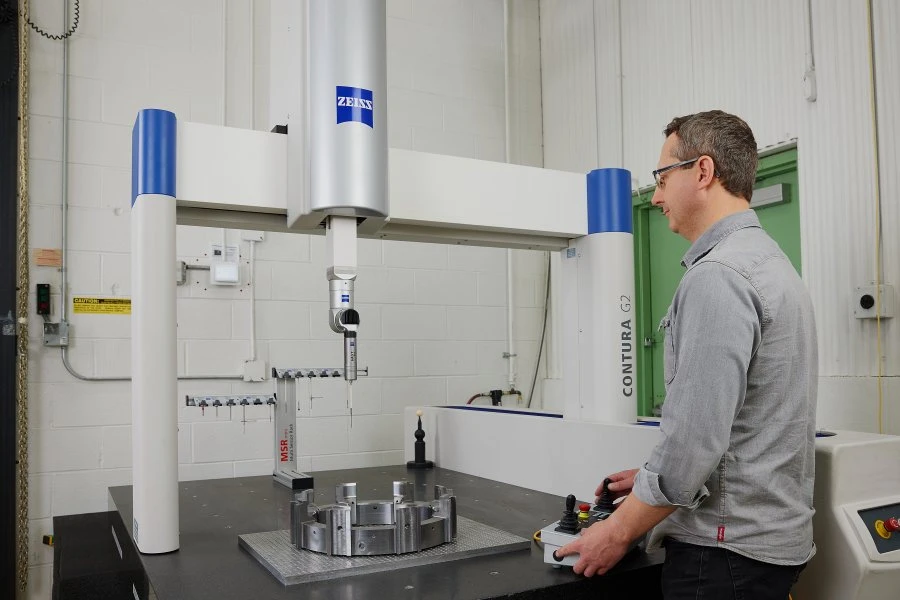
Inspection Equipment
This is one of the most underestimated costs.
Making a precision part is only useful if you can prove that the part is correct.
Basic equipment may include:
- calipers;
- micrometers;
- pin gauges;
- bore gauges;
- height gauges;
- surface plate.
More demanding components may require:
- CMM;
- optical measurement;
- surface roughness measurement;
- thread gauges;
- material verification equipment.
If your customers require documented inspection, measurement capability becomes part of the production system rather than an optional accessory.
Facility Costs
Industrial CNC machines require appropriate infrastructure.
This may include:
- floor space;
- reinforced foundations;
- three-phase power;
- compressed air;
- coolant handling;
- chip disposal;
- ventilation;
- lifting equipment.
Large machines can create facility constraints that do not exist when machining is outsourced.
Labor
A CNC machine still needs skilled people.
Depending on the operation, this can include:
- manufacturing engineer;
- CAM programmer;
- machinist;
- setup technician;
- quality inspector;
- maintenance technician.
A company may not need separate employees for every role, but somebody still has to perform each function.
The Utilization Problem
One of the most important questions is not how much the machine costs.
It is how often the machine will actually cut parts.
Suppose a company buys a CNC machine because it spends significant money every year on outsourced machining.
At first glance, replacing those supplier invoices with internal production appears economical.
But what if the machine is busy only 15 hours per week?
The company still pays for:
- depreciation;
- floor space;
- labor;
- software;
- maintenance;
- tooling.
Machine economics improve dramatically when utilization is high.
This is why companies with stable recurring parts can often justify internal equipment much more easily than businesses with unpredictable prototype demand.
A machine sitting idle does not become inexpensive simply because the company already owns it.
Example: Engineering Team Producing Occasional Prototypes
Consider a robotics company developing new hardware.
Each month it may need:
- 5 aluminum motor brackets;
- 2 stainless shafts;
- 10 prototype housings;
- 1 complex 5-axis joint component.
The designs change frequently.
At first, buying a small machining center may seem attractive because engineers could produce components immediately.
But the real workload is highly variable.
One week the machine may be busy.
The next week there may be no finished drawings to produce.
The company may also discover that one part requires turning, another needs 5-axis milling, and another requires cylindrical grinding.
Buying one machine does not eliminate outsourcing.
It simply moves part of the manufacturing process in-house.
For this type of development environment, outsourcing the more demanding machining work while maintaining only limited internal prototype capability can often be a better balance.
When Buying a CNC Machine Makes Sense
Owning CNC equipment can be extremely valuable under the right conditions.
You Have Stable, Repeatable Work
If the company produces the same or similar component families continuously, machine utilization becomes easier to predict.
For example, an automation company manufacturing its own standardized fixture components every week may have enough stable demand to justify internal production.
Lead Time Control Is Extremely Important
In-house machining can be valuable when a failed component can stop an entire production line.
Instead of waiting several days for a supplier, the maintenance or engineering team can produce a replacement immediately.
This is particularly useful for:
- maintenance departments;
- tooling departments;
- production engineering;
- fixture manufacturing.
Parts Change Frequently During Development
Internal CNC equipment can shorten engineering iteration.
An engineer can modify the CAD model in the morning, machine a new version, test it, and revise again.
For simple parts, this speed can be extremely valuable.
You Have Skilled Manufacturing Staff
If experienced machinists, programmers, and manufacturing engineers are already available, bringing machining in-house becomes much easier.
Starting with a machine but no manufacturing team creates a much steeper learning curve.
Your Work Matches the Machine
A company producing mostly 3-axis aluminum components may justify a 3-axis machining center.
If most of the workload requires turning, grinding, EDM, and 5-axis machining, one machine is unlikely to replace the external supply chain.
When Outsourcing CNC Machining Makes More Sense
Outsourcing tends to be more attractive when demand is variable or the parts require a broad manufacturing capability.
Prototype and Low-Volume Quantities
For quantities of 1, 20, 100, or even several hundred parts, external CNC machining can avoid a large capital investment.
You pay for manufacturing capacity when you actually need it.
Complex Multi-Axis Parts
A component may require:
- simultaneous 5-axis machining;
- mill-turn;
- Wire EDM;
- precision grinding.
Buying all the required equipment internally would be difficult to justify unless those processes are used continuously.
Many Different Materials
A professional CNC shop may already have experience machining:
- aluminum;
- stainless steel;
- titanium;
- copper;
- brass;
- tool steel;
- Inconel;
- PEEK;
- POM;
- PTFE.
Each material requires different tooling and machining experience.
A product-development team may encounter all of these materials without producing enough volume in any one of them to build deep internal expertise.
Advanced Inspection Requirements
A supplier that already owns CMMs, optical measurement systems, gauges, and surface-testing equipment can provide inspection without requiring the customer to build a complete metrology department.
Unpredictable Demand
If CNC demand changes significantly month to month, outsourcing converts fixed manufacturing cost into variable cost.
That can reduce financial risk.
Buying One CNC Machine Does Not Replace a Machine Shop
This is one of the biggest misconceptions.
A professional CNC supplier may operate:
- 3-axis mills;
- 4-axis machining centers;
- 5-axis machines;
- CNC lathes;
- mill-turn equipment;
- grinding machines;
- EDM.
Different parts are routed to different equipment.
A single in-house machining center cannot provide all of those capabilities.
Consider a small assembly containing:
- aluminum housing;
- hardened steel shaft;
- titanium mounting bracket;
- ground precision pin.
The housing may require milling.
The shaft needs turning.
The bracket may benefit from five-axis machining.
The pin may need cylindrical grinding after heat treatment.
Owning one CNC mill only solves one part of the manufacturing chain.
3-Axis Capability vs 5-Axis Capability
This becomes particularly important for companies considering an internal machine.
A relatively straightforward 3-axis machine can handle a wide variety of:
- brackets;
- plates;
- fixtures;
- housings;
- pockets;
- hole patterns.
But complicated components may require many setups.
A 5-axis machine expands capability significantly but also increases:
- machine cost;
- CAM complexity;
- postprocessor requirements;
- collision risk;
- training requirements;
- maintenance complexity.
A company should not buy five-axis capability simply because some future part might need it.
It should evaluate whether there is enough recurring five-axis work to justify the complete system.
For occasional 5-axis demand, outsourcing may be more economical.
Machine Capability Is Not the Same as Part Capability
A specification sheet may say that a machine can hold a certain positioning accuracy.
That does not mean every part produced on it will meet the same tolerance.
Finished accuracy also depends on:
- tooling;
- tool deflection;
- fixture rigidity;
- thermal stability;
- material behavior;
- machining strategy;
- inspection.
For example, a machine may position extremely accurately while a long end mill bends under cutting load.
A thin aluminum housing may distort after being removed from the fixture.
A stainless steel component may move after heavy material removal.
These are process problems.
Owning an accurate machine does not automatically create machining expertise.
Quality Control Is a Separate Investment
Many companies focus on making the part and underestimate inspection.
Imagine producing a housing with two bearing bores that must maintain tight positional accuracy.
A micrometer can measure the bore diameter.
It cannot easily confirm the complete three-dimensional positional relationship between the bores and other datums.
That may require CMM inspection.
Similarly, a drawing may specify:
- flatness;
- true position;
- perpendicularity;
- surface roughness.
The ability to manufacture these requirements must be matched by the ability to verify them.
If the company buys a machining center but still needs to send precision parts to an external inspection lab, some of the expected speed advantage disappears.
Programming Is Part of the Cost
CAM programming can be simple or extremely demanding depending on the component.
A basic plate may require only:
- facing;
- drilling;
- pocket milling;
- contouring.
A complex five-axis part may require:
- rest machining;
- multi-axis collision avoidance;
- tool-axis control;
- several finishing strategies;
- machine simulation.
Programming time is part of production time even though the spindle is not moving.
Professional machine shops spread this capability across many customer projects.
An internal department needs enough recurring work to justify maintaining that expertise.
Tooling Inventory Can Grow Quickly
Custom machining requires a surprisingly large number of tools.
Consider a single housing requiring:
- face mill;
- 12 mm end mill;
- 6 mm end mill;
- 3 mm end mill;
- spot drill;
- several drills;
- taps;
- chamfer tool;
- boring tool.
Now repeat that across parts made from aluminum, stainless steel, titanium, and plastic.
The tool cabinet grows quickly.
Special features may also require:
- long-reach cutters;
- thread mills;
- custom form tools;
- small-diameter tools.
A machining service spreads this tooling infrastructure across a large customer base.
Maintenance and Downtime Belong to the Owner
When you outsource machining, machine maintenance is the supplier’s problem.
When you own the equipment, it becomes yours.
Maintenance may involve:
- coolant;
- filters;
- lubrication;
- spindle systems;
- way covers;
- probes;
- tool changers;
- ball screws;
- rotary axes.
Even a reliable machine eventually requires service.
Unexpected downtime is especially problematic when only one machine is available.
A professional machining supplier may move work to another machine.
A company with one internal machining center may have no backup.
The Hidden Cost of Scrap
Internal machining also transfers manufacturing risk to the company.
A programmer error can damage:
- the part;
- fixture;
- cutter;
- spindle.
A setup error may destroy expensive material.
This matters when machining materials such as:
- titanium;
- Inconel;
- PEEK;
- large aluminum billets.
Professional suppliers also experience manufacturing risk, but that risk is incorporated into their production system and pricing.
Companies evaluating in-house machining should include the learning curve and possible scrap in their financial analysis.
CNC Outsourcing Is Not Automatically Cheaper
There is also a mistake in the opposite direction.
Outsourcing is not always the better choice.
If a company continuously orders thousands of the same relatively simple CNC components, supplier margins, logistics, and external scheduling can eventually exceed the cost of internal production.
For stable high-utilization work, ownership can be very economical.
This is particularly true when:
- component designs rarely change;
- cycle time is predictable;
- tooling is standardized;
- internal labor is available;
- machine utilization stays high.
The decision should be based on actual workload rather than assuming outsourcing is always more efficient.
Fixed Cost vs Variable Cost
One useful way to understand the difference is through fixed and variable costs.
Owning CNC Equipment
Creates more fixed costs:
- machine depreciation;
- staffing;
- software;
- facility;
- maintenance.
Once those costs exist, additional parts may be relatively economical to produce.
Outsourcing CNC Machining
Creates more variable cost.
You pay the supplier when parts are ordered.
If demand drops, most machining cost disappears with it.
For companies with unpredictable demand, variable cost can be strategically valuable even if the individual part price appears higher.
The Break-Even Point
Companies often ask:
“At what quantity should we buy a CNC machine?”
There is no universal answer.
The break-even calculation depends on:
- annual outsourced spend;
- machine purchase cost;
- financing;
- expected machine life;
- labor;
- tooling;
- CAM;
- inspection;
- maintenance;
- facility cost;
- utilization.
A simplified comparison might look like:
Annual in-house cost = fixed ownership cost + labor + tooling + maintenance + material + scrap
versus:
Annual outsourcing cost = supplier part price + logistics + supplier management cost
But this still misses strategic factors such as:
- engineering responsiveness;
- internal knowledge;
- machine downtime risk;
- demand uncertainty.
The decision should therefore include both financial and operational risk.
A More Useful Utilization Question
Instead of asking:
“How many parts do we buy each year?”
ask:
“How many productive spindle hours can we realistically load onto this machine?”
Two companies may each buy 10,000 parts annually.
Company A’s parts require only three minutes each.
Company B’s parts require 45 minutes each.
Their internal machine requirements are completely different.
Spindle hours are often more useful than part count when evaluating equipment utilization.
Example: 1,000 Simple Aluminum Brackets
Suppose a manufacturer uses 1,000 identical 6061 brackets every month.
Each part requires:
- one simple setup;
- common cutters;
- loose-to-moderate tolerances;
- no specialized inspection.
Demand is stable.
This is a strong candidate for internal manufacturing.
A dedicated fixture can hold several parts simultaneously.
The process can be optimized repeatedly.
Tool life becomes predictable.
Machine utilization can remain high.
In this case, internal CNC production may produce long-term savings.
Example: 100 Different Prototype Parts
Now consider a product-development company requiring approximately 100 machined components each month.
But every component is different.
Some are:
- aluminum housings;
- stainless shafts;
- titanium brackets;
- PEEK insulators;
- five-axis components.
The total number of parts sounds similar.
The manufacturing environment is completely different.
Each job requires:
- programming;
- setup;
- tooling decisions;
- inspection planning.
One internal machine cannot efficiently cover every process.
Outsourcing becomes much more attractive because the supplier already maintains a broad manufacturing infrastructure.
Example: Medical Device Startup
Consider a medical-device company developing a robotic surgical instrument.
During development it needs:
- 10 aluminum housings;
- 25 stainless instrument components;
- 5 PEEK components;
- 20 precision shafts.
Several designs may change after testing.
Buying enough internal equipment to produce all these parts would require milling, turning, potentially five-axis capability, specialized plastic-machining knowledge, and inspection equipment.
For a startup, tying large amounts of capital into manufacturing equipment may not be strategically sensible.
Using a machining supplier allows the company to keep capital focused on product development while changing quantities and designs as the project evolves.
Example: Factory Maintenance Department
A different company may operate several automated production lines.
When a bracket, fixture, spacer, or replacement part fails, the factory cannot wait several days.
An internal 3-axis machining center can be extremely useful.
The machine does not need to replace all outsourced machining.
Its value comes from:
- urgent repair parts;
- fixtures;
- engineering changes;
- maintenance support.
This is a good example of a hybrid strategy.
Hybrid Manufacturing: Often the Best Answer
The decision does not have to be 100% internal or 100% outsourced.
Many engineering organizations use both.
Internal machines handle:
- urgent parts;
- simple prototypes;
- fixture modifications;
- maintenance;
- experimental work.
External suppliers handle:
- large batches;
- difficult materials;
- 5-axis machining;
- precision grinding;
- EDM;
- overflow capacity;
- advanced inspection.
This gives the company internal responsiveness without requiring it to own every manufacturing capability.
For many businesses, this is the most practical long-term strategy.
Outsourcing Also Provides Capacity Flexibility
A company may be able to justify one CNC machine based on average demand.
But what happens when demand suddenly triples?
Internal capacity is fixed.
If the machine is already running near capacity, lead time increases immediately.
A supplier with a larger machine fleet can potentially distribute the order across several pieces of equipment.
This becomes particularly valuable when product launches or customer orders are unpredictable.
External machining capacity therefore functions partly as a form of production flexibility.
How Part Complexity Changes the Decision
Simple parts favor internal machining much earlier than complex parts.
Why?
Because complex parts require more infrastructure.
| Requirement | Internal impact |
|---|---|
| Simple 3-axis milling | Relatively accessible |
| CNC turning | Requires additional machine |
| 4-axis work | Rotary equipment/programming |
| 5-axis machining | Much greater capital and programming complexity |
| Precision grinding | Separate specialized equipment |
| Wire EDM | Separate equipment and expertise |
| CMM inspection | Metrology investment |
| Multiple materials | Larger tooling/knowledge requirement |
A company whose product mainly uses 3-axis aluminum parts has a much easier case for internal machining than a company requiring five different manufacturing processes.
Security and Intellectual Property
One advantage of internal machining is direct control over design information.
Sensitive components remain inside the company.
This can matter in:
- defense-related work;
- proprietary research;
- highly confidential prototypes.
However, professional machining suppliers routinely operate under NDAs and controlled document systems.
The correct decision depends on the sensitivity of the project and the supplier’s information-security practices.
Lead Time: Internal Is Not Always Faster
Owning the machine does not guarantee instant parts.
The machine may already be busy.
The programmer may have a queue.
The required material may not be in stock.
A fixture may need to be created.
The necessary cutter may need to be ordered.
Likewise, outsourcing does not automatically mean long lead times.
A supplier with available capacity, existing tooling, and material inventory may complete a part faster than an overloaded internal department.
Lead time should therefore be measured through the complete workflow rather than physical distance from the machine.
How to Decide Whether to Buy a CNC Machine
Before purchasing equipment, ask several practical questions.
1. What percentage of our work fits this machine?
If only half the current outsourced parts can actually be produced on the proposed machine, the financial case should reflect that.
2. How many spindle hours can we load annually?
Estimate realistic productive usage, not optimistic maximum capacity.
3. Who will program and operate it?
Do not assume the equipment will automatically fit into existing engineering roles.
4. How will we inspect the parts?
Include metrology from the beginning.
5. What happens when the machine breaks down?
Consider maintenance capability and backup production.
6. Will our part mix remain stable?
A machine purchased for today’s product may not match next year’s design.
7. What processes will still be outsourced?
Understanding this prevents the machine purchase from being evaluated as though it replaces the entire supplier.
When You Should Probably Buy
Buying CNC equipment deserves serious consideration when:
- machining demand is stable;
- machine utilization will be high;
- part families are relatively consistent;
- lead-time control has major business value;
- skilled staff are available;
- the equipment fits a large percentage of the workload;
- capital investment aligns with long-term strategy.
When You Should Probably Outsource
Outsourcing usually remains more attractive when:
- demand is unpredictable;
- designs change frequently;
- quantities are low;
- parts require many different processes;
- complex five-axis machining is only occasional;
- advanced inspection is required;
- internal manufacturing staff are limited;
- preserving capital is strategically important.
Choosing a CNC Machining Service Provider
If outsourcing is the better route, the next decision is choosing the right supplier.
Do not evaluate suppliers only by their machine list or lowest quote.
A good CNC partner should match the technical risk of the project.
Useful questions include:
- Can they machine the required material regularly?
- Do they have the right 3-axis, 5-axis, turning, or grinding capability?
- Can they inspect the critical drawing requirements?
- Do they support prototype and small-batch quantities?
- Can they maintain revision control?
- Can they provide material certification or inspection documentation when required?
- Do they provide meaningful DFM feedback?
JLCCNC‘s own more recent sourcing guidance similarly emphasizes capability, materials, inspection, lead time, and scalability rather than evaluating a supplier only by proximity or price.
Buy vs Outsource: Comparison
| Factor | Buy CNC Machine | Outsource CNC Machining |
|---|---|---|
| Upfront capital | High | Low |
| Fixed operating cost | High | Low |
| Cost with no production | Still present | Minimal |
| Direct schedule control | High | Supplier-dependent |
| Design iteration | Excellent for suitable parts | Good with responsive supplier |
| Equipment variety | Limited to what you own | Potentially broad |
| Skilled staff required | Internal | Supplier provides |
| Tooling investment | Internal | Mostly supplier responsibility |
| Inspection equipment | Internal | Supplier capability |
| Maintenance | Internal responsibility | Supplier responsibility |
| Capacity scaling | Limited by owned machines | More flexible |
| Complex 5-axis work | Expensive capability to build | Available as needed |
| Low-volume flexibility | Depends on utilization | Excellent |
| Stable repetitive production | Can be excellent | Can become more expensive |
| Financial risk | Higher fixed exposure | More variable cost |
A Simple Decision Framework
Start with the work rather than the machine.
If your company has a predictable stream of similar parts that fit one machine category and can keep the spindle productive for much of the year, owning CNC equipment may offer both financial and operational advantages.
If your work changes frequently, uses several materials, requires several machining technologies, or arrives in irregular small batches, outsourcing generally provides much greater flexibility.
And if both situations apply, a hybrid strategy may be best:
simple and urgent parts in-house; complex and capacity-sensitive work outsourced.
How 6CNC Fits Into an Outsourced Manufacturing Strategy
For companies that do not want to build every machining capability internally, 6CNC supports prototype and small-batch precision manufacturing across a broader process range.
Projects can include:
- CNC milling;
- CNC turning;
- 5-axis machining;
- mill-turn machining;
- cylindrical grinding;
- surface grinding;
- centerless grinding;
- Wire EDM;
- additional manufacturing and finishing processes.
This is particularly useful when a product contains several different kinds of parts.
A company may already own a 3-axis machine for fixtures and simple components but outsource complex five-axis housings, precision shafts, difficult materials, or overflow production.
In that situation, external machining is not replacing internal manufacturing.
It is extending it.
For prototype-to-small-batch projects, the manufacturing review can also consider part geometry, material, quantity, tolerance, workholding, critical dimensions, and inspection requirements before production begins.
The objective is to use external manufacturing where it creates real technical or economic value rather than forcing every component through the same sourcing strategy.
Final Thoughts
Buying a CNC machine can be an excellent investment, but only when there is enough suitable work to justify the complete manufacturing system around it.
The machine purchase itself is only the beginning.
Real in-house machining cost includes tooling, fixtures, CAM software, inspection equipment, skilled labor, maintenance, floor space, utilities, scrap, and the opportunity cost of idle capacity.
Outsourcing avoids much of that fixed investment and gives companies access to a broader range of machines and manufacturing expertise as needed. The tradeoff is less direct control over production scheduling and greater dependence on supplier performance.
For stable repetitive work with high utilization, internal production can be highly economical.
For prototypes, small batches, complex geometry, changing designs, or parts requiring several different manufacturing processes, outsourcing can provide a much lower-risk solution.
For many companies, the strongest strategy is neither extreme.
Maintain internal capability where speed and recurring demand justify it, and use qualified CNC suppliers to extend capacity and access equipment that would not make economic sense to own.
Before buying a machine, calculate the cost of the entire machining capability, not only the machine.
Before outsourcing, evaluate the supplier’s entire manufacturing process, not only the quotation.
That is where the real comparison begins.
If your company is deciding whether a custom component should be produced internally or outsourced, send 6CNC your CAD files, drawings, materials, quantities, and inspection requirements. We can review the project and provide a machining route and quotation that you can compare against your internal production cost.
Upload Your CAD Files → Request a CNC Machining Quote
Frequently Asked Questions
Is it cheaper to buy a CNC machine or outsource machining?
It depends on utilization, part complexity, labor, equipment requirements, and production volume. Buying becomes more attractive when the machine can remain highly utilized with repeatable work. Outsourcing is usually more economical when demand is variable or several different machining processes are required.
What costs should I consider before buying a CNC machine?
Consider machine purchase, tooling, holders, fixtures, CAM software, labor, inspection equipment, facility requirements, power, coolant, maintenance, scrap, and machine downtime.
How much CNC work justifies buying a machine?
There is no universal part quantity. Productive spindle hours are usually a better measure. A small number of long-cycle parts may keep a machine busier than thousands of very simple components.
Is buying a CNC machine good for prototyping?
It can be very useful when prototypes are frequent, geometrically suitable for the machine, and engineering iteration speed is important. If prototype parts require many different machines and materials, outsourcing may provide better flexibility.
Should a startup buy CNC equipment?
Usually only when internal machining provides a clear strategic advantage. Startups often benefit from preserving capital and outsourcing specialized manufacturing while product designs and demand are still changing.
Is owning a 5-axis CNC machine worth it?
It can be if there is enough recurring five-axis work and the company has the programming, tooling, workholding, and inspection capability to support it. For occasional complex parts, outsourcing five-axis machining is often more economical.
Can an in-house CNC machine replace a machine shop?
Usually not completely. One machine may cover certain milling or turning operations, while other parts still require five-axis machining, grinding, EDM, heat treatment, surface finishing, or advanced inspection.
What is a hybrid CNC sourcing strategy?
A hybrid strategy uses internal machines for suitable urgent, simple, or repetitive components while outsourcing complex, specialized, high-volume, or overflow work.
Is in-house CNC machining always faster?
No. Lead time depends on programming queues, machine availability, materials, tooling, fixtures, and inspection. A capable external supplier with available capacity may sometimes be faster.
What should I look for in a CNC machining service provider?
Look for appropriate machine capability, relevant material experience, quality and inspection systems, revision control, technical communication, DFM support, and the ability to handle your required quantities consistently.