
6CNC · Aluminum 7075
Aluminum 7075
CNC Machining
High-strength aluminum for parts where 6061 is not enough
Aluminum 7075 is selected when a machined part needs significantly greater strength than general-purpose aluminum while still benefiting from aluminum’s low density.
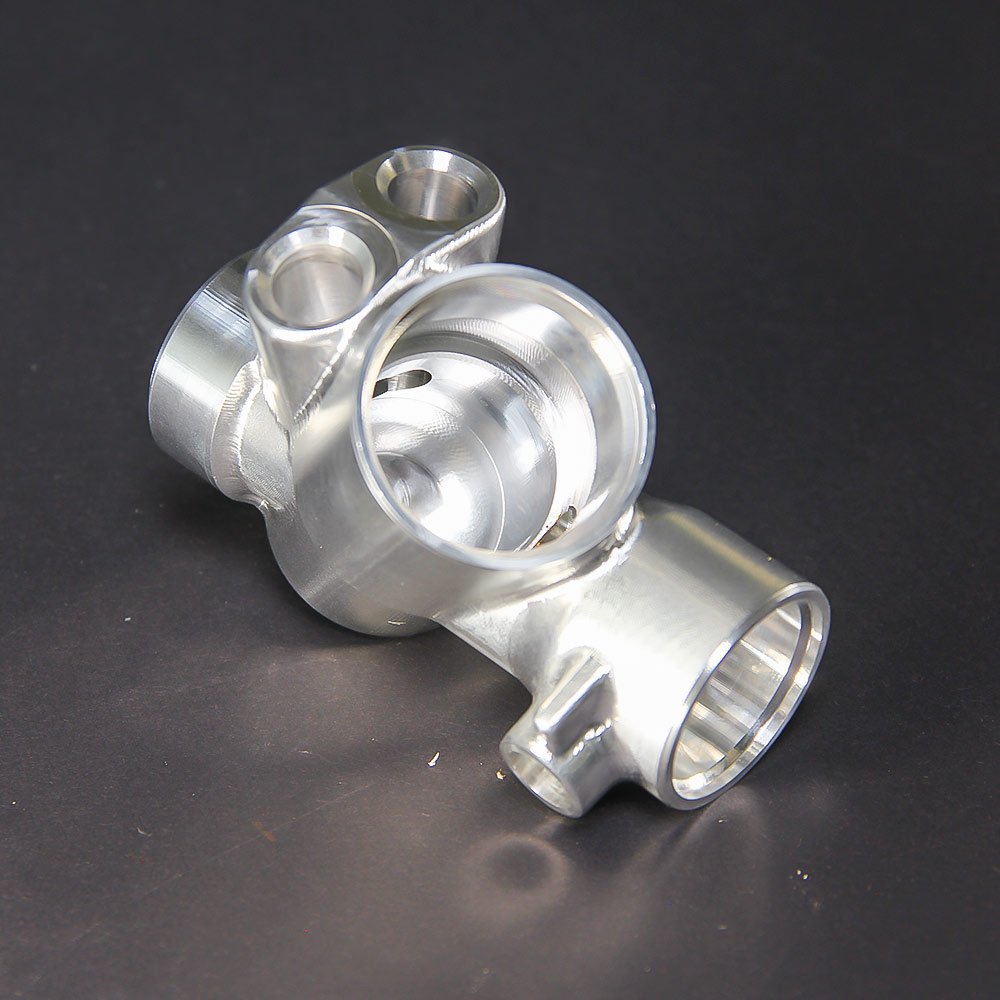
Representative geometry. Alloy and temper are confirmed from your specification.
Custom 7075 Parts with 6CNC
It is commonly associated with aerospace structures, high-load fixtures, performance equipment, robotics, precision mechanisms, and other components where strength-to-weight ratio matters. Compared with 6061, 7075 is stronger and harder, but it is also more expensive, less weldable, and generally less corrosion resistant.
6CNC provides precision CNC machining for custom 7075 components from prototypes to small batches, including multi-face milling, turned parts, tight-tolerance features, secondary operations, surface treatment, and dimensional inspection.
Best fit: high-strength custom parts that must stay light.
What makes 7075 different?
7075 is a zinc-rich, heat-treatable aluminum alloy with copper and magnesium additions. In the T6/T651 condition, it reaches mechanical properties far above common 6xxx-series aluminum.
Typical reference properties for 7075-T6 include:
| Property | Typical value |
|---|---|
| Density | 2.81 g/cm³ |
| Ultimate tensile strength | ~572 MPa |
| Yield strength | ~503 MPa |
| Elastic modulus | ~71.7 GPa |
| Brinell hardness | ~150 HB |
| Elongation | ~11% |
| Fatigue strength | ~159 MPa; 5 × 10⁸ completely reversed cycles, RR Moore test |
| General machinability | Good for a high-strength aluminum alloy |
These are typical reference values, not design allowables. Actual properties depend on product form, thickness, orientation, supplier, specification, and temper.
The practical implication is simple: if a part is failing a strength requirement in 6061 and geometry cannot be increased, 7075 may allow the designer to gain substantial strength without moving to steel or titanium.
Technical reference: ASM / MatWeb 7075 material data. Values depend on temper, product form, thickness and test conditions; use the purchased stock certification and governing specification for design. The listed fatigue test value is not a finished-part fatigue limit.
7075-T6 and 7075-T651
For machining projects, two common designations are 7075-T6 and 7075-T651.
7075-T6 has been solution heat treated and artificially aged.
7075-T651 adds stress relief, commonly by stretching. Plate in the T651 condition is frequently selected for precision-milled parts because stress relief can improve dimensional stability during heavy stock removal.
For large machined blocks, thin-wall aerospace-style components, precision fixtures, or parts that require substantial pocketing, the stock condition can be nearly as important as the alloy designation.
Machining 7075: where process control matters
7075 is not difficult to cut in the way some stainless steels or nickel alloys are, but its higher hardness and strength change the machining behavior compared with 6061.
It can support excellent surface finishes and crisp edges, yet the machining strategy still needs to manage:
- Tool load
- Tool wear
- Heat
- Deep-pocket reach
- Thin-wall deflection
- Residual stress
- Workholding pressure
- Burr formation at small features
- Surface requirements before finishing
The goal is not simply aggressive material removal. For a precision part, roughing productivity must be balanced against the amount of material and stability left for finishing.
A typical process may establish primary datums first, remove bulk material in controlled stages, leave finish stock on functional surfaces, and complete critical holes or bores after the part has reached a more stable state.
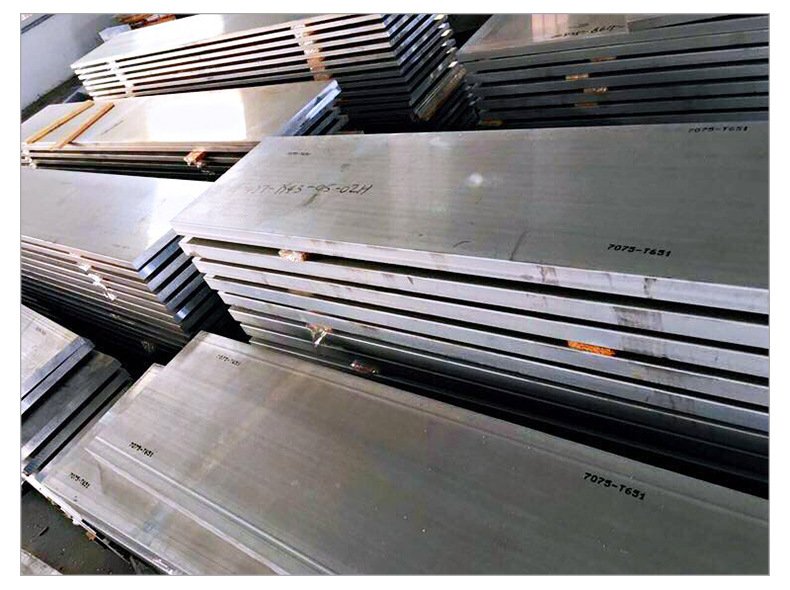
Material / component reference supplied for this page. Grade is verified during stock selection.
Where 7075 earns its cost
7075 is more expensive than 6061, so it makes the most sense when its additional performance is actually useful.
Lightweight high-load structures
Robotics arms, actuator structures, brackets, load-bearing links, UAV components, motorsport parts, and performance mechanisms may use 7075 to increase load capacity without the mass penalty of steel.
Precision fixtures and tooling
High-strength aluminum can be useful for inspection fixtures, machining fixtures, assembly tooling, and structural plates that need better resistance to deformation than softer aluminum grades.
Aerospace-style components
7075 has long been used for highly stressed structural parts, including aircraft fittings and mechanical components. Aerospace production requirements may also involve material certification, traceability, controlled specifications, and documented inspection.
Mechanisms with concentrated loads
Shaft-support structures, pivots, mounts, links, clamping components, and compact machine elements can benefit from the higher strength of 7075 when geometry is constrained.
7075 CNC milling
7075 is well suited to precision milling of complex parts from billet or plate.
Typical geometries include:
- Structural brackets
- Lightweight frames
- Ribbed components
- Actuator housings
- Camera and sensor mounts
- Aerospace fittings
- Robotic joints
- Precision fixture plates
- High-load mechanical supports
- Performance hardware
4-axis and 5-axis machining can reduce the number of setups for components with intersecting features on several faces, helping maintain feature-to-feature relationships and reducing manual repositioning.
For deep cavities or thin ribs, cutter reach and wall stiffness should be considered during design.
7075 CNC turning and mill-turn work
7075 also performs well in turning operations for:
- Hubs
- Sleeves
- Couplings
- Pulleys
- Rollers
- Bushings
- Precision spacers
- Threaded adapters
- Cylindrical housings
- Mechanical interface parts
Where parts combine concentric turned diameters with side holes, slots, flats, or bolt patterns, mill-turn machining can reduce setup transitions and simplify datum control.
Corrosion, stress-corrosion, and temper selection
High strength does not mean 7075 is superior in every environment.
Because of its alloy chemistry, 7075 generally has lower corrosion resistance than 6061. The T6 condition also deserves attention where stress-corrosion cracking is a design concern.
Alternative tempers such as T73/T7351 may be specified in applications where improved resistance to stress-corrosion cracking is more important than retaining the maximum strength associated with T6.
This is a design and material-specification decision. 6CNC should manufacture to the temper and specification stated on the drawing rather than silently substituting one condition for another.
Surface finishing 7075 aluminum parts
7075 can be anodized and otherwise finished, but its appearance may differ from 6061.
Anodizing
Type II anodizing can provide corrosion protection and color. Type III hard anodizing can increase surface hardness and wear resistance.
Because 7075 contains more alloying elements than 6061, anodized color may appear darker, grayer, or less uniform depending on batch, temper, surface preparation, and anodizing process.
If color matching is critical, define an approved sample or acceptable appearance range rather than relying only on a color name.
Chemical conversion coating
Can be used where corrosion protection and electrical conductivity requirements call for it.
Paint or other protective coatings
Useful when environmental protection or visual consistency is more important than exposing the aluminum surface.
Critical bores, threads, grounding surfaces, and precision fits should be identified for masking or dimensional allowance before coating.
7075 vs. 6061: a machining decision, not a marketing decision
| Requirement | 6061 | 7075 |
|---|---|---|
| General machinability | Very practical | Good |
| Strength | Moderate to high | Very high |
| Cost | Lower | Higher |
| Corrosion resistance | Better | Lower |
| Weldability | Good | Generally poor/not preferred |
| Anodizing | Very common | Common, color may be less uniform |
| Typical use | General precision parts | High-load lightweight parts |
Do not select 7075 simply because it sounds more premium. If a bracket is lightly loaded, 6061 may deliver the required performance at lower material cost and with easier finishing and joining.
Use 7075 when the strength-to-weight benefit solves a real engineering constraint.
Dimensional considerations for high-strength aluminum parts
The material may be strong, but the finished geometry can still move if the machining plan is poor.
For precision 7075 components, pay particular attention to:
Thin walls and ribs. High-strength aluminum can still deflect under tool pressure when cross-sections become slender.
Large asymmetric pockets. Removing most of the stock from one side can release stress and distort the part.
Flatness across large plates. Material condition, clamping, roughing sequence, and inspection state matter.
Tight bores after anodizing. Coating buildup can alter functional diameters.
Position tolerances across several setups. Multi-axis strategies may reduce accumulated setup error.
6CNC can review the part before manufacturing and identify features that may benefit from a different datum plan, machining sequence, or finishing allowance.
Typical 7075 aluminum parts for 6CNC
- Aerospace brackets and fittings
- UAV and drone structural parts
- Robotic arm components
- Lightweight joint housings
- High-load mounting plates
- Precision clamps
- Performance automotive components
- Optical equipment structures
- Test and inspection fixtures
- Motion-control components
- High-strength hubs
- Instrument frames
- Mechanical links
- Actuator components
- Small-batch specialty hardware
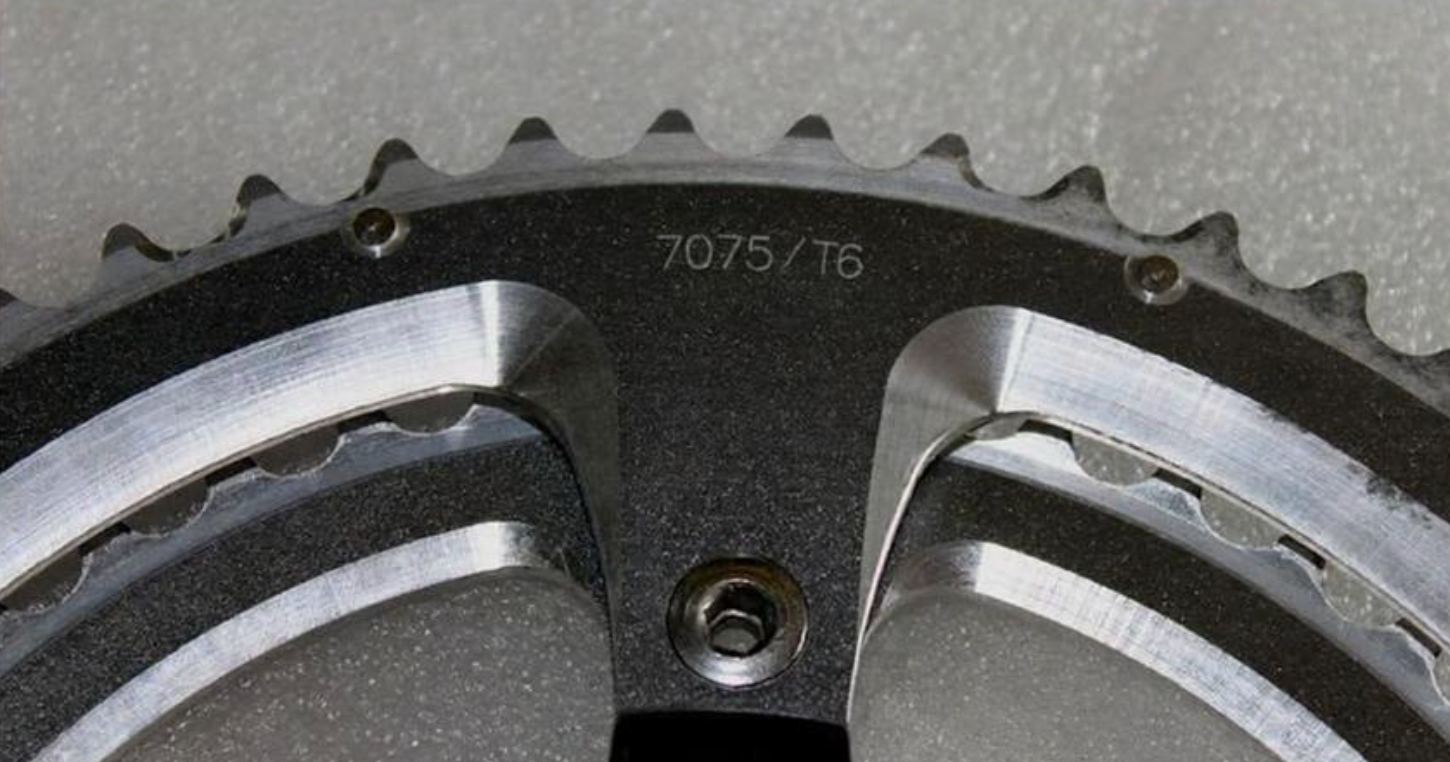
Material / component reference supplied for this page. Grade is verified during stock selection.
Inspection for critical 7075 components
High-strength parts are often chosen because the component is mechanically important. The inspection plan should reflect that.
Depending on the drawing, verification may include:
- CMM measurement
- Image measurement
- Bore and pin gauges
- Micrometers
- Calipers
- Surface roughness measurement
- Material verification
- First Article Inspection
- In-process checks on key dimensions
- Final dimensional records
Critical dimensions should be controlled during manufacturing where practical, with final inspection used for verification and documentation rather than as the first time drift is discovered.
Why 6CNC for 7075 machining?
6CNC specializes in custom CNC parts, including demanding prototypes and small-batch production where drawing interpretation, process planning, and inspection matter as much as machine capacity.
We support:
- CNC milling and turning
- Multi-axis machining
- Complex aluminum geometry
- Prototype-to-small-batch production
- Finishing coordination
- 9+ quality engineers
- 20+ types of inspection tools
- CMM and image measurement
- Material and quality documentation when specified
- Engineering feedback before production
Aluminum 7075 CNC Machining FAQs
Is 7075 aluminum easy to machine?
7075 has good machinability for a high-strength aluminum alloy and can produce excellent machined finishes. Its greater hardness and strength compared with 6061 require suitable tools and process parameters.
Is 7075 stronger than 6061?
Yes. In common T6 conditions, 7075 has substantially higher tensile and yield strength than 6061. That is the main reason it is selected for high-load lightweight parts.
Can 7075 be welded?
Welding is generally not recommended for 7075 when high structural performance is required. If welding is a core part of the design, another alloy such as 6061 may be more appropriate.
Can 7075 be anodized?
Yes. It can be Type II or hard anodized, but the color response can differ from 6061 and may be darker or less uniform.
What is 7075-T651 used for?
T651 plate is commonly used for machined structural components where high strength and improved stress relief are desirable.
Is 7075 suitable for aerospace CNC parts?
7075 is widely used in aerospace applications, but actual aerospace production must follow the specified material standard, traceability, quality documentation, inspection, and customer requirements.
From Drawing to Finished Part
01
Share your files
Send the CAD model, controlled drawing, quantity and required material condition.
02
Review the process
6CNC reviews stock, machining access, critical dimensions, finishing and inspection.
03
Machine and finish
Production follows the agreed drawing, material and surface requirements.
04
Inspect and deliver
Dimensional verification and requested documentation accompany the agreed delivery.
Compare Aluminum Alloys
Choose around loading, corrosion, forming, finishing and the specified stock condition.
Start your project with 6CNC
Let’s review your Aluminum 7075 part.
Send your design files for a project-specific material, machining and quotation review.
Include with your enquiry
- 3D CAD and controlled PDF drawing
- Alloy, temper and stock specification
- Quantity and delivery target
- Critical dimensions, datums and threads
- Surface finish and inspection requirements
Related Material Grade Guides
Compare high-strength aluminum with titanium and magnesium around loading, stiffness and weight.