
6CNC · Aluminum 5052
Aluminum 5052
CNC Machining
Corrosion-resistant aluminum for sheet-based and marine-oriented components
Aluminum 5052 is best known for corrosion resistance, formability, weldability, and reliable performance in sheet-metal applications.
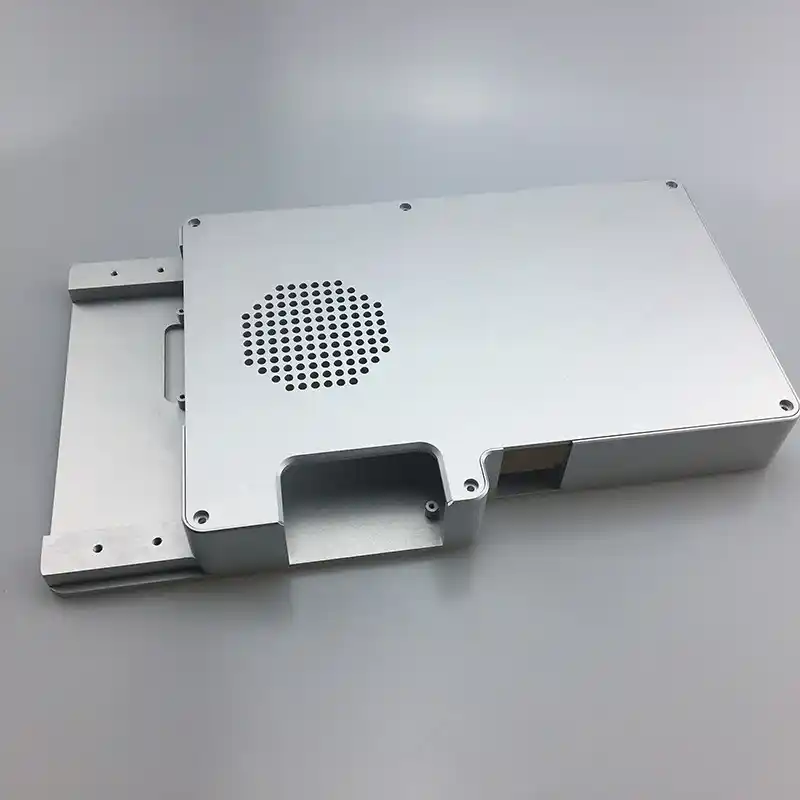
Representative geometry. Alloy and temper are confirmed from your specification.
Custom 5052 Parts with 6CNC
That makes a 5052 material page different from a 6061 or 7075 page.
5052 can be CNC machined, and there are real applications where machining 5052 is appropriate. But it is not usually the first alloy chosen for a fully machined billet component. Its greater value often appears when a part starts as sheet, plate, or formed stock and requires precision machined features afterward.
For engineers, the useful question is not simply “Can 5052 be machined?” It is:
Does 5052 give the part a corrosion, forming, welding, or environmental advantage that justifies choosing it over a more machining-oriented alloy?
Where 5052 makes sense
5052 is an aluminum-magnesium alloy that is not strengthened by heat treatment. H32 is a common strain-hardened and stabilized temper.
Typical advantages include:
- Very good corrosion resistance
- Strong performance in marine atmospheres
- Good weldability
- Good formability
- Moderate strength
- Good fatigue resistance for its class
- Useful sheet and plate availability
- Low density
- Compatibility with common protective finishes
Typical 5052-H32 reference properties include:
| Property | Typical value |
|---|---|
| Density | 2.68 g/cm³ |
| Ultimate tensile strength | ~228 MPa |
| Yield strength | ~193 MPa |
| Elastic modulus | ~70.3 GPa |
| Brinell hardness | ~60 HB |
| Elongation | ~12–18%, depending on product geometry |
| Heat treatable | No |
| Corrosion resistance | Very good |
Values are typical references and may vary with material thickness, product form, specification, and temper.
Technical reference: ASM / MatWeb 5052 material data. Values depend on temper, product form, thickness and test conditions; use the purchased stock certification and governing specification for design.
Is 5052-H32 good for CNC machining?
It can be machined, but the behavior is different from 6061-T6.
5052 is softer and more ductile. During machining, that can lead to:
- More tendency toward long or gummy chips
- Built-up edge on the cutting tool
- More burr formation
- Greater sensitivity to tool sharpness
- More edge smearing if cutting conditions are poor
- Deformation risk on thin sheet or formed parts
For this reason, sharp tools, suitable aluminum cutting geometry, effective chip evacuation, and stable workholding are important.
On a thin 5052 component, workholding may be a bigger challenge than material removal. Vacuum fixtures, soft jaws, support tooling, sacrificial backing, or custom fixtures may be required to keep the part flat and avoid clamp marks.
The strongest use case: formed parts with machined features
5052 is frequently a better engineering choice when a component combines sheet-metal characteristics with precision local features.
Examples:
- Bent electronics enclosure with precision connector openings
- Marine panel with tapped inserts and machined mounting datums
- Welded tank component with post-machined sealing face
- Sheet bracket with precision bores
- Formed cover with machined counterbores
- Instrument chassis requiring aligned mounting features
- Welded assembly requiring final datum machining
In these cases, using a machining-friendly billet alloy may actually be the wrong manufacturing route because it ignores the part’s forming and welding requirements.
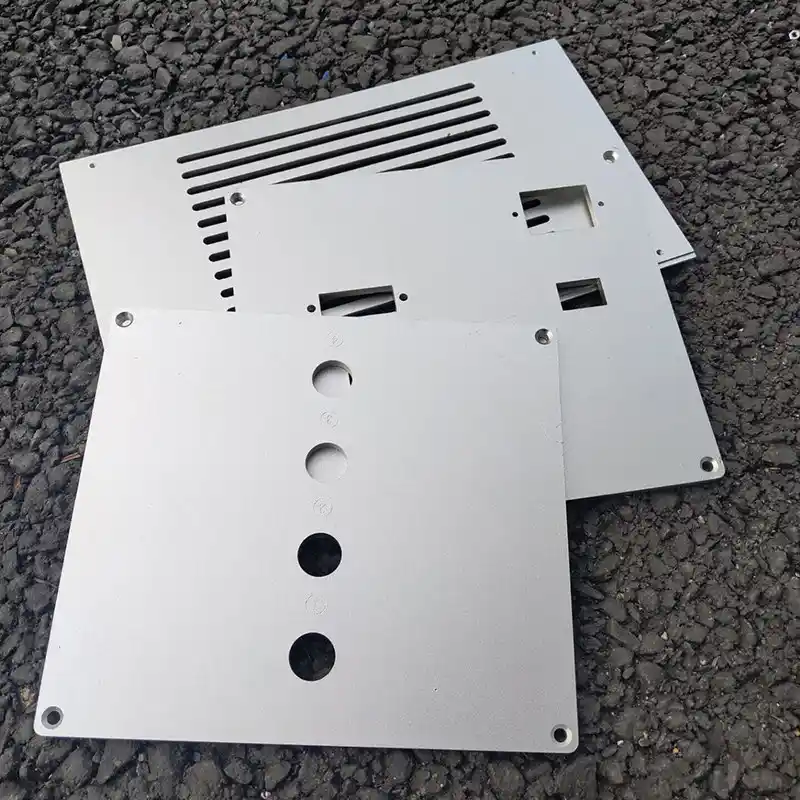
Material / component reference supplied for this page. Grade is verified during stock selection.
CNC operations commonly used on 5052
Depending on stock thickness and geometry, machining may include:
Drilling and tapping
Used for assembly holes, threaded mounting features, hardware locations, and interface points.
CNC milling
Useful for precision profiles, pockets, datum surfaces, slots, connector cutouts, and local thickness control.
Counterboring and countersinking
Common in enclosure, panel, and equipment applications.
Facing
Can establish a controlled mounting or sealing plane on thicker stock or a fabricated assembly.
Post-weld machining
Machining after welding may restore alignment, flatness, bore accuracy, or sealing geometry.
Marine aluminum machining: what 5052 offers
5052 is often described as a marine aluminum because it performs well in saltwater and marine atmospheres compared with many higher-copper aluminum alloys.
Typical uses may include:
- Marine equipment panels
- Instrument housings
- Covers
- Electrical enclosures
- Brackets
- Vessel interior hardware
- Coastal equipment parts
- Corrosion-resistant fabricated assemblies
However, “marine grade” should not be treated as a blanket guarantee. Final performance depends on the exact environment, finish, galvanic contact with other metals, crevices, fasteners, drainage, and maintenance.
For severe structural marine applications, other 5xxx alloys may also be considered depending on strength and welding requirements.
5052 vs. 6061
These alloys are often compared because both are common and corrosion resistant, but they are optimized for different manufacturing routes.
Choose 5052 when:
- The part must be bent or formed
- Weldability is important
- Sheet fabrication is the primary process
- Marine/corrosive exposure is important
- Moderate strength is sufficient
- Machining is secondary to fabrication
Choose 6061 when:
- Most geometry will be removed by CNC machining
- The part starts from billet, bar, or thick plate
- Higher strength is useful
- Rigid machined housings or fixtures are required
- Machining productivity is a priority
- Heat treatment and wide billet availability are useful
A common mistake is selecting 5052 because of corrosion resistance even though the design is a deep-pocket milled billet. In that case, 6061 plus the right finish may be a more practical machining solution.
Typical 5052 parts
6CNC can support precision work for 5052 components such as:
- Electrical enclosures
- Chassis and covers
- Marine instrument parts
- Control panels
- Equipment brackets
- Mounting plates
- Sheet-based housings
- Welded aluminum assemblies
- Battery and power-electronics components
- Lighting components
- Appliance hardware
- Transportation equipment
- Fuel or fluid-related fabricated parts where specified
- Prototype sheet assemblies
- Corrosion-resistant equipment panels
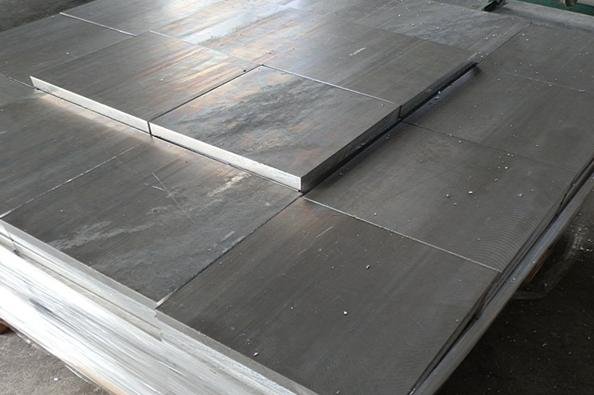
Material / component reference supplied for this page. Grade is verified during stock selection.
Design rules for machining 5052 successfully
Give thin material enough support
Thin sheet can lift, bow, chatter, or distort when clamped. The fixture design needs to support the cutting area.
Avoid tiny unsupported tabs
Small flexible features can bend instead of cutting cleanly.
Expect burr management
5052’s ductility makes edge condition important. Deburring requirements should be defined, especially around connector openings, slots, and manual handling edges.
Consider machining after forming
A hole pattern that must align to a mating assembly may be more reliable if critical machining occurs after bending or welding.
Account for weld distortion
If a 5052 assembly is welded, dimensional movement may occur. Critical faces and bores can be intentionally left for post-weld machining.
Surface finishing options
5052 already offers good corrosion resistance, but surface treatment may add appearance, environmental protection, or system compatibility.
Common options include:
- Anodizing
- Chemical conversion coating
- Powder coating
- Wet painting
- Brushed finish
- Bead blasting, where appropriate
- As-fabricated or as-machined finish
For cosmetic panels, specify the visible side, acceptable grain direction, handling requirements, and finish expectations.
For electrical enclosures, identify surfaces that must remain electrically conductive or free of coating.
Small-batch 5052 production at 6CNC
5052 projects often cross the boundary between fabrication and machining. This is where a supplier needs to understand the final functional geometry rather than treating every operation independently.
A typical project may involve:
- Material preparation
- Cutting or forming
- Welding or hardware insertion, if required
- CNC machining of critical features
- Deburring and cleaning
- Surface treatment
- Final dimensional inspection
For prototype and small-batch production, this integrated route can avoid redesigning a sheet-based product simply to fit a machining-only process.
Inspection of 5052 components
Inspection strategy depends heavily on the part format.
For a rigid machined block, conventional CMM measurement may be straightforward.
For a thin formed part, measurement technique must consider natural part flexibility, free-state condition, fixture condition, and drawing requirements. Clamping a flexible panel flat during inspection can produce a different result from its actual free-state geometry.
6CNC can use CMM, image measurement, gauges, micrometers, calipers, and other tools according to the feature and inspection condition.
Why 6CNC for 5052 aluminum parts?
6CNC supports custom parts from prototype to small-batch production, including projects where machining must integrate with downstream or upstream manufacturing operations.
Relevant capabilities include:
- CNC milling and turning
- Precision drilling and tapping
- Machining of plates and fabricated parts
- Post-weld machining
- Surface finishing coordination
- Dimensional inspection
- 9+ quality engineers
- 20+ inspection tools
- Material and quality documentation when specified
Aluminum 5052 CNC Machining FAQs
Can Aluminum 5052 be CNC machined?
Yes. It can be milled, drilled, tapped, bored, and otherwise machined. It is softer and more ductile than 6061-T6, so sharp tools and burr control are important.
Is 5052-H32 good for machined billet parts?
It can be used, but 6061 is often more practical for parts produced mainly by material removal. 5052 is especially attractive when corrosion resistance, forming, or welding drives the design.
Why is 5052 used in marine applications?
It offers very good corrosion resistance, including good performance in marine atmospheres, while remaining formable and weldable.
Can 5052 be heat treated?
No. 5052 is a non-heat-treatable alloy. Its strength is developed primarily through strain hardening.
Is 5052 stronger than 6061?
Typical 6061-T6 is stronger than 5052-H32. The best alloy depends on whether strength, formability, weldability, corrosion resistance, or machining efficiency is the main requirement.
Can 5052 be anodized?
Yes. Anodizing is possible, although alloy composition and surface condition can influence the final appearance.
From Drawing to Finished Part
01
Share your files
Send the CAD model, controlled drawing, quantity and required material condition.
02
Review the process
6CNC reviews stock, machining access, critical dimensions, finishing and inspection.
03
Machine and finish
Production follows the agreed drawing, material and surface requirements.
04
Inspect and deliver
Dimensional verification and requested documentation accompany the agreed delivery.
Compare Aluminum Alloys
Choose around loading, corrosion, forming, finishing and the specified stock condition.
Start your project with 6CNC
Let’s review your Aluminum 5052 part.
Send your design files for a project-specific material, machining and quotation review.
Include with your enquiry
- 3D CAD and controlled PDF drawing
- Alloy, temper and stock specification
- Quantity and delivery target
- Critical dimensions, datums and threads
- Surface finish and inspection requirements