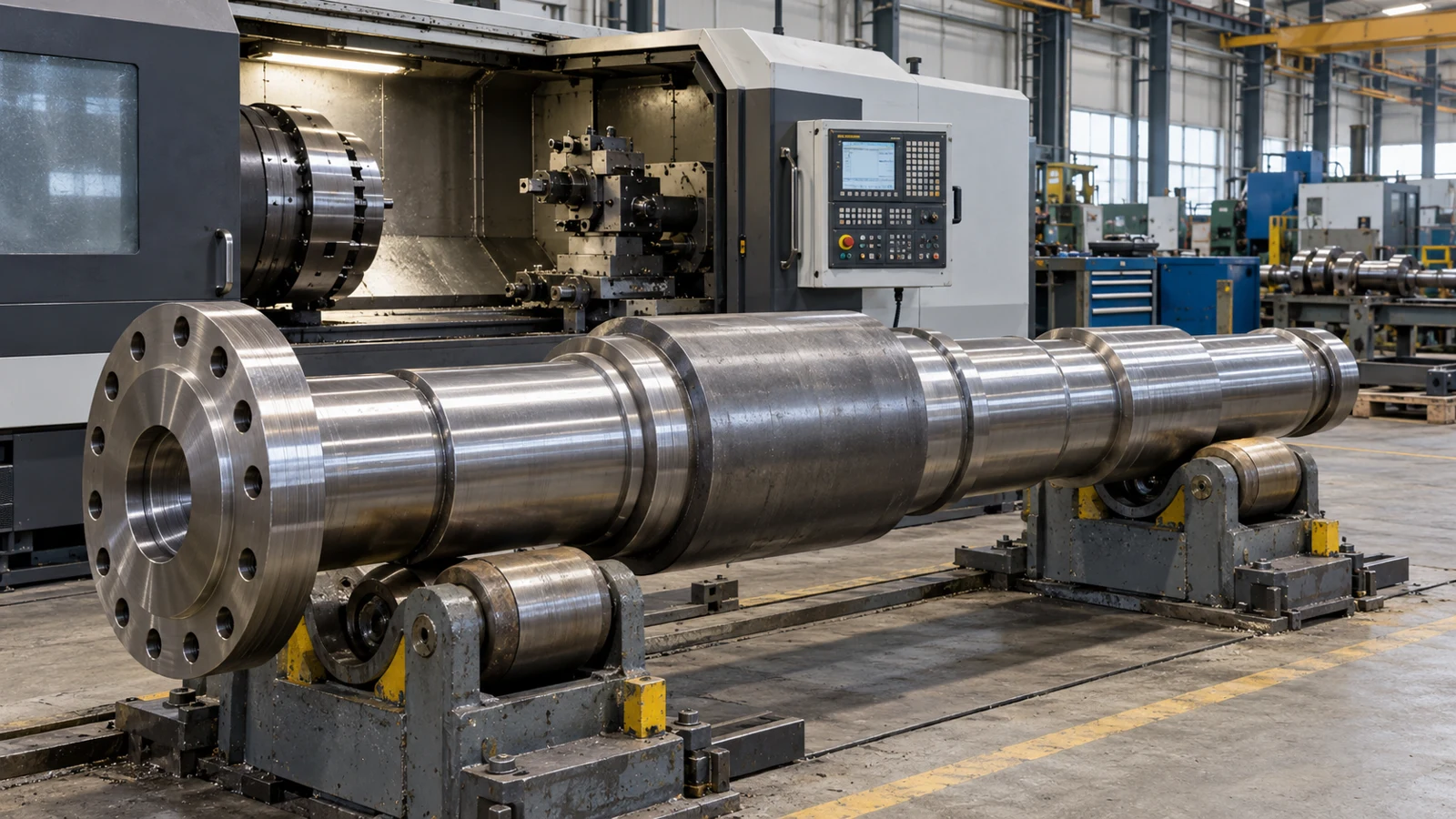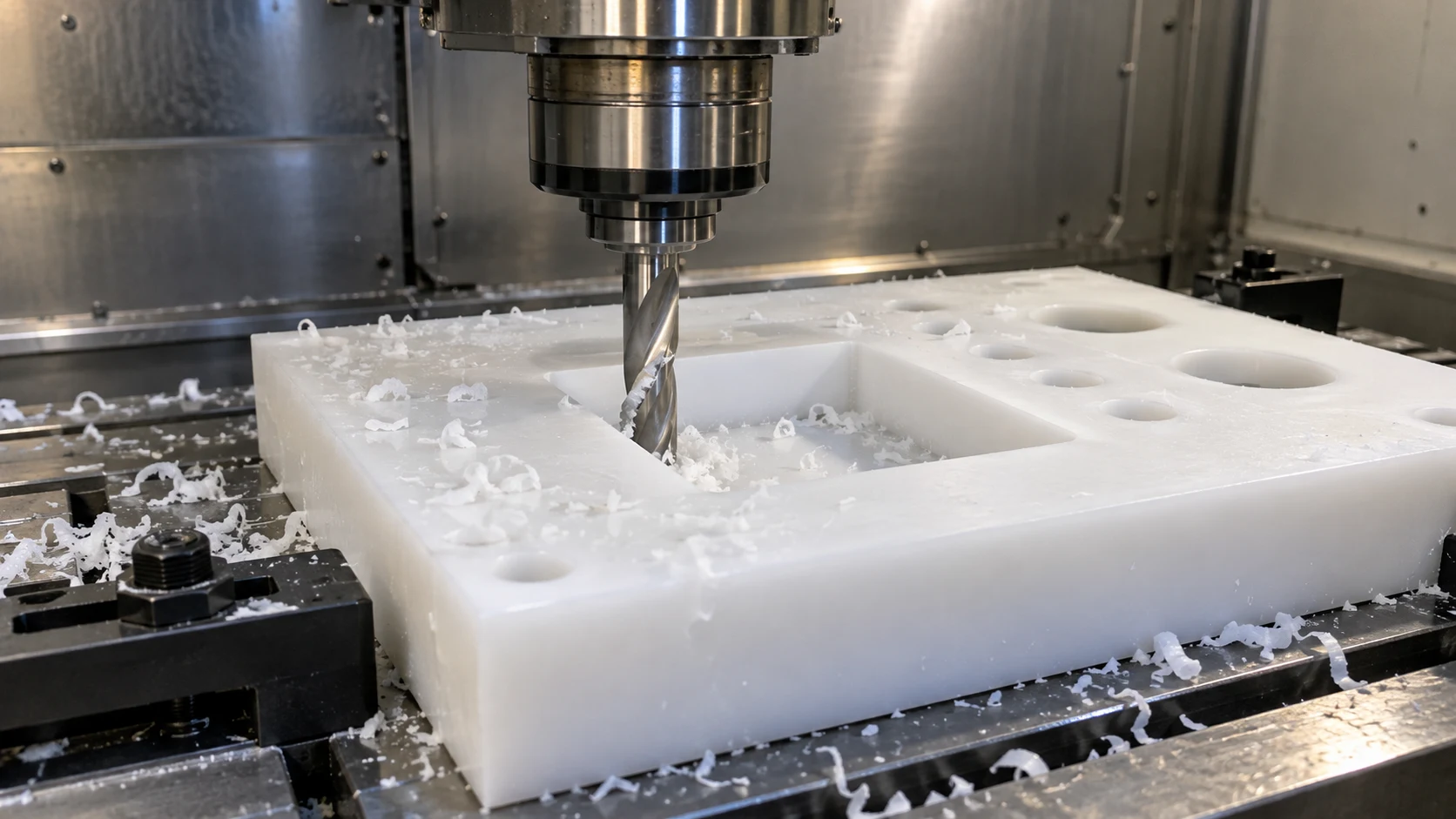
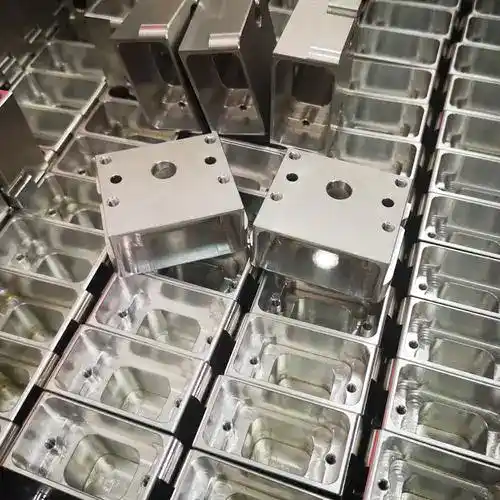
CNC machining cost can range from a modest amount for a simple repeat component to thousands of dollars for a complex prototype, large part, difficult material, or documentation-heavy order. The price is not determined by machine time alone. Programming, setup, material, tooling, inspection, finishing, packaging, quantity, lead time, and manufacturing risk all contribute.
This guide explains how machine shops build a quotation, gives planning ranges for CNC machining cost per hour, provides a worked calculation, and shows which design decisions usually offer the greatest savings.
How Much Does CNC Machining Cost?
For early budgeting, buyers commonly encounter ranges like these:
| Project type | Illustrative price range | Why it varies |
|---|---|---|
| Simple small prototype | $50–$300 per part | Minimum order, programming, setup, stock size, and basic inspection dominate |
| Moderately complex prototype | $150–$1,000+ per part | Multiple setups, longer cycle, tighter tolerances, and finishing |
| Complex five-axis or exotic-material prototype | $500–$5,000+ per part | Advanced equipment, tooling, long cycle, difficult inspection, and scrap risk |
| Low-volume batch | Often tens to hundreds of dollars per part | Fixed setup cost is spread across the batch |
| Production quantity | Can fall below prototype price substantially | Dedicated fixtures, optimized cycles, material purchasing, and automation |
These ranges overlap because geometry matters more than the bounding-box size alone. A small part with deep micro-features, thin walls, multiple tight positional tolerances, and full inspection can cost more than a much larger but simple turned component.
Quick CNC Machining Cost Formula
A practical buyer-side estimate is:
Total job cost = material + programming + setup + machine time + tooling + secondary operations + inspection + packaging/logistics + overhead and risk
For a batch:
Estimated unit cost = [fixed costs + (variable cost per part × quantity)] ÷ quantity
Where:
- Fixed costs include quotation engineering, CAM programming, setup sheets, fixtures, initial tool preparation, and first-article work.
- Variable costs include stock, machine cycle, operator handling, tool consumption, finishing, inspection, marking, and packaging for each part.
This explains why ordering ten pieces does not normally cost ten times the price of one. Fixed work is amortized across more units. For a deeper treatment of that effect, see our low-volume CNC cost breakdown.
CNC Machine Cost per Hour
The CNC machine cost per hour—often called the machine rate, shop rate, or burdened rate—is what a supplier assigns to productive time on a particular machine or work center. It may include equipment depreciation or financing, operator labor, facility costs, maintenance, power, software, coolant, ordinary tooling, management overhead, utilization, and margin.
| Machine or process | Illustrative global shop-rate range | Typical use |
|---|---|---|
| 3-axis CNC mill | $40–$120 per hour | Prismatic parts, plates, brackets, housings |
| CNC turning center | $40–$110 per hour | Shafts, bushings, sleeves, round parts |
| 4-axis machining | $60–$150 per hour | Multiple sides and rotary features with fewer setups |
| 5-axis machining | $90–$250+ per hour | Complex surfaces, difficult access, setup consolidation |
| Swiss-type turning | $80–$200+ per hour | Small complex turned parts and production quantities |
| Wire or sinker EDM | $60–$180+ per hour | Hardened materials, sharp internal details, special geometries |
| Large-format or heavy machining | $100–$300+ per hour | Large travel, table-load, crane, and tooling requirements |
Rates in lower-cost manufacturing regions can be below rates in North America or Western Europe, while advanced, large, highly automated, certified, or capacity-constrained equipment can exceed these ranges.
Why the higher hourly rate can produce the cheaper part
A five-axis machine may cost more per hour but complete a component in one setup instead of three. A modern turning center may combine turning, drilling, milling, and part transfer. Better workholding, probing, pallet systems, tool monitoring, and CAM can reduce setup, handling, cycle time, and scrap. Compare total process cost, not just the hourly number.
CNC Machining Cost Calculation: Worked Example
Consider a batch of 25 small 6061-T6 aluminum brackets. Assume the following illustrative inputs:
| Cost item | Assumption | Estimated cost |
|---|---|---|
| Material | Stock, cutting, and allowance | $100 |
| Programming | 1.5 hours × $75 | $112.50 |
| Setup and first article | 2 hours × $75 | $150 |
| Machine cycle | 8 minutes × 25 × $75/hour | $250 |
| Tooling allowance | End mills, drills, inserts | $50 |
| Inspection | First article and batch sampling | $75 |
| Deburring and packaging | Batch allowance | $50 |
| Estimated job total | Before freight and tax | $787.50 |
| Estimated unit cost | $787.50 ÷ 25 | $31.50 |
If the buyer orders only one part, much of the programming and setup remains. The prototype might therefore cost several hundred dollars rather than $31.50. If the quantity increases, the shop may invest in better fixtures and cycle optimization, reducing the unit cost further—but material, cutting time, finishing, and inspection never become zero.
The Biggest CNC Machining Cost Drivers
1. Material price and stock form
The quotation includes more than the finished part’s weight. The shop purchases a bar, plate, tube, forging, casting, or cut blank large enough for workholding and cleanup. Material certification, minimum mill quantity, cutting loss, remnant risk, freight, and price volatility also matter.
Common aluminum and mild-steel grades are often economical. Stainless steel, tool steel, titanium, nickel alloys, engineering plastics, and specialty copper alloys can increase both raw-material and machining cost.
2. Machinability
Materials differ in cutting speed, heat generation, work hardening, chip control, tool wear, distortion, and coolant needs. Titanium or Inconel may require slower parameters and more tooling than aluminum, multiplying machine hours even when the part geometry is unchanged.
3. Geometry complexity
Deep pockets, thin walls, small internal radii, undercuts, long-reach features, compound angles, inaccessible holes, and numerous tool changes extend programming and cycle time. Complex geometry may require custom workholding or five-axis machining.
4. Number of setups
Every new orientation requires handling, locating, proving, and often inspection. Setup consolidation is one of the strongest opportunities for cost reduction. A slightly higher-rate machine can be economical if it reduces fixtures and datum transfers.
5. Tolerances and GD&T
Tight tolerances may require stable machines, controlled temperature, special tools, slower finishing passes, in-process measurement, grinding, lapping, or additional inspection. Apply tight tolerances only to features whose function requires them.
6. Surface finish
A fine machined finish requires additional passes and careful tool condition. Bead blasting, anodizing, plating, polishing, painting, passivation, heat treatment, and coating introduce handling, minimum charges, masking, inspection, and transportation between processes.
7. Inspection and documentation
A commercial inspection with sampling costs less than a full dimensional report, CMM program, first-article package, material traceability, process certificates, capability study, PPAP, or regulated-industry documentation. Specify only the records the project needs—but specify them before quoting.
8. Quantity
Low quantities carry a high share of fixed programming and setup. Medium quantities benefit from amortization. At higher volume, dedicated fixtures, bar feeders, palletization, multi-part workholding, and tool-life optimization may reduce cycle cost.
9. Lead time
Rush work may require rescheduling machines, overtime, expedited material, priority finishing, and faster freight. A realistic schedule lets the supplier choose a more efficient production window.
10. Supplier location and business model
Labor, rent, equipment utilization, taxes, compliance, energy, logistics, tariffs, and commercial overhead vary by region. Digital platforms, managed networks, domestic specialists, and direct overseas factories provide different combinations of convenience, engineering support, capacity, cost, and control.
Material Impact on the Cost of CNC
| Material | Relative machining cost tendency | Main reasons |
|---|---|---|
| 6061 aluminum | Low | Good machinability, availability, cutting speed, and finish response |
| 7075 aluminum | Low to medium | Good machining but higher stock cost and application controls |
| Mild steel | Low to medium | Affordable stock; lower cutting speed than aluminum |
| Stainless steel | Medium to high | Tool wear, heat, work hardening, and slower parameters |
| Tool steel | Medium to high | Heat treatment, hardness, grinding, and distortion control |
| Titanium | High | Expensive stock, heat concentration, slow cutting, and tooling risk |
| Nickel alloys | High to very high | Severe tool wear, heat, low productivity, and high material cost |
| Brass | Low to medium | Good machinability but material price can be significant |
| Engineering plastics | Low to high | Stock cost, stability, burrs, thermal expansion, and special handling vary widely |
Prototype, Low-Volume, and Production Pricing
Prototype: 1–5 parts
Programming, setup, tool preparation, and first-article inspection dominate. The supplier also carries more uncertainty because the part has not been produced before.
Low volume: approximately 10–100 parts
Fixed cost is distributed, but the order may not justify fully dedicated automation. This range often offers a strong balance for design validation, bridge production, service parts, and specialized equipment.
Production: hundreds or thousands
The shop may use dedicated fixtures, optimized stock, automation, in-process gauging, and statistical controls. Unit cost declines, but tooling, capacity reservation, quality planning, and supply continuity become more important.
Quantity bands are not universal. One thousand tiny Swiss-turned pins and one thousand large five-axis titanium housings represent completely different production models.
How to Reduce CNC Machining Cost
- Relax non-critical tolerances. Use tight limits only where fit, sealing, alignment, motion, or performance demands them.
- Increase internal corner radii. Larger standard tools are stiffer, faster, and longer lasting than tiny cutters.
- Reduce deep narrow pockets. Lower depth-to-width ratios improve access, tool life, chip evacuation, and cycle time.
- Avoid unnecessary thin walls. Thin sections deflect and may require light passes, special fixtures, or stress-relief steps.
- Design for fewer setups. Align features, improve tool access, and consider whether a fourth or fifth axis can reduce datum transfers.
- Use standard materials and stock sizes. Readily available plate, bar, tube, and common grades reduce purchasing and preparation cost.
- Standardize holes and threads. Prefer common drill, reamer, tap, insert, and fastener sizes.
- Specify finish only where needed. Separate cosmetic, sealing, bearing, and non-critical surfaces.
- Combine compatible parts into a batch. Shared material, tools, fixtures, and finishing minimums may reduce total cost.
- Provide clean CAD and drawings. Resolve conflicts between model and print, identify critical features, and avoid RFQ uncertainty.
- Offer realistic lead time. More scheduling flexibility can reduce rush premiums and material-expediting costs.
- Ask for DFM alternatives. The supplier may propose a different stock form, tool access, tolerance, fixture, or process sequence.
How to Compare CNC Quotes
Two prices are comparable only when their scope is the same. Check:
- Drawing revision and CAD version
- Material grade, temper, product form, and certification
- Quantity and whether setup or tooling is a one-time charge
- General and feature-specific tolerances
- Surface finish and cosmetic acceptance standard
- Heat treatment, coating, masking, and special processes
- Inspection level and documentation
- Hardware, assembly, cleaning, and marking
- Packaging and corrosion protection
- Incoterm, freight, tariff, tax, and delivery date
- Prototype versus production-intent process
- Validity period and assumptions
A quote that omits inspection, finishing, packaging, or freight may look cheaper without delivering the same requirement.
Buyer-Side CNC Machining Cost Calculation Template
| Input | Calculation |
|---|---|
| Material | Stock volume or weight × purchase rate + cutting/waste allowance |
| Programming | CAM and planning hours × engineering rate |
| Setup | Number of setups × setup hours × shop rate |
| Cycle | Cycle minutes ÷ 60 × machine rate × quantity |
| Handling | Load/unload and between-operation labor × quantity |
| Tooling | Special tools + expected consumption or amortization |
| Secondary processes | Heat treatment, grinding, coating, deburring, marking, assembly |
| Quality | FAI, inspection time, CMM programming, certificates, testing |
| Logistics | Packaging, freight, insurance, duty, tariff, and tax |
| Risk and margin | Supplier allowance for uncertainty, scrap, schedule, and profit |
This template helps explain a quote but cannot replace process planning. Cycle time requires knowledge of tools, feeds, speeds, workholding, material removal, machine acceleration, probing, tool changes, and operator handling.
Frequently Asked Questions
How much does CNC machining cost per hour?
Broad planning ranges are roughly $40–$120 per hour for standard three-axis milling or turning and $90–$250 or more for advanced five-axis, large-format, or specialized equipment. Region, machine, certification, capacity, and what the rate includes can move the number outside these ranges.
How much does a single CNC-machined part cost?
A simple small prototype may cost around $50–$300, while a moderately complex part may cost several hundred dollars. Complex, large, tight-tolerance, exotic-material, or documentation-heavy prototypes can cost thousands. A drawing is required for a meaningful answer.
Why is the first CNC part so expensive?
The first part carries programming, process planning, setup, workholding, tool preparation, proving, and first-article inspection. Those costs are spread across more units in a batch.
Is CNC turning cheaper than milling?
Turning is often very efficient for rotational parts because the geometry matches the process, but it is not automatically cheaper. A part requiring driven tools, sub-spindle work, multiple transfers, tight runout, or grinding may still be costly. Choose the process that matches the geometry.
Does five-axis machining always cost more?
The hourly rate is normally higher, but total part cost can be lower when five-axis machining eliminates fixtures, setups, handling, and alignment errors. Compare complete cycle and setup cost.
How accurate is an online CNC cost calculator?
It can provide an early estimate for standard parts, but it may not fully capture workholding, thin-wall distortion, inspection access, tool reach, cosmetic standards, special processes, or supplier capacity. Treat it as a budget, then obtain a drawing-based quotation.
How can I get the lowest CNC machining price?
Design for manufacturability, use standard material and tooling, limit tight tolerances and premium finishes, consolidate setups, provide complete files, allow reasonable lead time, and request several comparable quotes. Optimize total landed cost and quality risk rather than selecting the lowest hourly rate alone.
Get a CNC Machining Cost Estimate from 6CNC
For a part-specific quotation, send 6CNC a controlled 2D drawing, 3D model, material, quantity, tolerance, finish, inspection requirements, packaging, delivery destination, and target date. If some requirements are flexible, identify them so the engineering team can suggest lower-cost alternatives without changing the part’s function.