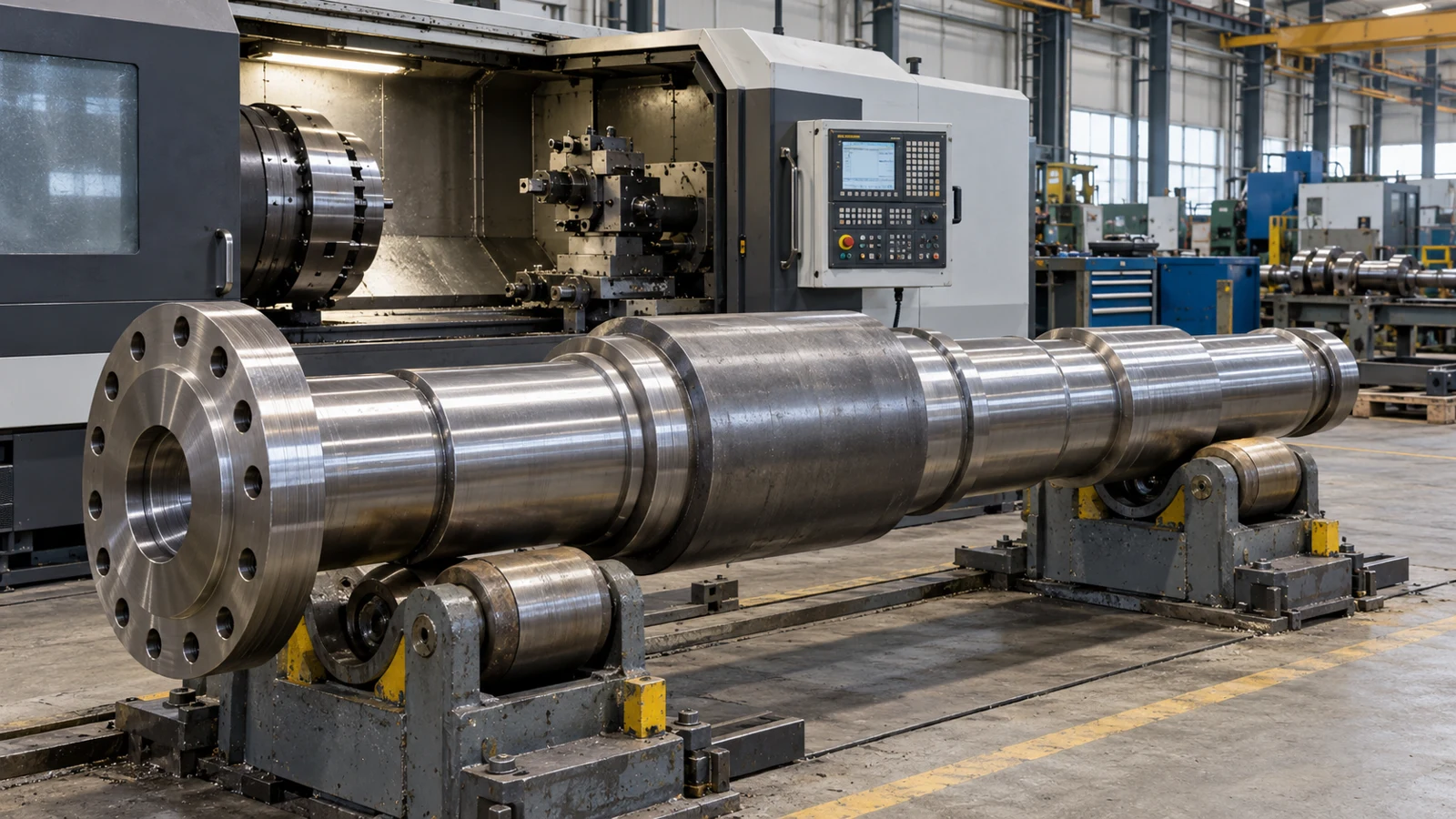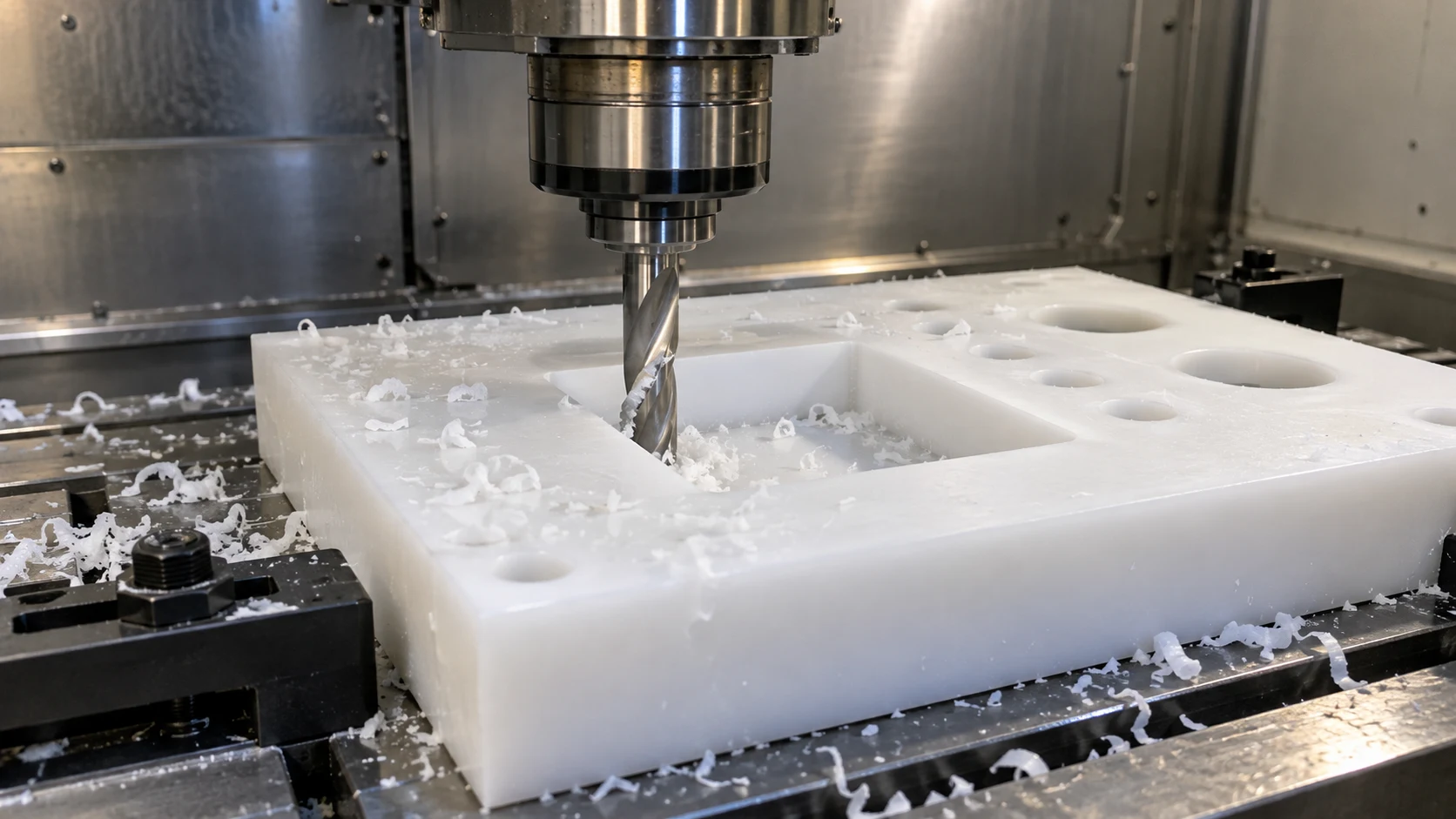
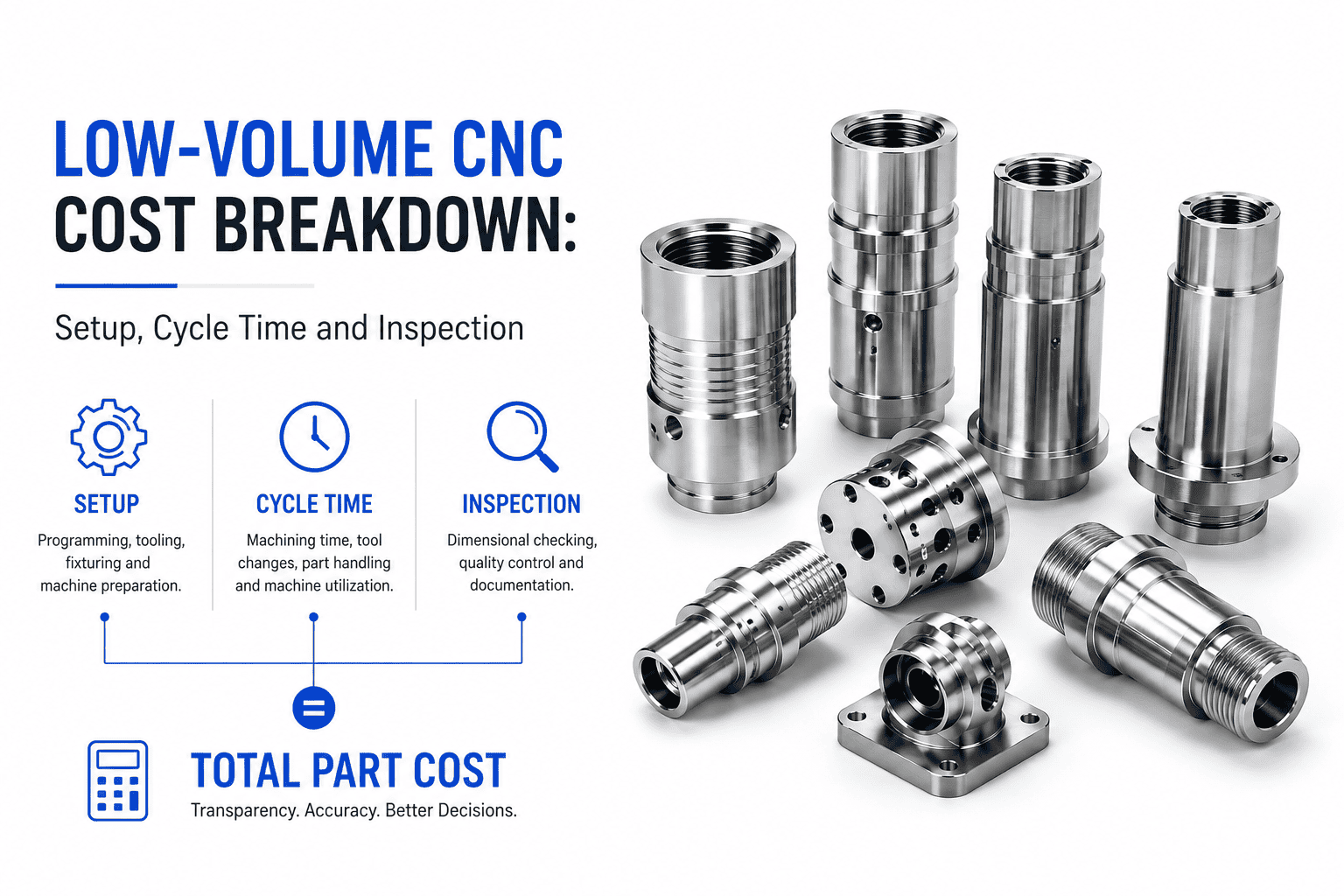
Low-volume CNC cost is not simply machine time multiplied by the number of parts. A quotation normally combines fixed work—such as programming, setup and first-piece validation—with variable work such as material, cycle time, deburring, finishing and per-part inspection.
That is why one part can have a high unit price, ten parts often cost much less per unit, and the curve eventually flattens. Setup and initial inspection are spread over more pieces, but every part still consumes stock, machining capacity, tools, handling and quality-control effort.
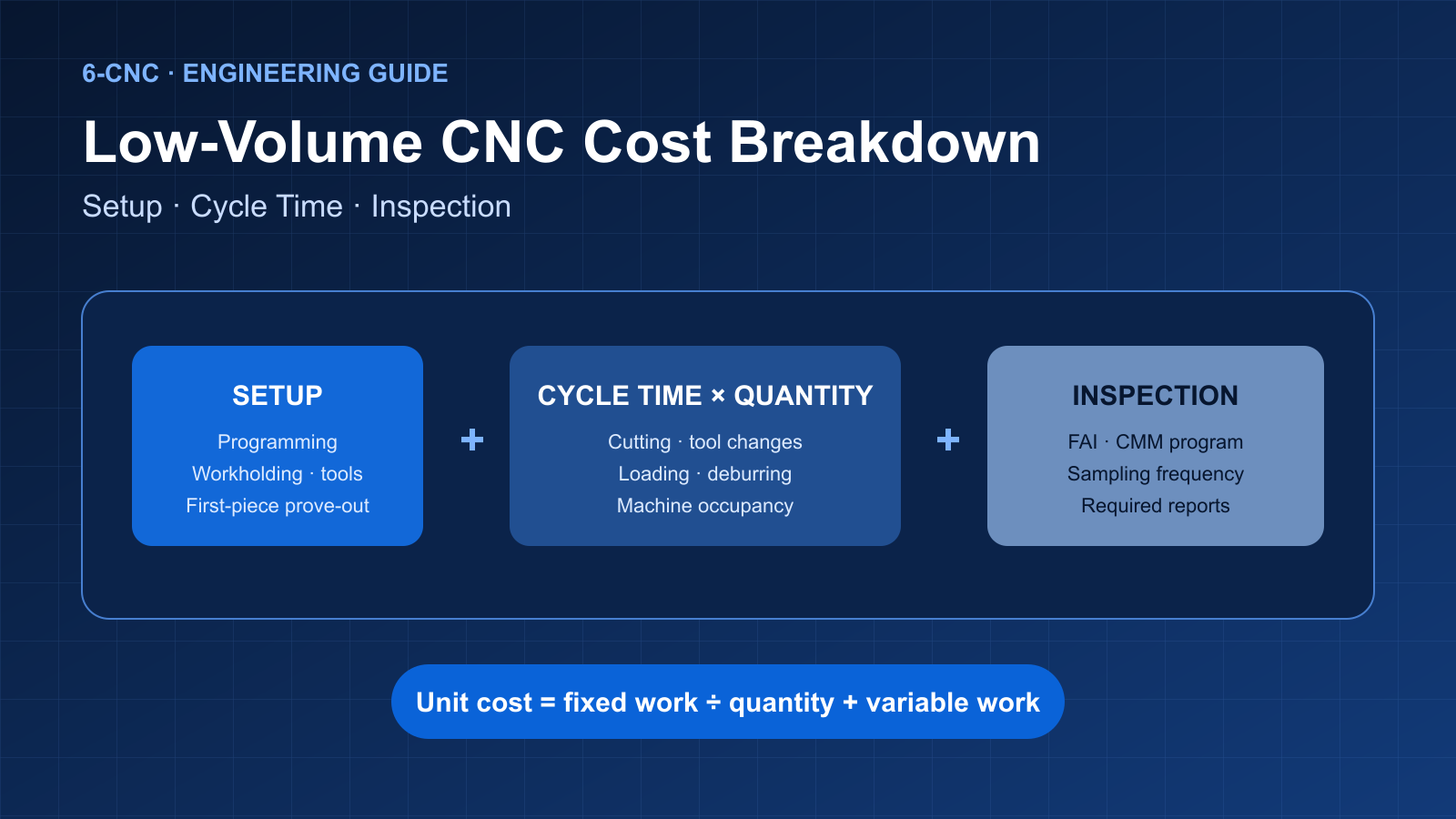
Low-Volume CNC Cost at a Glance
1. Setup Cost: Work Required Before the Batch Runs
Setup begins before the machine removes material. The supplier reviews the model and drawing, selects a process, plans datum transfer, creates or verifies the CAM program, chooses tools, prepares workholding and decides how the part will be measured. The machine then needs tools loaded, offsets established and the first piece proven out.
A part requiring one simple vise setup carries less fixed work than a component requiring soft jaws, multiple orientations, a custom fixture and an intermediate inspection. Five pieces do not require five independent programs, so setup is spread across the batch. But a revised model, changed material or altered datum scheme can trigger some of that work again.
- Number of operations and part orientations.
- Standard vise, collet or chuck versus custom workholding.
- Tool count, special cutters and probing requirements.
- Difficulty locating the part from functional drawing datums.
- First-piece adjustment needed to control tight or interacting features.
2. Cycle Time: The Cost That Repeats
Cycle time is the recurring machine and handling time attached to every piece. It includes cutting, rapid moves, tool changes, probing, loading and unloading, chip clearing, in-process checks and any manual deburring performed within the machining flow.
Material-removal volume matters, but cycle time is not determined by part weight alone. Deep pockets, small internal radii, long-reach tools, fine surface finishes and difficult materials can require slower cuts or multiple passes. Tight tolerances may add spring passes, temperature stabilization or repeated measurement. A five-minute feature repeated on 100 pieces adds far more cost than several minutes of one-time programming.
3. Inspection Cost: More Than Measuring a Diameter
Inspection cost depends on what must be checked, how it can be measured and what evidence must be returned. A first article inspection can require ballooning the drawing, selecting methods, programming a CMM or optical system and documenting results. That preparation is largely fixed. Production sampling, 100% checks and final reports add recurring work.
The measurement method must fit the feature and tolerance. An accessible outside diameter may be checked quickly with a micrometer. Position, profile or compound datum relationships may require a CMM program and controlled setup. Internal burrs, deep bores and cosmetic requirements may need magnification, borescopes or approved visual standards.
- Lowest ambiguity: identify critical features and required records directly on the RFQ.
- Higher cost: 100% inspection of many features, complex GD&T, inaccessible geometry or custom gauges.
- Avoidable rework: requesting a report after production when it was not included in the original scope.
Why Quantity Changes Unit Cost
Suppose a job requires one program, two setups and an initial inspection plan. Those tasks are needed whether the batch contains one accepted part or fifty. Dividing that fixed effort by more parts lowers the fixed contribution per unit. The saving is steep at first, then smaller as quantity grows because material, machining time and per-part handling remain.
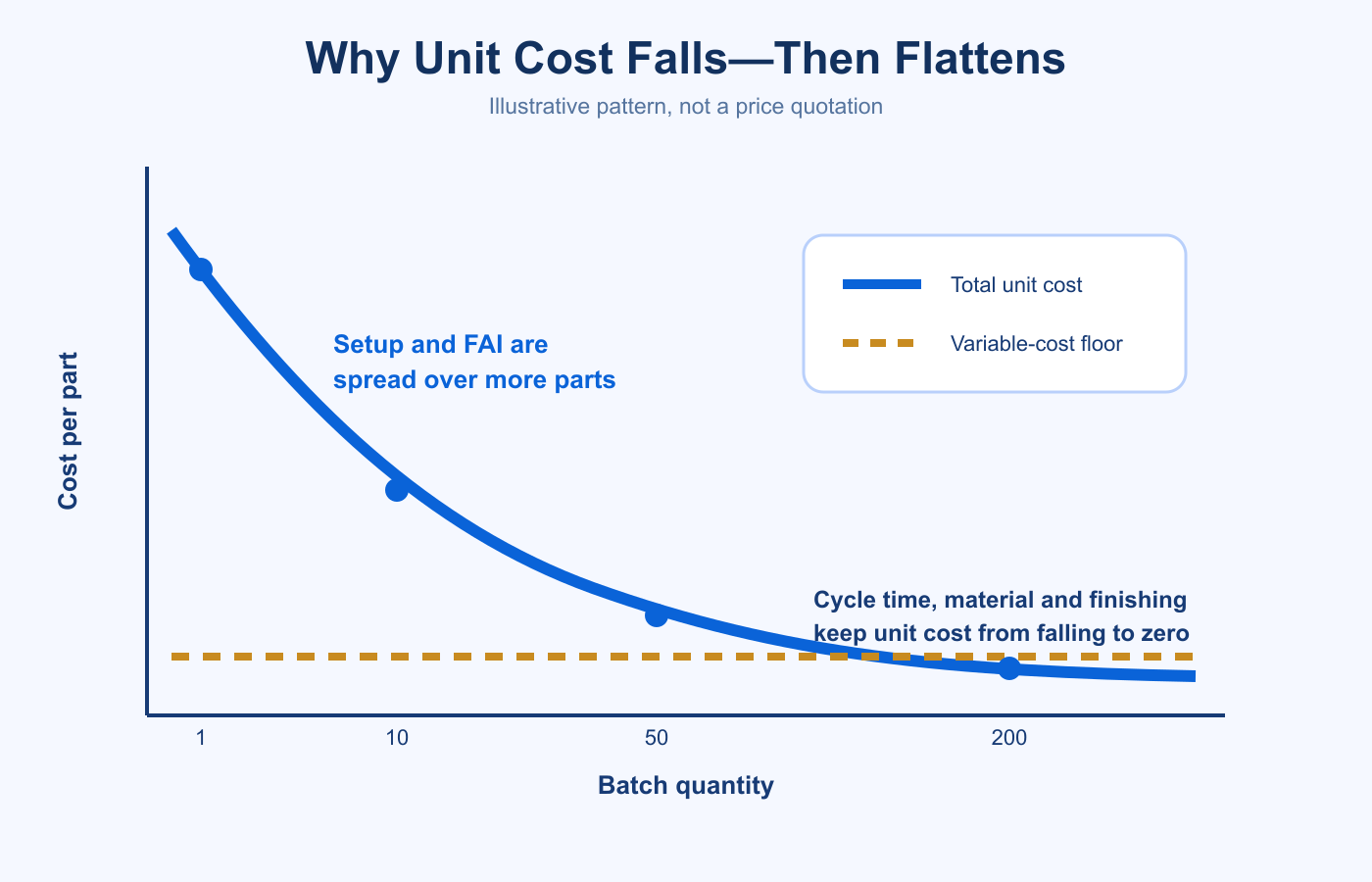
Illustrative Cost Example
Consider a hypothetical aluminum housing with two setups. The fixed work includes process review, CAM programming, workholding preparation and first-article inspection. Variable work includes stock, machine cycle, deburring and per-part checks.
This example intentionally uses no dollar values. Applying generic internet shop rates to a real part can be misleading because machine class, region, geometry, inspection and finishing scope vary. A meaningful quotation requires the controlled files and project requirements.
Hidden Cost Drivers in Low-Volume Work
How to Reduce Cost Without Weakening the Part
- Apply tight tolerances only to features that control fit, function or assembly.
- Use standard radii, threads, hole sizes and accessible tool paths where function permits.
- Provide expected release quantities so the supplier can compare flexible and production-oriented setups.
- Identify required inspection reports before quotation instead of adding them after machining.
- Freeze the revision before programming or clearly separate prototype learning from production intent.
- Ask whether one larger batch or scheduled releases from one controlled lot would reduce repeated setup.
Common Mistake: Comparing Only the Unit Price
Example: Quote A has a lower unit price but excludes first-article documentation, finishing certificates and protective packaging. Quote B includes them.
Why the comparison fails: the suppliers are not pricing the same scope. Normalize material, revision, quantity, acceptance criteria, documentation, finishing, packaging and delivery terms before choosing.
RFQ Checklist for a Defensible Quote
- Solid 3D model and controlled 2D drawing with matching revision.
- Material grade, condition or temper, and certification requirements.
- Prototype quantity, first release, repeat quantities and expected annual demand.
- Critical tolerances, datums, GD&T, threads and surface roughness.
- Finish specification, thickness, color, masking and pre-/post-finish dimensions.
- FAI, CMM report, sampling, material cert, CoC or traceability requirements.
- Packaging, destination and required arrival date.
Frequently Asked Questions
Why is one prototype expensive? One part must carry nearly all programming, setup and first-piece validation. Additional parts reuse much of that fixed work.
Will doubling quantity halve the unit price? Usually not. Only the fixed contribution is divided further; material, cycle time, finishing and recurring inspection remain.
Does tighter tolerance always increase cost? It increases cost when it changes the process, tooling, stability, inspection or yield risk. A tolerance already supported by the selected process may have little effect, which is why feature-specific review matters.
How can I compare quotes fairly? Send every supplier the same revision, material, quantity breaks, finish, inspection scope, packaging and delivery terms, then compare exclusions and assumptions—not only the headline unit price.
Request a Low-Volume Cost Review
6CNC provides low-volume CNC machining services for prototypes and repeat batches. Send your CAD model, drawing, material, quantity breaks, finish and inspection requirements so we can identify which costs are fixed, which repeat per part and where DFM changes could improve the total process.
The most useful low-volume quote makes the cost structure visible. Once setup, cycle time and inspection are separated, engineering and purchasing teams can change quantity, tolerances, documentation or geometry without guessing which decision actually moves the price.