China’s automotive supply chain includes everything from global Tier-1 groups producing millions of safety-critical components to agile CNC shops making a handful of prototype housings. That range is useful, but it also makes a simple “best supplier” ranking misleading.
This guide compares 10 auto parts manufacturers in China by what matters to a buyer: product focus, production model, engineering support, volume fit, and likely project type. Some companies below are best for OEM-scale programs; others are better for prototypes, replacement parts, motorsport, fixtures, or low-to-medium-volume custom components.
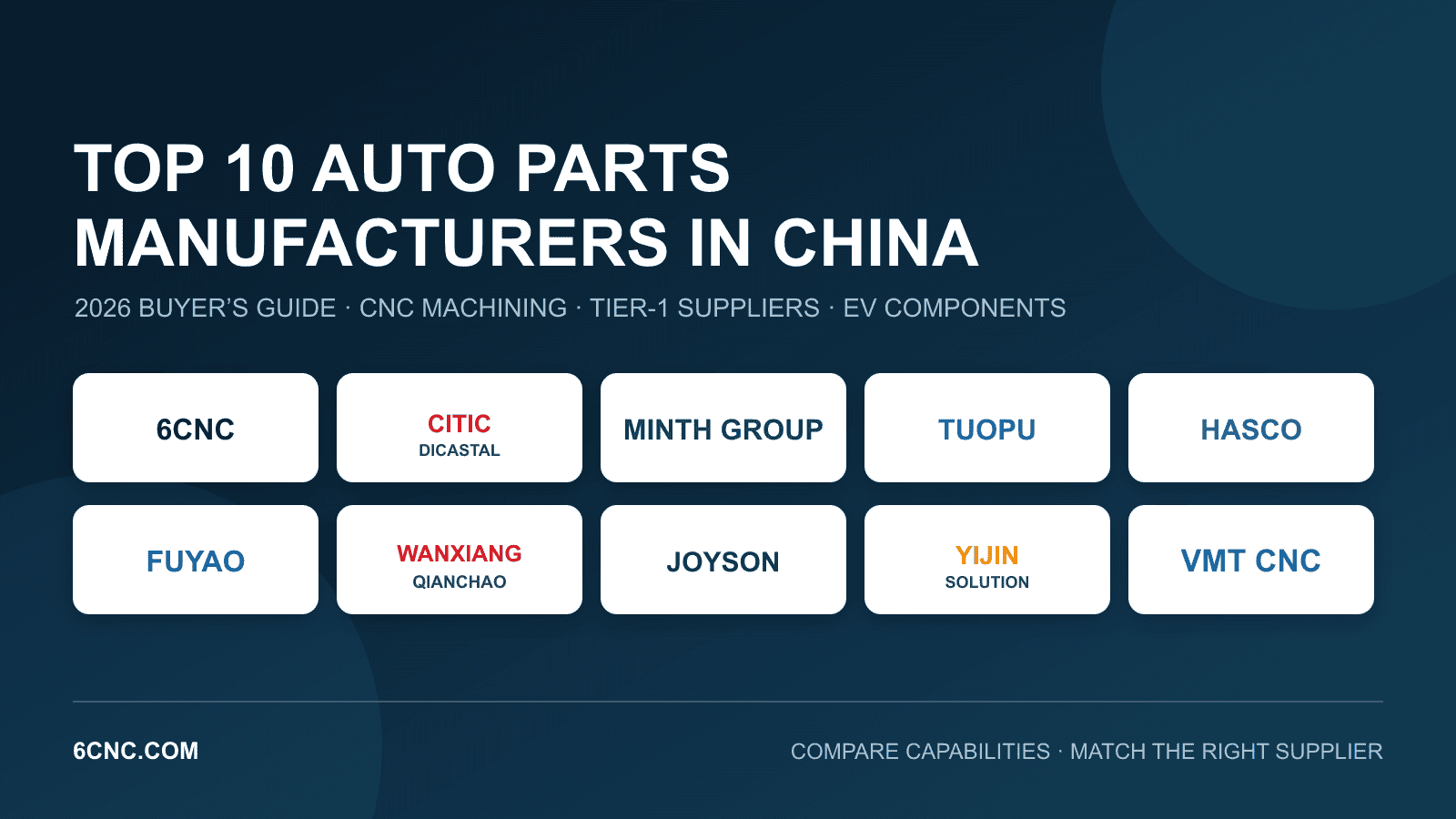
Top China Auto Parts Manufacturers at a Glance
| Manufacturer | Main location | Core capability | Best suited to |
|---|---|---|---|
| 6CNC | China | Custom CNC machining and rapid production | Prototypes and low-to-medium-volume precision parts |
| CITIC Dicastal | Qinhuangdao, Hebei | Aluminum wheels and lightweight castings | Large OEM wheel, chassis, powertrain, and body programs |
| Minth Group | China; global network | Exterior trim, structural parts, and battery enclosures | Global vehicle platforms and EV body systems |
| Ningbo Tuopu Group | Ningbo, Zhejiang | Chassis, vibration control, thermal management, and interiors | System-level OEM and EV programs |
| HASCO | Shanghai | Interior, exterior, chassis, electronics, and powertrain systems | Integrated Tier-1 sourcing |
| Fuyao Glass | Fuqing, Fujian | Automotive safety glass and related systems | OEM glazing programs |
| Wanxiang Qianchao | Hangzhou, Zhejiang | Driveline, bearings, hubs, brakes, and chassis parts | Volume mechanical component sourcing |
| Ningbo Joyson Electronic | Ningbo, Zhejiang | Automotive electronics and safety systems | Electronics, controls, and occupant safety |
| Yijin Solution | Shenzhen, Guangdong | CNC machining and custom manufacturing | Custom metal parts, prototypes, and production runs |
| VMT | China | Precision CNC machining and automotive prototyping | Tight-tolerance custom parts and engineering support |
Locations and capabilities are summarized from company websites and public corporate information. Buyers should verify current facilities, certifications, capacity, and approved processes directly during supplier qualification.
How We Selected These Manufacturers
We did not treat revenue, factory size, or search popularity as a substitute for supplier fit. The shortlist considers five practical dimensions:
- Automotive relevance: a clear focus on vehicle components, systems, or manufacturing services used by automotive customers.
- Manufacturing depth: evidence of in-house processes, engineering support, testing, or scalable production.
- Buyer coverage: a mix of large Tier-1 suppliers and accessible custom manufacturers.
- Specialization: distinct strengths such as aluminum wheels, glass, electronics, chassis systems, or CNC machining.
- Public verifiability: enough company information for buyers to conduct further due diligence.
The order is editorial, not a universal performance score. A global Tier-1 may be the strongest candidate for a multi-year vehicle platform but unsuitable for 20 prototype parts. A smaller China CNC auto parts manufacturer may be the right choice for those 20 parts but not for a safety-system program requiring OEM nomination and years of validation.
1. 6CNC — Best for Custom CNC Auto Parts and Responsive Project Support
6CNC focuses on custom, drawing-based manufacturing rather than off-the-shelf replacement components. Its role is most relevant when a buyer needs machined prototypes, test parts, bridge production, tooling components, or low-to-medium-volume metal parts made to a CAD model and specification.
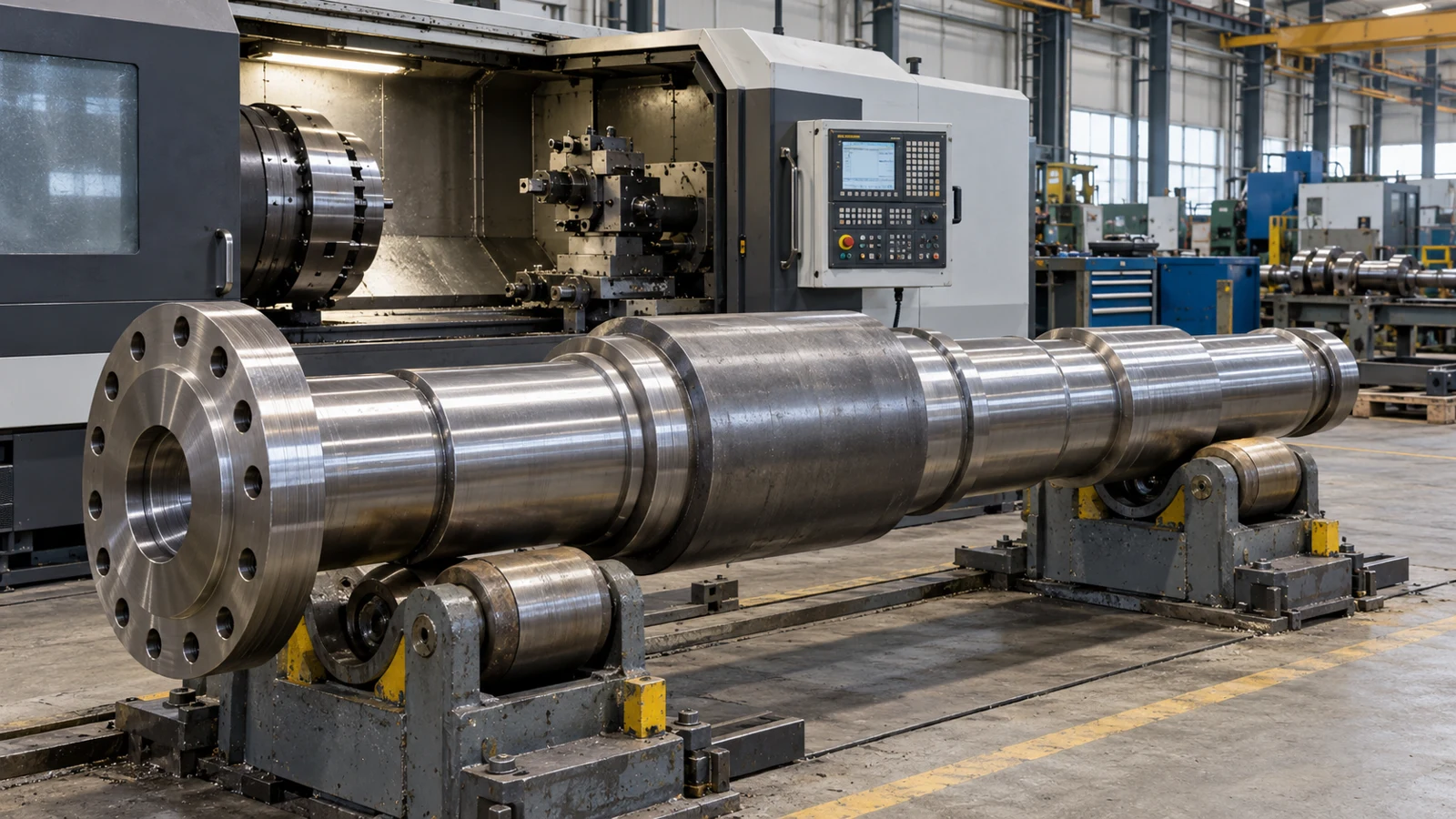
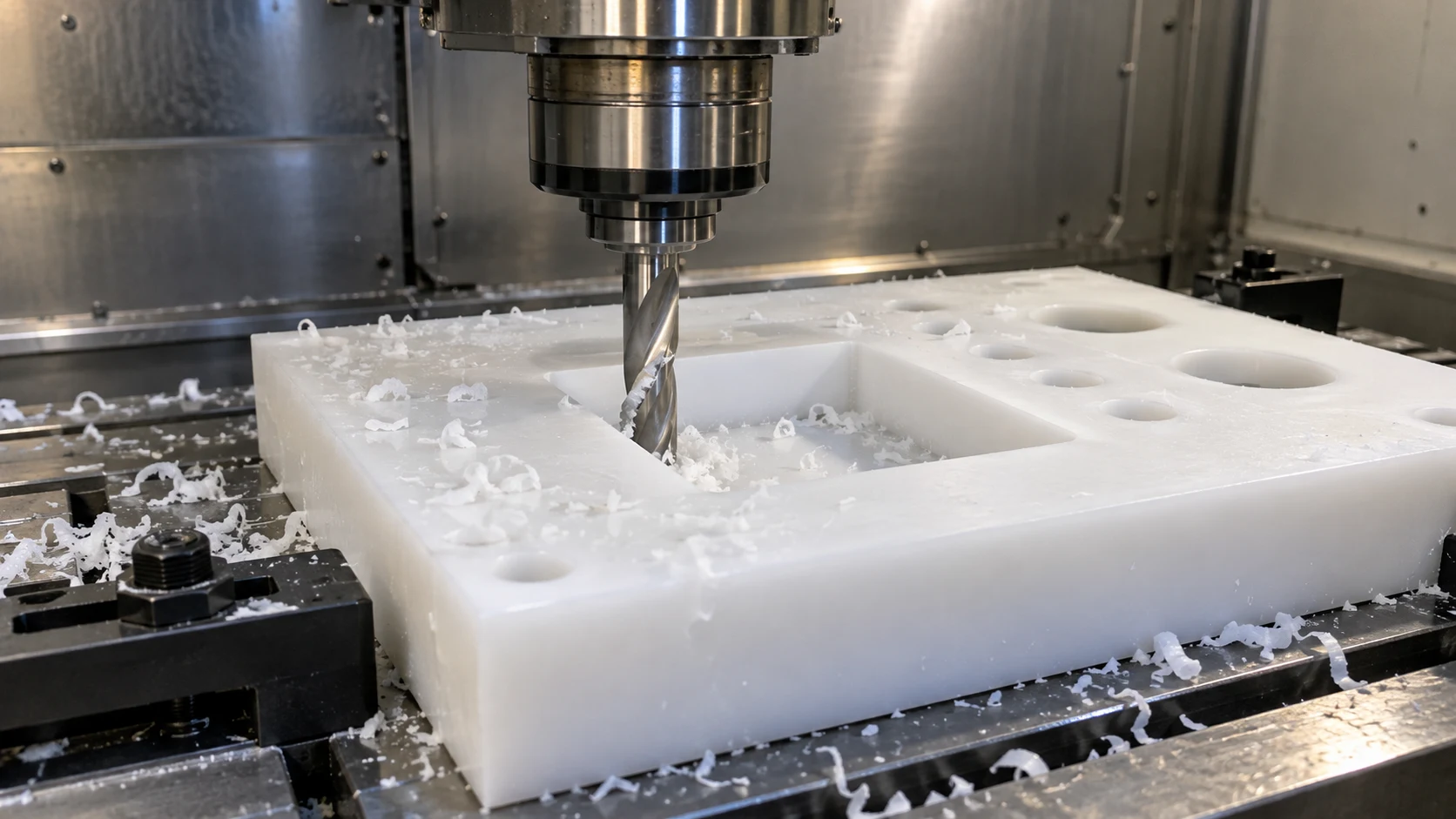
Typical projects may include aluminum housings, brackets, shafts, bushings, sensor mounts, transmission-related components, battery and thermal-management hardware, and motorsport parts. CNC milling and turning are especially useful before dedicated tooling is justified or when designs are still changing.
Best for: engineering teams that value DFM feedback, flexible quantities, and one point of contact for custom parts.
Ask before ordering: request process-specific tolerance confirmation, material traceability, inspection documentation, surface-finish standards, and any automotive certification required by your program.
2. CITIC Dicastal — Best for Aluminum Wheels and Lightweight Cast Components
CITIC Dicastal was established in 1988 and describes itself as a leading global supplier of aluminum wheels and aluminum chassis components. Its processes include low-pressure die casting, casting, spinning, and forging, supported by product development and testing capabilities.
This is a large-scale supplier for vehicle manufacturers, not a typical job shop. It is most relevant to buyers developing aluminum wheels or lightweight castings for chassis, powertrain, and body systems with long program horizons and significant production volumes.
Best for: OEM-scale aluminum wheel and lightweight component programs.
Watch for: high qualification requirements, long sourcing cycles, tooling investment, and production-volume expectations.
3. Minth Group — Best for Exterior, Structural, and EV Battery-Enclosure Programs
Minth Group specializes in exterior and structural automotive parts. Its public materials highlight metal and trim products, plastic products, aluminum products, battery housings, tooling, gauges, and fixtures, supported by manufacturing and R&D operations across multiple regions.
Minth is particularly relevant to electrification and lightweighting projects. Buyers evaluating battery enclosures, body structural components, decorative trim, roof racks, and intelligent exterior systems may find its global footprint valuable for platform localization.
Best for: global OEM programs that need exterior systems, structural aluminum parts, or battery enclosures.
Watch for: clarify which plant owns the process, tooling, quality documentation, and export route for your program.
4. Ningbo Tuopu Group — Best for Chassis and Multi-System EV Programs
Ningbo Tuopu Group, founded in 1983 and headquartered in Ningbo, develops and manufactures power chassis, interior and exterior, and intelligent-driving control systems. Its product areas include vibration control, lightweight chassis, thermal management, air suspension, braking and steering solutions, and actuators.
Tuopu is a strong candidate when procurement is organized around modules or systems rather than individual machined parts. Its broad portfolio can help vehicle makers reduce interface risk across related components.
Best for: new-energy vehicle platforms and high-volume chassis, thermal-management, and actuation programs.
Watch for: system suppliers usually need early engineering involvement and a formal OEM sourcing process.
5. HASCO — Best for Integrated Tier-1 Automotive Systems
HUAYU Automotive Systems, commonly known as HASCO, is a Shanghai-based automotive component group with activities spanning interiors and exteriors, chassis, electronics, powertrain, thermal systems, and new-energy drive systems.
Its breadth makes it more appropriate for OEMs and major integrators seeking system-level development and industrialization than for small custom orders. Buyers should identify the relevant business unit or subsidiary before beginning qualification because capabilities and commercial contacts vary across the group.
Best for: vehicle manufacturers seeking a broad Tier-1 partner with integrated R&D and production resources.
Watch for: confirm the exact legal entity, plant, product responsibility, and quality scope on the quotation.
6. Fuyao Glass — Best for Automotive Glazing
Fuyao Glass is one of China’s best-known specialized automotive suppliers. It focuses on automotive safety glass and related glazing solutions rather than general mechanical parts.
Its specialization matters because automotive glass programs combine optics, coating, lamination, shaping, sealing, sensor integration, and vehicle-level validation. Buyers should consider Fuyao for series-production glazing rather than using a general fabricator for a safety-critical windshield or integrated smart-glass application.
Best for: OEM windshield, side-glass, roof-glass, and integrated glazing programs.
Watch for: confirm homologation, optical requirements, coatings, antenna or sensor integration, and regional production support.
7. Wanxiang Qianchao — Best for Driveline, Hub, Bearing, Brake, and Chassis Parts
Wanxiang Qianchao is associated with a broad range of mechanical automotive components, including universal joints, bearings, wheel hubs, driveline parts, braking products, and chassis-related assemblies.
For buyers who want a volume supplier with deep experience in rotating and load-bearing components, the group is more relevant than a general CNC factory. These parts often require tightly controlled forging, heat treatment, machining, assembly, fatigue testing, and traceability.
Best for: established, higher-volume mechanical component programs.
Watch for: validate the responsible plant, sub-tier controls, heat-treatment source, fatigue-test plan, and warranty expectations.
8. Ningbo Joyson Electronic — Best for Automotive Electronics and Safety Systems
Ningbo Joyson Electronic operates in automotive electronics and safety-related systems. Its scope is fundamentally different from a metal-parts machine shop and may include electronics, human-machine interfaces, connectivity, controls, and occupant-safety technologies through its business operations.
This type of supplier is relevant when a project requires embedded engineering, software-hardware integration, functional safety, cybersecurity, or regulated occupant-safety validation.
Best for: OEM electronics, control, interface, and safety-system programs.
Watch for: define software ownership, change control, cybersecurity obligations, validation responsibility, and long-term component availability.
9. Yijin Solution — Best for Custom CNC Machining with Broad Process Options
Yijin Solution presents itself as a direct custom manufacturer with CNC machining and related production services. It is a more accessible option for drawing-based parts than a large Tier-1, particularly during product development or for specialized equipment.
Its suitability depends on the required process, inspection plan, and volume. Buyers should send a complete request for quotation that includes drawings, 3D files, annual demand, material specification, special characteristics, finishing, and documentation requirements.
Best for: prototypes, custom metal components, and low-to-medium production quantities.
Watch for: verify which processes are performed in-house and which are outsourced, especially heat treatment, coating, and special testing.
10. VMT — Best for Tight-Tolerance Automotive CNC Machining
VMT markets custom automotive manufacturing supported by CNC machining, CNC turning, Swiss machining, five-axis machining, rapid tooling, die casting, extrusion, and assembly. Its automotive page also describes DFM support and inspection controls.
VMT is relevant to buyers searching for China auto CNC machining parts factories rather than standardized Tier-1 modules. It may fit complex housings, turned components, small precision parts, and development-stage builds.
Best for: custom tight-tolerance components that benefit from multiple machining options.
Watch for: ask for a part-specific capability review; a website tolerance is not a guarantee that every geometry, material, and lot size can hold the same limit.
Which Type of Chinese Auto Parts Supplier Do You Need?
Choose a Tier-1 or system supplier when:
- The part belongs to a complete vehicle platform with multi-year forecast volumes.
- You need design responsibility, validation, global production, and OEM launch support.
- The product is a regulated or safety-critical system such as glazing, occupant safety, braking, steering, or structural components.
- You can support formal nomination, tooling, PPAP, audits, and long qualification cycles.
Choose a custom CNC manufacturer when:
- You need prototypes, test fixtures, service parts, or bridge production.
- Volumes do not justify dedicated casting, forging, or stamping tools.
- The design may change and engineering feedback is valuable.
- You are sourcing motorsport, specialty-vehicle, automation, battery-development, or aftermarket components from drawings.
How to Qualify Automotive Parts Manufacturers in China
- Send a complete RFQ package. Include 2D drawings, native 3D files, revision level, annual demand, lot size, material standard, finish, critical characteristics, inspection level, packaging, delivery location, and target schedule.
- Confirm the manufacturing location. The sales office, quoted factory, and legal entity on the purchase order may be different. Identify the exact plant and any subcontractors.
- Audit certification scope. Do not stop at a certificate logo. Check the issuing body, certificate number, validity dates, site address, covered processes, and whether IATF 16949 is actually required for your program.
- Review process capability. Ask how critical dimensions will be controlled, what gauges will be used, and whether capability studies, MSA, control plans, FMEA, and PPAP are available.
- Control special processes. Heat treatment, plating, anodizing, welding, casting, molding, and painting can determine final performance. Approve sources and validation methods before production.
- Order samples strategically. A polished sample proves little if it was made by a different process from production. Make sure prototypes and production-intent samples are clearly identified.
- Define change control. Require written approval before changes to material, tooling, process, plant, sub-supplier, inspection method, or packaging.
- Protect supply continuity. Agree on tool ownership, spare tooling, raw-material strategy, capacity reservation, obsolescence notice, and contingency plans.
Questions to Ask Before Placing an Order
- Have you manufactured parts with similar geometry, material, tolerances, and validation requirements?
- Which operations will be completed in-house?
- Can you provide material certificates and lot-level traceability?
- What inspection equipment will be used for each critical feature?
- Can you support PPAP, FAI, CMM reports, MSA, SPC, or capability studies if required?
- How do you manage engineering changes and nonconforming material?
- Who owns the fixtures, cutting tools, dies, molds, and inspection gauges?
- What Incoterm, packaging specification, lead time, and shipping method are included?
Frequently Asked Questions
Who is the best auto parts manufacturer in China?
There is no single best manufacturer for every project. CITIC Dicastal may be a strong fit for high-volume aluminum wheels, Fuyao for automotive glass, Minth for exterior and battery-enclosure programs, Tuopu for chassis and EV systems, and a custom CNC supplier such as 6CNC, Yijin, or VMT for prototype and low-to-medium-volume machined components.
Can China CNC auto parts manufacturers handle low-volume orders?
Many can. CNC machining avoids dedicated casting or stamping tools, making it useful for prototypes and smaller runs. Minimum order quantity, setup cost, material availability, inspection requirements, and finishing still affect the practical order size.
Is IATF 16949 always necessary?
Not always. It is commonly expected in the automotive production supply chain, especially for OEM series parts, but a prototype, test fixture, motorsport component, or non-production tool may follow a different quality plan. The buyer must define the applicable requirement. If certification is mandatory, verify the certificate and site scope independently.
What information should I send for a CNC automotive-part quotation?
Send a dimensioned 2D drawing and 3D model, material and temper, quantity, expected annual demand, surface finish, tolerance standard, critical features, inspection documents, packaging, delivery location, and required date. Mark safety or regulatory characteristics explicitly.
How can I reduce sourcing risk?
Start with a documented supplier review, audit the actual production site, validate production-intent samples, control sub-suppliers and special processes, and define traceability and change-notification rules in writing. Do not choose on unit price alone.
Final Recommendation
Start by matching the supplier’s production model to your project. Large automotive parts manufacturers in China provide system engineering, validation, and scale, but usually expect substantial programs. Custom China CNC auto parts manufacturers are often faster and more flexible for prototypes, tooling, specialized vehicles, and lower-volume precision components.
If your requirement is a drawing-based machined part, send 6CNC the 2D drawing, 3D model, material, quantity, finish, and inspection requirements for a manufacturability review and quotation. For safety-critical or OEM production parts, include all applicable regulatory, PPAP, traceability, and validation requirements from the beginning.