Mining equipment is built to withstand extreme working conditions, but even the heaviest machinery depends on precision-manufactured components. A crusher shaft with excessive runout, a bearing housing with an incorrect fit, or a hydraulic manifold with poorly finished sealing surfaces can cause premature wear, equipment failure, and costly production interruptions.
CNC machining plays an important role in manufacturing mining equipment parts, particularly where dimensional accuracy, mechanical strength, material performance, and reliable replacement are essential. From drilling equipment and mineral processing machinery to conveyors, excavators, and hydraulic systems, machined components maintain the alignment, movement, and functionality of critical assemblies.
For mining equipment manufacturers, maintenance teams, and industrial parts distributors, CNC machining also provides flexibility. Custom components can be produced from approved engineering drawings in quantities ranging from a single prototype or replacement part to repeat small-batch production.
This guide examines the mining equipment components commonly produced through CNC machining, the materials and manufacturing processes involved, critical engineering considerations, and how to source reliable custom mining machinery parts.
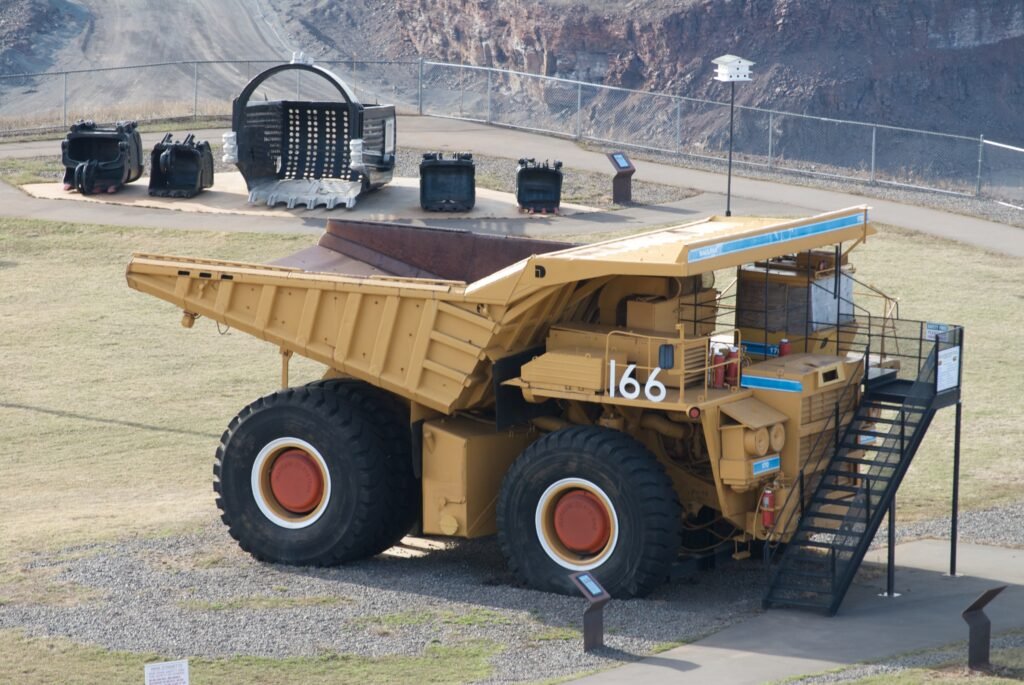
How CNC Machining Supports the Mining Industry
Mining machinery operates in environments where impact loading, vibration, abrasive particles, moisture, and continuous mechanical stress are unavoidable. These operating conditions create significant demands on components that must transmit power, support rotating assemblies, maintain hydraulic pressure, or withstand repeated movement.
Although many large mining equipment structures are fabricated through casting, forging, and welding, CNC machining provides the precision required at their functional interfaces. Bearing bores, shaft journals, mounting faces, hydraulic ports, and mating surfaces often require controlled machining after the initial component has been formed.
Consider a crusher bearing housing. The housing may begin as a casting, but its bearing bore, mounting surface, and alignment features still need precise machining. If the bore is oversized or the mounting surface is incorrectly positioned, the bearing may experience poor support, misalignment, and reduced service life.
CNC machining is particularly valuable in three manufacturing situations.
Original equipment manufacturing. Mining equipment OEMs use CNC-machined components for new machines and assemblies where repeatable dimensional accuracy and controlled production are required.
Replacement parts and maintenance. When a shaft, bushing, coupling, or housing wears out, CNC machining can reproduce the approved component geometry without the need to establish an entirely new production tooling system.
Equipment development and upgrades. Custom mounting brackets, hydraulic blocks, redesigned components, and prototype mechanisms can be manufactured in small quantities before broader equipment deployment.
The advantage is not simply machining accuracy. CNC manufacturing makes it possible to produce highly specific components while maintaining control over drawings, materials, machining sequences, and inspection requirements.
Common CNC-Machined Parts Used in Mining Equipment
Mining equipment contains a wide range of machined parts, from relatively simple spacers and bushings to complex hydraulic manifolds and multi-feature bearing housings. The manufacturing challenges vary according to the component’s function, loading conditions, and operating environment.
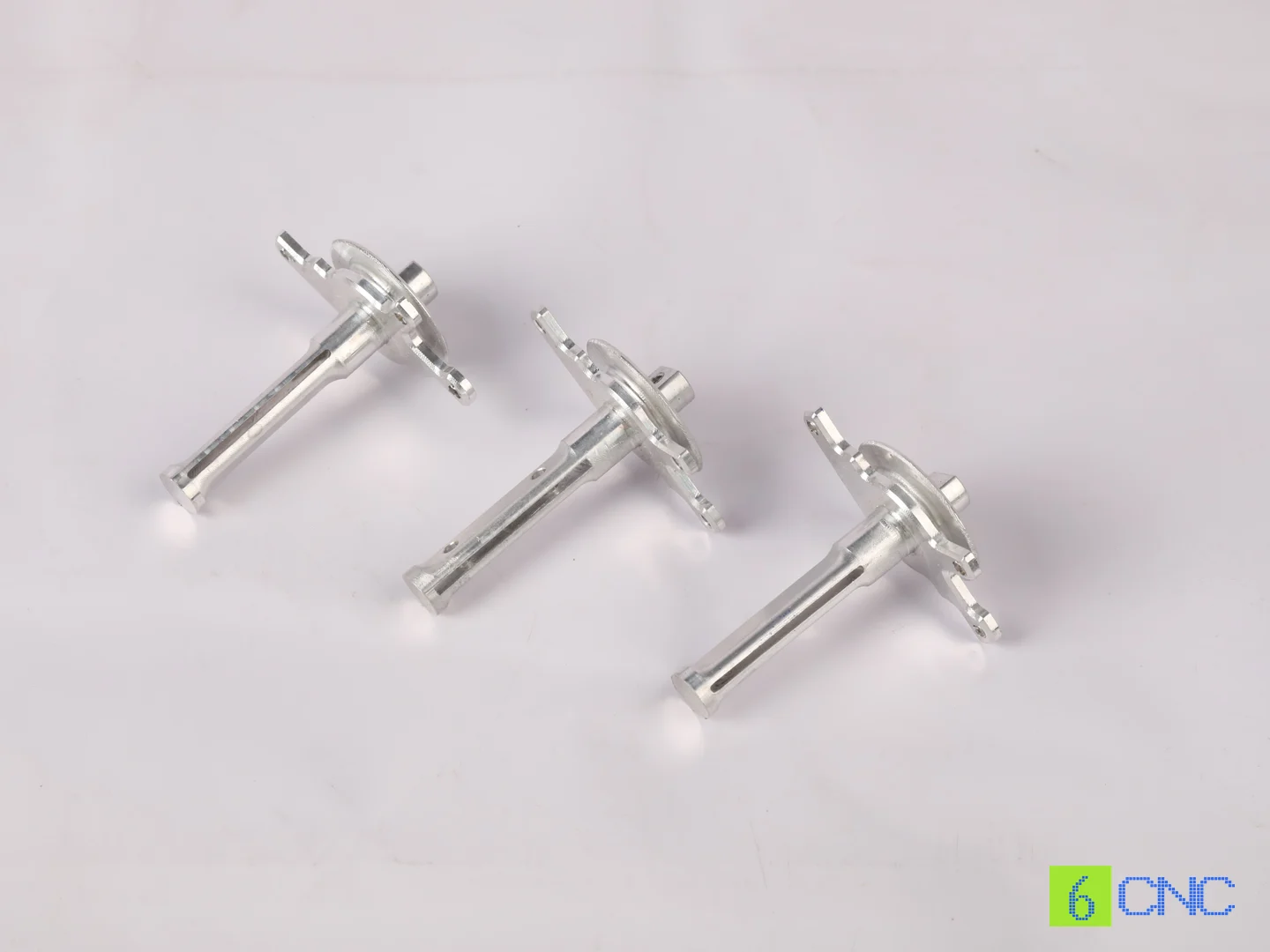
Shafts and Drive Components
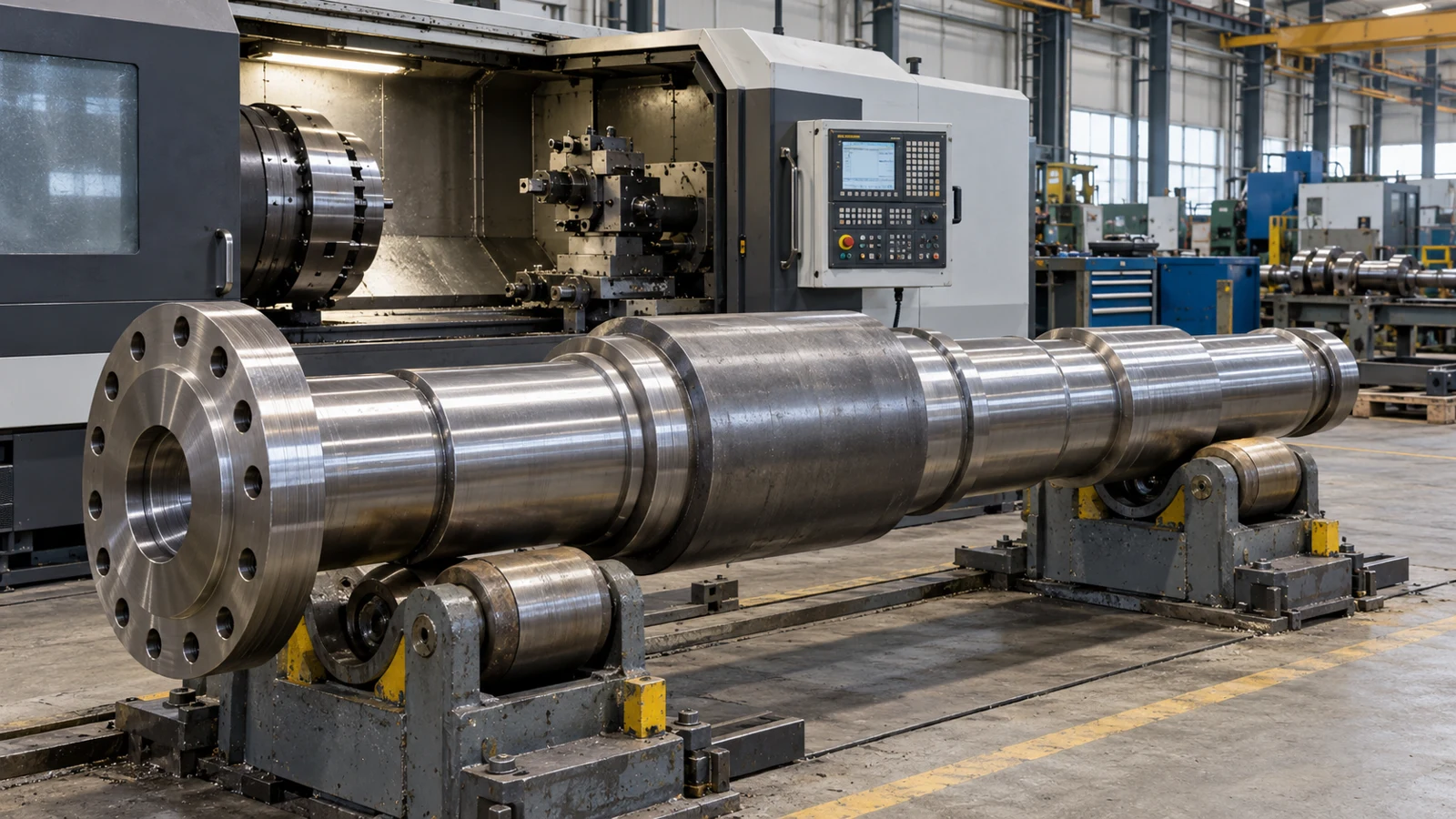
Shafts are among the most critical machined parts in crushers, grinding mills, conveyor drives, pumps, and material-handling equipment. They transfer torque, support rotating loads, and establish the alignment of bearings, seals, gears, and couplings.
A typical mining equipment shaft may contain multiple bearing journals, shoulders, keyways, threaded ends, and sealing surfaces. These features must be machined relative to a consistent datum system to maintain proper assembly alignment.
For example, a conveyor drive shaft may require accurately positioned bearing seats at both ends, a keyway for torque transmission, and an appropriate surface finish where seals contact the shaft. Excessive runout or poor bearing fits can increase vibration and accelerate bearing wear.
Manufacturing considerations include shaft straightness, journal dimensions, shoulder perpendicularity, heat treatment, and the concentric relationship between functional diameters. Long or slender shafts may also require additional support during machining and inspection to control deflection.
CNC turning is commonly used to produce the main rotational geometry, while milling, grinding, and other finishing operations are applied where required.
Bushings, Pins, and Wear Sleeves
Bushings and pins are frequently used in excavator linkages, hydraulic mechanisms, shovel assemblies, and other mining equipment where components rotate or oscillate under heavy loads.
Unlike a general-purpose spacer, a bushing must operate as part of a mechanical contact system. Its performance depends on the material pairing, lubrication conditions, operating clearance, surface finish, and exposure to abrasive contaminants.
For instance, a hardened steel pin working with a bronze bushing may provide different wear behavior from two hardened steel surfaces operating against each other. The appropriate combination depends on load, lubrication, contamination, maintenance practices, and the desired replacement interval.
CNC turning can produce accurate internal and external diameters, while additional operations create lubrication grooves, oil holes, and other functional features. Some applications also require heat treatment, coatings, or precision grinding after machining.
For maintenance-focused designs, making the bushing replaceable can help protect a more expensive structural component from unnecessary wear.
Bearing Housings and Seal Components
Bearing housings support rotating components and help maintain the alignment of shafts, gears, and other mechanical assemblies. They are widely used in crushing, screening, conveying, and mineral processing equipment.
Although housing exteriors may have relatively generous tolerances, internal bearing seats and mating surfaces often require much closer dimensional control. A housing with an incorrectly positioned bore can introduce bearing misalignment even when individual dimensions appear acceptable.
CNC milling and boring are used to produce mounting surfaces, precision bores, flange features, bolt patterns, and seal grooves. For housings with multiple bearing locations, positional accuracy and bore alignment must be considered together.
Components exposed to abrasive dust or slurry may also incorporate labyrinth seals and other contamination-control features. Their effectiveness depends on proper mating geometry, clearances, and surface condition.
Hydraulic Manifolds and Valve Components
Hydraulic systems are essential to mining excavators, drilling rigs, loaders, haulage equipment, and supporting machinery. CNC-machined hydraulic components include manifolds, valve bodies, adapters, fittings, gland components, and precision sealing parts.
A hydraulic manifold is often produced from a metal block containing interconnected drilled passages, threaded ports, mounting holes, and sealing interfaces. Its manufacturing difficulty comes not only from the number of holes but also from the relationships between them.
Intersecting passages must be accurately positioned, burrs must be removed, and internal surfaces must be cleaned to prevent contamination of hydraulic components. The appropriate port standards, pressure rating, material, and sealing method must also be established during engineering review.
For pressure-containing parts, dimensional inspection alone is insufficient. Pressure testing, cleanliness verification, and other acceptance requirements may be necessary under the approved design and applicable standards.
Couplings, Hubs, Spacers, and Gearbox Components
Couplings and hubs connect rotating parts within mining drives and transmission systems. They may include precision bores, keyways, splines, flange faces, bolt patterns, and locating features.
These parts frequently combine turning and milling operations. The machining sequence must maintain the correct relationship between the center bore, mating face, and torque-transmitting features.
Gearbox components such as carriers, bearing supports, gear blanks, covers, and precision spacers can also be CNC machined. When completed gears are required, additional operations such as gear cutting, heat treatment, and tooth grinding may be necessary.
Mining Equipment Applications and Machining Requirements
Different mining machines place different mechanical demands on their components. A slurry pump shaft experiences different wear mechanisms from an excavator pivot pin, even when both are manufactured from alloy steel.
The table below summarizes common applications and their machining priorities.
| Mining equipment | Typical CNC-machined parts | Critical requirements |
|---|---|---|
| Crushers and grinding mills | Shafts, housings, hubs, spacers | Impact resistance, alignment, fatigue strength |
| Mining drilling equipment | Couplings, adapters, sleeves, manifolds | Thread integrity, concentricity, fatigue resistance |
| Conveyor systems | Roller shafts, bearing blocks, pulleys | Bearing fits, runout, continuous-duty reliability |
| Excavators and loaders | Pivot pins, bushings, hydraulic parts | Wear resistance, mechanical strength, clearance |
| Slurry pumps | Shafts, sleeves, seal carriers, wear rings | Erosion resistance, corrosion resistance, sealing |
| Vibrating screens | Bearing housings, eccentric shafts, mounts | Fatigue resistance, balance, positional accuracy |
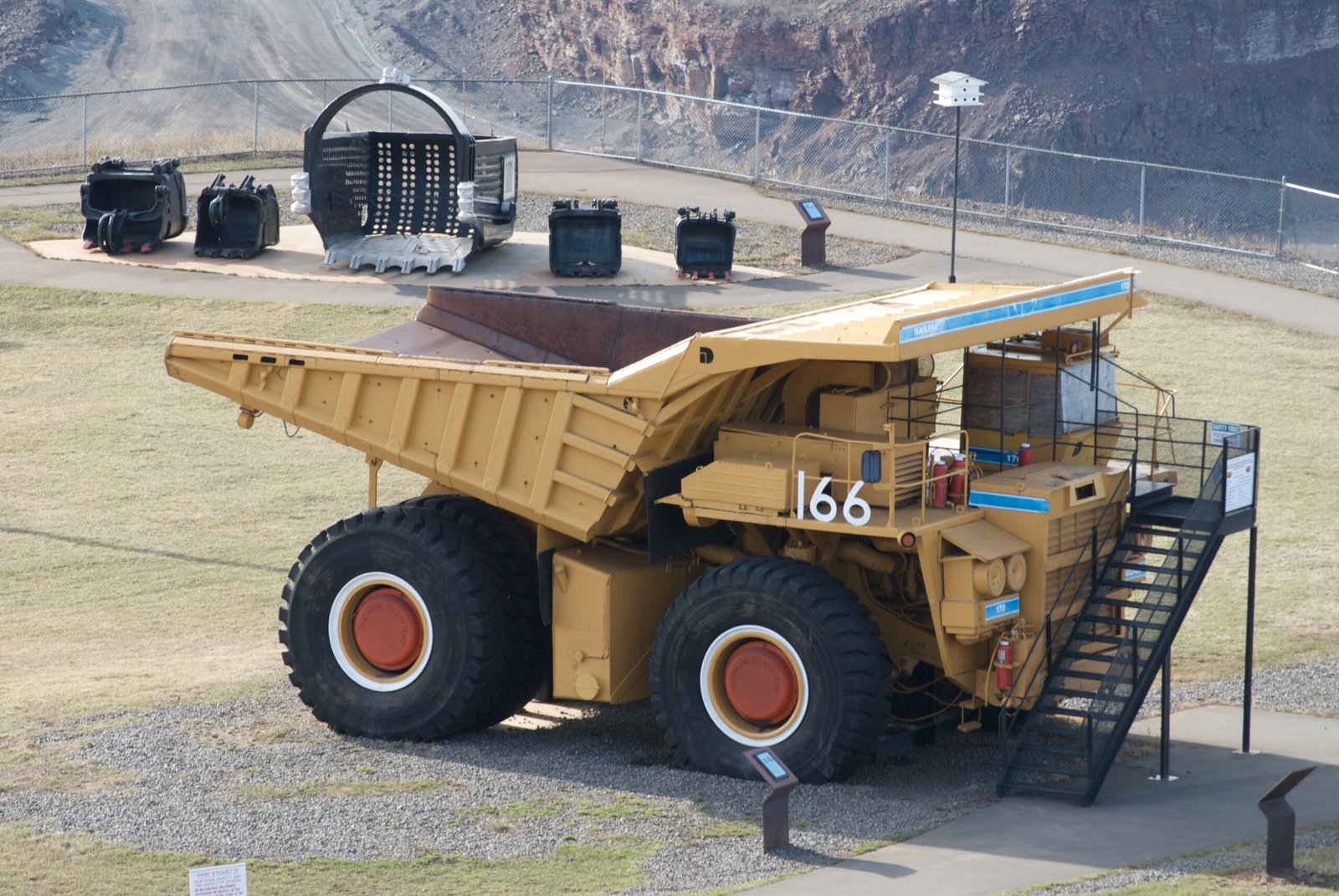
| Haul trucks | Hubs, spacers, brackets, transmission parts | High-load performance, traceability, reliable fits |
Manufacturing methods must therefore be selected according to the actual component rather than treating all mining equipment parts as a single category.
For highly loaded components, the machining plan should also consider material certification, fatigue-sensitive geometry, inspection access, and the consequences of failure during equipment operation.
Best Materials for CNC-Machined Mining Equipment Parts
Material selection is one of the most important decisions in mining component manufacturing. High strength alone does not guarantee durability, and the hardest available material is not necessarily the best solution for every wear application.
Mining parts may fail through impact fracture, sliding wear, abrasive erosion, corrosion, fatigue, or combinations of these mechanisms. A suitable material must match the dominant operating conditions while remaining practical to machine, heat treat, and inspect.
Carbon and Alloy Steels
Carbon and alloy steels are commonly used for shafts, pins, hubs, couplings, and other mechanically loaded components. Grades such as AISI 1045, 4140, and 4340 offer different combinations of strength, toughness, hardenability, and manufacturing cost.
AISI 4140 is frequently considered for mechanical components requiring greater strength or heat-treatment flexibility than conventional low-carbon steel. In demanding applications, quenching and tempering can be specified to achieve the required balance between strength and toughness.
AISI 4340 may be considered where the engineering design calls for high strength and suitable fracture toughness. However, its higher material and processing costs should be justified by the operating requirements.
The material grade must be considered together with its supply condition and heat treatment. A generic material designation does not establish the finished part’s mechanical performance.
Wear-Resistant Steels
Wear-resistant steels are used where abrasive contact is a primary concern. Depending on the application, this may include hardened alloy steels, abrasion-resistant plate, or specialized wear materials.
For components exposed to repeated heavy impacts, extreme hardness can become a disadvantage if sufficient toughness is not maintained. The wear mechanism must be understood before selecting the grade and hardness level.
Some wear components are more economically produced through casting, fabrication, hardfacing, or a combination of processes, with CNC machining applied only to mounting features and critical interfaces.
Stainless Steels
Stainless steels are useful in mining applications involving water, chemical processing, or corrosive environments. Grades such as 304 and 316 offer corrosion resistance for appropriate service conditions, although their mechanical and wear properties differ from hardened alloy steels.
316 stainless steel may be considered for certain wet-process and chemical-handling components, subject to the actual fluid chemistry and temperature. It should not automatically be treated as suitable for every abrasive slurry or chloride-rich environment.
For applications requiring both strength and corrosion resistance, precipitation-hardening stainless steels may be evaluated against the engineering specification.
Bronze and Engineering Plastics
Bronze alloys are widely associated with bearing and sliding applications. They may be used for bushings, thrust washers, and sacrificial wear components where controlled friction and compatibility with the mating shaft are important.
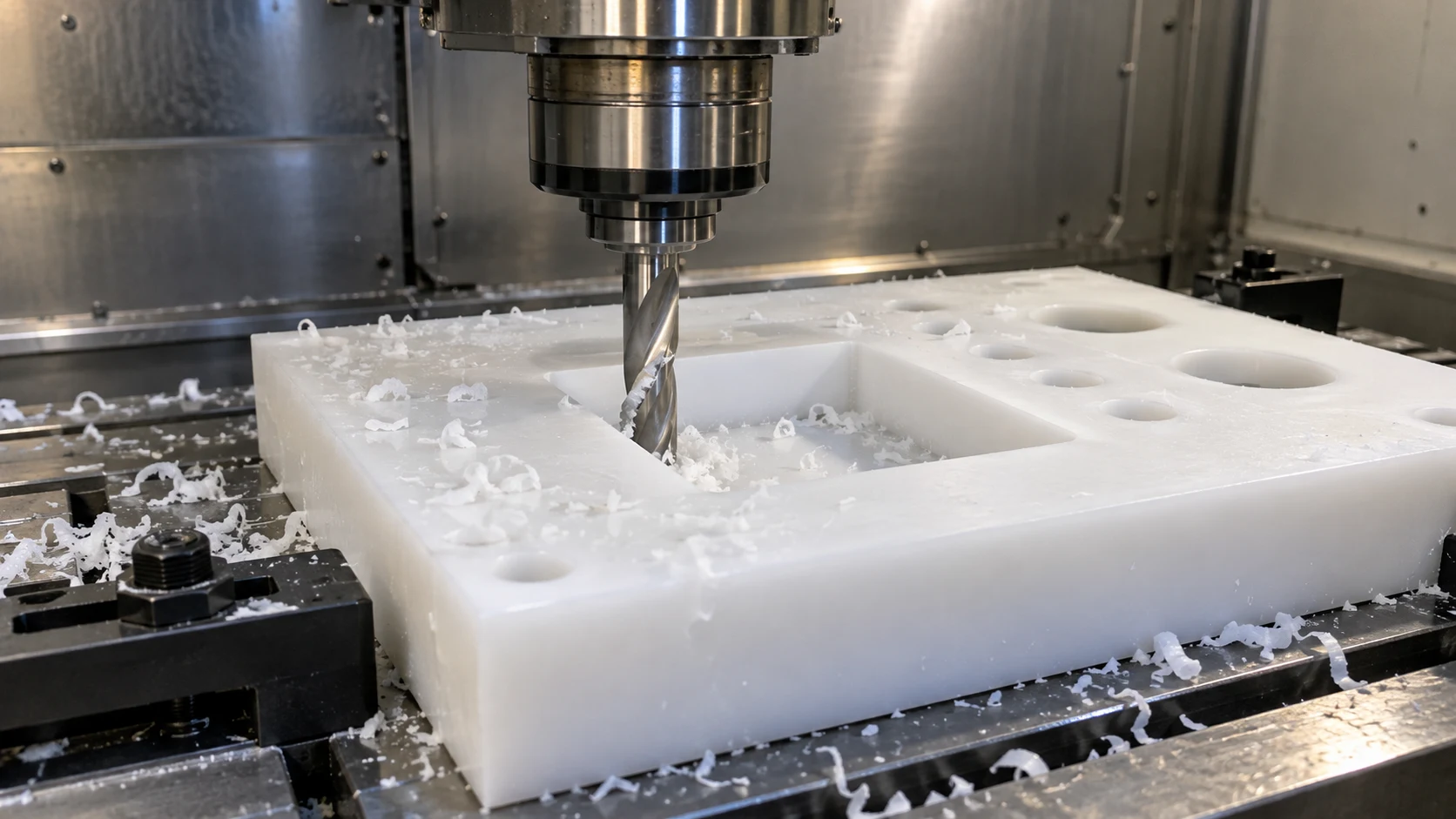
Engineering plastics such as POM, UHMW-PE, and selected nylon grades may also be suitable for guides, sliding elements, and nonstructural wear components. Their suitability depends on load, temperature, moisture absorption, chemical exposure, and creep behavior.
Material selection should always reflect actual operating conditions rather than a general claim that one material offers better wear resistance than another.
Material Selection Reference
| Material | Potential applications | Important considerations |
|---|---|---|
| AISI 1045 | Shafts, pins, spacers | Strength, heat-treatment condition, wear |
| AISI 4140 | Drive shafts, pins, couplings | Toughness, hardness, fatigue resistance |
| AISI 4340 | Highly loaded shaft components | Heat treatment, fracture toughness, cost |
| 304 / 316 Stainless Steel | Wet-process fittings, valve parts | Corrosion environment, galling, wear |
| Bronze alloys | Bushings, thrust washers | Lubrication, load, mating material |
| Ductile iron | Housings and supports | Casting quality, fatigue, bore machining |
| UHMW-PE / POM | Guides and sliding components | Temperature, load, dimensional stability |
Engineering note: These are application examples, not universal material specifications. Actual material requirements should be established from the approved equipment design, relevant standards, and operating conditions.
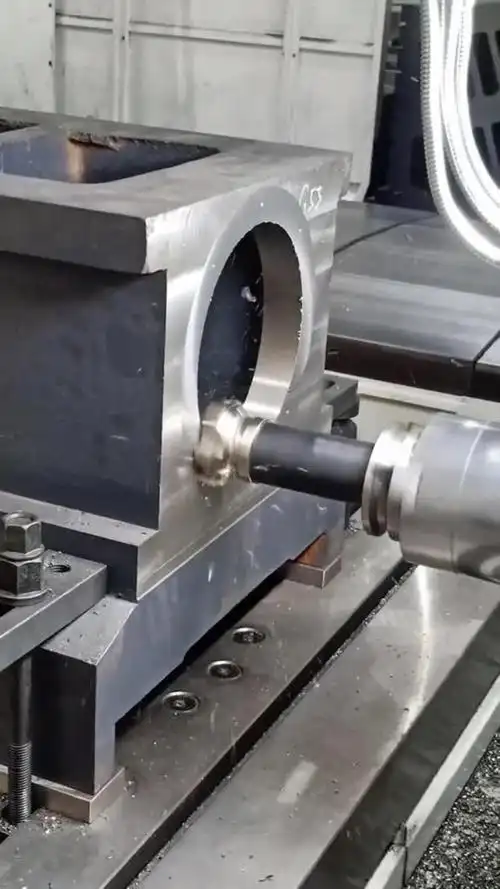
CNC Machining Processes for Mining Equipment Components
Manufacturing mining machinery parts often requires more than one machining operation. A steel shaft may be rough-turned, heat-treated, finish-turned, and ground, while a bearing housing may require milling, boring, drilling, and surface finishing.
Choosing the correct manufacturing sequence is important because machining operations, material conditions, and thermal processes can influence the final geometry of the component.
CNC Turning and Milling
CNC turning is commonly used for rotational mining components such as shafts, pins, bushings, sleeves, couplings, and spacers. It provides controlled machining of diameters, shoulders, grooves, threads, and other concentric features.
CNC milling is suitable for bearing housings, mounting blocks, brackets, hydraulic manifolds, and components containing flat surfaces, pockets, slots, and complex hole patterns.
For components that combine rotational and prismatic geometry, mill-turn machining may reduce the number of setups and improve the positional relationship between features. Whether this is economical depends on component size, complexity, machine capacity, and production quantity.
Precision Grinding and Finishing
Some mining components require surface finishes or dimensional accuracy that are difficult to achieve consistently through conventional turning alone.
Cylindrical grinding may be specified for hardened shaft journals, bearing seats, and selected sealing surfaces. Surface grinding can improve flatness and surface finish on suitable components, while other specialized grinding methods may be required for difficult geometries.
Grinding requirements should be based on the actual fit and function. A machined surface that meets the drawing and application requirements does not automatically benefit from an additional grinding operation.
Heat Treatment and Surface Engineering
Heat treatment is often used to improve the strength, hardness, or wear performance of mining equipment parts. Depending on the material and component design, this may involve quenching and tempering, induction hardening, carburizing, or nitriding.
For example, an alloy steel pivot pin may require a hardened wear surface while retaining sufficient core toughness to withstand repeated loading. The selected treatment must be supported by the steel grade, component geometry, and approved engineering specification.
Heat treatment also introduces manufacturing challenges. Long shafts can distort, thin sections may move, and previously finished surfaces can change dimensionally. Manufacturers should establish suitable machining allowances and determine whether final grinding or machining is needed after treatment.
Surface coatings and treatments may provide additional corrosion or wear resistance, but coating thickness, adhesion, substrate preparation, and dimensional effects must be included in the manufacturing plan.
Critical Tolerances and Inspection Requirements
Precision in mining equipment does not mean applying extremely tight tolerances to every dimension. Effective machining focuses on the features that control mechanical function, assembly alignment, sealing, and component life.
A large machined bracket may perform correctly with relatively broad tolerances on external surfaces, while a bearing bore or hydraulic sealing feature requires much closer control.
Bearing Fits, Runout, and Alignment
SKF guidance on shaft and housing fit selection
For rotating equipment, functional relationships are often more important than the dimensions of isolated features.
Consider a shaft supported by two bearings. Even if both bearing journals fall within their individual diameter tolerances, excessive runout or incorrect relative alignment may still affect the assembled machine.
Manufacturing and inspection should therefore consider the specified datum system, bearing fits, runout, shoulder geometry, and surface condition.
For bearing housings, bore size, roundness, alignment, and mounting-face relationships may all influence assembly performance.
Typical Machining and Inspection Considerations
| Feature | Engineering concern | Inspection method |
|---|---|---|
| Bearing journal | Fit, size, roundness | Micrometer, roundness measurement |
| Bearing housing bore | Diameter, position, alignment | Bore gauge, CMM |
| Rotating shaft | Runout, straightness | Dial indicator, suitable support fixture |
| Seal surface | Roughness, surface condition | Surface roughness tester |
| Mounting face | Flatness, perpendicularity | CMM, surface plate methods |
| Threaded connection | Thread form and functional fit | Thread gauges |
| Heat-treated component | Hardness, specified case depth | Hardness testing, approved case-depth testing |
| Hydraulic manifold | Passage quality, cleanliness, sealing | Inspection and specified functional tests |
The acceptance limits must come from the component design, relevant standards, or an approved engineering review. They should not be inferred from generic machining capability figures.
For high-load shafts, hydraulic components, and other critical assemblies, inspection documentation may be as important as the component itself. Material traceability, heat-treatment certificates, dimensional inspection reports, and specified nondestructive testing provide evidence that manufacturing requirements have been addressed.
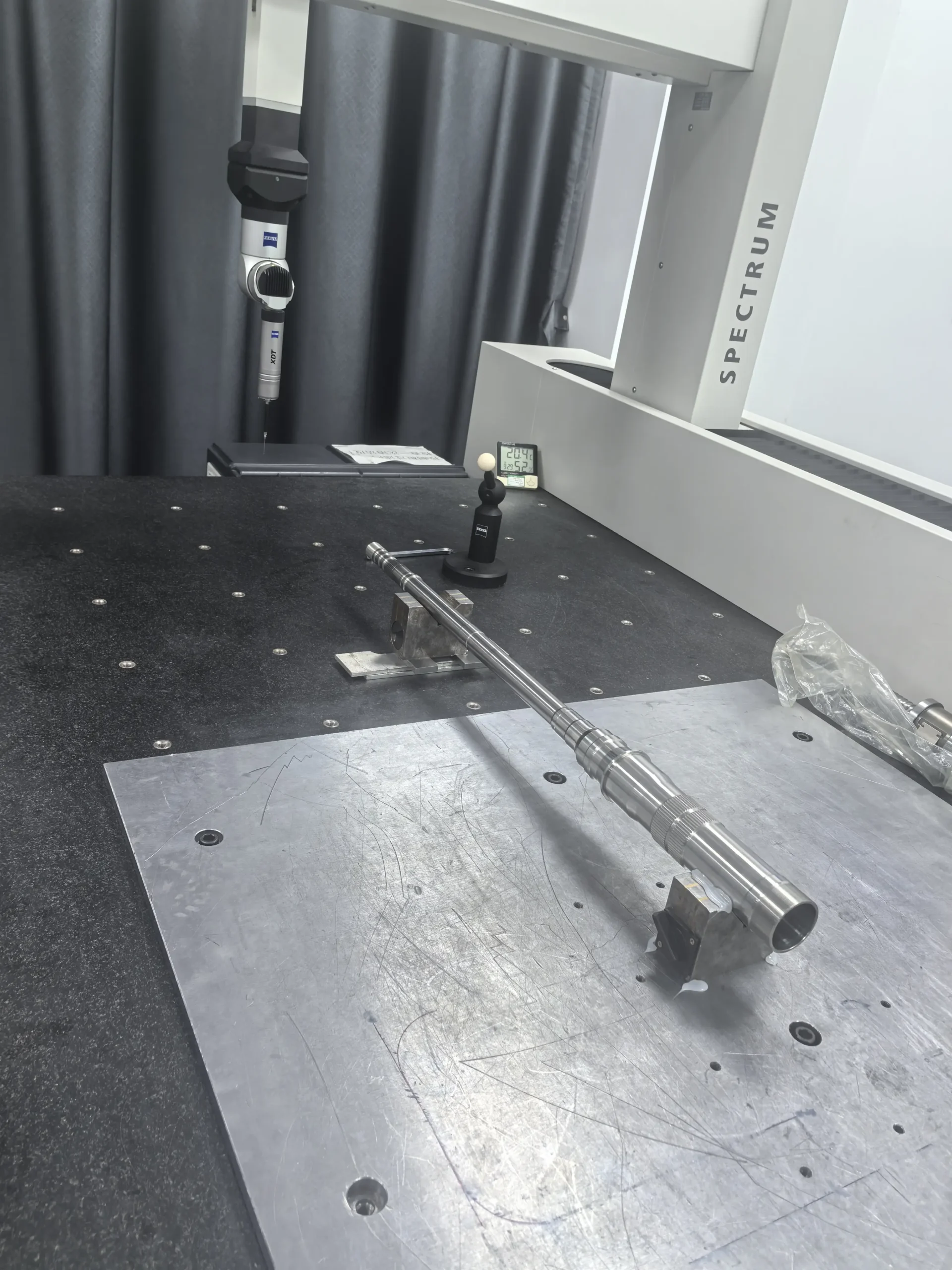
Quality Control at 6CNC
6CNC supports drawing-based dimensional inspection using equipment such as coordinate measuring machines, optical measurement systems, surface roughness instruments, and conventional precision gauges.
For custom mining machinery components, inspection plans can be developed around specified critical characteristics, including bearing locations, functional diameters, mating surfaces, and geometric tolerances.
First Article Inspection and material documentation can be included according to the project requirements. Special testing, heat-treatment verification, and third-party documentation should be established during quotation and manufacturing planning.
Replacement Mining Equipment Parts: From Drawing to Production
Replacement-part manufacturing is a practical application of CNC machining in the mining industry. Many mining operations continue using machinery for years, creating ongoing demand for spare components that may no longer be readily available from the original manufacturer.
When an approved engineering drawing and material specification exist, CNC machining can provide a repeatable manufacturing route. The process becomes more complicated when the only available reference is a worn or damaged component.
A worn sample should not automatically be treated as an accurate representation of the original design. Bearing surfaces may have lost material, holes may have become oval, and shafts may have experienced permanent deformation.
A reliable replacement-part project generally follows five stages.
- Engineering review
Verify the drawing, material, application, mating features, and critical dimensions.
- Dimensional reconstruction, if needed
Measure the sample and assembly, identify wear, and obtain approval for reconstructed geometry.
- Manufacturing planning
Select material, stock form, machining sequence, workholding, and special processes.
- First-part inspection
Check critical dimensions, material condition, finishes, and required documentation.
- Approved production and delivery
Manufacture the required quantity under controlled revisions and agreed inspection requirements.
When reproducing safety-critical or highly loaded parts, the equipment owner or responsible engineering authority must approve the reconstructed design and replacement specification. Reverse engineering should establish a verified manufacturing definition, not merely produce a visually similar component.
How to Reduce the Cost and Lead Time of Mining Equipment Parts
The machining cost of a custom mining component is influenced by material availability, part geometry, machining time, tool wear, setup requirements, heat treatment, inspection, and production quantity.
A complicated component is not always expensive simply because it has many features. In some cases, a relatively simple shaft requires more manufacturing effort because of its length, hardness, dimensional tolerances, or grinding requirements.
Several engineering and purchasing decisions can improve manufacturability without compromising the component’s function.
Use tolerances that reflect actual assembly requirements. Applying unnecessarily tight tolerances across the entire part increases machining and inspection effort. Precision should be concentrated on bearing seats, sealing features, alignment surfaces, and other functionally critical dimensions.
Choose a practical raw material form. A large housing machined entirely from a solid block may generate substantial material waste. A suitable casting, forging, or welded blank with finish-machined interfaces can sometimes reduce total manufacturing cost.
Plan heat treatment before final machining. If a component requires hardening, the sequence should allow for potential distortion and the removal of final machining allowance.
Combine recurring spare-part requirements. Producing several components under one approved drawing revision can distribute setup and programming costs across the order.
Maintain controlled manufacturing documentation. Approved models, drawings, material specifications, and inspection records make repeat orders more predictable. This is especially valuable for mining operations maintaining multiple machines with common components.
For critical equipment, the lowest piece price is not necessarily the lowest operating cost. Material reliability, replacement frequency, inspection quality, and delivery predictability all influence the total cost of ownership.
What to Include When Requesting a CNC Mining Parts Quote
A complete request for quotation allows the manufacturer to evaluate feasibility, identify technical risks, and recommend an appropriate manufacturing process.
For most custom mining equipment components, provide the following information:
- 2D engineering drawing and, where available, a 3D CAD model.
- Material grade, supply condition, and required certification.
- Quantity, including expected repeat orders or spare-part demand.
- Critical dimensions, fits, GD&T, and surface finish requirements.
- Heat treatment, hardness, coating, or special finishing specifications.
- Component application and relevant operating conditions.
- Inspection reports, traceability, and additional testing requirements.
- Delivery requirements and destination.
For replacement parts without drawings, photographs and sample measurements can assist an initial feasibility discussion. However, production should proceed only after the geometry, material condition, and acceptance criteria are adequately defined and approved.
Why Choose 6CNC for Custom Mining Equipment Parts?
Manufacturing mining equipment components requires an understanding of both machining processes and the functional requirements behind the drawing.
6CNC provides custom CNC machining services for industrial components, supporting prototypes, replacement parts, and small-batch production. Our capabilities include CNC milling, CNC turning, mill-turn machining, and precision grinding, with additional manufacturing processes coordinated according to project requirements.
Our small-batch manufacturing approach is particularly suitable for equipment manufacturers, maintenance suppliers, and industrial purchasing teams that require custom components without committing to high-volume production.
We work with a range of engineering metals and plastics, including carbon and alloy steels, stainless steels, aluminum, copper alloys, and selected industrial polymers. Material availability, manufacturing feasibility, part size, and special-process requirements are reviewed for each project.
Through drawing review, production planning, and dimensional inspection, 6CNC helps customers move from an approved design to finished, inspection-ready components.
For components requiring documented quality control, inspection and material verification requirements can be discussed before production.
Need custom CNC-machined mining equipment parts?
Whether you are sourcing precision shafts, bushings, bearing housings, hydraulic components, or other drawing-based replacement parts, share your specifications with our team for a manufacturing review and quotation.
Request a CNC Machining Quote from 6CNC.
Frequently Asked Questions
What mining equipment parts can be manufactured using CNC machining?
CNC machining can produce shafts, bushings, pins, bearing housings, hydraulic manifolds, couplings, hubs, spacers, pump components, and custom mounting parts. The appropriate process depends on part size, geometry, material, and functional requirements.
Can CNC machining produce replacement parts for older mining machinery?
Yes. Replacement components can often be manufactured from approved drawings or reconstructed engineering models. When only a worn sample is available, its geometry and material must be evaluated carefully, and any reconstructed design must receive appropriate engineering approval.
Which material is best for mining machinery shafts?
AISI 4140 and 4340 are among the alloy steels commonly considered for mechanically demanding shaft applications, although other grades may be more appropriate. Selection depends on transmitted torque, fatigue loading, impact conditions, heat treatment, and design requirements.
Why are tight tolerances important for mining equipment?
Tight tolerances are important where features control bearing fits, shaft alignment, sealing, or other critical assembly relationships. Unnecessary precision on nonfunctional features may increase manufacturing cost without improving equipment reliability.
Can 6CNC manufacture small quantities of mining equipment components?
Yes. 6CNC specializes in custom prototypes and small-batch precision manufacturing. Projects are reviewed according to drawing requirements, material, quantity, part dimensions, and process feasibility.
What documentation should be requested for critical mining equipment parts?
Depending on the application, documentation may include material certificates, dimensional inspection reports, First Article Inspection, heat-treatment records, hardness testing, and specified nondestructive examination. The required documentation should be agreed before manufacturing begins.