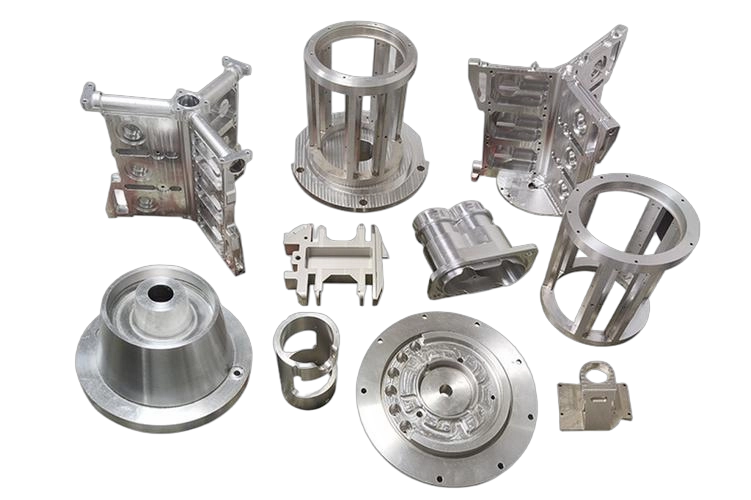
China has a deep supply base for CNC machined aluminum parts, ranging from rapid-prototyping specialists to production factories with multi-axis machining, anodizing coordination, and export-quality inspection. The challenge is not finding a supplier; it is finding one whose equipment, quality system, communication, and order-volume model fit your part.
This guide compares 10 China CNC machined aluminum parts suppliers for overseas buyers. It focuses on practical sourcing factors: machining capability, prototype and production fit, surface-finishing support, engineering communication, and the checks buyers should complete before placing an order.
Top China CNC Aluminum Parts Suppliers at a Glance
| Supplier | Main strength | Best suited to |
|---|---|---|
| 6CNC | Drawing-based CNC machining and responsive project support | Prototypes and low-to-medium-volume precision aluminum parts |
| RapidDirect | Online manufacturing platform with broad process coverage | Fast quoting and multi-process sourcing |
| WayKen | Rapid prototyping and low-volume manufacturing | Appearance models, functional prototypes, and bridge production |
| 3ERP | Prototype and low-volume CNC manufacturing | Product-development teams and short production runs |
| Star Rapid | Prototyping, tooling, molding, and CNC machining | Projects that may progress from prototype to tooling |
| HLH Rapid | Rapid manufacturing with several production processes | Prototype and low-volume product-development programs |
| Tuofa | Custom precision machining and aluminum finishing | Export-oriented custom aluminum components |
| DEK | Precision CNC machining and tight-tolerance work | Complex parts requiring detailed inspection planning |
| Yijin Solution | Broad custom manufacturing and CNC options | Custom parts across prototypes and production quantities |
| VMT | Multi-process precision machining and DFM support | Complex milled, turned, and tight-tolerance components |
Supplier positioning is summarized from public company information. Confirm current capacity, certification scope, lead time, and process ownership directly with each supplier.
How We Selected These Suppliers
A useful supplier list should help a buyer create a shortlist, not pretend that one factory is best for every drawing. We considered:
- Aluminum machining relevance: visible experience with milled or turned aluminum components.
- Process breadth: support for common alloys, multi-axis work, inspection, and surface finishing.
- Order flexibility: suitability for prototypes, bridge production, or repeat batches.
- Buyer access: public information and an export-oriented quotation process.
- Distinct fit: a reason a buyer might choose the supplier for a particular project type.
1. 6CNC — Best for Custom Aluminum Parts and Direct Project Support
6CNC manufactures custom components from customer drawings and 3D models. Its strongest fit is for engineering teams that need aluminum prototypes, fixtures, housings, brackets, heat-management parts, shafts, or repeat batches without committing to dedicated production tooling.
The company’s project model emphasizes CNC milling and turning, manufacturability review, inspection, and coordination of common finishing processes. Buyers can send material, quantity, tolerance, finish, and delivery requirements together for a part-specific review.
Best for: prototypes and low-to-medium-volume custom aluminum components where communication and drawing review matter.
Confirm before ordering: achievable tolerance by feature, cosmetic-surface requirements, material traceability, inspection-report format, and which finishing steps are performed by approved partners.
2. RapidDirect — Best for Fast Online Quoting and Broad Process Access
RapidDirect operates an online manufacturing platform covering CNC machining and several complementary production processes. This can be useful when a buyer wants a fast initial quote, centralized communication, or parts produced through more than one manufacturing method.
Best for: buyers comparing process options or sourcing mixed prototype and production requirements through one interface.
Watch for: confirm the actual production route, inspection plan, finishing source, and how engineering changes are controlled after the order is released.
3. WayKen — Best for Appearance Prototypes and Low-Volume Development Parts
WayKen focuses on rapid prototyping and low-volume manufacturing. Its public service range includes CNC machining and finishing options used for functional prototypes, appearance models, test housings, and development-stage assemblies.
Best for: product teams that need machined aluminum parts with close attention to visual finish and short development schedules.
Watch for: define color, gloss, texture, masking, plug requirements, and acceptable cosmetic variation with physical samples or a written appearance standard.
4. 3ERP — Best for Prototype-to-Low-Volume CNC Programs
3ERP offers rapid prototyping and low-volume manufacturing services, including CNC machining. It is positioned for product-development teams that need functional aluminum parts before full production tooling or want a limited bridge-production run.
Best for: engineering validation, pilot builds, and short-run custom parts.
Watch for: ensure first-article approval, revision control, and production-intent process requirements are agreed before moving from prototypes to repeat orders.
5. Star Rapid — Best for Projects Moving from CNC Prototype to Tooling
Star Rapid combines rapid prototyping, CNC machining, tooling, molding, and related manufacturing services. That range can help teams whose early aluminum prototypes may later lead to molded, cast, or otherwise tooled production parts.
Best for: product-development programs that benefit from continuity across prototyping and later manufacturing stages.
Watch for: compare the CNC route with the planned production process because machining a prototype can mask draft, wall-thickness, or tooling constraints.
6. HLH Rapid — Best for Multi-Process Product Development
HLH Rapid provides rapid manufacturing services that include CNC machining alongside other prototyping and low-volume processes. This can simplify sourcing when a project contains machined aluminum parts plus plastic, cast, or additive components.
Best for: assemblies and development programs requiring several prototype processes.
Watch for: request a process-by-process responsibility matrix, especially when different facilities or partners supply parts for the same assembly.
7. Tuofa — Best for Export-Oriented Custom Aluminum Components
Tuofa markets custom CNC machining for aluminum and other materials, with milling, turning, and common finishing support. Its content and service model are oriented toward international buyers seeking drawing-based components.
Best for: custom aluminum housings, brackets, turned parts, and other components requiring machining plus finish coordination.
Watch for: verify the exact factory, in-house operations, inspection equipment, and finish acceptance criteria for your part.
8. DEK — Best for Precision and Tight-Tolerance Machining
DEK presents precision CNC machining capabilities for complex components and demanding tolerance requirements. It may be relevant when a project needs careful process planning, stable workholding, and dimensional reporting.
Best for: precision components where geometry and inspection strategy are more important than the lowest headline price.
Watch for: never treat a general website tolerance as a blanket guarantee. Ask for a feature-level capability review tied to part size, alloy, wall thickness, datum scheme, and inspection method.
9. Yijin Solution — Best for Broad Custom-Manufacturing Options
Yijin Solution offers CNC machining and related custom manufacturing services. The broad process range may suit buyers consolidating several metal component types or comparing different production methods.
Best for: custom metal parts spanning prototypes, machined production parts, and supporting processes.
Watch for: ask which operations are completed in-house and which are subcontracted, particularly anodizing, heat treatment, plating, and special testing.
10. VMT — Best for Complex Milled and Turned Aluminum Parts
VMT promotes CNC milling, turning, Swiss machining, five-axis work, and associated custom manufacturing services. This makes it a candidate for parts combining multiple setups, complex surfaces, or both turned and milled features.
Best for: complex drawing-based components that benefit from multi-axis equipment and DFM discussion.
Watch for: confirm whether quoted tolerances apply after anodizing or other finishing, and agree on how threaded holes, bores, sealing faces, and cosmetic areas will be protected.
How to Choose a CNC Aluminum Parts Supplier in China
Match the factory to your volume
A prototype specialist may provide fast communication and excellent one-off parts but may not offer the lowest repeat-production price. A production shop may be cost-effective at hundreds or thousands of pieces but impose higher minimum quantities, longer setup, or stricter change-control rules. State prototype quantity, batch quantity, and expected annual demand in the RFQ.
Confirm alloy and temper
“Aluminum” is not a complete material specification. Common choices such as 6061-T6, 6082-T6, 7075-T6, 5052, and 2024 have different strength, corrosion resistance, availability, machinability, and finishing behavior. Reference a recognized material standard and ask for certificates when traceability matters.
Review the drawing for manufacturability
Deep pockets, thin walls, long-reach tools, tiny corner radii, close positional tolerances, and extensive cosmetic requirements can dominate price and risk. Ask the supplier to identify cost drivers and propose changes to non-critical features before the purchase order.
Define surface finishing precisely
Anodizing is common for machined aluminum, but “black anodize” alone is ambiguous. Specify the anodizing standard or type, target color, thickness where needed, sealing, gloss or texture, masking, plugged holes, contact points, and acceptable color variation. For bead blasting, define the visual sample or measurable roughness.
Agree on inspection and reporting
Mark critical-to-function features. Define whether you require a first-article report, CMM data, full-dimensional inspection, sampling level, material certificates, finish certificates, or serial traceability. The measurement method should be appropriate to the tolerance and datum scheme.
Common Aluminum Grades for CNC Machined Parts
| Grade | Typical advantages | Common uses |
|---|---|---|
| 6061-T6 | Good machinability, corrosion resistance, and availability | Housings, brackets, fixtures, general structural parts |
| 6082-T6 | Good structural strength and European availability | Frames, load-bearing components, machine parts |
| 7075-T6 | High strength-to-weight ratio | Aerospace, robotics, performance and highly loaded parts |
| 2024 | High strength and fatigue performance | Aerospace and mechanical components with controlled corrosion protection |
| 5052 | Good corrosion resistance and formability | Sheet-based enclosures and parts combining fabrication with machining |
The final choice should follow design loads, environment, finish, regulatory needs, and local material availability—not just machineability.
RFQ Checklist for Machined Aluminum Parts
- Dimensioned 2D drawing with revision and datum scheme
- Native 3D CAD file, preferably STEP for exchange
- Exact alloy, temper, and material standard
- Prototype quantity, batch quantity, and annual demand
- General and feature-specific tolerances
- Surface finish, anodizing, color, masking, and cosmetic zones
- Threads, inserts, engraving, assembly, and cleaning requirements
- Inspection documents and material or finish certificates
- Packaging requirements for scratch-sensitive surfaces
- Delivery address, Incoterm, target date, and preferred shipping method
Frequently Asked Questions
What is a typical lead time for CNC aluminum parts from China?
Simple prototypes may be completed in several working days, while complex parts, large batches, special material, anodizing, or detailed inspection can extend the schedule to several weeks. Ask for separate milestones for material, machining, finishing, inspection, and shipping.
Which aluminum grade is easiest to source for CNC machining?
6061-T6 is widely used because it balances availability, machinability, strength, corrosion resistance, and finishing response. However, the best grade depends on the part’s load, environment, weight, finish, and applicable standard.
Can tight tolerances be held after anodizing?
They can be controlled, but the drawing and process plan must account for coating growth and dimensional variation. Identify critical bores, sealing surfaces, threads, and mating features; then agree whether they will be masked, plugged, finish-machined, or inspected after coating.
How do I protect cosmetic aluminum parts during shipping?
Define cosmetic zones, handling rules, inter-part separation, protective film or bags, tray orientation, moisture protection, and outer-carton limits. Approve packaging with the sample order rather than waiting for mass production.
Should I choose the lowest quotation?
Not automatically. Compare whether each quotation includes the same alloy, finish, inspection, packaging, taxes, shipping terms, and documentation. A low price can reflect omitted requirements, different material, limited inspection, or an unapproved subcontracted process.
Final Recommendation
Start with a shortlist of two or three China CNC aluminum parts manufacturers whose production model matches your quantity and complexity. Send the same controlled RFQ package to each, compare questions as well as prices, and place a representative sample order before committing to repeat production.
If you need custom aluminum parts from drawings, send 6CNC your 2D drawing, 3D model, alloy, quantity, finish, tolerance, and inspection requirements for a manufacturability review and quotation.