
6CNC · Aluminum 6082
Aluminum 6082
CNC Machining
A high-strength 6000-series alloy widely used for structural parts
Aluminum 6082 is a heat-treatable aluminum-magnesium-silicon-manganese alloy widely used in Europe for structural and mechanical applications.
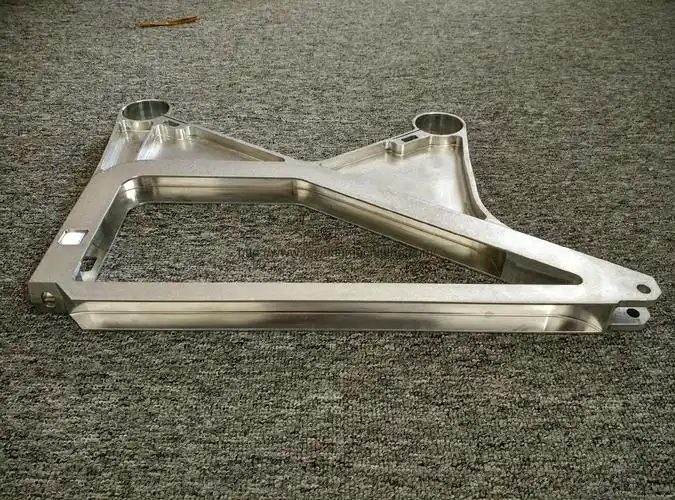
Representative geometry. Alloy and temper are confirmed from your specification.
Custom 6082 Parts with 6CNC
For engineers familiar with 6061, 6082 fills a similar general space but is often selected where the European EN AW-6082 supply chain is standard or where a higher-strength 6xxx structural alloy is preferred.
It combines:
- Good strength
- Good corrosion resistance
- Good machinability
- Weldability
- Heat treatability
- Broad structural use
- Availability in plate, bar, and extruded forms
6CNC machines custom 6082 components for prototypes, machinery, robotics, automation, industrial equipment, transport systems, frames, brackets, and small-batch production.
6082-T6 mechanical properties
Mechanical values for 6082-T6 vary with product form and thickness. That matters because published values for thin extrusion should not automatically be applied to thick plate.
Representative values often fall around:
| Property | Representative 6082-T6 / T651 range |
|---|---|
| Density | ~2.70 g/cm³ |
| Yield / proof strength | ~240–260+ MPa, depending on form/thickness |
| Ultimate tensile strength | ~275–310+ MPa, depending on form/thickness |
| Brinell hardness | ~84–95 HB, depending on form/thickness |
| Elongation | commonly ~6–10% minimum ranges in structural product standards |
| Corrosion resistance | Good |
| Machinability | Good |
The exact value must be taken from the applicable material standard, stock certification, thickness, and temper.
This is particularly important for engineered structural components. A single “6082-T6 strength” number can oversimplify what the purchased material actually guarantees.
Technical reference: Hydro EN AW-6082 extruded-products datasheet. Values depend on temper, product form, thickness and test conditions; use the purchased stock certification and governing specification for design.
Why 6082 contains manganese
6082 belongs to the 6xxx aluminum family, where magnesium and silicon form the basis for heat treatment.
The addition of manganese contributes to its structural character and helps differentiate it from other common 6xxx alloys.
In practical procurement terms, engineers often encounter 6082 as:
- EN AW-6082
- 6082-T6
- 6082-T651 plate
- 6082 extrusion
- Structural bar or plate
For international projects, the drawing should state the intended standard rather than assuming “6082” means the same purchasing specification everywhere.
CNC machining 6082-T6
6082-T6 is generally well suited to CNC machining.
It is harder and stronger than softer non-heat-treated aluminum grades and can be milled or turned with productive cutting conditions using tools designed for aluminum.
Common machining operations include:
- 3-axis milling
- 4-axis machining
- 5-axis machining
- CNC turning
- Boring
- Drilling
- Reaming
- Tapping
- Thread milling
- Facing
- Pocketing
Like 6061, dimensional stability becomes a larger concern when the part contains deep pockets, thin walls, large flat surfaces, or strongly asymmetric stock removal.
For thick structural plate, stress-relieved T651 stock may be considered where available and appropriate.
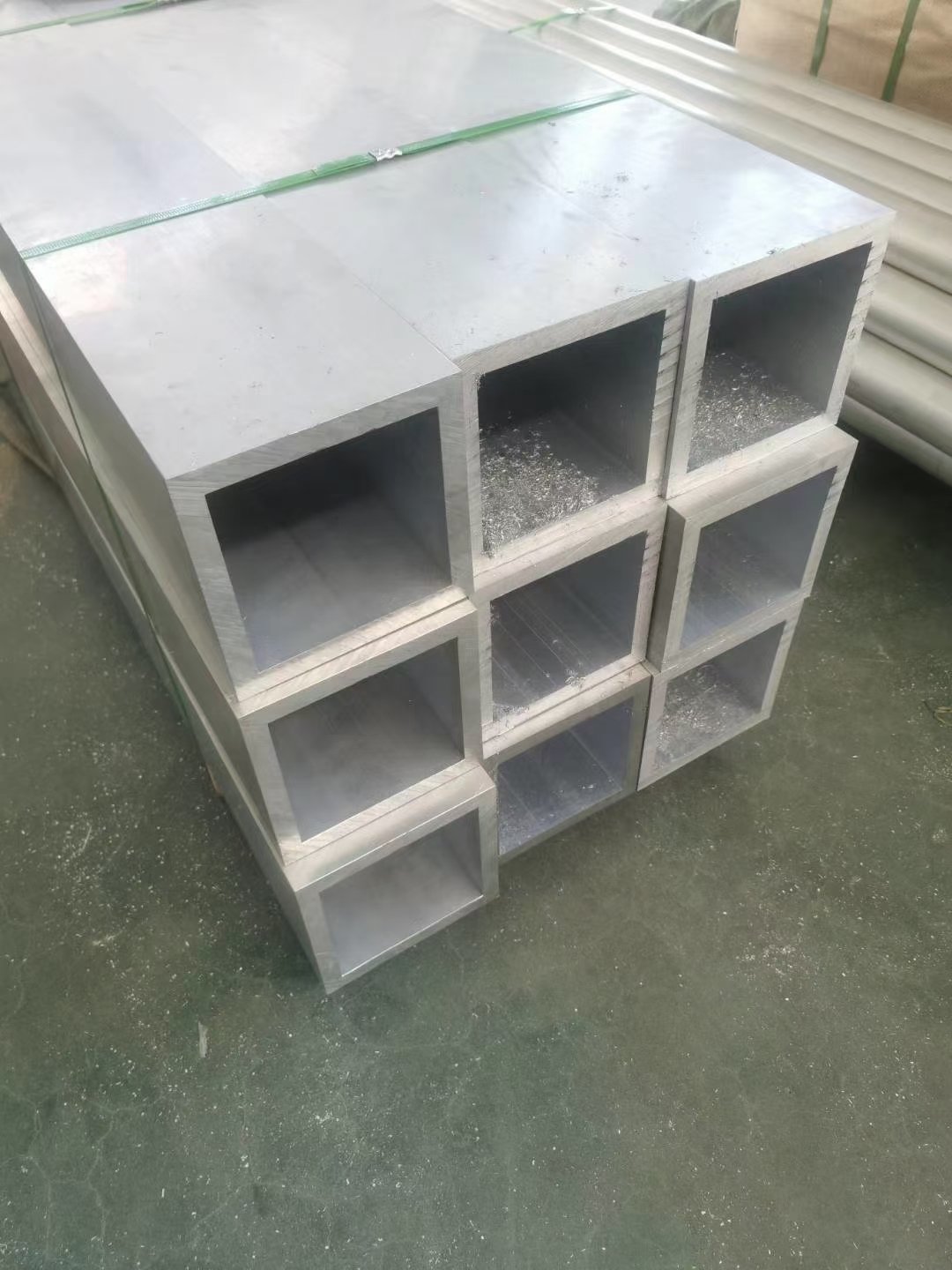
Material / component reference supplied for this page. Grade is verified during stock selection.
Structural aluminum machining
6082 is often used where the part is not only a housing or cover but also carries mechanical load.
Typical structural machining questions include:
- Will the bracket deflect under service load?
- Does the mounting face remain flat after pocketing?
- Are bolt-hole positions controlled relative to the primary datum?
- Does a thin web remain stable after unclamping?
- Are bearing bores aligned?
- Does anodizing alter a precision fit?
- Is the part loaded across the expected material orientation?
These questions connect machining directly to mechanical function.
6CNC can review the geometry and identify manufacturing risks before the first setup.
Common 6082 CNC-machined parts
6082 is particularly suitable for:
- Machine frames
- Structural brackets
- Robotic mounting components
- Automation plates
- Equipment supports
- Load-bearing housings
- Transport-system parts
- Jigs and fixtures
- Structural base plates
- Motor mounts
- Linear-motion supports
- Gantry components
- Mechanical links
- Industrial equipment parts
- Marine and transport components where specified
In small-batch machinery, 6082 can be a practical choice for one-piece machined structures that replace fabricated steel parts when lower mass and corrosion resistance are valuable.
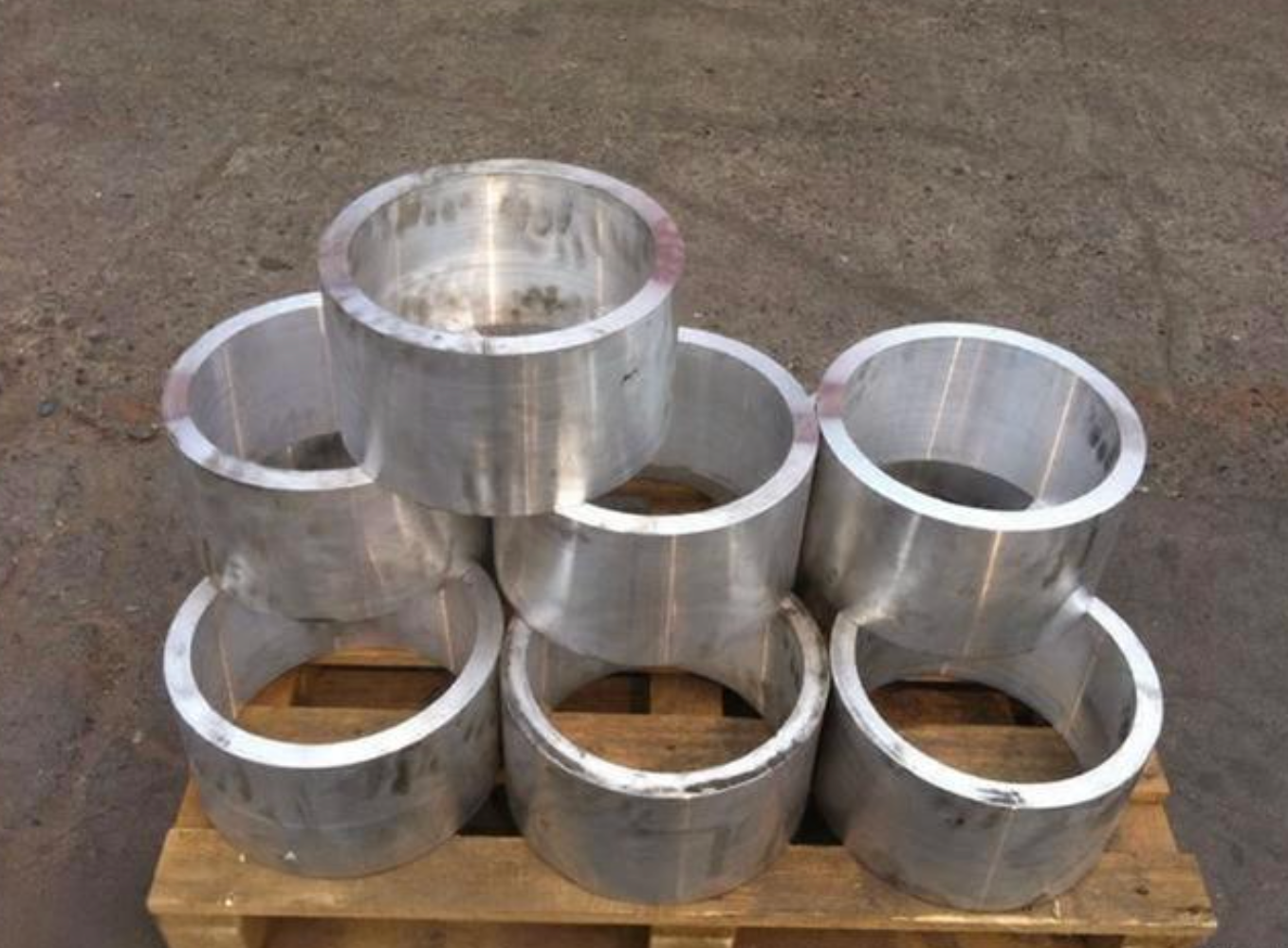
Material / component reference supplied for this page. Grade is verified during stock selection.
6082 vs. 6061
These alloys are close enough that engineers often ask whether one can replace the other.
They should not be treated as automatic substitutes.
6082 advantages
- Widely used and stocked in Europe
- Strong structural reputation
- Can offer higher strength depending on product form and condition
- Good corrosion resistance
- Good machinability
- Weldable
6061 advantages
- Extremely common in North American and global machining supply chains
- Broad stock availability
- Familiar anodizing behavior
- Widely referenced in general CNC design guidance
For many machine parts, either alloy may work technically. The better choice may come down to required specification, stock form, certified properties, region, customer drawing, and availability.
If the drawing states EN AW-6082-T6, substituting 6061 without customer approval is not appropriate.
6082 vs. 7075
The distinction is clearer.
Choose 6082 when you need a corrosion-resistant, weldable structural aluminum with good machining characteristics.
Choose 7075 when very high strength is the dominant requirement and reduced weldability and higher material cost are acceptable.
For machine frames, equipment plates, structural brackets, and welded/mechanically joined assemblies, 6082 may provide a more balanced manufacturing solution.
Machining large 6082 plates
Structural parts are often physically larger than conventional precision components, and large size changes the process planning.
Important factors include:
Stock flatness
Raw plate is not perfectly flat. If both faces become functional, sufficient machining allowance may be needed.
Residual stress
Heavy material removal can release internal stress and cause bow or twist.
Workholding
Large parts require support that prevents vibration without forcing the plate into an artificial shape.
Machining sequence
Alternating sides or using staged roughing may improve stability.
Inspection condition
Flatness and profile measurements should reflect the drawing’s datum scheme and free-state/fixtured requirements.
Tolerances: do not confuse machine accuracy with part capability
A CNC machine may have excellent positioning performance, but that does not mean every 6082 part can hold the same tolerance across every feature.
Actual capability depends on:
- Part size
- Wall thickness
- Tool reach
- Number of setups
- Thermal effects
- Clamping
- Material movement
- Surface finish
- Inspection method
For structural parts, functional GD&T often communicates design intent better than applying a blanket ± tolerance to every dimension.
Useful controls may include:
- Flatness
- Parallelism
- Perpendicularity
- Position
- Profile
- Coaxiality requirements expressed through appropriate GD&T
- Datum-based hole patterns
Surface finishing 6082
Common finish options include:
As machined
Appropriate for internal machine components, fixtures, and functional parts.
Anodizing
Adds corrosion protection and can improve appearance. Type II is common; Type III hard anodizing can be specified for wear-sensitive surfaces.
Bead blasting
Used before anodizing or as a cosmetic treatment where a uniform matte surface is wanted.
Chemical conversion coating
Useful where conductivity or paint preparation is required.
Powder coating or paint
Common on equipment, structural frames, and visible machinery components.
Designers should identify masked threads, grounding points, bearing seats, and precision mating surfaces before finishing.
Welded 6082 parts and post-machining
6082 is weldable, but welding affects local material properties and can introduce distortion.
For welded structures requiring precision, a practical process may be:
- Cut and prepare components
- Weld the assembly
- Allow the assembly to stabilize as required
- Machine critical mounting faces
- Bore or ream aligned holes
- Finish critical interfaces
- Inspect the final assembly
This is often more reliable than attempting to machine every component to final tolerance before welding.
If post-weld strength in the heat-affected zone is functionally important, the design team should evaluate it as part of structural engineering.
Quality control for 6082 machined parts
6CNC can support:
- Incoming material verification
- Drawing and revision control
- In-process inspection
- Final dimensional inspection
- CMM measurement
- Image measurement
- Surface roughness checks
- Material analysis
- FAI
- SPC
- PPAP
- COC where specified
Our quality organization includes 9+ quality engineers and more than 20 types of inspection tools.
For a large structural component, the inspection plan should be agreed before production because not every dimension is best measured with the same equipment.
Why 6CNC for Aluminum 6082?
6CNC is positioned around custom precision machining from prototypes through small-batch production.
That makes us a strong fit for 6082 projects such as machine components, robot structures, structural plates, custom frames, fixtures, and equipment parts that are too specialized for mass production but too critical for casual job-shop control.
We support:
- CNC milling and turning
- 5-axis machining
- Large and complex custom parts
- Small-batch production
- Surface treatment coordination
- Inspection and documentation
- Engineering review before machining
Aluminum 6082 CNC Machining FAQs
Is 6082 aluminum good for CNC machining?
Yes. 6082-T6 has good machinability and is widely used for machined structural and mechanical parts.
What is 6082-T6 commonly used for?
Typical applications include structural brackets, machine frames, equipment components, transport parts, fixtures, mechanical supports, and other load-bearing aluminum components.
Is 6082 the same as 6061?
No. They are different 6xxx-series alloys. Their applications overlap, but composition, specifications, regional availability, and guaranteed properties differ.
Is 6082 stronger than 6061?
6082 is often selected as a higher-strength structural 6xxx alloy, but the actual comparison must use the specific temper, thickness, product form, and governing standard.
Can 6082 be welded?
Yes. It is considered weldable. However, welding can reduce strength locally in the heat-affected zone and introduce distortion.
Can 6082 be anodized?
Yes. Anodizing is commonly used for corrosion protection, appearance, or wear performance.
From Drawing to Finished Part
01
Share your files
Send the CAD model, controlled drawing, quantity and required material condition.
02
Review the process
6CNC reviews stock, machining access, critical dimensions, finishing and inspection.
03
Machine and finish
Production follows the agreed drawing, material and surface requirements.
04
Inspect and deliver
Dimensional verification and requested documentation accompany the agreed delivery.
Compare Aluminum Alloys
Choose around loading, corrosion, forming, finishing and the specified stock condition.
Start your project with 6CNC
Let’s review your Aluminum 6082 part.
Send your design files for a project-specific material, machining and quotation review.
Include with your enquiry
- 3D CAD and controlled PDF drawing
- Alloy, temper and stock specification
- Quantity and delivery target
- Critical dimensions, datums and threads
- Surface finish and inspection requirements