
6CNC · Aluminum 2024
Aluminum 2024
CNC Machining
High-strength, fatigue-resistant aluminum for precision mechanical parts
Aluminum 2024 is a copper-alloyed aluminum grade known for high strength, good fatigue performance, and good machinability. It has a long history in aerospace and other demanding mechanical applications, especially where cyclic loading and strength-to-weight ratio are more important than maximum corrosion resistance.
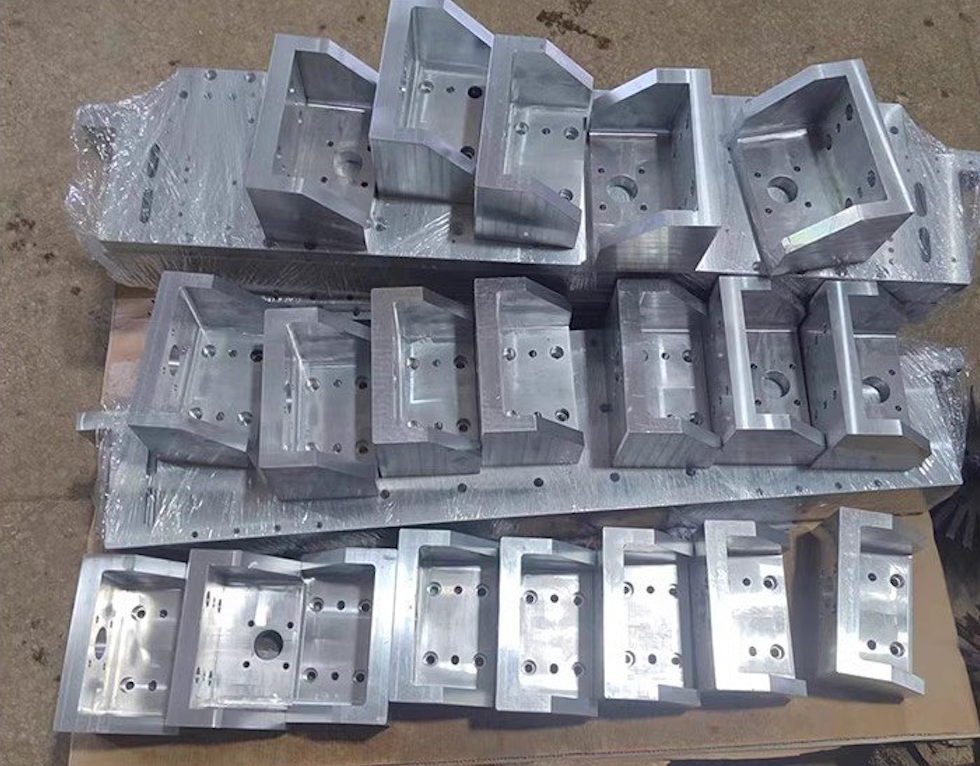
Representative geometry. Alloy and temper are confirmed from your specification.
Custom 2024 Parts with 6CNC
For CNC parts, 2024 is often considered alongside 6061 and 7075, but it occupies a different engineering position. It offers higher strength than 6061 and good fatigue behavior, while requiring more attention to corrosion protection and joining.
6CNC machines custom Aluminum 2024 components for prototypes, development builds, replacement parts, tooling, and small-batch production.
Why 2024 is still specified
2024 is not simply “another strong aluminum.”
Its combination of copper, magnesium, and other alloying elements gives it mechanical properties that have made it useful for highly loaded aircraft and machine components for decades.
Common reasons to specify 2024 include:
- High strength-to-weight ratio
- Good fatigue performance
- Good machinability
- Good machined surface capability
- Proven use in mechanical and aerospace structures
- Availability in plate, sheet, bar, and other wrought forms
- Suitability for precision fittings, mechanisms, and load-bearing components
Its main tradeoff is corrosion resistance. Bare 2024 generally requires more environmental consideration than 5xxx or 6xxx aluminum alloys.
Typical 2024-T3 properties
The T3 condition is one of the most familiar tempers for 2024 wrought products.
| Property | Typical reference value |
|---|---|
| Density | 2.78 g/cm³ |
| Ultimate tensile strength | ~483 MPa |
| Yield strength | ~345 MPa |
| Elastic modulus | ~73.1 GPa |
| Brinell hardness | ~120 HB |
| Elongation | ~18% reference value |
| Fatigue strength | ~138 MPa; 5 × 10⁸ completely reversed cycles, RR Moore test |
| General machinability | Good |
Values are typical references and vary by product form, thickness, specification, orientation, and temper. Use the governing specification and certified material data for engineering design.
Technical reference: ASM / MatWeb 2024 material data. Values depend on temper, product form, thickness and test conditions; use the purchased stock certification and governing specification for design. The listed fatigue test value is not a finished-part fatigue limit.
Understanding 2024-T3, T351, and other machining tempers
2024 is supplied in several tempers depending on product form and required properties.
2024-T3 is solution heat treated, cold worked, and naturally aged. It is common in sheet and some wrought forms.
2024-T351 adds stress relief after solution treatment and is commonly associated with plate. For heavily machined plate components, stress-relieved stock can be important for dimensional stability.
Other tempers may be specified for particular strength, forming, stress-corrosion, or manufacturing requirements.
For 6CNC, the correct approach is to purchase and machine the exact alloy, temper, and material specification stated on the drawing. “2024 aluminum” alone may not be enough information for a controlled aerospace or precision project.
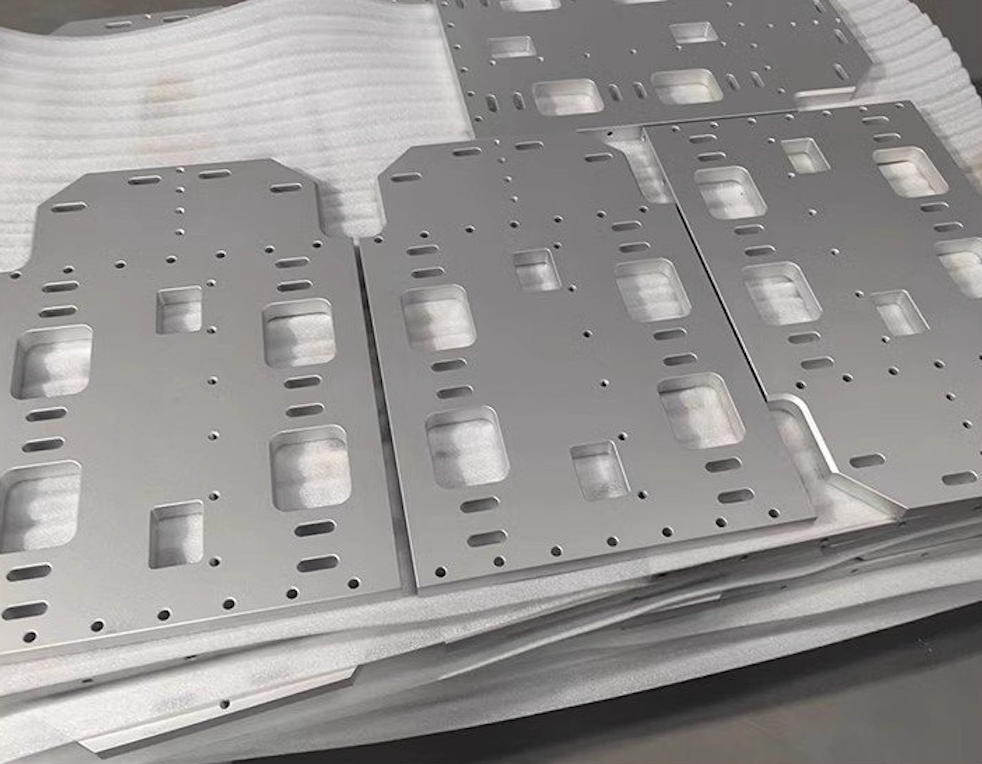
Material / component reference supplied for this page. Grade is verified during stock selection.
Aerospace aluminum machining: what actually matters
The word “aerospace” should not be treated as a generic quality claim.
If a 2024 part is used in an aerospace program, manufacturing may require controls beyond dimensional machining:
- Approved material specification
- Material certification
- Lot traceability
- Drawing revision control
- Defined inspection records
- First Article Inspection requirements
- Special-process certification
- Surface treatment specification
- Customer-specific documentation
- Controlled nonconformance handling
The geometry may be straightforward while the documentation requirements are strict.
For prototype or development work, these requirements should be clarified at quotation rather than assumed.
How 2024 machines
2024 is regarded as a good machining aluminum. It forms chips well and can produce high-quality machined surfaces when tools are sharp and cutting conditions are appropriate.
It is suitable for:
- High-speed milling
- Drilling
- Reaming
- Boring
- Turning
- Thread milling
- Tapping
- Multi-axis machining
Because many 2024 parts are designed for high mechanical performance, the most difficult part of the job may be maintaining feature relationships and material integrity rather than obtaining a visually smooth surface.
Common manufacturing concerns include:
- Thin structural walls
- Deep pockets
- Webs and ribs
- Close-position hole patterns
- Bearing or bushing bores
- High aspect-ratio features
- Residual stress after heavy material removal
- Surface treatment after machining
Typical 2024 CNC-machined parts
2024 is often used for parts where fatigue, mechanical strength, and weight are significant design factors.
Examples include:
- Aircraft fittings
- Structural brackets
- Couplings
- Gear and shaft-related components
- Hydraulic valve bodies
- Precision links
- Fastening components
- Mechanical housings
- Aerospace test hardware
- Instrument structures
- High-load mounts
- Motion-system components
- Orthopedic or equipment hardware where specified
- Prototype flight hardware
- Small-batch replacement components
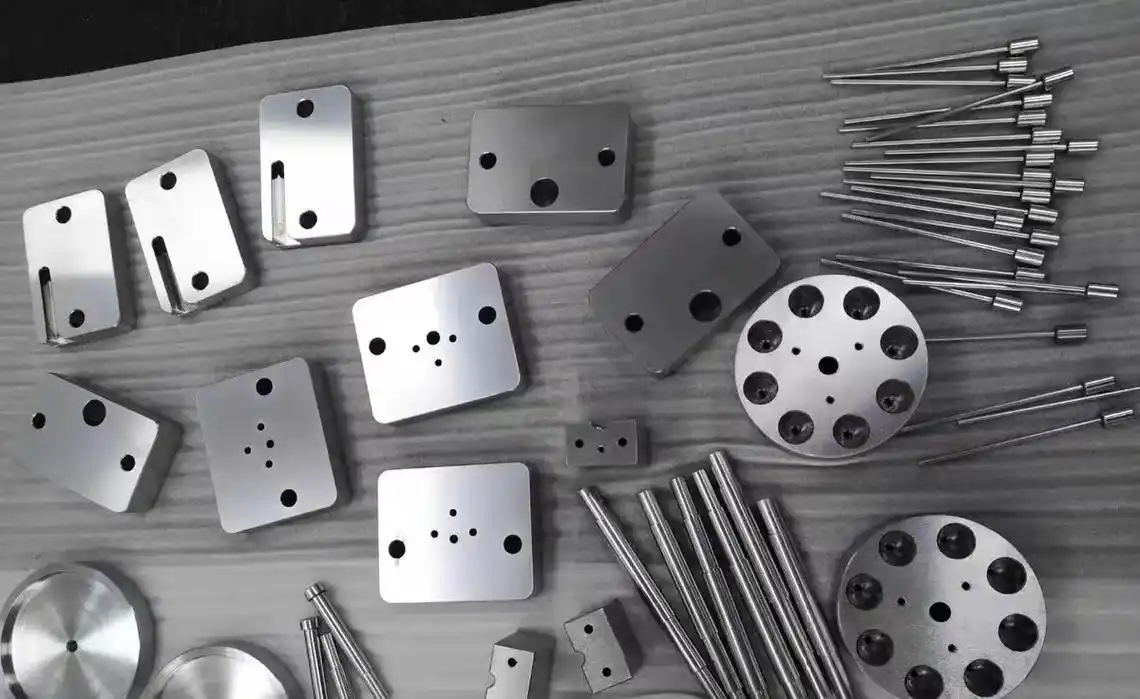
Material / component reference supplied for this page. Grade is verified during stock selection.
Corrosion resistance is the major design tradeoff
2024 contains copper, which contributes to strength but reduces general corrosion resistance compared with 6061 or 5052.
This does not mean 2024 cannot be used in demanding environments. It means corrosion protection should be designed intentionally.
Depending on the application, engineers may specify:
- Alclad product forms
- Anodizing
- Chemical conversion coating
- Primer and paint systems
- Sealants
- Controlled contact with dissimilar metals
- Environmental protection in the assembly
Unprotected surfaces in humid, marine, or chemically aggressive environments deserve particular attention.
Finishing 2024 aluminum
Finishing requirements should be defined before final machining dimensions are frozen.
Anodizing
Anodizing can improve corrosion and wear behavior, but alloy chemistry affects appearance. Dimensional growth and masking requirements must be considered on bores, threads, and precision mating surfaces.
Chemical conversion coating
Common where corrosion protection, paint adhesion, or electrical requirements make a conductive conversion layer useful.
Primer and paint
A common engineering approach when environmental protection is important.
As machined
Acceptable for controlled environments, fixtures, test components, or parts where the customer manages downstream protection.
For high-specification work, the drawing should identify the finish standard rather than simply stating “anodize” or “coat.”
2024 vs. 6061 vs. 7075
The correct aluminum depends on the design priorities.
| Consideration | 2024 | 6061 | 7075 |
|---|---|---|---|
| Strength | High | Moderate | Very high |
| Fatigue performance | Strong reason to consider | General purpose | High-performance option |
| Corrosion resistance | Lower | Good | Lower than 6061 |
| Machinability | Good | Good | Good |
| Weldability | Poor/not preferred | Good | Poor/not preferred |
| Cost | Higher than 6061 | Usually lowest | Usually highest |
| Common design angle | Fatigue + aerospace structures | General precision machining | Maximum strength-to-weight |
This table should be used as a screening tool, not as a substitute for material engineering.
Design notes for 2024 CNC parts
Protect loaded edges and holes
Many 2024 applications include bolts, pins, bearings, and fasteners. Hole quality, edge distance, surface condition, and fit can be functionally important.
Avoid unnecessary sharp internal corners
Sharp corners concentrate stress and require small cutters. Appropriate radii can improve both fatigue behavior and machining efficiency.
Control surface damage
Nicks, tool marks, scratches, or handling damage can matter more on highly stressed components than on cosmetic parts. Define critical surfaces on the drawing.
Plan finishing allowances
If a bore, slot, or sealing feature will be coated, the process route should account for coating buildup and masking.
Define grain-direction requirements if relevant
For highly loaded parts, material orientation relative to rolling or extrusion direction may affect performance. If grain direction matters, specify it clearly.
Precision inspection for 2024 parts
Depending on the component, 6CNC can apply in-process and final inspection using equipment such as:
- CMM
- Image measurement systems
- Micrometers
- Calipers
- Gauges
- Surface roughness measurement
- Material-analysis equipment
Quality planning can include FAI, SPC, PPAP, COC, or customer-specific records when required by the order.
The key principle is that critical dimensions should be understood before machining starts. Final CMM inspection verifies conformance; it should not be the first point where the manufacturing process discovers an unstable feature.
Why 6CNC for Aluminum 2024?
6CNC supports engineers who need custom precision components rather than catalog parts.
Our focus is prototype through small-batch machining, with a process that combines manufacturing review, machining, finishing coordination, and inspection.
Capabilities relevant to 2024 projects include:
- CNC milling
- CNC turning
- 5-axis machining
- Tight-tolerance custom features
- Complex multi-face geometry
- Small-batch production
- Inspection and quality documentation
- Material traceability when specified
- 9+ quality engineers
- 20+ inspection tools and measurement systems
Aluminum 2024 CNC Machining FAQs
Is 2024 aluminum good for CNC machining?
Yes. 2024 generally has good machinability and can produce high-quality milled and turned surfaces.
What is 2024-T3 aluminum used for?
It is commonly associated with aircraft structures, fittings, mechanical components, fasteners, couplings, hydraulic parts, and other applications needing high strength and fatigue performance.
Is 2024 stronger than 6061?
Typical heat-treated 2024 grades are stronger than 6061-T6, although the exact comparison depends on temper and product form.
Does 2024 corrode easily?
Its corrosion resistance is lower than that of common 5xxx and 6xxx alloys. Protective finishing or cladding may be appropriate depending on environment.
Can 2024 aluminum be welded?
Fusion welding is generally not preferred for high-performance 2024 components. Mechanical fastening or other joining strategies are more common.
Should I specify T3 or T351?
Specify the temper required by the design and product form. T351 stress-relieved plate may be useful for heavily machined components where dimensional stability is important.
From Drawing to Finished Part
01
Share your files
Send the CAD model, controlled drawing, quantity and required material condition.
02
Review the process
6CNC reviews stock, machining access, critical dimensions, finishing and inspection.
03
Machine and finish
Production follows the agreed drawing, material and surface requirements.
04
Inspect and deliver
Dimensional verification and requested documentation accompany the agreed delivery.
Compare Aluminum Alloys
Choose around loading, corrosion, forming, finishing and the specified stock condition.
Start your project with 6CNC
Let’s review your Aluminum 2024 part.
Send your design files for a project-specific material, machining and quotation review.
Include with your enquiry
- 3D CAD and controlled PDF drawing
- Alloy, temper and stock specification
- Quantity and delivery target
- Critical dimensions, datums and threads
- Surface finish and inspection requirements