
6CNC · Custom plastic parts
PTFE CNC Machining
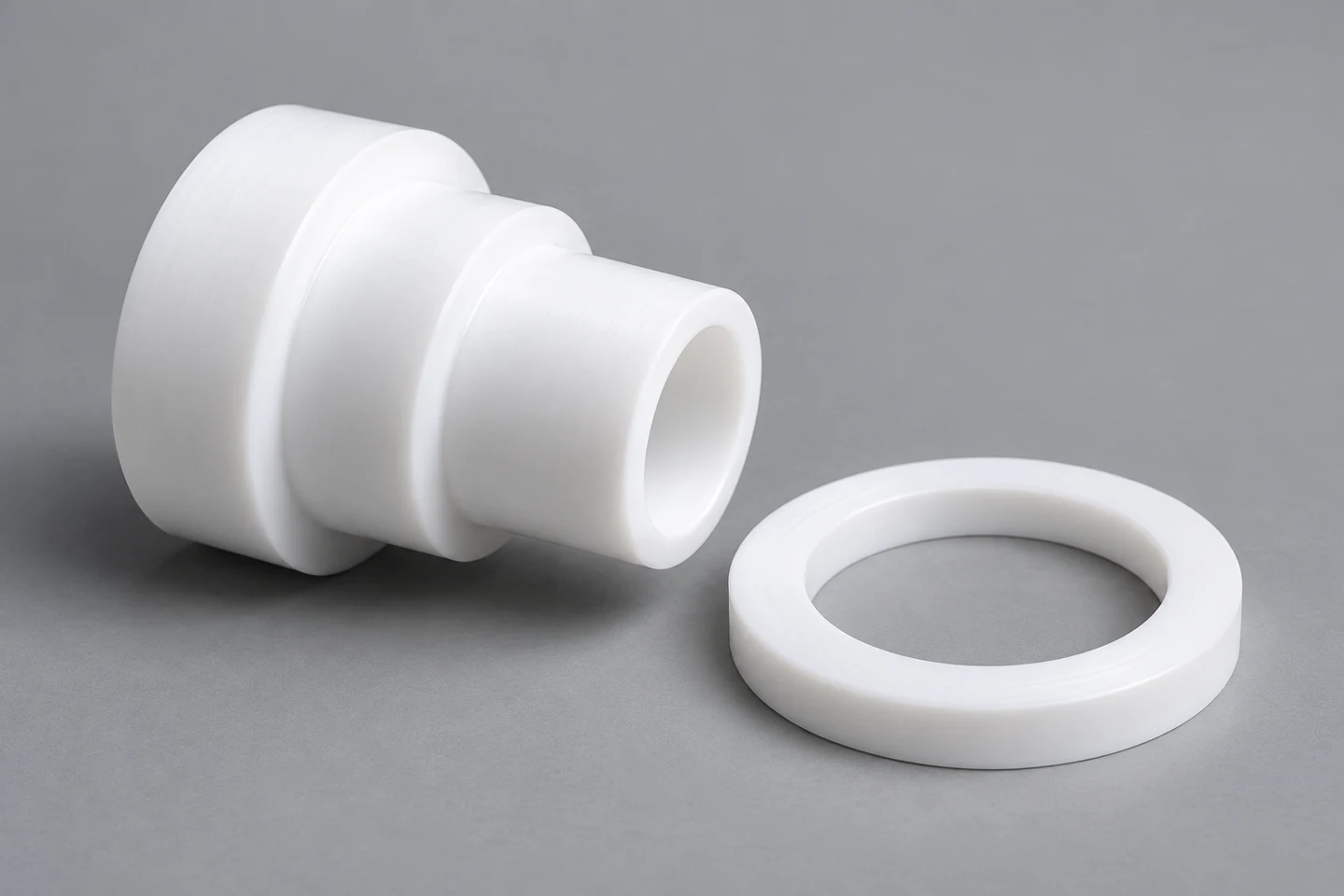
PTFE machining serves chemical-handling, sealing and insulation designs. Define the compound, service temperature and loaded condition so the part can be reviewed around creep and dimensional behavior.
PTFE sealing and insulating components with realistic fit control.
Material choice
Chemical compatibility is only one requirement
PTFE offers broad chemical resistance and low friction, but its low stiffness and tendency to creep affect fitted and loaded components. Do not select the material solely from a chemical-resistance summary.
Specify the exact grade, stock form and operating environment. The material family alone does not define the acceptance requirements for your part.
Machining considerations
Machine soft PTFE without losing the functional fit
Turning seal and seat geometry
PTFE rings and seats are often defined by their relationship with a gland or mating surface. Give the manufacturer the relevant interface dimensions and sealing direction. The free-state shape alone may not communicate how the part behaves after preload is applied.
Milling insulating components
PTFE can deflect under cutting and clamping loads. Supporting the part over a useful area helps avoid machining it while distorted. Thin lips, long unsupported steps and shallow seating details deserve specific review rather than a single blanket tolerance.
Measuring compliant features
A measuring instrument can deform a soft feature if contact force is excessive. Agree the measurement method and temperature for critical fits. For sealing geometry, define the actual edge and surface requirements rather than requesting an unspecified smooth finish.
Application fit
Part features to discuss
- Seal rings: define the gland, loading and mating surface.
- Insulating sleeves: specify electrical needs and compression.
- Valve seats: identify sealing geometry, media and temperature.
Define your application and material requirements before approving stock or process substitutions.
Design for manufacture
Design details that affect machining
- Specify the inspection temperature and avoid overconstraining soft features.
- Minimize long unsupported sections and thin flexible lips where possible.
- Define seal-critical edges and surfaces explicitly.
- Review assembly preload and sustained compression.
Surface finish and handling
PTFE often relies on the quality of the machined surface itself. Define seal-critical lands, allowable burrs and clean edges. Bonding, coating and aggressive secondary finishing are separate engineering decisions; do not add them merely to obtain a shinier part.
Inspection planning
Measure without distorting the part
Contact force and fixturing can affect measurement of soft PTFE features. Agree how critical diameters and sealing surfaces will be accepted.
- Specify virgin or filled PTFE and the complete compound designation.
- Define pressure, temperature, preload and exposure duration.
- Identify sealing faces, gland geometry and burr-sensitive edges.
- Agree a measurement method that does not distort the feature.
Compare the requirements
Virgin and filled PTFE need separate specifications
| Selection point | Engineering consideration |
|---|---|
| Virgin PTFE | Evaluate the base material against load and dimensional needs. |
| Filled PTFE | Name the filler and compound; properties depend on the formulation. |
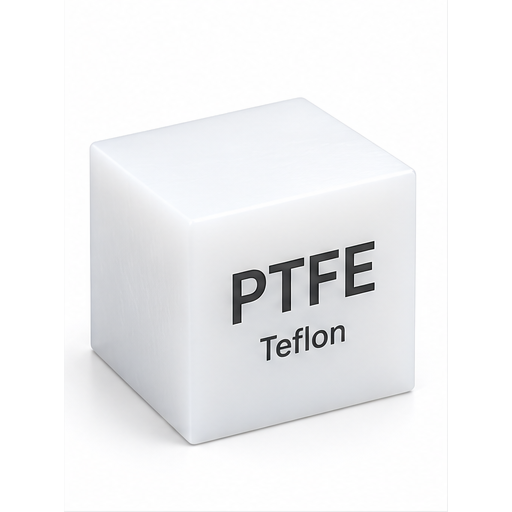
| Teflon reference | A trade name is not a complete purchasing specification. |
Use the exact supplier datasheet, supplied condition and application requirements for final selection.
From drawing to part
Plan the project around functional requirements
01 · Share the design
Send the 3D model and a controlled drawing. Identify critical dimensions, quantity, the exact polymer grade and the intended service environment.
02 · Define acceptance
Review stock, workholding, finishing and measurement conditions together. Resolve required substitutions before manufacture.
03 · Confirm delivery scope
Agree the drawing revision, finished condition, inspection records and packaging requirements for the quoted project.
Common questions
PTFE / Teflon machining FAQs
Can PTFE hold the same tight fit as a metal part?
That cannot be assumed. Evaluate stiffness, thermal movement, creep, geometry and the measurement method for the specific assembly.
Does a filled PTFE grade behave like virgin PTFE?
No. Filler type and content can change creep, wear, electrical and chemical behavior. Use a complete compound specification.
Does chemical resistance establish seal performance?
No. Sealing also depends on gland design, preload, movement, temperature and the mating surface. Check the full assembly.
Is Teflon a complete material specification?
No. It is a trade name used for fluoropolymer products. State the polymer, compound and required product documentation.
Include with your enquiry
- 3D CAD and controlled PDF drawing
- Quantity and required delivery date
- Virgin or filled compound; medium and temperature; pressure and preload; gland geometry; inspection conditions.
Start your project
Let’s review your PTFE / Teflon part.
Send the drawing and service conditions for a project-specific machining and quotation review.