
6CNC · Custom plastic parts
Polycarbonate CNC Machining
Polycarbonate machining is a candidate for clear guards, covers and functional prototypes. Specify visibility, impact needs and chemical exposure separately so material and finish can be reviewed together.
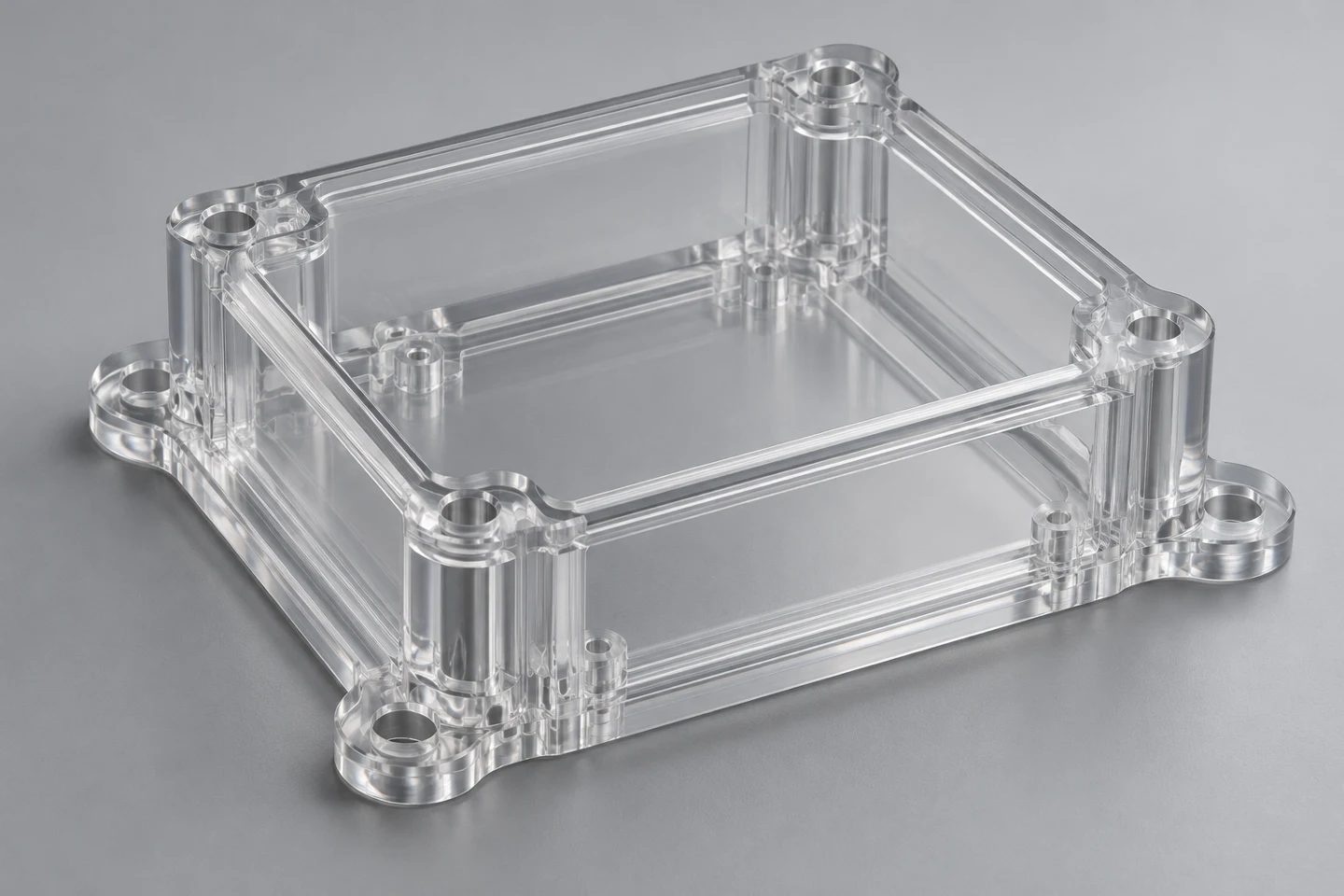
Clear PC parts where impact resistance guides selection.
Material choice
Clear does not automatically mean optical
Polycarbonate is valued for transparency and impact resistance. Machining leaves tool marks, and a transparent resin does not establish optical performance. Viewing surfaces need an explicit finish and acceptance requirement.
Specify the exact grade, stock form and operating environment. The material family alone does not define the acceptance requirements for your part.
Machining considerations
Protect clarity while machining functional PC features
Milling clear covers and pockets
Polycarbonate stock can be machined into mounting holes, recesses and covers. Cutting heat, clamping and residual stress can affect both the fit and visual quality. Identify the viewing zone so it can be protected during machining, inspection and handling.
Drilling and fastening
Small holes near an edge or thin mounting tabs concentrate assembly stress. Provide sensible corner radii and identify the fastening method. The required tightening load and contact with washers or inserts should be assessed as part of the mounting design.
Reviewing cleaners and exposure
Transparent parts are often cleaned repeatedly. A cleaner, adhesive or service chemical can interact with stressed plastic and affect appearance or integrity. Review compatibility with the actual grade and exposure rather than describing all polycarbonate as chemically resistant.
Application fit
Part features to discuss
- Equipment covers: define mounting loads and impact requirements.
- Viewing components: identify sight lines and acceptable distortion.
- Transparent prototypes: distinguish functional features from appearance surfaces.
Define your application and material requirements before approving stock or process substitutions.
Design for manufacture
Design details that affect machining
- Use radiused internal corners to reduce local stress concentration.
- Avoid overtightened fasteners and unsupported thin mounting tabs.
- Identify viewing faces before machining and finishing.
- Review cleaners and bonding agents for compatibility.
Surface finish and handling
An as-machined PC surface may retain visible tool marks. If the part must be used as a viewing window, define the acceptable haze, marks or distortion and confirm a suitable finishing route. A cosmetic improvement should not remove critical edges or change fitted dimensions.
Inspection planning
Protect the viewing surface
Define tool-mark acceptance, haze or other measurable optical requirements where necessary. Protective packaging and handling belong in the specification for appearance-sensitive parts.
- Identify the exact viewing area and appearance standard.
- Specify impact or safety requirements through the applicable product design.
- List cleaners, adhesives and chemicals the part will encounter.
- Define masking, surface protection and shipment packaging.
Compare the requirements
Polycarbonate or acrylic?
| Selection point | Engineering consideration |
|---|---|
| Polycarbonate | Consider when toughness and impact performance lead selection. |
| Acrylic / PMMA | Consider for appearance-led clarity with different impact behavior. |
| Chemical exposure | Check the actual fluid, cleaner and stress state for either material. |
Use the exact supplier datasheet, supplied condition and application requirements for final selection.
From drawing to part
Plan the project around functional requirements
01 · Share the design
Send the 3D model and a controlled drawing. Identify critical dimensions, quantity, the exact polymer grade and the intended service environment.
02 · Define acceptance
Review stock, workholding, finishing and measurement conditions together. Resolve required substitutions before manufacture.
03 · Confirm delivery scope
Agree the drawing revision, finished condition, inspection records and packaging requirements for the quoted project.
Common questions
Polycarbonate machining FAQs
Will CNC machining produce an optically clear window?
Not automatically. Machined surfaces may require a separately reviewed finishing route, and optical acceptance must be defined rather than inferred from transparency.
Is polycarbonate stronger than acrylic?
Polycarbonate is commonly selected for impact toughness, while acrylic is often considered for clarity-led appearance. Compare the actual grades and the type of loading rather than relying on one word such as stronger.
Will a clear PC part be scratch-proof?
No. Transparency does not imply scratch resistance. Define the handling requirements and review any protective coating separately.
Can a machined PC guard be called safety-certified?
Only when the complete product and applicable requirements have been assessed. The material name and machining process do not establish a safety rating.
Include with your enquiry
- 3D CAD and controlled PDF drawing
- Quantity and required delivery date
- PC grade; impact and exposure requirements; viewing surfaces; finish acceptance; mounting and packaging requirements.
Start your project
Let’s review your Polycarbonate part.
Send the drawing and service conditions for a project-specific machining and quotation review.