
6CNC · Custom plastic parts
Acrylic / PMMA CNC Machining
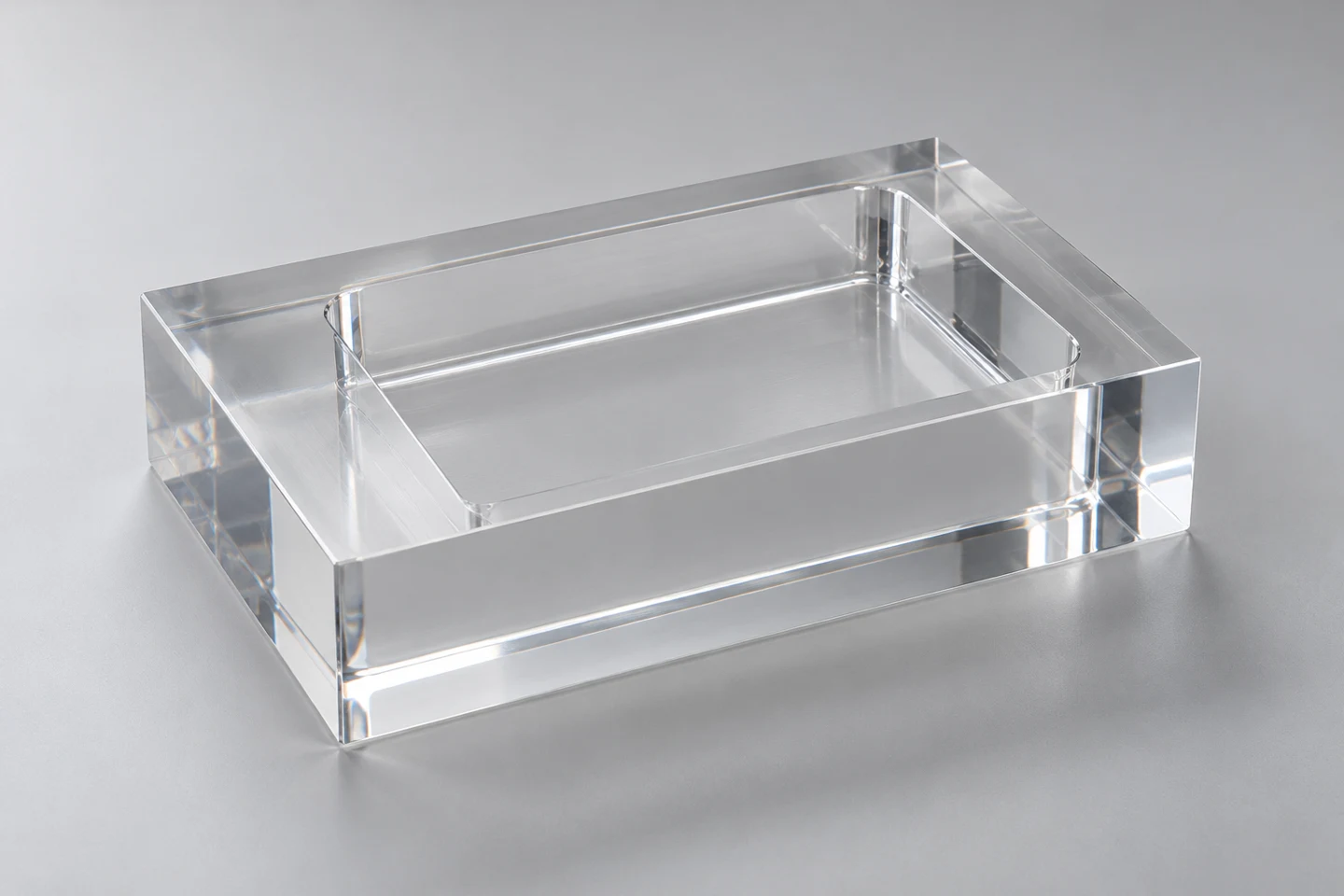
PMMA machining suits transparent covers, display components and appearance prototypes. Mark the surfaces that must be clear and define acceptable marks, edge quality and fit before selecting a finishing route.
Clear acrylic parts with appearance surfaces defined upfront.
Material choice
Define what clear means for the part
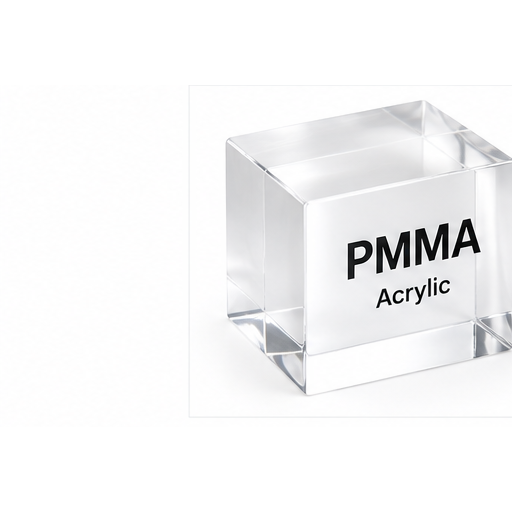
PMMA is an option for clarity-led designs. It is less tolerant of impact and stress concentration than polycarbonate in many applications. A polished appearance does not by itself qualify a part as an optical component.
Specify the exact grade, stock form and operating environment. The material family alone does not define the acceptance requirements for your part.
Machining considerations
Define visible faces before machining PMMA
Milling transparent features
Pockets, recesses and mounting holes can be machined into PMMA stock. Tool access and chip evacuation affect edge quality and surface marks. Mark the faces viewed in service and distinguish them from internal clearance surfaces that do not require the same cosmetic work.
Avoiding stressed corners
Sharp internal corners, thin tabs and concentrated fastening loads can increase cracking risk. Review corner radii and the method of attachment. Do not expect an appearance-driven polishing operation to correct a mechanically fragile mounting detail.
Planning clear edges and fitted surfaces
A clear polished edge and a close-fitting shoulder have different acceptance needs. Define where material removal is allowed during finishing. For an assembly window or display cover, the final fit should be evaluated after the approved finishing operation.
Application fit
Part features to discuss
- Display components: identify visible faces and edge appearance.
- Clear housings: define fastening loads and internal corners.
- Optical-development parts: specify the measurable optical requirement and test method.
Define your application and material requirements before approving stock or process substitutions.
Design for manufacture
Design details that affect machining
- Use practical radii around loaded internal corners.
- Avoid thin unsupported tabs near screws.
- Distinguish polished faces from dimension-critical mating features.
- Review stock form, internal stress and compatible cleaning methods.
Surface finish and handling
Specify polished faces and edges individually. Surface treatment must be compatible with the geometry, stock condition and application. For an optical-development component, use measurable criteria and a defined verification method rather than the phrase optical clear alone.
Inspection planning
Finish only the surfaces that need it
Finishing can alter edges and fitted dimensions. Define where polishing is required and how those surfaces will be protected through inspection and shipment.
- State the PMMA stock requirements and approved substitutions.
- Mark visible faces, polished edges and functional mating surfaces.
- Define an agreed visual reference or measurable optical requirement.
- Specify protective handling and packaging for finished surfaces.
Compare the requirements
Clarity, toughness and finishing
| Selection point | Engineering consideration |
|---|---|
| PMMA | Consider when visual appearance and clarity dominate. |
| Polycarbonate | Review when impact or mounting toughness is more important. |
| Optical requirement | Specify transmission, haze or surface criteria only as the application requires. |
Use the exact supplier datasheet, supplied condition and application requirements for final selection.
From drawing to part
Plan the project around functional requirements
01 · Share the design
Send the 3D model and a controlled drawing. Identify critical dimensions, quantity, the exact polymer grade and the intended service environment.
02 · Define acceptance
Review stock, workholding, finishing and measurement conditions together. Resolve required substitutions before manufacture.
03 · Confirm delivery scope
Agree the drawing revision, finished condition, inspection records and packaging requirements for the quoted project.
Common questions
Acrylic / PMMA machining FAQs
Does polished acrylic mean optical-grade machining?
No. Optical performance requires a defined material, geometry, finish and verification method. Visual clarity alone does not establish lens or imaging performance.
Is cast acrylic always required for machining?
Stock selection depends on geometry, dimensions and the finishing route. Specify a required stock type when the design depends on it and review the supplier’s recommendation.
Should every acrylic surface be polished?
No. Finish the faces that serve a viewing or appearance function. Unnecessary polishing can add cost and affect edges or fitted dimensions.
Can acrylic replace a polycarbonate guard?
Review impact loading, mounting, exposure and applicable safety requirements. Visual similarity is not evidence of equivalent performance.
Include with your enquiry
- 3D CAD and controlled PDF drawing
- Quantity and required delivery date
- PMMA stock requirement; visible faces; edge finish; optical criteria if applicable; mounting loads and protective packaging.
Start your project
Let’s review your Acrylic / PMMA part.
Send the drawing and service conditions for a project-specific machining and quotation review.