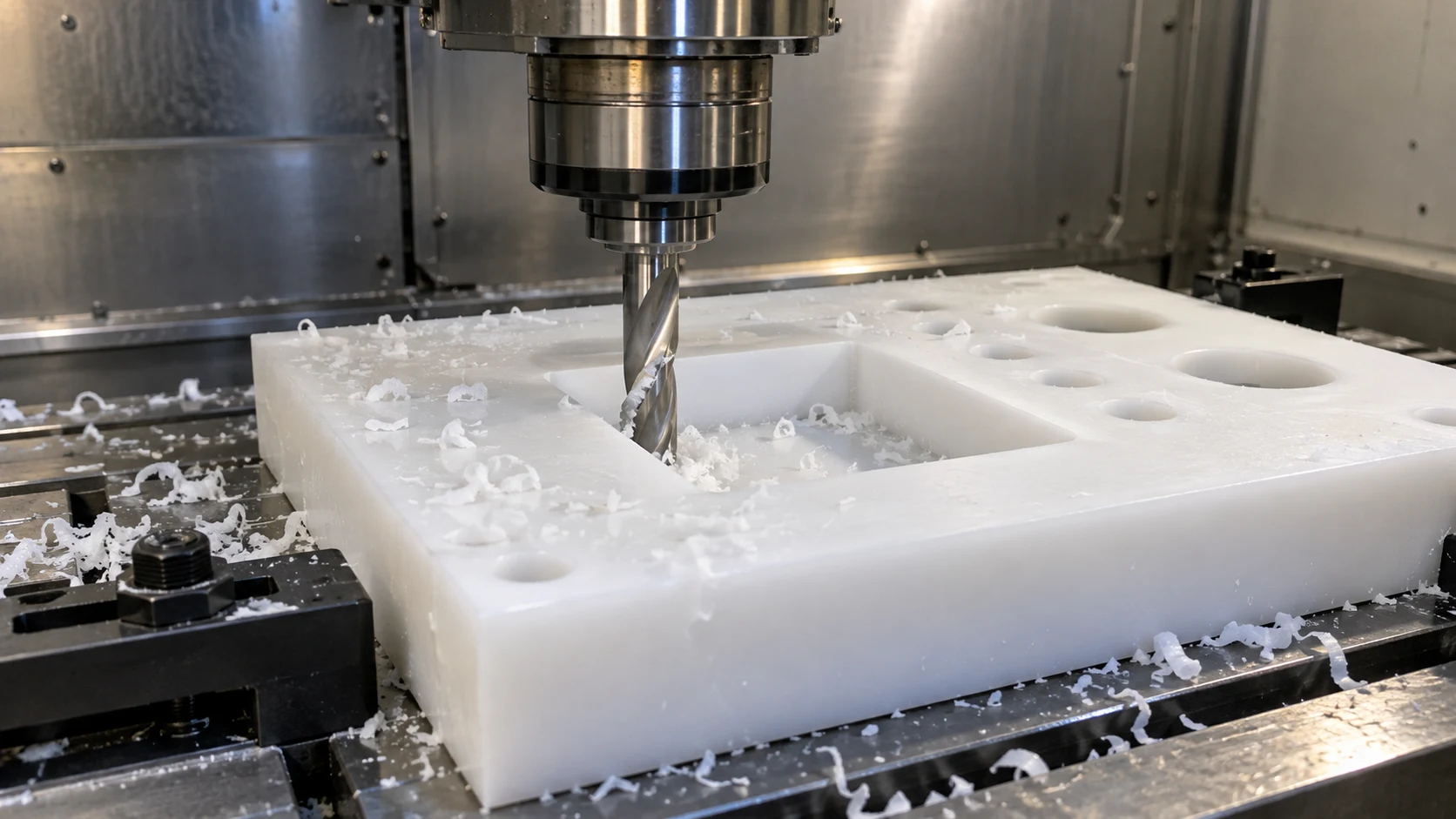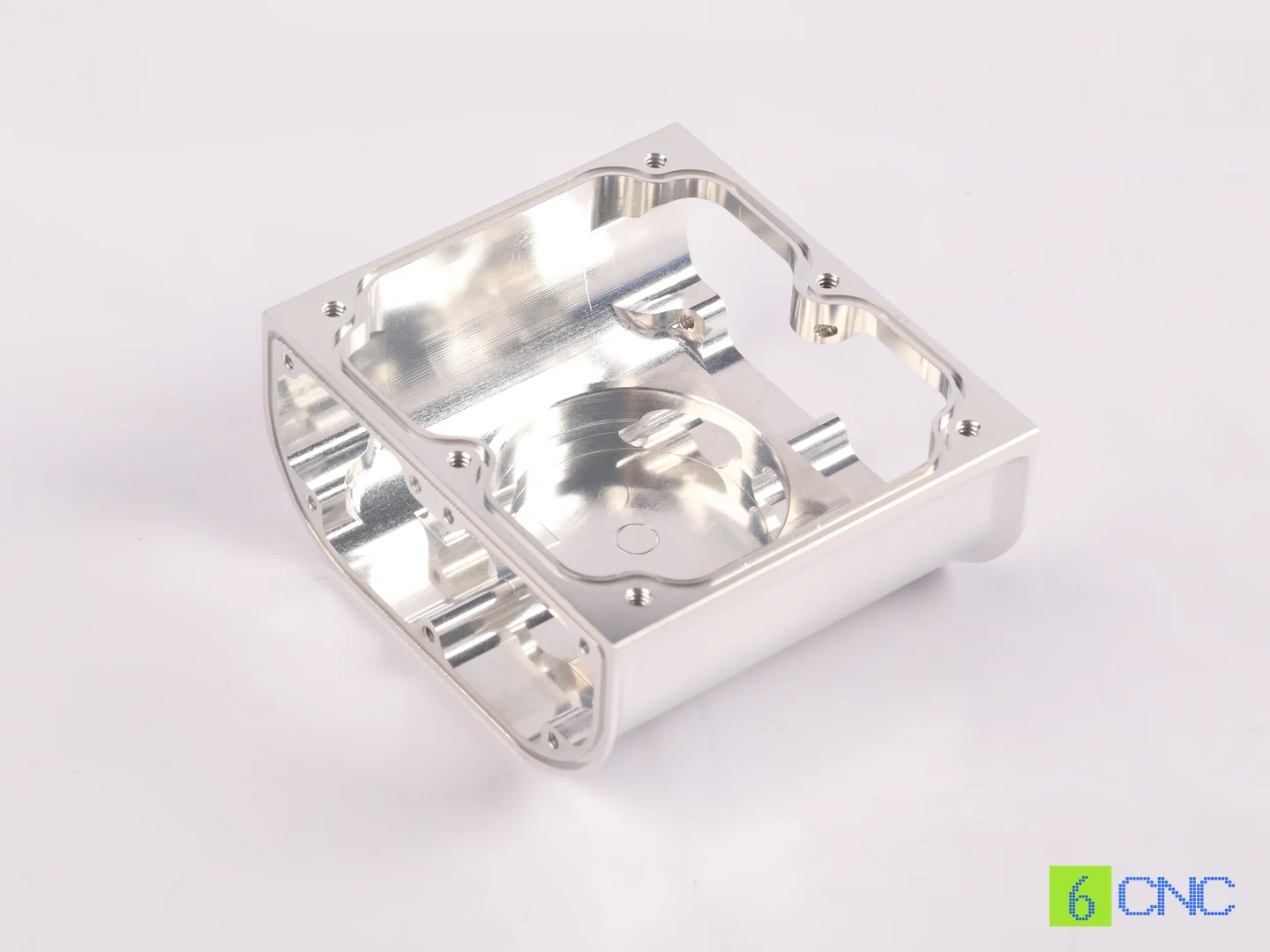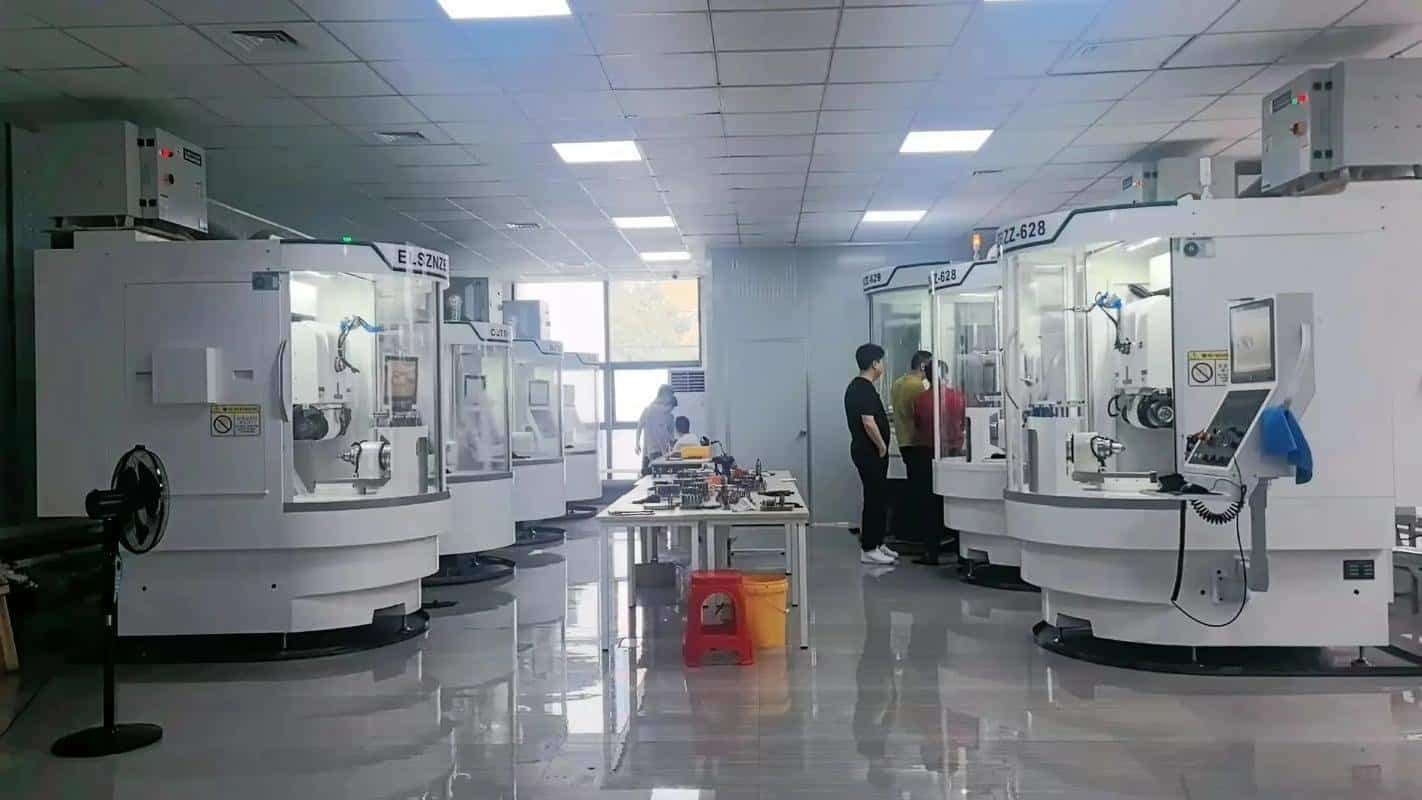
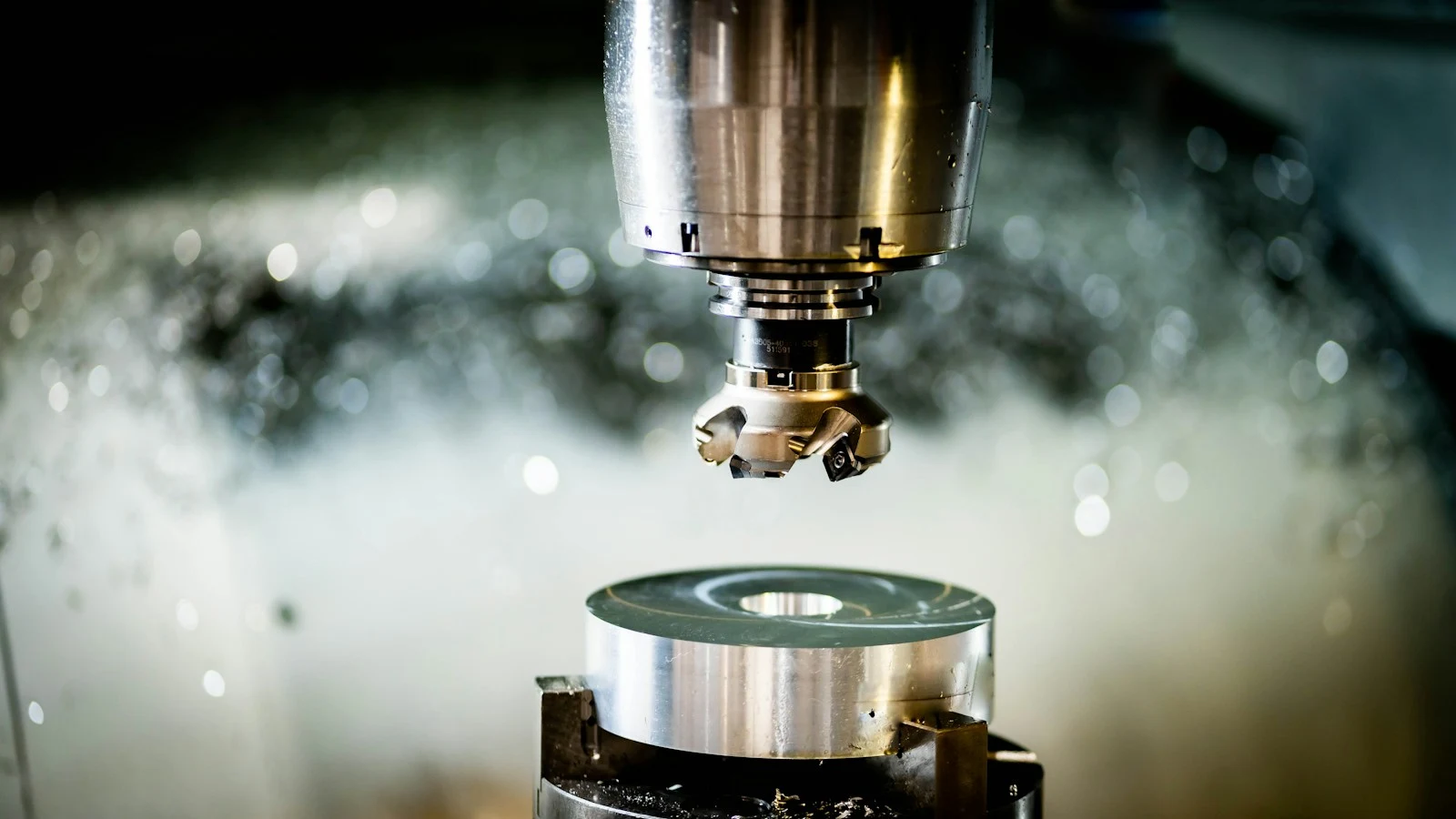
Artificial intelligence is becoming part of CNC machining, but probably not in the way many headlines suggest.
A modern CNC machine shop is not suddenly replacing machinists with autonomous machines that receive a CAD model, decide how to manufacture it, correct every problem automatically, and deliver perfect parts without human involvement. CNC manufacturing remains a physical process governed by cutting forces, workholding, tool access, material behavior, machine capability, tolerances, and inspection requirements.
What AI is changing is the amount of manufacturing data that can be analyzed and the speed at which useful decisions can be made from it.
Machine-learning systems can look for patterns in spindle load, vibration, power consumption, tool-life history, inspection results, machine alarms, production schedules, and other data that would be difficult for a person to evaluate continuously. AI-assisted software can help programmers compare machining strategies, estimate cycle time, identify possible tool wear, improve scheduling, detect visual defects, or flag processes that are behaving differently from historical production.
Some of these applications are already practical. Others require sophisticated sensors, large amounts of reliable production data, and tightly integrated machine systems. A few remain closer to research than everyday machine-shop reality.
Understanding that distinction is important.
The real future of AI in CNC machining is unlikely to be “AI replaces machining knowledge.” It is much more likely to be experienced manufacturing teams using better data, faster prediction, and more automated decision support to control increasingly complex production processes.
What Does AI in CNC Machining Actually Mean?
Artificial intelligence in CNC machining generally refers to software systems that use data to recognize patterns, predict outcomes, recommend actions, or automate part of a manufacturing decision.
Traditional CNC automation usually follows predefined rules.
For example, a machining program may specify:
- spindle speed;
- feed rate;
- cutting depth;
- coolant commands;
- tool changes;
- probing cycles;
- axis movements.
The machine executes those instructions repeatedly.
An AI-assisted system adds another layer. Instead of responding only to fixed commands, it may analyze information from the process and compare that information with previous production data.
For example, spindle current and vibration could gradually change as a cutter wears. A machine-learning model trained on previous tool-life data may identify that pattern and estimate that the tool is approaching an unacceptable wear condition.
The CNC machine is still executing a programmed process. AI is helping interpret what is happening inside that process.
This distinction separates useful industrial AI from marketing language.
AI Does Not Replace CAM, CNC Controls, or Machining Knowledge
Artificial intelligence is sometimes described as if it were a new type of CNC controller. In most practical applications, that is not the case.
A modern machining workflow may include several different software layers:
CAD defines the component geometry.
CAM creates machining strategies and toolpaths.
Post-processing converts those strategies into machine-specific NC code.
The CNC controller executes machine motion.
Sensors and metrology systems collect information about what actually happens.
AI or machine-learning systems analyze some of that information and help predict, classify, optimize, or recommend decisions.
These systems can increasingly interact, but they are not interchangeable.
AI does not remove the need to understand whether a part should be machined from two setups or five, whether a 6 mm end mill has enough rigidity for a 60 mm deep feature, or whether clamping pressure will distort a thin aluminum wall.
Those remain manufacturing-engineering problems.
What AI can do is help engineers evaluate more variables at once and learn from previous production more systematically.
1. Tool Wear Prediction and Tool Condition Monitoring
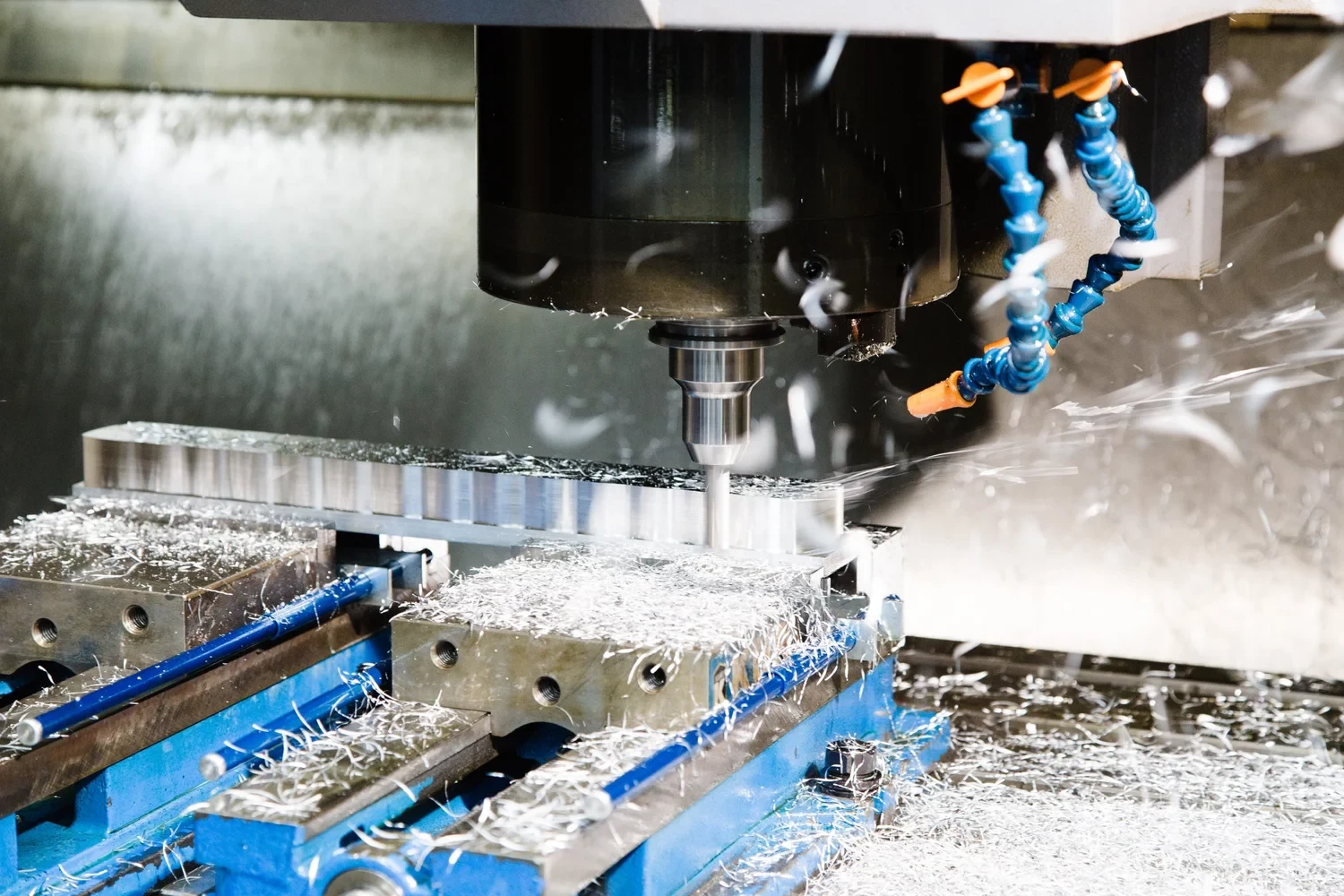
Tool condition monitoring is one of the most practical applications of machine learning in CNC machining.
Cutting tools do not normally go from “perfect” to “broken” instantly. Their condition changes gradually.
As a tool wears, manufacturers may observe changes in:
- spindle load;
- vibration;
- acoustic signals;
- cutting forces;
- power consumption;
- surface finish;
- part dimensions.
Traditionally, shops manage this through experience, fixed tool-life limits, visual inspection, or dimensional inspection.
For example, a finishing end mill may be replaced every 80 parts because historical experience shows that quality becomes less predictable beyond that point.
This is safe, but it can also waste usable tool life.
The opposite strategy—running every cutter until quality deteriorates—creates greater scrap risk.
Machine-learning-based tool monitoring attempts to make that decision more data-driven.
Example: Finishing 200 Stainless Steel Housings
Suppose a shop is machining 200 stainless steel housings containing a precision sealing surface.
During the first parts, the cutter produces a stable spindle-load signature and consistent finish.
As flank wear develops, vibration and power consumption begin changing slightly.
A monitoring system trained using previous machining cycles may recognize that the pattern is similar to earlier tools approaching the end of their useful finishing life.
Instead of waiting for a bad part, the system can flag the tool for replacement.
The value is not that AI somehow sharpens the cutter.
The value is earlier detection.
For small-batch precision manufacturing, this can be particularly useful when one worn tool could affect dozens of parts before conventional final inspection detects the trend.
2. Predictive Maintenance for CNC Equipment
Predictive maintenance applies similar logic to the machine itself.
Traditional maintenance generally follows one of two approaches.
Preventive maintenance replaces or services components according to a schedule.
Reactive maintenance repairs the machine after a problem occurs.
Predictive maintenance attempts to identify developing problems before they cause unexpected downtime.
A machining center generates a large amount of operational information. Depending on the machine and sensors available, this may include:
- spindle vibration;
- motor current;
- temperature;
- axis load;
- lubrication conditions;
- alarm history;
- cycle history.
A sudden machine failure is expensive, but many failures are preceded by smaller changes.
For example, spindle-bearing condition may gradually affect vibration. Axis behavior may begin changing before a positioning problem becomes severe enough to trigger obvious dimensional failures.
AI-based condition monitoring can compare current behavior with historical patterns and identify anomalies that deserve maintenance attention.
This is especially valuable in high-utilization factories where one machine stopping unexpectedly can affect several production orders.
It does not eliminate maintenance engineers. Instead, it can help them decide which machine deserves attention first and why.
3. AI-Assisted Cutting Parameter Optimization
Selecting feeds and speeds is a familiar machining problem.
Tool manufacturers provide recommended starting values, but actual machining conditions depend on much more than workpiece material.
The best parameters may change according to:
- cutter diameter;
- flute count;
- coating;
- tool overhang;
- axial depth;
- radial engagement;
- machine rigidity;
- fixture rigidity;
- coolant conditions;
- feature geometry.
An experienced programmer adjusts these variables using engineering knowledge and previous results.
AI-assisted systems can add another source of information: historical production data.
Imagine that a shop has machined hundreds of aluminum housings using similar tools and materials. Its production records contain combinations of cutting parameters, spindle loads, tool life, cycle time, and quality results.
Instead of treating every new part as an isolated problem, data-driven software can identify which parameter combinations previously produced stable results.
This becomes particularly useful in high-mix manufacturing, where similar but non-identical jobs appear repeatedly.
However, there is an important limitation.
Historical correlation is not the same as manufacturing understanding.
A recommended feed rate may have performed well because the previous component had excellent support. Applying the same parameters to a thin-wall part could produce chatter or deformation.
AI-generated machining recommendations therefore still need engineering validation.
4. AI-Assisted CAM Programming
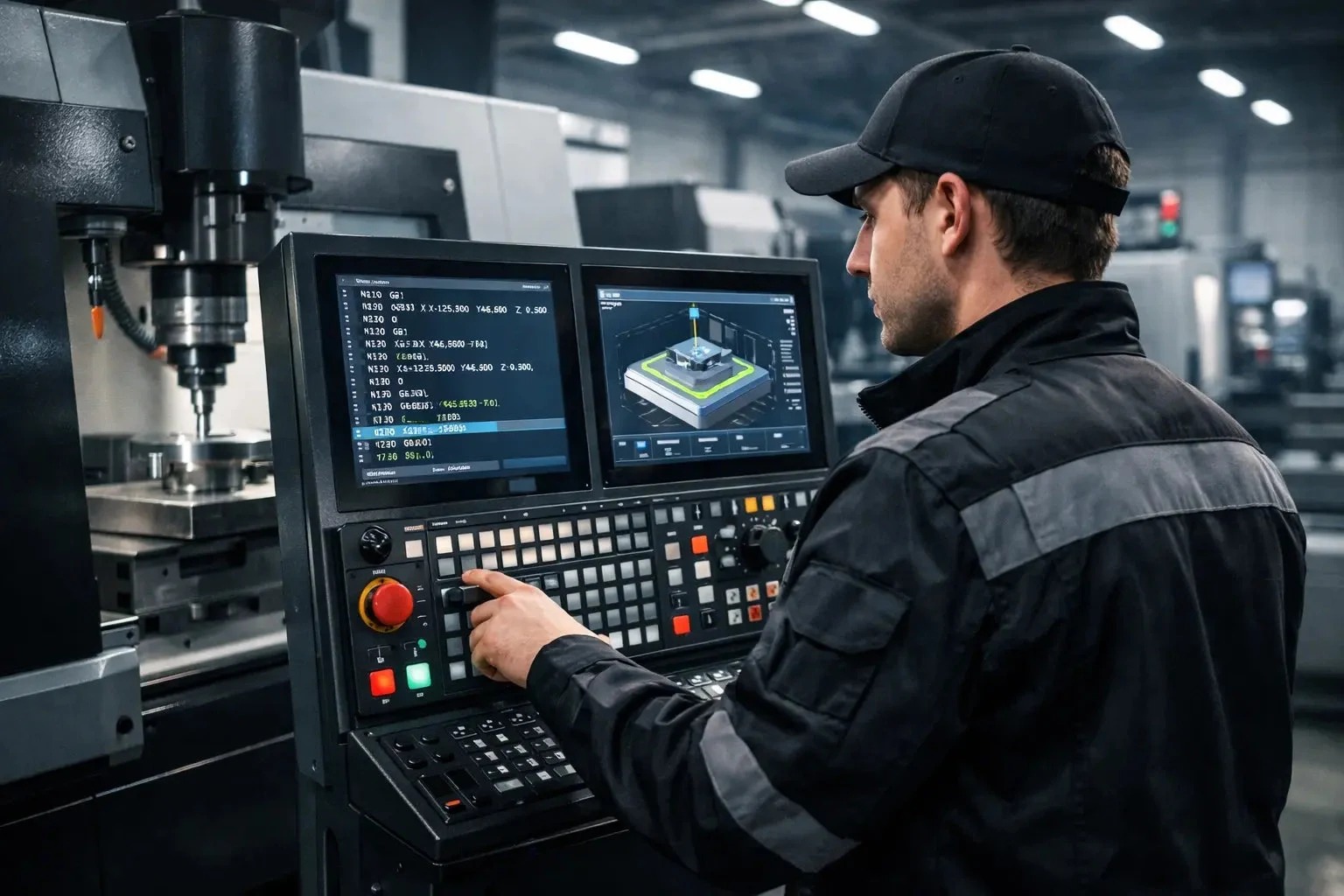
CAM programming is another area where AI is beginning to reduce repetitive work.
Traditional CAM programming requires a programmer to identify features, select tools, choose machining strategies, define cutting parameters, create boundaries, simulate toolpaths, and generate NC code.
Much of this work follows repeatable patterns.
A shop may have standard methods for:
- facing raw stock;
- roughing aluminum pockets;
- drilling tapped holes;
- finishing bores;
- machining standard chamfers.
Feature recognition and rule-based automation already handle some of these tasks without requiring advanced AI.
Newer systems can extend this idea by learning from programming history or allowing programmers to define machining intent at a higher level.
For example, software may suggest:
- suitable cutters;
- roughing strategies;
- previous similar operations;
- feeds and speeds;
- operation sequencing.
This can shorten programming time, especially for repetitive prismatic components.
But complex parts remain harder.
An aerospace bracket with thin walls, a medical component with several critical datums, or a five-axis impeller still requires manufacturing judgment about setup sequence, workholding, tool access, and deformation.
AI may help create toolpaths.
It does not automatically understand all the physical consequences of machining them.
5. Automated Quoting and Manufacturability Analysis
AI and automation can create significant value before a part reaches the machine.
CNC quotation traditionally requires someone to review a model and estimate:
- material;
- stock size;
- setup count;
- machining time;
- tooling;
- secondary operations;
- inspection effort.
For a busy custom machine shop receiving hundreds of RFQs, this consumes substantial engineering time.
Automated manufacturing platforms increasingly analyze CAD geometry and estimate machining complexity.
Systems may identify features such as:
- pockets;
- holes;
- deep cavities;
- thin walls;
- internal radii;
- overall dimensions.
They can then compare the geometry against machine capability and historical production data to generate preliminary pricing or manufacturability feedback.
AI can make these systems more adaptable by learning from previous quotes and actual production outcomes.
But automatic quoting has an important weakness
CAD geometry alone does not describe the entire manufacturing problem.
A model may look straightforward while the drawing specifies:
- a tight true-position requirement;
- an unusually fine surface finish;
- controlled flatness;
- full dimensional reporting.
Those requirements can dramatically change cost.
For this reason, automated quotation works best when combined with engineering review for precision or unusual parts.
6. AI in CNC Quality Inspection
ZEISS describes targeted AI applications in image analysis and quality control.
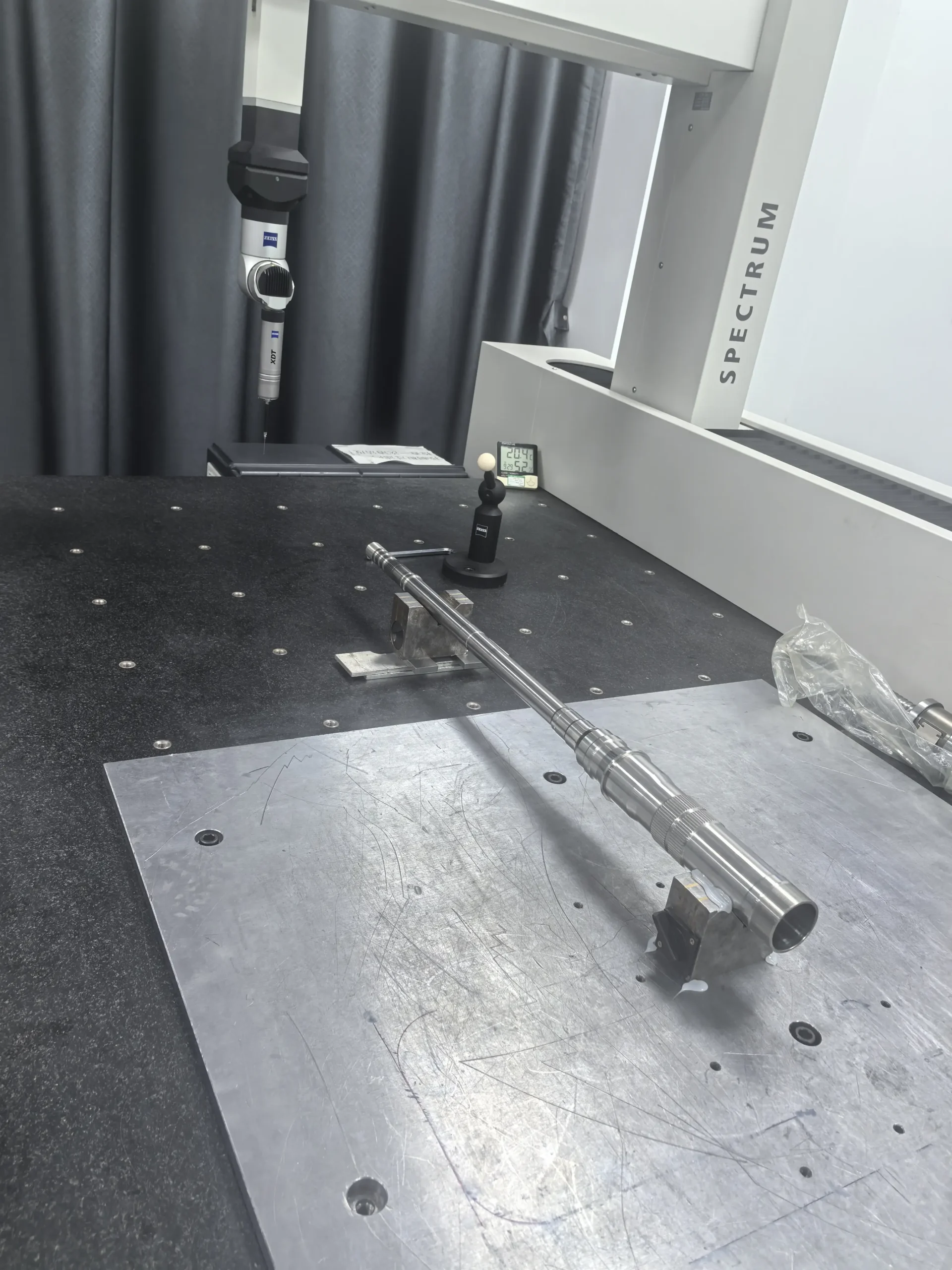
Quality control generates another large source of manufacturing data.
A precision machine shop may collect:
- CMM reports;
- optical measurements;
- surface measurements;
- pass/fail records;
- tool histories;
- process deviations.
Traditionally, these records confirm whether parts meet specifications.
AI can potentially make them more useful by identifying patterns across multiple production runs.
For example, suppose a particular bore begins trending toward the upper tolerance limit every time one specific cutting tool reaches a similar number of cycles.
Individually, every part may still pass inspection.
Across dozens of batches, however, the pattern becomes visible.
Data analysis can connect dimensional trends with:
- tool condition;
- machine;
- fixture;
- operator;
- material batch;
- process parameters.
That turns inspection data into process information.
Computer Vision for Surface Defects
Computer vision is another promising quality application.
Cameras combined with machine-learning models can inspect surfaces for visible conditions such as:
- scratches;
- dents;
- missing features;
- discoloration;
- burrs;
- cosmetic defects.
This can be effective when the defect has a consistent visual signature.
It is less suitable for dimensions that require precise geometric measurement.
A camera may determine that a surface looks wrong, but that does not replace a CMM when a drawing specifies true position, flatness, or bore diameter.
AI visual inspection should therefore complement dimensional metrology rather than being treated as a universal replacement.
7. Process Anomaly Detection
Some machining failures are obvious.
A cutter breaks.
The machine alarms.
The part moves in the fixture.
Other problems develop more subtly.
A tool may begin chattering only in one corner.
Chip evacuation may gradually worsen.
A spindle-load pattern may change.
The part may still appear normal while the process behaves differently from previous cycles.
Anomaly detection systems look for these deviations.
Instead of requiring the software to know every possible failure in advance, it learns what a normal process looks like and flags behavior that falls outside the expected pattern.
For repetitive production, this can be powerful.
Imagine a CNC turning process that has completed 500 stable cycles. Cycle 501 suddenly produces a significantly different spindle-load pattern during one operation.
The part may not yet be out of tolerance, but the process deserves investigation.
The system does not necessarily need to know whether the cause is a worn insert, chip wrapping, or material variation.
Identifying the abnormal cycle is already valuable.
8. Adaptive Machining and Closed-Loop Control
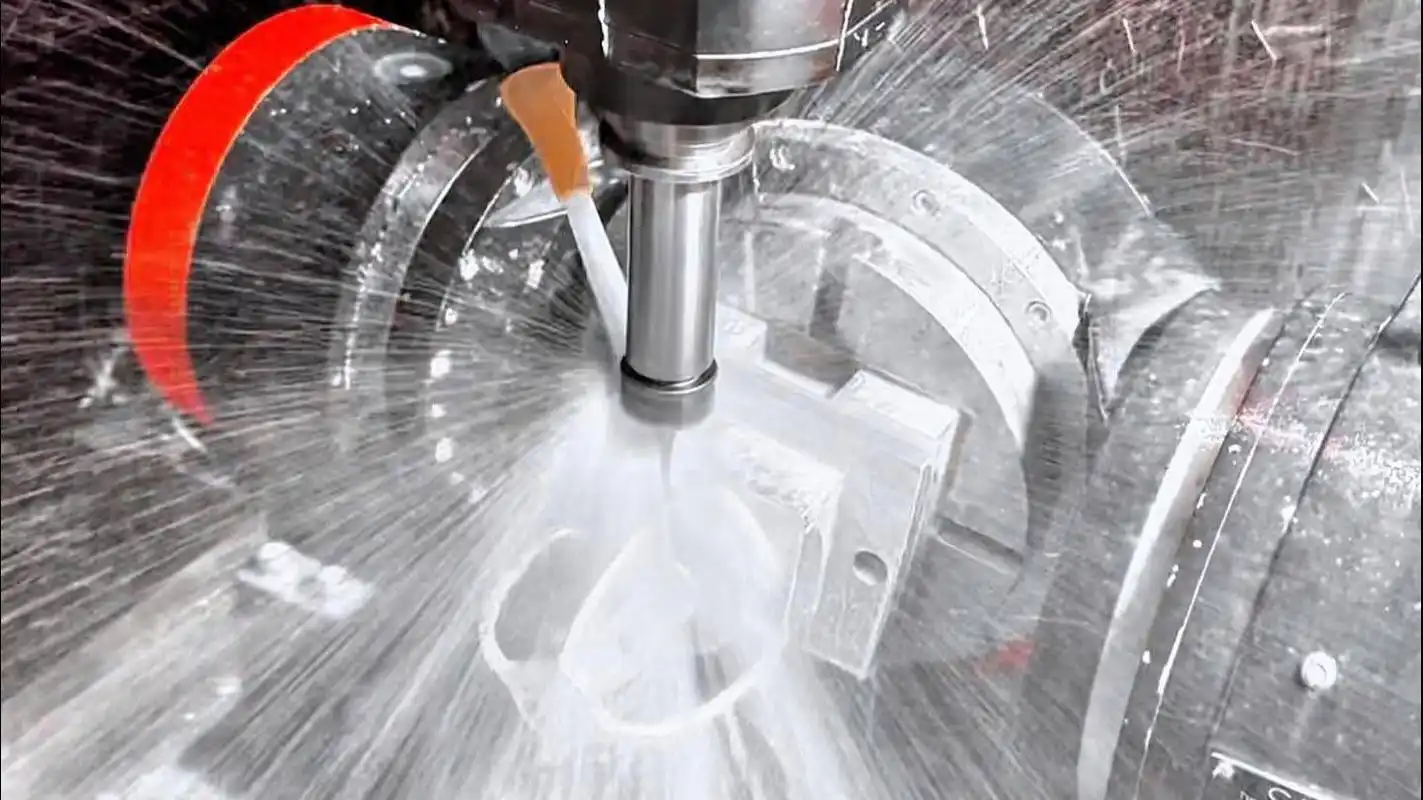
One of the more advanced applications of AI is adjusting machining conditions while cutting is taking place.
This moves beyond monitoring.
The system measures what is happening and modifies the process in response.
Possible adjustments could include:
- feed rate;
- spindle speed;
- tool compensation;
- machining sequence;
- replacement timing.
Adaptive control itself is not new. CNC systems have used load monitoring and parameter adaptation for years.
AI can potentially make those systems more sophisticated by combining several inputs and predicting the effect of different adjustments.
For example, a system could detect increasing cutting load and reduce feed before chatter becomes severe.
More advanced research combines digital twins, sensors, machine learning, and edge computing to move toward real-time process optimization.
This is an important direction, but it should not be confused with a capability found in every modern CNC shop.
Closed-loop autonomous machining requires reliable sensors, trustworthy models, machine integration, and safeguards that prevent incorrect automated decisions from damaging expensive components.
For high-value precision machining, a wrong automatic correction can be worse than no correction at all.
9. AI and Digital Twins
A digital twin is a digital representation of a physical system that receives information from the real system.
In machining, a digital twin might represent:
- the CNC machine;
- spindle behavior;
- tooling;
- cutting process;
- workpiece;
- production state.
The idea is to compare predicted behavior with actual behavior.
For example, a model may predict spindle load during a particular operation. If the real load begins deviating significantly, the system can identify that something has changed.
AI can improve digital twins by learning relationships that are difficult to describe using physics models alone.
A hybrid approach can be particularly powerful.
Physics explains known machining behavior.
Production data captures effects that are difficult to model precisely.
Machine learning finds patterns in that data.
The challenge is implementation.
A useful manufacturing digital twin needs reliable machine connectivity and clean, synchronized production data. A dashboard showing machine status is not automatically a meaningful digital twin.
10. AI for Production Scheduling in Machine Shops
Not every important AI application happens at the cutting edge.
Scheduling a high-mix CNC factory is itself a difficult optimization problem.
A shop may have:
- 140 machines;
- hundreds of active jobs;
- different machine capabilities;
- different due dates;
- limited inspectors;
- shared tools;
- outside finishing operations.
Moving one urgent job can affect dozens of other schedules.
Traditional planning systems use rules and manual adjustments.
AI-assisted scheduling can evaluate many possible sequences while considering constraints such as:
- machine availability;
- job priority;
- setup similarity;
- due date;
- tool availability;
- expected maintenance;
- operator capacity.
For small-batch machining, this is particularly relevant because frequent changeovers create more scheduling complexity than repetitive high-volume production.
A factory making one million identical components has a very different planning problem from a factory producing 300 different custom part numbers in small batches.
Why AI May Matter More for High-Mix, Low-Volume Manufacturing
At first glance, AI seems better suited to mass production because large production runs generate more data.
There is some truth to that.
A process repeated one million times provides much more consistent training data than a five-piece prototype order.
However, high-mix, low-volume machining has a different problem: decision complexity.
Each new project may involve different:
- geometry;
- material;
- tolerance;
- tooling;
- quantity;
- machine selection.
The goal is therefore not necessarily to build a machine-learning model dedicated to one part.
The greater opportunity may be using data from many previous jobs to improve future decisions.
For example, a shop may accumulate years of experience machining:
- 7075 robotic housings;
- 316 stainless medical components;
- titanium aerospace brackets;
- PEEK semiconductor parts.
AI-assisted systems can help retrieve similar historical jobs and show programmers what previously worked.
This effectively turns factory experience into a searchable manufacturing knowledge base.
For small-batch manufacturers, that may prove more valuable than the vision of a fully autonomous machine.
Where AI Still Struggles in CNC Machining
AI works best when the problem contains useful, repeatable data.
CNC manufacturing frequently contains situations where that condition does not exist.
New Parts Have Little Historical Data
A completely new geometry may have no directly comparable machining history.
The model must generalize from other parts.
That introduces uncertainty.
Sensor Data Does Not Explain Everything
An abnormal vibration signal can show that something has changed.
It does not necessarily explain why.
Possible causes include:
- cutter wear;
- loose workholding;
- material variation;
- spindle problems;
- chip recutting.
Human investigation may still be necessary.
Manufacturing Data Can Be Messy
Machine shops often use equipment from different manufacturers and generations.
One CNC may provide detailed sensor information while an older machine provides only basic status signals.
File names, revision histories, quality reports, and tool databases may also be inconsistent.
AI cannot automatically turn bad data into reliable engineering decisions.
Rare Failures Are Difficult to Learn
The events factories most want to predict—catastrophic tool failure, spindle failure, unexpected scrap—are often relatively rare.
That means there may be limited training examples.
Geometry Is Physical, Not Just Digital
An AI system can analyze a CAD model, but physical machining still depends on details such as:
- actual clamping stiffness;
- residual stress;
- cutting-edge condition;
- machine thermal behavior;
- chip evacuation.
These variables are difficult to represent perfectly in a model.
AI vs Traditional CNC Automation
It is useful to separate AI from ordinary automation.
| Capability | Traditional CNC automation | AI-assisted approach |
|---|---|---|
| Execute programmed toolpath | Excellent | Not necessary |
| Automatic tool changing | Standard | Not necessary |
| Fixed tool-life replacement | Standard | Predictive tool-life estimation |
| Machine alarms | Rule-based | Pattern/anomaly detection |
| Probing compensation | Predefined | Potential data-driven optimization |
| CAM templates | Rule-based | Learning from previous jobs |
| Quality inspection | Measurement against limits | Trend and defect-pattern analysis |
| Maintenance | Scheduled intervals | Condition-based prediction |
| Scheduling | Rules/manual planning | Optimization using multiple constraints |
This distinction helps avoid calling every advanced manufacturing function “AI.”
Many highly effective CNC technologies rely on conventional automation, process control, and physics rather than machine learning.
The strongest factories will likely combine all of them.
Will AI Automatically Generate G-Code?
AI can increasingly assist with CNC programming, but “AI generates G-code from a model” oversimplifies the problem.
Producing safe machining code requires decisions about:
- stock orientation;
- workholding;
- setup sequence;
- tools;
- collision clearance;
- roughing strategy;
- finishing strategy;
- inspection;
- machine kinematics.
A language model can write G-code examples.
That is completely different from proving that the program is safe for a specific machine, fixture, tool assembly, and workpiece.
In professional machining, simulation, postprocessor validation, machine limits, and programmer review remain important.
Over time, more programming work will undoubtedly become automated.
But the path is more likely to involve increasingly intelligent CAM systems than operators simply typing a prompt and sending generated G-code directly to a machine.
Will AI Replace CNC Machinists and Programmers?
Some repetitive tasks will continue to become automated.
That has happened throughout the history of machining.
Manual tool changes became automatic tool changers.
Hand-written programs increasingly became CAM-generated toolpaths.
Manual edge finding increasingly became machine probing.
AI continues that progression.
However, CNC machining combines digital planning with physical problem solving.
An experienced machinist may notice that:
- a part sounds different;
- a fixture is not supporting one area properly;
- a thin wall is beginning to move;
- chips are packing inside a deep cavity;
- a finishing tool is no longer cutting cleanly.
AI may increasingly detect some of these conditions.
But the manufacturing team still needs to decide what the condition means and how the process should change.
The job therefore moves toward higher-level process management rather than simply disappearing.
Machinists who understand tooling, workholding, metrology, CAM, automation, and manufacturing data will become even more valuable in increasingly automated factories.
What AI Cannot Fix
Artificial intelligence cannot overcome fundamental manufacturability problems.
If a designer specifies a 0.3 mm internal corner radius 80 mm deep inside a hardened steel component, AI cannot make a large rigid milling cutter physically fit into the geometry.
If a thin aluminum wall moves under cutting force, better prediction does not automatically make the wall rigid.
If a fixture does not locate the part repeatably, machine-learning analysis cannot replace good workholding design.
If the inspection system cannot measure the required feature accurately, AI cannot manufacture trustworthy measurement data.
This leads to an important principle:
AI can optimize a manufacturing process, but it cannot repeal machining physics.
Human Expertise Becomes More Important as Automation Increases
This may sound contradictory, but more automation often increases the importance of manufacturing knowledge.
When a machinist manually controls every step, problems are visible directly.
When a factory relies on automated programming, tool monitoring, probing, scheduling, and data analysis, an incorrect assumption can be repeated much faster.
Someone still needs to define:
- what good data looks like;
- which dimensions are critical;
- when a tool should be replaced;
- what level of automatic compensation is acceptable;
- when the system should stop and request human review.
AI systems need boundaries.
Those boundaries come from process knowledge.
The Importance of Data Quality
There is a common assumption that factories already possess huge amounts of valuable manufacturing data.
They often possess huge amounts of data.
That does not mean the data is ready for AI.
A useful machining dataset needs context.
A spindle-load curve becomes much more valuable when it is connected to:
- machine ID;
- cutter ID;
- tool-life stage;
- material;
- work order;
- operation;
- inspection result.
Without that context, it is simply another signal.
The same problem appears with quality records.
Thousands of inspection reports are difficult to analyze if drawing revisions, feature IDs, and production batches are inconsistent.
For many CNC factories, preparing reliable data infrastructure may produce more immediate value than developing sophisticated AI models.
AI and Quality Traceability
One area where AI and structured data can create significant value is traceability.
Precision manufacturing may require a chain connecting:
customer drawing → revision → material lot → machine → process → inspection → finished part
When this information is structured, AI can help find relationships across production history.
Suppose several parts from different orders develop the same dimensional trend.
Instead of manually searching through reports, the system could identify that all affected parts were machined:
- on the same machine;
- using the same fixture;
- after a particular maintenance event;
- with one material lot.
This is where AI becomes a manufacturing-analysis tool rather than merely an automation feature.
AI in Medical and Aerospace CNC Machining
Highly controlled industries present both opportunities and limitations.
Medical and aerospace components often generate extensive manufacturing and inspection data.
That makes them attractive candidates for:
- predictive process monitoring;
- tool-life analysis;
- anomaly detection;
- inspection trend analysis.
At the same time, process changes may require validation and documentation.
An AI system cannot simply modify critical machining conditions without appropriate engineering control.
In regulated or safety-critical manufacturing, explainability and traceability can be as important as prediction accuracy.
The system must not only recommend a change.
Engineers may also need to understand why the change was made and whether it remains inside an approved process window.
AI in Small-Batch Precision Manufacturing
For a small-batch machine shop, the most useful AI applications may look less dramatic than fully autonomous machining.
They may include:
- finding similar historical jobs;
- helping estimate machining time;
- organizing drawing and process knowledge;
- identifying abnormal machine behavior;
- predicting tool replacement;
- analyzing quality trends;
- improving production scheduling;
- assisting CAM programmers;
- flagging potential DFM risks.
These improvements accumulate.
Saving twenty minutes of programming on one job is modest.
Saving twenty minutes across hundreds of new jobs becomes substantial.
Preventing one tool from producing twenty out-of-tolerance parts can pay for a monitoring system much faster than a futuristic autonomous-machining demonstration.
Example: AI-Assisted Production of Robotic Housings
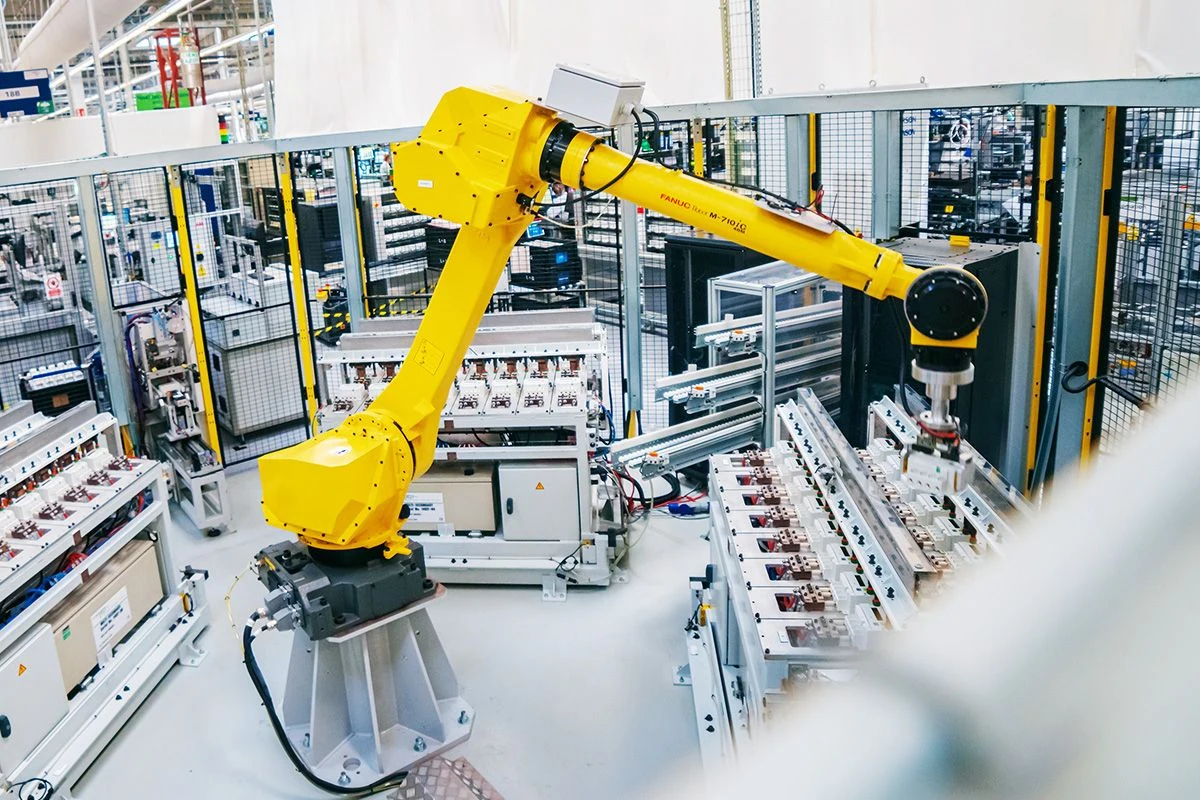
Consider a manufacturer producing batches of 100 aluminum robotic joint housings.
Each housing contains:
- two bearing bores;
- several threaded holes;
- a motor mounting face;
- cable channels;
- an external curved profile.
The process could use AI at several stages.
Before programming, manufacturing software compares the new component with similar previous housings and suggests possible tools and machining strategies.
During production, spindle-load and vibration data are collected.
The finishing tool used for the bearing geometry has known wear behavior from previous batches.
A monitoring model notices that the current tool is deteriorating faster than normal and recommends replacement before the next production group.
Inspection data from the first 30 housings then shows a small trend in one bore dimension.
The quality system connects that trend with tool condition and alerts the process engineer.
Meanwhile, production-planning software reorganizes several machine jobs because another machining center is approaching scheduled maintenance.
No single AI feature “manufactures the housing.”
Instead, several data-driven systems make the complete production process easier to manage.
That is a much more realistic picture of AI-enabled CNC manufacturing.
Example: AI-Assisted Tool Monitoring in Titanium Machining
Titanium provides an even stronger case for tool monitoring because cutting tools are relatively expensive and tool condition can change more rapidly under demanding cutting conditions.
Imagine a 5-axis titanium aerospace component requiring a long finishing cycle.
Replacing the cutter too early wastes expensive tooling.
Replacing it too late risks damaging a high-value part.
A monitoring system can combine information such as spindle load, vibration, and historical tool-life patterns.
If the current cutter behaves similarly to previous tools near the end of their acceptable life, the system can flag the operation.
The process engineer still decides whether to replace the cutter.
AI improves the quality of that decision.
From Predictive Manufacturing to More Autonomous CNC
The long-term direction is clear.
CNC manufacturing systems are becoming more connected.
CAM data, machine sensors, tooling information, metrology, production scheduling, and quality results are increasingly capable of feeding into one digital manufacturing environment.
The progression may look something like this:
Monitoring → Prediction → Recommendation → Controlled adjustment → Increasing autonomy
Most machine shops today operate somewhere between monitoring and recommendation depending on the application.
More advanced research and production systems are already exploring controlled real-time adjustment.
Fully autonomous machining across high-mix custom manufacturing is much harder because every new component introduces different geometry, risk, and physical behavior.
Autonomy will therefore arrive gradually and unevenly rather than through one sudden industry-wide shift.
Benefits of AI in CNC Machining
When applied to appropriate problems, AI can provide several practical benefits.
Better Tool Utilization
Condition monitoring may allow tools to be replaced based on actual process behavior rather than conservative fixed intervals.
Earlier Problem Detection
Anomaly detection can identify unusual machine behavior before it produces obvious failures.
Reduced Unplanned Downtime
Predictive maintenance can help factories service equipment before breakdowns disrupt production.
Faster Programming
AI-assisted CAM and historical process retrieval can reduce repetitive programming work.
Better Quality Decisions
Inspection data can be analyzed as a process trend rather than simply a pass/fail record.
Improved Scheduling
Data-driven planning systems can consider machine condition, workload, due dates, and production constraints simultaneously.
Better Use of Manufacturing Knowledge
Historical machining experience can be captured and reused instead of remaining only in the memory of individual employees.
Limitations and Risks of AI in CNC Manufacturing
AI adoption also creates new risks.
Bad Recommendations Can Scale Quickly
Automation makes correct processes faster.
It also makes incorrect processes faster.
Models Can Become Outdated
A model trained using one machine, cutter, or material condition may not remain reliable after the process changes.
Data Security Matters
Connected factories generate valuable information about customer designs, machine capability, and production.
Data architecture must therefore consider cybersecurity and access control.
Black-Box Decisions Can Be Difficult to Trust
In precision manufacturing, engineers may need to understand why a system recommends a change.
A prediction without an understandable manufacturing reason may not be appropriate for a critical process.
AI Projects Need Real Manufacturing Goals
Installing AI because it sounds modern rarely creates value.
The project should begin with a measurable manufacturing problem, such as:
- excessive tool waste;
- unplanned downtime;
- high scrap;
- long quotation time;
- inefficient scheduling.
Technology should follow the problem.
What CNC Shops Should Do Before Adopting AI
A factory does not need to become an AI company to benefit from smarter manufacturing.
The best starting point is usually improving the quality of existing process data.
A practical sequence is:
- Standardize machine and job identification.
- Connect tooling records with operations.
- Structure inspection data.
- Record causes of scrap and rework.
- Track tool life consistently.
- Identify one expensive recurring problem.
- Apply analytics or machine learning where the data is strong enough.
For example, if tool wear on one titanium process causes frequent scrap, that may be a much better AI project than attempting to build a factory-wide autonomous production system.
Successful manufacturing AI normally grows from focused applications.
AI Will Change CNC Machining Gradually, Not Overnight
The CNC industry has been automating for decades.
AI is another stage in that evolution.
Previous generations introduced:
- CNC controls;
- CAM software;
- automatic tool changers;
- machine probing;
- pallet systems;
- robotic loading;
- digital inspection.
None eliminated the need for manufacturing engineering.
They changed which decisions humans needed to make manually.
AI will do the same.
The difference is that future manufacturing systems will increasingly make decisions using patterns found across large amounts of production data rather than relying only on fixed programming rules.
That will make factories more predictive.
Not necessarily fully autonomous.
How AI Fits Into 6CNC’s Type of Manufacturing
For a high-mix small-batch manufacturer, the most important opportunity is not simply automating one repetitive production line.
It is building manufacturing knowledge that can be reused across thousands of different custom components.
Each new part creates decisions around:
- machine selection;
- setup planning;
- tool selection;
- machining parameters;
- inspection;
- scheduling.
Historical production data can make those decisions better.
A new 7075 robotic housing may share machining characteristics with dozens of previous aluminum housings. A PEEK medical component may benefit from process knowledge accumulated from earlier PEEK projects. A titanium part can be compared with historical tooling and cycle data from similar difficult-material jobs.
This combination of AI and human manufacturing experience is particularly relevant for prototype-to-small-batch production because every order may be different, but the underlying machining knowledge is reusable.
At 6CNC, the goal of manufacturing technology is ultimately practical: improve process consistency, reduce avoidable risk, shorten the path from engineering design to reliable small-batch production, and give manufacturing engineers better information when making process decisions.
Final Thoughts
Artificial intelligence is changing CNC machining, but its real impact is more practical than futuristic.
AI can help manufacturers predict tool wear, identify machine anomalies, improve maintenance decisions, analyze inspection trends, assist CAM programming, improve quoting, and make production scheduling more intelligent.
More advanced systems are also moving toward adaptive control and increasingly autonomous manufacturing.
But CNC machining remains governed by physical reality.
Cutting tools deflect.
Thin walls move.
Fixtures distort parts.
Materials behave differently.
Machines have limits.
AI does not remove those constraints.
Its value comes from helping engineers understand and control them more effectively.
The future CNC shop will therefore probably not be a dark factory where AI replaces everyone.
It will be a factory where experienced machinists, programmers, quality engineers, connected machines, sensors, software, and AI systems work together—and where fewer manufacturing decisions depend entirely on guesswork.
For custom precision manufacturing, that combination may be much more valuable than the idea of a completely autonomous machine.
Send your CAD files and drawings for a manufacturing review.
Frequently Asked Questions
How is AI used in CNC machining?
AI can be used for tool-condition monitoring, predictive maintenance, quality analysis, anomaly detection, production scheduling, assisted CAM programming, quotation, and process optimization.
Can AI automatically program CNC machines?
AI can assist with machining-feature recognition, tool selection, parameter recommendations, and CAM automation, but complex CNC programming still requires decisions about workholding, setup sequence, tool access, machine limits, and process risk.
Can AI predict CNC tool wear?
Machine-learning systems can analyze signals such as vibration, spindle load, current, or other process data to estimate tool condition. Reliability depends on the quality of the training data and how similar the actual machining process is to the conditions represented in that data.
What is predictive maintenance in CNC machining?
Predictive maintenance uses machine-condition data to identify signs that equipment may require service before a failure occurs. This differs from maintenance performed only according to fixed schedules or after breakdown.
Can AI improve CNC part quality?
AI can help detect process anomalies, analyze inspection trends, predict tool deterioration, and support process adjustments. Actual part quality still depends on machine capability, tooling, fixtures, machining strategy, and inspection.
Can AI replace CMM inspection?
No. AI can analyze measurement data or perform visual defect classification, but it does not replace dimensional metrology where drawings require precise verification of size, position, flatness, or other geometric characteristics.
Will AI replace CNC machinists?
AI will automate some repetitive analysis and programming tasks, but machining still requires knowledge of tooling, workholding, material behavior, metrology, process planning, and problem solving. Roles are more likely to change than disappear entirely.
What is the difference between CNC automation and AI?
Traditional automation follows predefined instructions and rules. AI systems use data to identify patterns, make predictions, classify conditions, or recommend decisions that were not explicitly programmed as individual rules.
Is AI useful for low-volume CNC machining?
Yes, but the applications differ from mass production. Low-volume shops can use AI to retrieve similar historical jobs, improve quoting and scheduling, monitor expensive tooling, analyze quality trends, and reuse manufacturing knowledge across many different components.
What is the biggest limitation of AI in CNC machining?
AI depends on reliable and relevant data. New parts, changing processes, inconsistent production records, rare failure events, and physical conditions that are poorly captured by sensors can all limit prediction reliability.