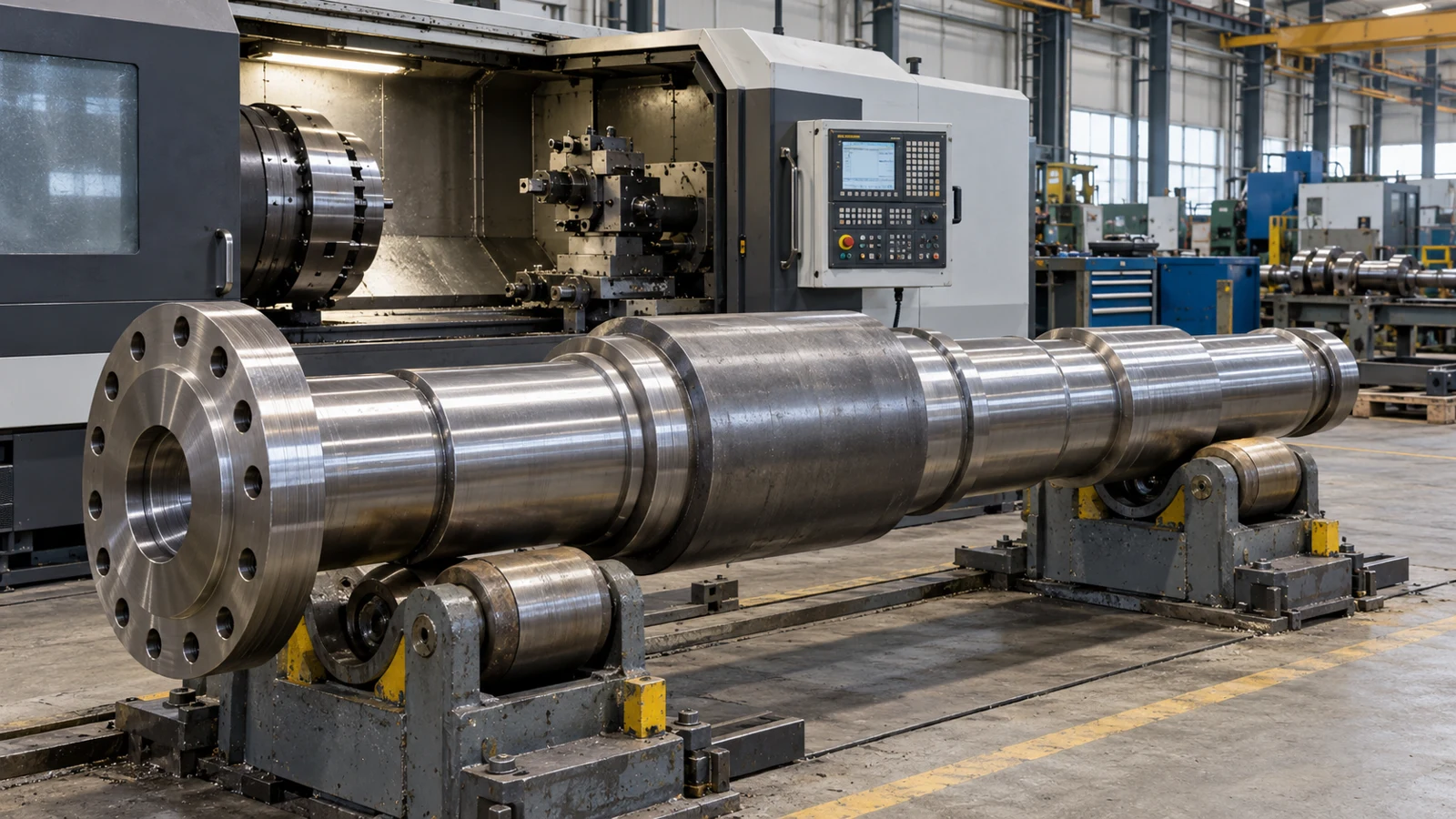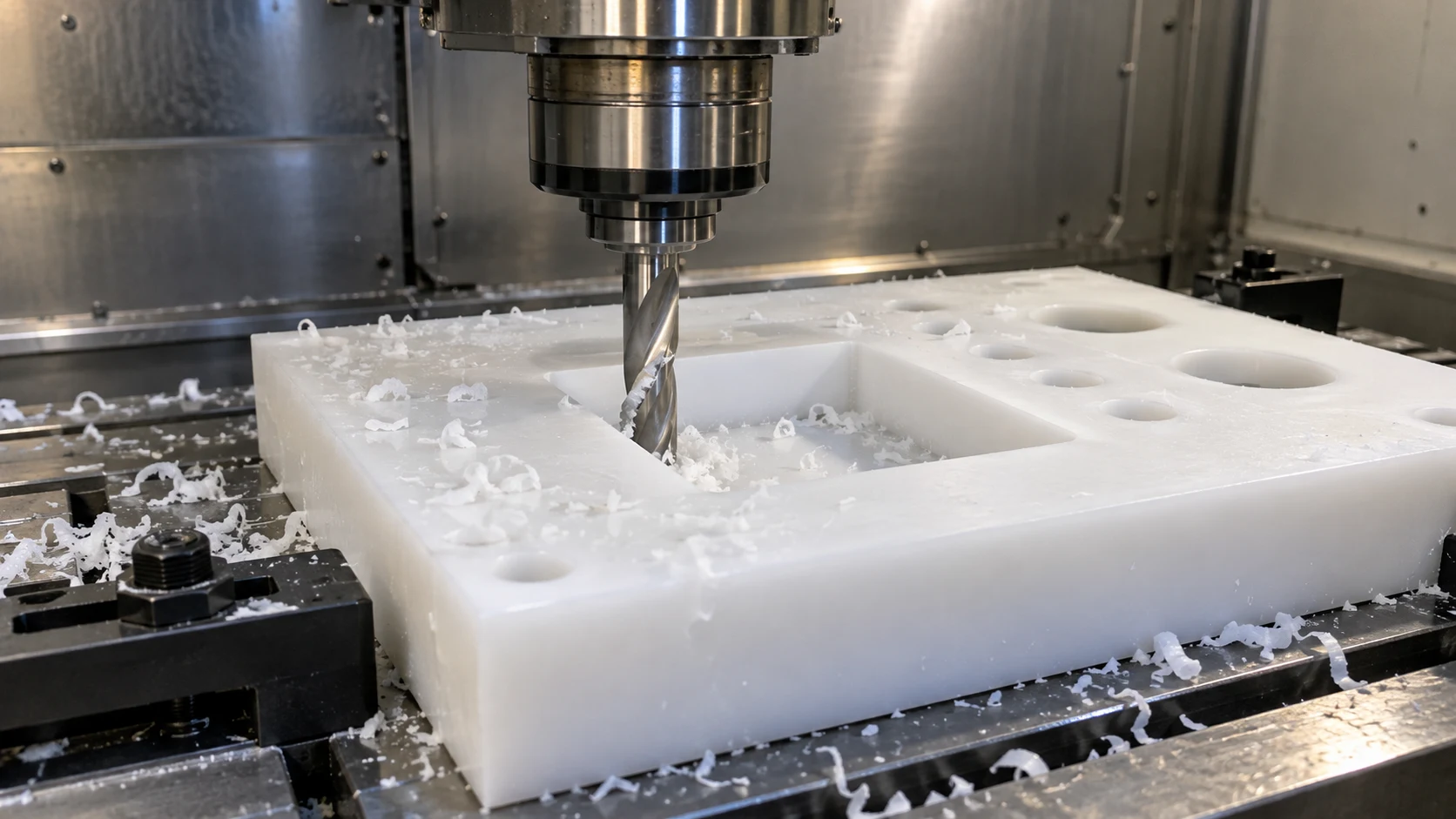
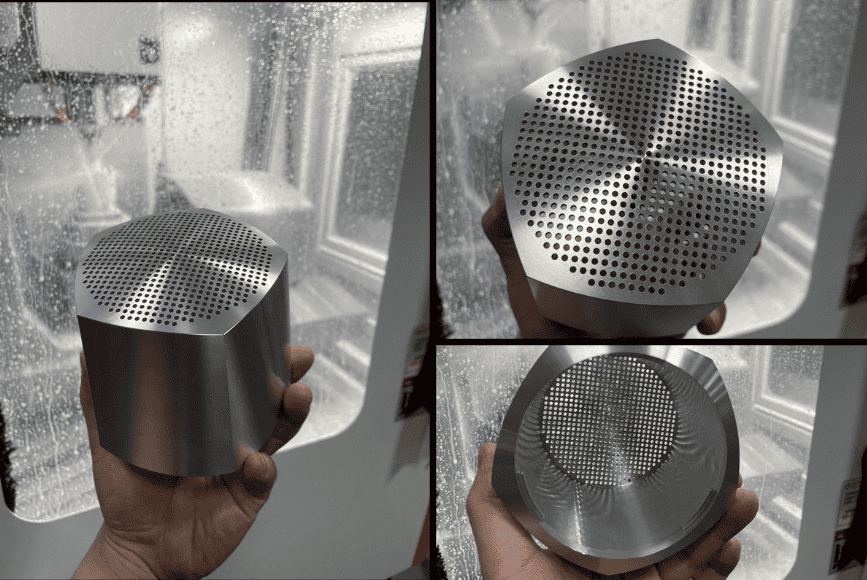
A five axis machine shop review should start with one hard question: can this supplier hold your tolerances on a real part, not just on a capability page? Many buyers get impressed by machine lists, spindle speeds, or sample photos. Those details matter, but they do not tell you whether a shop can manage setup strategy, inspection discipline, and repeatability when your geometry gets difficult.
For engineers and sourcing teams, five-axis machining is usually tied to higher stakes. The parts are often expensive, the materials are tougher, and the downstream risk is larger. A poor supplier choice can show up as chatter marks on a sealing face, an out-of-spec angular feature, or a late delivery that stalls assembly. That is why a useful review has to go beyond marketing claims and focus on what affects cost, lead time, and project risk.
What a five axis machine shop review should actually measure
A proper review looks at production performance, not just equipment ownership. A shop may have advanced five-axis machines and still struggle with fixture design, toolpath planning, or in-process verification. Another shop may run fewer machines but deliver better results because its engineering workflow is tighter.
We suggest evaluating five areas together: machining capability, tolerance control, material experience, communication quality, and delivery reliability. If one area is weak, the whole project can suffer. A supplier that machines Inconel well but responds slowly to drawing revisions can still create serious delays.
Capability starts with the kind of geometry the shop handles every week. True five-axis work is not simply about moving five axes at once. It is about reducing setups, improving surface access, controlling feature relationships, and machining complex forms without introducing new error in every repositioning step. Shops that understand this will talk clearly about part orientation, fixture strategy, collision avoidance, and datum control.
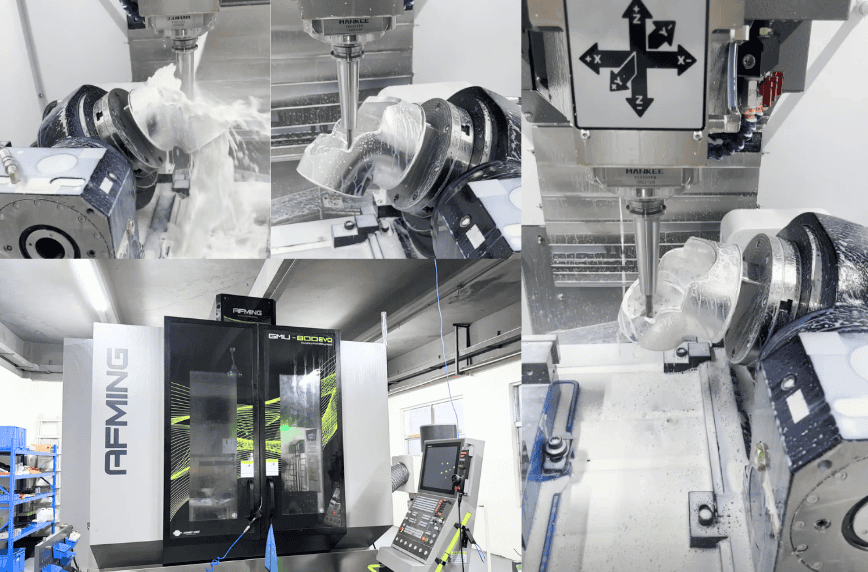
Capability in a five axis machine shop review
The first checkpoint is whether the shop uses five-axis machining for the right reasons. Some parts genuinely require simultaneous five-axis motion, especially turbine-like surfaces, impellers, orthopedic components, or compound-angle aerospace features. Other parts only need 3+2 positioning, where the machine indexes to an angle and then cuts in a fixed orientation. Both approaches are valid. The issue is whether the supplier chooses the process that fits your tolerances, finish, and budget.
That distinction affects cost directly. Simultaneous five-axis machining can reduce cycle time on complex surfaces, but programming is more demanding. Indexed machining can be more stable for certain prismatic parts and may lower risk. A credible supplier explains that trade-off instead of pushing every part into the most expensive route.
Ask what part sizes the shop runs, which control systems it uses, and what spindle and toolholding setup supports the work. Ask how they manage deep cavities, thin walls, and hard-to-reach features. The quality of these answers tells you more than a generic statement about advanced equipment.
Material range matters just as much. Aluminum is common and forgiving compared with titanium, stainless steel, hardened tool steel, or engineering plastics with tight dimensional stability requirements. A supplier that routinely machines 6061 may not be the right fit for 17-4 PH, Inconel, or PEEK components with demanding flatness and positional tolerances.
Tolerance claims need evidence
A five axis machine shop review falls apart when tolerance claims stay vague. If a supplier says it can hold tight tolerances, ask which tolerances, on what materials, and at what feature depth. There is a real difference between holding ±0.01 mm on a simple milled edge and holding ±0.002 mm on a critical feature relationship across a complex five-axis part.
This is where inspection capability becomes central. You should look for a process that includes first article verification, in-process checks, and final inspection with calibrated equipment. Coordinate measuring machines, height gauges, thread inspection, surface roughness testing, and material traceability all matter depending on your part. The key is not whether the shop owns inspection tools. The key is whether those tools are integrated into production control.
We often tell buyers to listen for process language. Strong shops talk about datum strategy, thermal stability, tool wear compensation, and feature-specific inspection methods. Weak shops stay at the level of broad promises. Precision work is never just the machine. It is the system around the machine.
Surface finish is another area where assumptions create problems. Five-axis access can improve finish because the tool approaches the surface more effectively, but machine motion alone does not guarantee a good result. Toolpath step-over, cutter selection, machine dynamics, and material behavior all shape the final finish. If your part includes optical surfaces, sealing faces, or cosmetic requirements, call those out early.
Lead time and quoting reveal operational maturity
Many buyers treat quoting as an admin step. In practice, it is one of the best indicators of whether a supplier is organized. A good quote should show that the engineering team actually reviewed the geometry, material, tolerance stack, and finishing requirements. Fast response is useful only when it is accurate.
Watch for shops that identify manufacturability issues before production. DFM feedback can save days or weeks by catching unnecessary sharp internal corners, unrealistic aspect ratios, hidden tool access problems, or tolerance zones that drive cost without adding function. This is especially valuable in low-volume projects, where there is less room to spread setup mistakes over larger batches.
Lead time should also be discussed in layers. There is quote turnaround, programming time, raw material readiness, machining queue, inspection, surface treatment, and shipping. A supplier may offer a very short machining window but lose time on subcontracted finishing or weak outbound logistics. For international buyers, that handoff matters.
This is one reason many customers prefer working with a manufacturing partner that can combine CNC machining with secondary processes in one managed workflow. If your project needs turning, milling, grinding, anodizing, heat treatment, or assembly support, fragmented supply chains create more failure points.
Communication quality is part of the review
Technical capability without clear communication still creates risk. In complex machining projects, drawing interpretation, revision control, and issue escalation must be handled cleanly. If a supplier takes too long to answer a tolerance question during quoting, it probably will not get better under production pressure.
You want practical communication, not sales language. Good suppliers confirm revision levels, flag ambiguous dimensions, and explain when a requested feature will increase scrap risk or cycle time. They do not hide trade-offs. They help you decide where tighter tolerances matter and where standard tolerances can control budget.
For global buyers, this point is even more important. Cross-border manufacturing works well when documentation is clear and response times are stable. It breaks down when emails go unanswered, measurement reports are incomplete, or process changes are not documented.
How we think about supplier fit
At 6 CNC, we see the strongest five-axis projects come from early engineering alignment. Buyers send a complete drawing package, 3D files, material callouts, finish requirements, and any critical-to-function notes. That gives the manufacturing team enough information to recommend the right setup strategy and identify cost drivers before chips are cut.
This matters most for prototype and low-volume work. In that environment, every setup hour and every inspection step has a visible impact on price and schedule. A capable supplier should help you balance precision, speed, and manufacturability instead of forcing a one-size-fits-all process. If your project needs ±0.002 mm on a few critical features and looser tolerance elsewhere, the quoting and planning process should reflect that reality.
Red flags in a five axis machine shop review
Some warning signs show up quickly. One is a shop that cannot explain whether your part needs indexed or simultaneous five-axis machining. Another is a quote with no questions on missing tolerances, surface finish, or material condition. You should also be cautious if inspection reporting is vague or if the supplier avoids discussing scrap control and repeatability.
A different red flag is overpromising on turnaround without discussing process constraints. Complex parts need programming, simulation, verification, and often custom workholding. Compressing that timeline too far can shift risk into quality issues later.
Price alone is also a poor review metric. A low quote may reflect optimistic cycle time, weak inspection scope, or an incomplete understanding of your drawing. The real comparison is total project outcome: accepted parts, on-time delivery, and fewer engineering hours spent correcting supplier mistakes.
The best supplier is usually not the one with the biggest machine list or the lowest headline price. It is the one that can explain its process clearly, support your geometry with evidence, and deliver repeatable quality without forcing unnecessary lead time or cost. If you review five-axis machine shops through that lens, you will make better sourcing decisions and avoid the expensive surprises that show up after production starts.
Before you send your next RFQ, look at your part the same way a strong machine shop should: which features truly drive function, where setup risk lives, and what evidence you need before approving a supplier.