A shaft comes in 8 microns oversize, and suddenly the bearing press fit that looked fine on paper becomes a production problem. That is the reality of tight tolerance CNC machining. At this level, small dimensional drift does not stay small for long. It turns into assembly force issues, scrap, noise, wear, leakage, failed validation, or field returns.
For engineers and buyers, the question is not whether precision matters. The real question is where tight tolerances actually protect product performance, and where they only add cost and delay without improving the part. We see both cases regularly. Some dimensions truly need micron-level control. Others can be opened up with no functional downside, which makes quoting easier, machining more stable, and inspection more efficient.
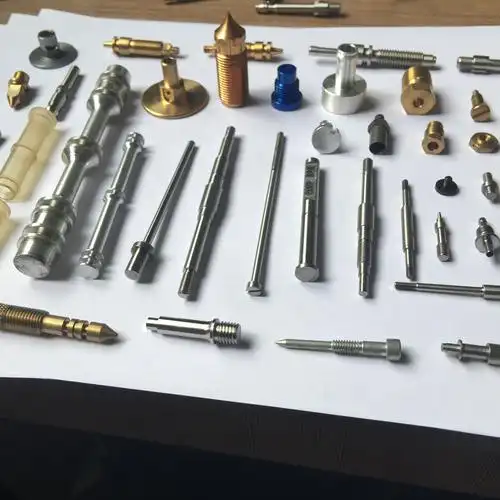
What tight tolerance CNC machining really means
In practical terms, tight tolerance CNC machining means holding dimensions significantly closer than general machining tolerances across critical features. The exact threshold depends on the material, feature geometry, machine setup, and inspection method. A turned diameter held to ±0.01 mm is demanding in many jobs. A ground sealing surface at ±0.002 mm sits in a different category and usually requires a different process strategy.
The mistake we often see is treating all tolerances as equal. They are not. A ±0.005 mm tolerance on a short external diameter is one challenge. The same tolerance on a deep pocket width, a thin wall, or a long unsupported feature is much harder. The drawing may show one number, but the manufacturing risk behind that number changes feature by feature.
That is why tolerance review should happen early. If the print specifies very tight control on every dimension, your supplier has to assume every feature is critical. That increases machine time, setup checks, in-process measurement, final inspection workload, and rejection risk. The result is a higher price and often a longer lead time.
Where tight tolerances matter most
Tight tolerances usually matter when a feature controls fit, motion, sealing, alignment, or load path. Bearing seats, precision bores, mating diameters, gear-related features, valve components, sensor interfaces, and optical or medical assemblies often fall into this category. In these cases, tolerance is directly tied to function.
It also matters when variation stacks across multiple parts. A single part may appear safe on its own, but once it enters a larger assembly, small deviations compound. That is where positional tolerances, perpendicularity, concentricity, and flatness can matter as much as linear dimensions.
There is also a commercial side to this. If your component goes into regulated equipment, high-speed automation, or premium industrial systems, inconsistent geometry creates downstream cost fast. Assembly delays, failed incoming inspection, line stoppages, and warranty exposure often cost more than the machining itself.
What makes a part difficult to hold within tight tolerance
Geometry drives much of the difficulty. Thin walls move during cutting. Deep cavities amplify tool deflection. Long slender shafts can vibrate or bend. Small internal radii force smaller tools, and smaller tools are less rigid. Features that need high positional accuracy across multiple faces may require 5-axis machining or multiple setups with very careful datuming.
Material selection also changes the process window. Aluminum machines quickly, but it can move after roughing if internal stress is present. Stainless steel offers corrosion resistance but tends to generate more heat and tool wear. Titanium adds strength-to-weight benefits but is less forgiving during cutting. Engineering plastics bring their own issues, including thermal movement and moisture sensitivity.
Tolerance is only one part of the equation. Surface finish, burr control, edge condition, and geometric tolerancing can interact with it. A bore may measure within size but still fail if roundness or finish is poor. A flat mounting surface may meet thickness requirements but still create sealing issues if flatness is not controlled.
The process choices behind tight tolerance CNC machining
You do not achieve precision by asking for it. You achieve it by building the right process chain. That usually starts with selecting the right machining route for the feature, then controlling variation at each step.
For some parts, standard milling and turning are enough. For others, we may rough machine first, allow the part to stabilize, then finish machine critical features. If the tolerance target approaches ±0.002 mm, grinding, honing, lapping, or precision reaming may be necessary after CNC machining. The best process is not always the fastest one. It is the one that gives repeatable results across the full batch.
Fixturing matters just as much as machine capability. If a part distorts in the fixture, the machine can cut a perfect feature in the wrong condition. Once unclamped, the geometry shifts. That is why custom workholding, clamping force control, and datum strategy matter so much on precision jobs.
Thermal stability is another factor buyers often underestimate. A few degrees of temperature change can affect both the machine structure and the part itself, especially on larger dimensions or sensitive materials. That is one reason serious precision work relies on process discipline, not only machine specifications.
Why tighter tolerances increase cost
The cost increase is not arbitrary. It comes from more process control and less margin for variation. Cycle times go up because feeds may need adjustment, finishing passes become lighter, and operators check dimensions more often. Scrap risk rises because fewer parts fall inside the acceptance window. Inspection time increases because critical features require higher-resolution measurement and better traceability.
Sometimes the cost jump is modest. Sometimes it is sharp. Moving a non-critical feature from ±0.1 mm to ±0.05 mm may have little impact. Pushing a bore from ±0.01 mm to ±0.003 mm can force a different tool, a different machine, added finishing operations, or 100 percent inspection.
This is where good DFM feedback pays off. If only three dimensions truly affect function, keep those tight and relax the rest. You get the performance you need without forcing precision where it brings no value.
How to specify tight tolerances without creating avoidable risk
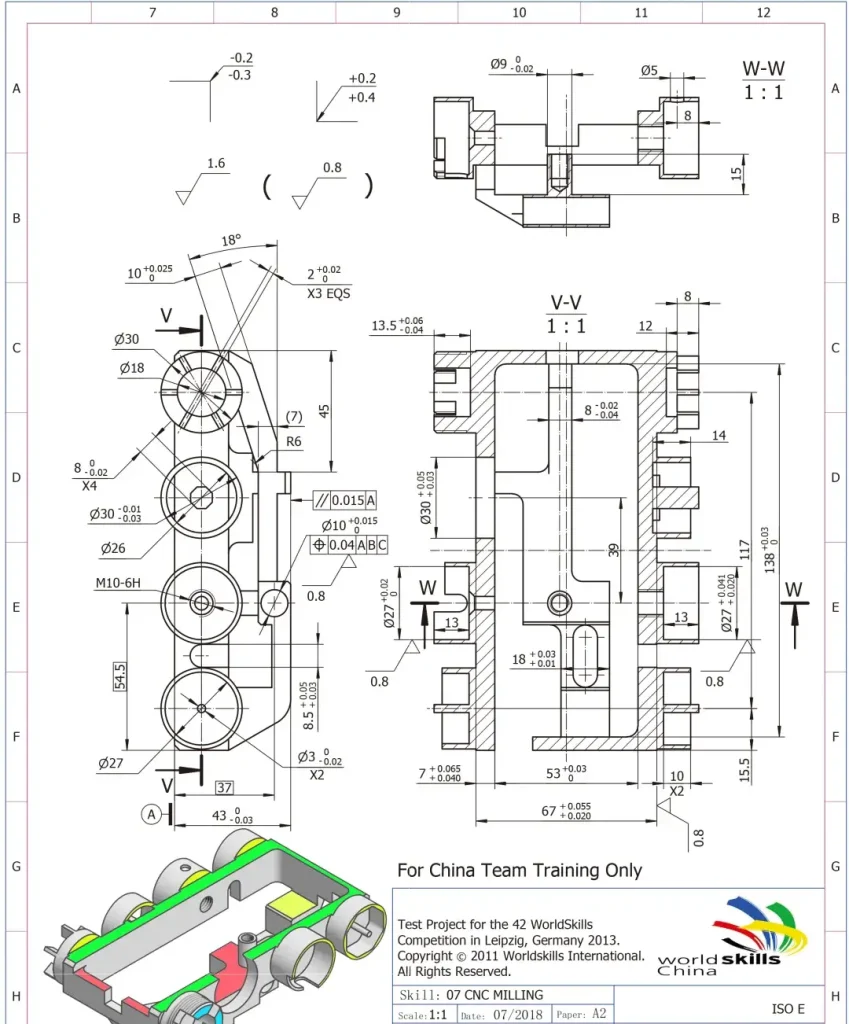
A strong drawing tells the machinist what matters most. It identifies critical-to-function dimensions, uses geometric tolerancing where needed, and avoids over-constraining the entire part. That sounds basic, but it prevents many expensive misunderstandings.
Start with fit and function. Ask which features locate the part, transmit load, seal, rotate, or align with another component. Tighten those dimensions first. Then check whether the tolerance reflects actual assembly needs or only legacy print habits.
Choose datums that match how the part will be measured and assembled. If the datum structure is weak, even a well-machined part may become difficult to inspect consistently. It also helps to call out surface finish only where it matters. A 0.8 Ra finish on a sealing face makes sense. Applying that same requirement to every hidden surface usually does not.
If your project is still in prototype stage, be honest about what needs validation now versus later. Many teams can accelerate first articles by tightening only the test-critical features and leaving room to refine the print after evaluation.
Inspection is part of the machining strategy
Precision manufacturing does not end at the spindle. It ends when the part can be verified against the requirement. For tight tolerance work, that often means using calibrated micrometers, bore gauges, height gauges, optical systems, or CMM inspection depending on the feature.
The inspection method has to match the tolerance band. A very tight positional requirement cannot be verified reliably with a basic handheld tool. Equally, not every feature needs a full CMM report. The right inspection plan balances speed, cost, and confidence.
At 6 CNC, we treat inspection planning as part of the production plan, not a final checkpoint. That helps us decide process capability early, identify risk features before cutting, and provide the measurement evidence customers need for approval and repeat orders.
What buyers should ask before placing a precision order
If a supplier claims tight tolerance capability, ask how they achieve it on your specific part type. Machine lists are useful, but they are not enough. You need to know how they handle material behavior, fixture design, setup repeatability, in-process checks, and final verification.
Ask which tolerances are routine and which ones trigger secondary operations. Ask whether the quoted tolerance applies across the whole batch or only to sample parts. Ask how they manage low-volume custom jobs where setup variation can be a larger share of total risk. These questions usually reveal whether you are dealing with a production-minded precision partner or a shop that is simply accepting a difficult print.
The best precision projects start with a direct technical conversation. If your supplier can challenge unnecessary tolerances, protect the critical ones, and explain the inspection path clearly, you are far more likely to get parts that fit the first time and keep fitting when you reorder.
When the tolerance is right, the part does its job quietly. That is usually the best outcome in manufacturing.

![Comparison of Operating Principles: This figure illustrates a microscopic comparison of the surface waviness and residual scallop height generated by a face milling cutter and a ball-nose cutter under different stepover and step-down settings. [Figure 4-1]](https://6-cnc.com/wp-content/uploads/2026/06/image-2-300x199.png)