
Precision CNC Parts for Industrial Automation
Built for Fit, Motion and Repeatability
Custom machined components for robotic cells, linear motion systems, packaging equipment, automated inspection machines and assembly lines. 6CNC supports engineers from first fit-check prototypes to revision-controlled small-batch production.
ISO 9001
ISO 13485
ISO 14001
3/4/5-Axis CNC
Need a machined component for your next automation build?

Assembly-Focused DFM
Review mounting datums, bearing seats, rail interfaces and tool access before production.

Integrated Processes
Combine 3–5-axis milling, turning, mill-turn, grinding and EDM as the geometry requires.

Inspection for Motion Systems
Check critical bores, flatness, perpendicularity and positional relationships against the drawing.

Prototype to Small Batch
Support one-off machine builds, pilot equipment and repeat orders with revision control.
CNC Machining for Automation Equipment
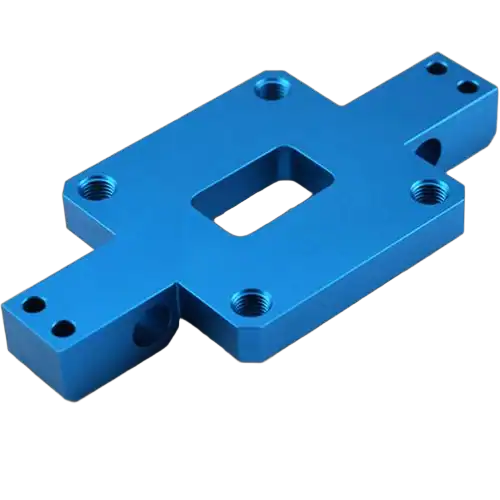
Precision-machined motor mounts, actuator bodies, machine plates, bearing blocks and inspection fixtures require accurate interfaces that assemble without fitting or rework. We machine to your 2D drawing and 3D model, with attention to functional datums.
Materials for Machine Components
6061 and 7075 aluminum serve lightweight frames, tooling plates and brackets; 304 and 316 stainless steel support washdown or corrosive environments; 4140, 17-4PH, POM and PEEK suit selected shafts, wear parts and insulating features.
5-Axis CNC for Complex Mounts & Fixtures

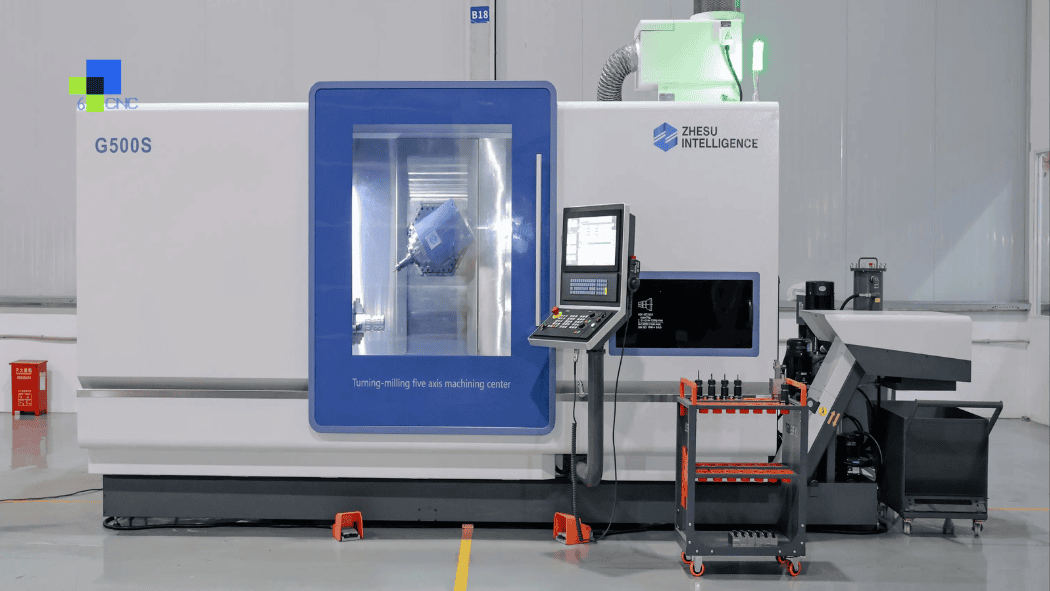
Multi-face sensor brackets, robotic tool plates and angled actuator mounts can benefit from 5-axis machining. Improved tool access and fewer repositioning steps help maintain related locating features on complex parts.
Engineering Challenges in Industrial Automation Machining
Explore the practical issues behind reliable motion, machine assembly, equipment validation and repeatable small-batch manufacturing.
Dimensional Control for Reliable Machine Assembly
Automation machines rely on the geometry between parts, not just the accuracy of individual holes. Linear rail mounting surfaces require controlled flatness and parallelism; bearing supports require aligned bores; motor plates and coupling adapters need appropriate concentricity and perpendicularity. If these interfaces drift, a machine may bind, vibrate or lose positioning repeatability during commissioning.
6CNC reviews datum references and functional fits before programming. Suitable features can be machined down to ±0.003 mm where geometry and process conditions permit; critical results are verified with appropriate CMM, optical, bore-gauge or surface-finish measurements.
- Linear motion: rail-seat flatness, hole-pattern position and parallel mounting surfaces
- Rotating assemblies: bearing-seat diameter, coaxiality and shaft runout requirements
- Robot tooling: locating pin holes, tool-center interfaces and repeatable mounting datums
- Inspection records: FAI, dimensional reports, material certification and CoC when requested
Automation Applications & Machining Challenges
Each class of automation component creates a different manufacturing constraint. An accurately machined bracket may still cause installation trouble if the mating surface, tool clearance or assembly datum is overlooked. We organize the machining route around how the finished part works inside the machine.
Linear motion and positioning: carriage plates, bearing blocks and guide-rail mounts demand flat support faces, consistent hole pitch and stable alignment over their length. Wide, thin plates may require stress-relief strategy and controlled stock removal.
Robotic grippers and end effectors: custom fingers, jaw carriers and tool changer adapters combine low weight with accurate locating faces. Small tapped holes, pockets and multi-side features require careful access planning.
Actuation and drive systems: motor adapters, pneumatic manifold blocks and shaft couplings depend on bore alignment, sealing faces and reliable coaxial relationships.
Inspection, packaging and assembly machines: camera mounts, nests, datum fixtures and changeover tooling need repeatable positioning and durable contact surfaces to minimize setup time.
- Rail and bearing interfaces: flatness, alignment and fit
- Grippers and tool plates: weight, stiffness and locating accuracy
- Actuator blocks: bores, port geometry and sealing surfaces
- Fixtures: repeatable datums, wear surfaces and changeover speed
Machine Prototypes, Commissioning Parts and Pilot Lots
Automated equipment often changes between first assembly and factory acceptance testing. A sensor mount moves after camera calibration, a gripper finger changes after product trials, or a conveyor guide needs more clearance. CNC machining gives equipment builders a way to implement these revisions without committing to dedicated tooling.
6CNC focuses on one-off prototypes and small batches, commonly 1–600 pieces depending on geometry. We support development builds, spare tooling and repeat orders by retaining drawing revisions, critical datums and agreed inspection checkpoints.
- Concept and prototype: verify assembly clearance, reach and mechanical function
- Commissioning: revise mounts, nests and brackets based on actual machine behavior
- Pilot equipment: stabilize toolpaths, fixtures and inspection for several identical units
- Repeat batches: preserve the approved drawing revision and acceptance criteria
Planning Machined Parts Around Equipment Build Dates
A missing bearing block or sensor adapter can delay machine commissioning. Delivery planning therefore covers material availability, CNC programming, setup, machining, coating, inspection and packaging—not merely spindle time. Black anodizing, hard coating, heat treatment or grinding can affect both lead time and feature dimensions.
Simple prototype parts can be available in as little as 1–7 days when the design and material permit. Complex multi-process components and pilot batches are scheduled against confirmed requirements. Critical installation parts can be identified early for first-article review or practical split shipments.
- Provide the machine assembly or FAT date and quantities by revision
- Flag critical-path parts and any outsourced heat treatment or coatings
- Agree first-article inspection before releasing the remaining pilot lot
- Identify mating sets, protective packaging and part marking requirements
DFM and Cost Control for Automation Components
Automation components often contain expensive features that do not improve machine performance. A full-plate ±0.01 mm tolerance, a deep pocket with sharp internal corners or unnecessary cosmetic finishing can increase setup time without improving positioning accuracy. We distinguish functional fits and datums from noncritical geometry during review.
For a long linear rail mounting plate, we assess plate stock, material stress, fixturing and the inspection method for flatness. For a robotic end-effector adapter, we consider five-axis access, tool reach, wall stiffness and whether multiple faces can be machined from a stable setup. For a turned coupling, we plan bearing or shaft fits before selecting finishing operations.
- Use GD&T to distinguish locating features from general surfaces
- Review thin walls, deep pockets, narrow slots and internal corner radii
- Minimize needless re-clamping and machining of nonfunctional faces
- Plan coating thickness and heat-treatment effects on critical fits
- Compare quantity breaks for prototype and repeat-order economics
Industrial Automation CNC Machining FAQs
What automation components can 6CNC machine?
We produce made-to-print linear rail mounts, bearing blocks, actuator housings, robotic gripper fingers, motor adapters, sensor brackets, assembly nests and inspection fixtures. We do not supply standard catalog automation hardware.
Can you support one-off machine parts and pilot builds?
Yes. We specialize in prototypes and low-volume orders, typically 1–600 pieces depending on geometry, with support for drawing revisions and repeat batches.
How are rail alignment and bearing fits inspected?
We review the drawing datums and critical GD&T characteristics, then plan suitable CMM, bore gauge, micrometer and flatness measurements for the specified features.
Which materials are common for automation equipment?
Aluminum 6061/7075, stainless steel 304/316/17-4PH, alloy steels such as 4140, and engineering plastics including POM and PEEK are common choices. Final selection depends on load, wear, corrosion and assembly needs.
What should I submit for an automation CNC quote?
Provide STEP or IGES geometry, a 2D drawing with tolerances and revision, material/finish, quantity, intended function and any inspection or delivery constraints.
Why Automation Engineers Work With 6CNC
Parts Designed Around Real Assemblies
We review rail seats, bearing fits, motor interfaces and locating datums with the finished machine in mind.
That attention helps reduce adjustment and rework during equipment assembly.

Process Flexibility for Complex Geometry
Milling, turning, mill-turn, grinding and EDM are selected by feature and functional requirement.
One project can combine plates, shafts, housings and fixtures across several operations.
Repeatable Small-Batch Supply
Development revisions and repeat orders can use clear drawing, inspection and material requirements.
Request FAI, dimensional reporting and certificates where your equipment program needs them.
Get in Touch
Tell us about your project, material, quantity, and delivery requirements. Our team can review the next steps with you.