
6CNC · Custom plastic parts
Nylon 6/6 CNC Machining
Nylon 6/6 machining suits many guides, rollers and mechanical wear components. Define humidity exposure and fit requirements early so the dimensions reflect the part’s service environment.
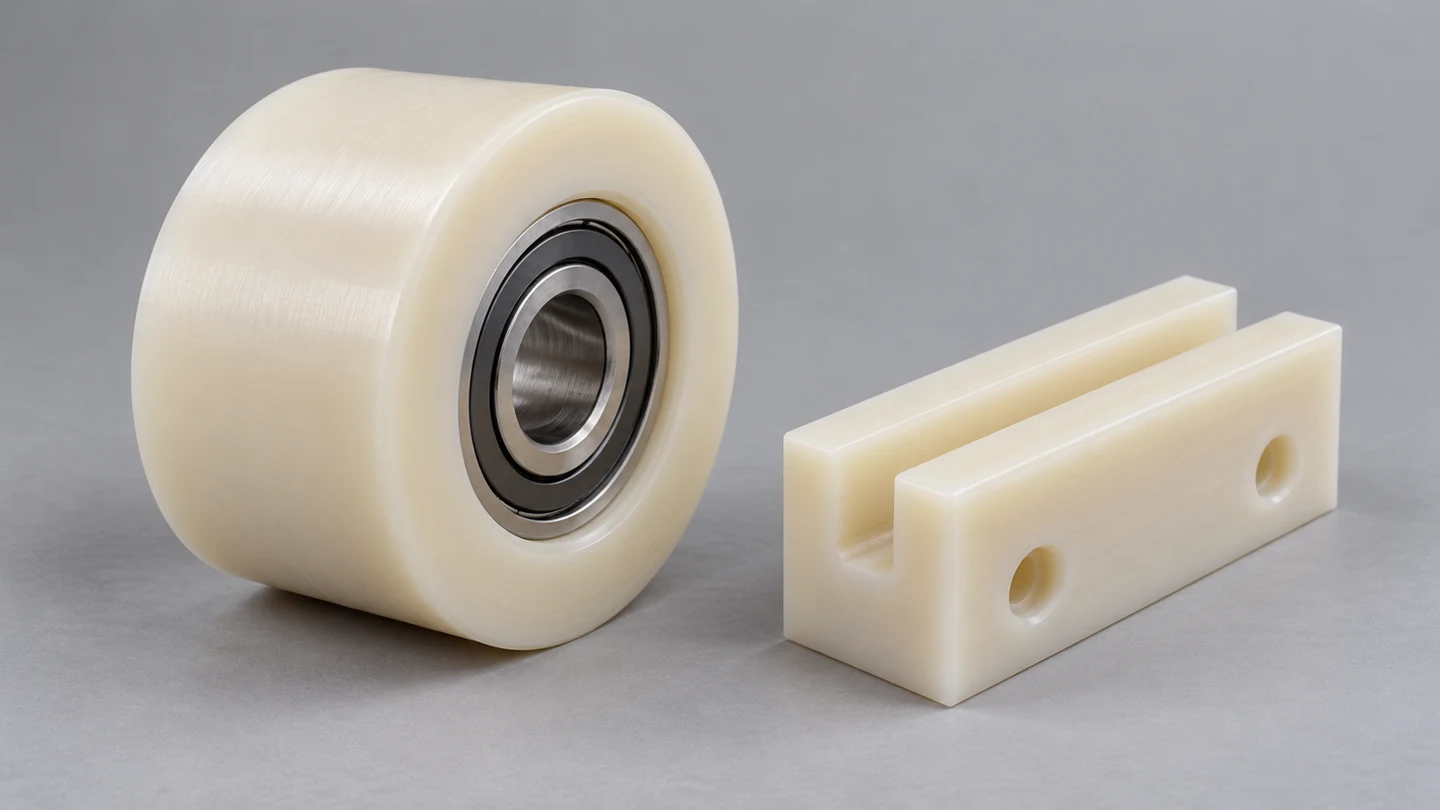
PA66 wear components designed for their moisture environment.
Material choice
Moisture changes the fit decision
PA66 absorbs moisture, which can change dimensions and mechanical behavior. A part measured dry may behave differently after conditioning or exposure in service. Close-running fits need a stated moisture and temperature context.
Specify the exact grade, stock form and operating environment. The material family alone does not define the acceptance requirements for your part.
Machining considerations
Plan PA66 dimensions around the service environment
Milling guides and wear surfaces
Sharp cutting tools and suitable work support help limit heat and deflection. A broad guide surface and a thin locating tab can need very different workholding. Mark the faces that govern running clearance so the process can prioritize functional geometry.
Turning rollers and bushings
Define the shaft interface, retained length and assembly method. A press fit can change a thin bushing’s bore, while moisture uptake can change the later running clearance. Check the installed condition instead of evaluating a bearing solely by its free-state diameter.
Choosing the stock condition
Nylon 6/6 is not the same designation as nylon 6. Filled and unfilled PA66 also need separate review. State the compound and conditioning requirements in the request, especially where the component will move from a dry inspection room to a humid environment.
Application fit
Part features to discuss
- Guide components: define clearance through the expected environment.
- Rollers and wheels: identify loading, shaft fit and contact wear.
- Spacers and bushings: specify sustained compression and assembly temperature.
Define your application and material requirements before approving stock or process substitutions.
Design for manufacture
Design details that affect machining
- State whether dimensions apply dry, conditioned or in another agreed state.
- Allow realistic clearances on long bearing interfaces.
- Avoid excessive press fits without checking creep and environment.
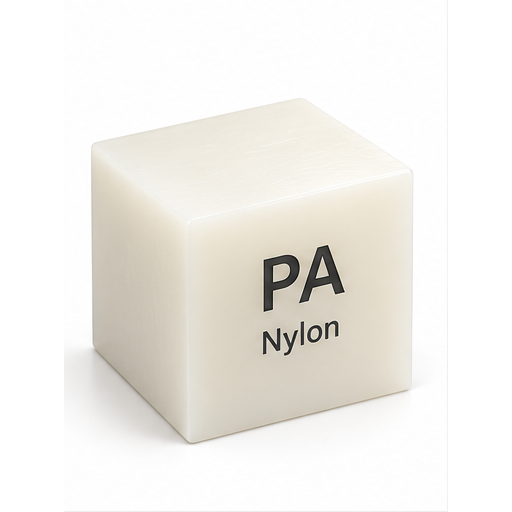
- Distinguish filled grades from natural unfilled PA66.
Surface finish and handling
Machining and controlled deburring are generally more relevant to a functional nylon surface than cosmetic polishing. Specify a clean edge around holes and contact faces. Surface treatment or color requirements must remain consistent with the approved PA66 compound.
Inspection planning
Inspect for the intended environment
Record the agreed conditioning and measurement state for close fits. Color and the word nylon are insufficient to establish the grade, filler or physical condition.
- Agree the moisture or conditioning state used for dimensional acceptance.
- Identify the temperature and humidity range in service.
- Define the installed bore or running clearance where relevant.
- Use the exact grade designation for reinforced or wear-modified stock.
Compare the requirements
PA66 is not a generic nylon substitution
| Selection point | Engineering consideration |
|---|---|
| PA66 | Specify unfilled or the exact reinforced compound. |
| PA6 | A different nylon; do not substitute without design review. |
| POM alternative | Compare when moisture-related dimensional stability is a main concern. |
Use the exact supplier datasheet, supplied condition and application requirements for final selection.
From drawing to part
Plan the project around functional requirements
01 · Share the design
Send the 3D model and a controlled drawing. Identify critical dimensions, quantity, the exact polymer grade and the intended service environment.
02 · Define acceptance
Review stock, workholding, finishing and measurement conditions together. Resolve required substitutions before manufacture.
03 · Confirm delivery scope
Agree the drawing revision, finished condition, inspection records and packaging requirements for the quoted project.
Common questions
Nylon 6/6 machining FAQs
Why can a nylon bore change after delivery?
Moisture uptake and temperature can alter dimensions. Review packaging, conditioning and the service environment before deciding whether the bore is nonconforming.
Are nylon 6 and nylon 6/6 interchangeable?
No. They are different polyamides with different grade-dependent behavior. Specify PA66 explicitly and review substitutions.
Should every nylon part be conditioned?
Conditioning depends on the intended environment and acceptance criteria. Agree the required state rather than adding an unspecified treatment to every project.
Can nylon threads support repeated assembly?
Review torque, engagement and wear. Inserts or another fastening design may be preferable when disassembly is frequent or loads are sustained.
Include with your enquiry
- 3D CAD and controlled PDF drawing
- Quantity and required delivery date
- PA66 compound; conditioning state; humidity and temperature range; mating fits; loading and wear context.
Start your project
Let’s review your Nylon 6/6 part.
Send the drawing and service conditions for a project-specific machining and quotation review.