
6CNC · Custom plastic parts
POM / Delrin CNC Machining
Choose POM machining for functional components that need low friction and practical dimensional control. Identify whether your drawing requires acetal copolymer or a specified homopolymer product before requesting a quote.
Acetal parts for sliding, guiding and precision mechanisms.
Material choice
Name the acetal grade correctly
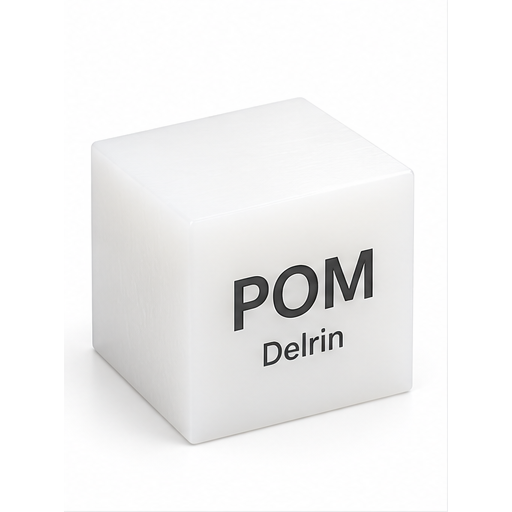
POM is the polymer family. Delrin is a trade name associated with acetal homopolymer; it is not a universal name for all acetal. Grade, stock form and application requirements should govern substitutions.
Specify the exact grade, stock form and operating environment. The material family alone does not define the acceptance requirements for your part.
Machining considerations
Clean geometry for moving mechanisms
Milling guides and pockets
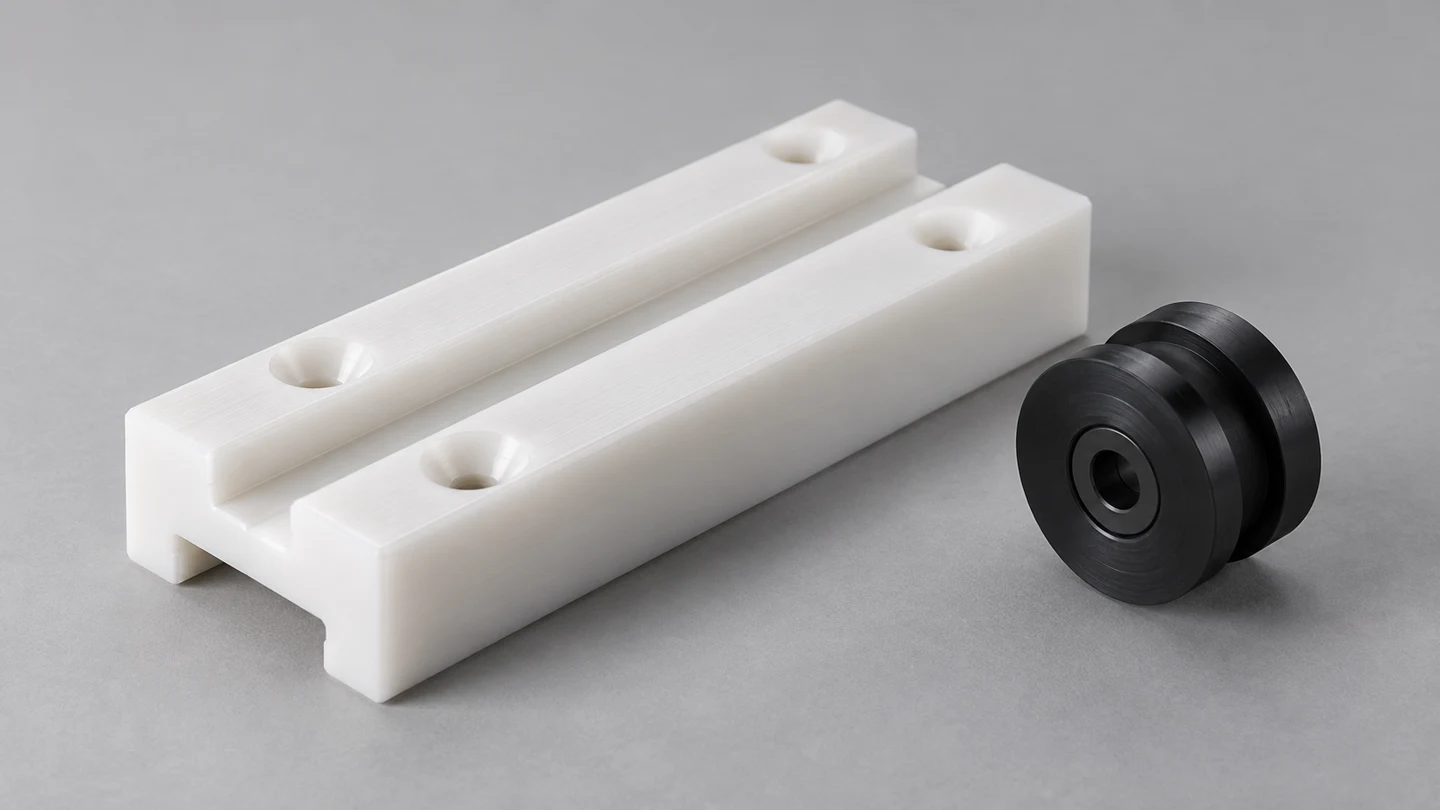
Machined acetal is a useful candidate for guide blocks, locating features and mechanism components. Open pockets, practical internal radii and accessible holes help keep the cutting route straightforward. Identify sliding surfaces separately from clearance geometry so finishing effort follows the function.
Turning bushings and rollers
For a turned acetal part, begin with the shaft fit, running clearance and contact length. Thin rings can deform under workholding pressure; long sleeves may need a different support strategy from compact spacers. Final dimensions should be checked after release from the fixture.
Threads and repeated assembly
Directly machined threads may suit light-duty assemblies. Repeated fastening, sustained loads or high installation torque can justify an insert or a revised fastening arrangement. Define the mating hardware and the expected assembly cycle rather than applying a metal-part thread detail without review.
Application fit
Part features to discuss
- Guide blocks: define contact faces and running clearances.
- Bushings and rollers: state shaft fit and service conditions.
- Mechanism components: identify repeated sliding interfaces and wear requirements.
Define your application and material requirements before approving stock or process substitutions.
Design for manufacture
Design details that affect machining
- Avoid forcing metal-like tolerances onto every plastic feature.
- Support thin walls and long slender parts during machining.
- Allow for thermal expansion in the assembled fit.
- Specify functional finish rather than cosmetic polishing by default.
Surface finish and handling
An as-machined surface is often appropriate for functional acetal parts. Specify the contact surface, edge condition and acceptable tool marks. Coating, bonding or decorative treatment should be reviewed separately because a low-friction engineering polymer is not automatically easy to bond or paint.
Inspection planning
Define the measurement conditions
Part temperature, clamping and geometry can affect measured plastic dimensions. Specify critical fits and the relevant acceptance conditions rather than relying only on a general tolerance note.
- State the exact acetal grade and any approved substitutions.
- Identify the bore or guide faces that control running clearance.
- Specify inspection temperature when a close fit depends on it.
- Request product-specific documentation for contact-sensitive applications.
Compare the requirements
POM-H, POM-C or Nylon 6/6?
| Selection point | Engineering consideration |
|---|---|
| POM-H | Use the specified homopolymer product where the design requires it. |
| POM-C | Copolymer acetal; evaluate its actual supplier datasheet. |
| Nylon 6/6 | Compare moisture-related dimensional change before selecting a close fit. |
Use the exact supplier datasheet, supplied condition and application requirements for final selection.
From drawing to part
Plan the project around functional requirements
01 · Share the design
Send the 3D model and a controlled drawing. Identify critical dimensions, quantity, the exact polymer grade and the intended service environment.
02 · Define acceptance
Review stock, workholding, finishing and measurement conditions together. Resolve required substitutions before manufacture.
03 · Confirm delivery scope
Agree the drawing revision, finished condition, inspection records and packaging requirements for the quoted project.
Common questions
POM / Delrin machining FAQs
Can any POM grade be used in food-contact equipment?
No. Require a product-specific declaration appropriate to the application and jurisdiction. Polymer identity alone does not establish compliance.
Is Delrin the same as all acetal?
No. POM describes a polymer family, while Delrin is a trade name associated with homopolymer acetal. A POM-C substitution should be approved against the drawing and application.
Is acetal better than nylon for a close fit?
It can be a useful alternative when moisture-related dimensional movement is a concern. Compare the actual grades, load, temperature and wear interface before deciding.
Can machined acetal replace a metal bushing?
Review stiffness, temperature, creep, lubrication and allowable clearance. A geometrically identical part can behave differently under sustained loading.
Include with your enquiry
- 3D CAD and controlled PDF drawing
- Quantity and required delivery date
- POM-H or POM-C; approved brand if required; operating temperature; mating clearances; contact or traceability requirements.
Start your project
Let’s review your POM / Delrin part.
Send the drawing and service conditions for a project-specific machining and quotation review.