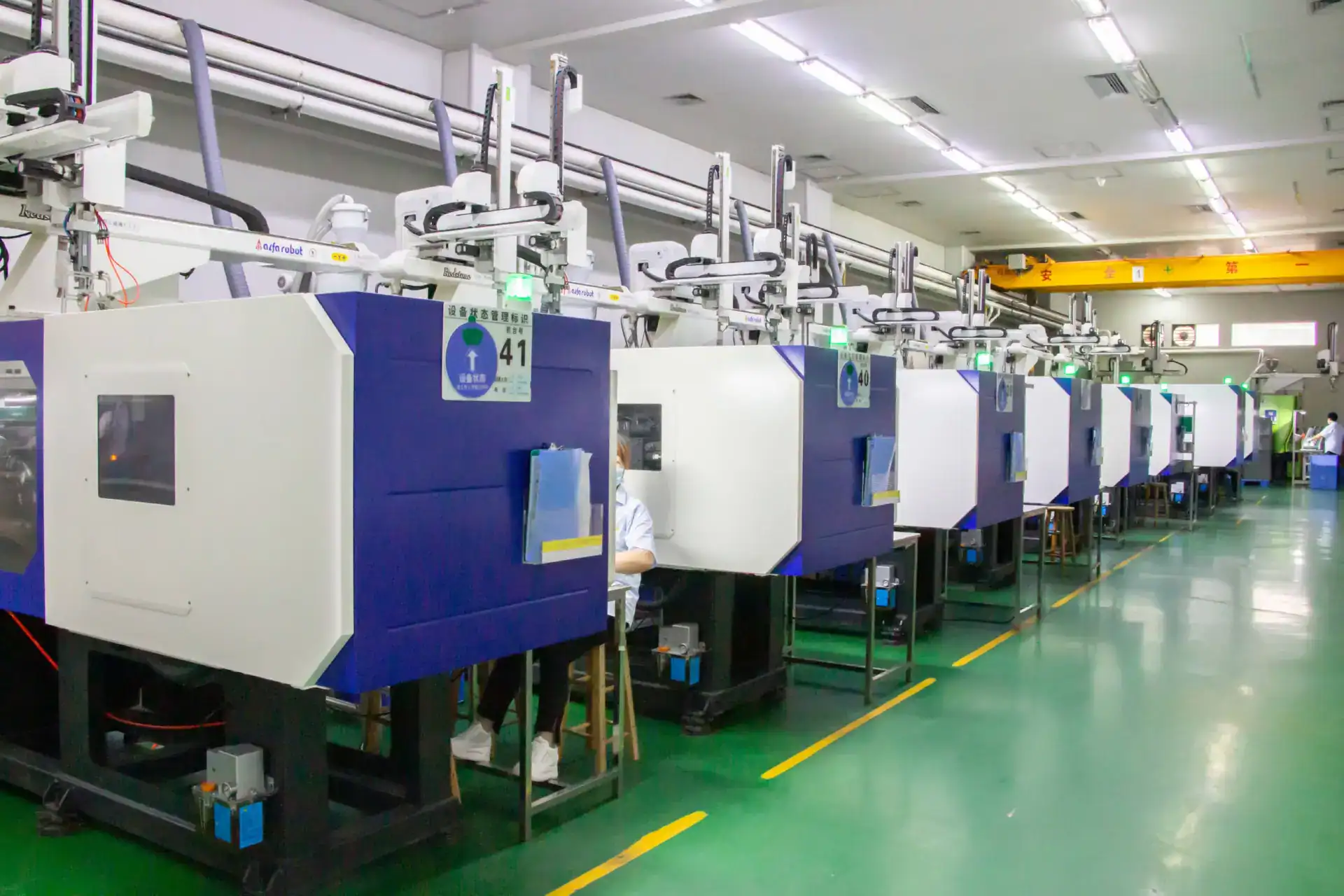

If you need 200 housings in six weeks, CNC machining may look expensive and full production tooling may look unjustified. That gap is exactly where injection molding for low volume production becomes a serious option. Used correctly, it gives you repeatable plastic parts, stable cosmetics, and better per-part economics without committing to mass-production tooling too early.
The key phrase is “used correctly.” Low-volume injection molding is not automatically the cheapest path, and it is not always faster than machining or urethane casting. The right choice depends on geometry, annual demand, resin requirements, tolerance expectations, and how likely your design is to change after the first build.
When injection molding for low volume production makes sense
We usually look at low-volume molding when a part has moved beyond one-off prototyping but has not reached high-volume demand. In practice, that often means dozens to a few thousand parts. The part needs production-grade material properties, better repeatability than additive processes, or a surface finish that customers will actually see and judge.
A common example is an enclosure that started as a 3D-printed prototype. The shape is now frozen, the mating features have been tested, and the product team needs pilot-run units for certification, market testing, or small OEM deliveries. Printing can still work, but print lines, anisotropic strength, and post-processing variability start to create risk. Injection molding produces parts in the actual resin, with much tighter consistency from part to part.
Medical device housings, sensor covers, cable guides, clips, fluid-handling components, and consumer electronics brackets often fit this stage. So do industrial machine components where each assembly needs several matching plastic parts with stable dimensions over time.
The real cost question is tooling, not just piece price
Buyers often compare machining cost against molded part cost and stop there. That misses the biggest economic driver in low-volume projects: the mold itself. Your unit price may drop sharply with molding, but the upfront tooling investment can still make the total project cost higher if quantities stay low.
That is why low-volume programs usually use aluminum molds or simplified tooling strategies instead of hardened steel production molds. Aluminum tooling can reduce lead time and initial spend, especially for pilot runs, bridge production, and market validation. It is a practical choice when expected tool life is limited and the resin is not excessively abrasive.
Tool design complexity changes the numbers fast. Side actions, lifters, unscrewing cores, mirror-polish cosmetic areas, and tight shutoff features all increase cost and risk. A part that looks simple in CAD can become expensive if it needs undercuts on three faces and zero witness marks in visible areas.
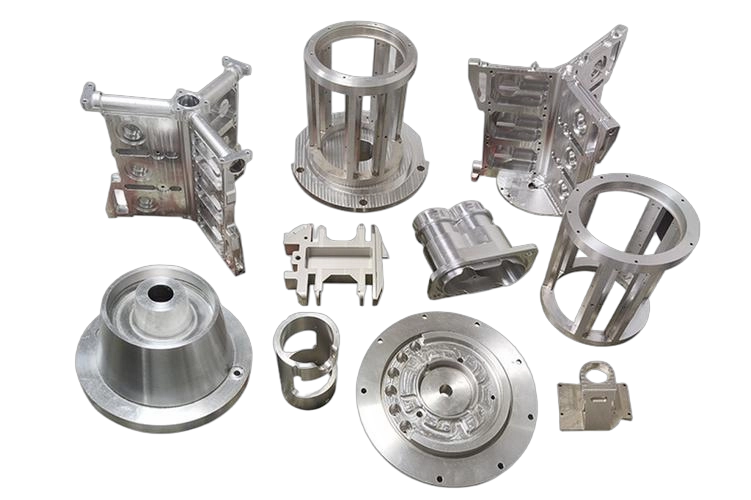
For many projects, the break-even point compared with CNC machining appears sooner than teams expect. If the geometry is complex and cycle time is reasonable, injection molding can win at a few hundred parts. If the design is likely to change twice after the first build, machining or vacuum casting may still be the smarter path despite the higher piece cost.
Design rules matter more at low volume than many teams expect
Low-volume tools are less forgiving of bad part design because the business case depends on speed and controlled tooling cost. If your model ignores basic molding rules, you pay for it in mold complexity, longer sampling, and higher scrap.
Wall thickness is the first checkpoint. Thick sections create sink and long cooling times. Thin sections can cause short shots and unstable filling. Most thermoplastics perform best with consistent wall thickness, usually in the range of about 1.0 to 4.0 mm depending on resin and part size. Uniform walls improve filling, reduce warpage, and make the process easier to control.
Draft is the next one. We often see customers optimize geometry for assembly and forget ejection. A vertical wall with no draft may still be machinable and printable, but it creates unnecessary drag in a mold. Even 1 to 2 degrees of draft can improve ejection, protect cosmetic surfaces, and reduce wear on the tool.
Ribs and bosses also need restraint. Oversized ribs add stiffness on paper but often create sink marks that show up immediately on the outer surface. A good design balances structural needs with cosmetic expectations and resin flow behavior.
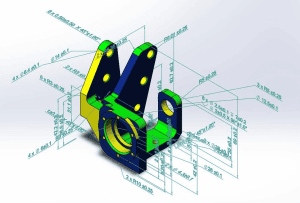
This is where DFM feedback saves time. Before cutting a mold, we review gate options, parting line location, ejection strategy, likely shrinkage behavior, and any feature that could drive flash or deformation. That review is not a formality. It directly affects first-shot success, tool life, and the number of revisions before you get saleable parts.
Material choice can make or break the project
The best resin for full production is not always the best resin for low-volume launch. You need to consider performance, availability, moldability, and how much material behavior will complicate sampling.
ABS and PC-ABS are common for housings because they balance toughness, appearance, and processability. PP works well for living hinges, chemical resistance, and lower-cost industrial parts. Nylon offers strength and wear resistance, but moisture absorption and shrink behavior need careful control. POM performs well for low-friction parts, though it requires disciplined processing. Filled materials improve stiffness, but glass fiber increases tool wear and can affect surface appearance.
Color also matters more than many buyers assume. Black resins often hide flow lines and minor cosmetic variation better than light colors. Natural or translucent materials can expose gate blush, splay, and internal flow patterns. If your product is customer-facing, visual standards should be defined before tool launch rather than after T1 samples arrive.
Material selection should align with the actual stage of your program. For pilot builds, some teams choose a close equivalent resin that is easier to source quickly. That can work, but only if you understand what you are trading away in mechanical properties, regulatory fit, or long-term consistency.
Lead time is driven by decisions, not only machine capacity
Many teams ask for a mold quote and expect the lead time to depend only on workshop speed. In reality, preventable delays usually start upstream. Unreleased CAD, unclear texture standards, undefined critical dimensions, and changing insert features add more days than most customers expect.
A well-prepared low-volume molding project can move fast. Quotation and DFM review should happen early. Tool design should lock gate location, parting line, ejection, and steel-safe areas before manufacturing starts. First samples should be measured against clear inspection criteria, not informal visual approval.
If your schedule is aggressive, bridge strategies help. We often advise customers to split the program into phases: initial prototypes by CNC or printing, pilot validation in low-volume molding, then production optimization once demand is proven. That sequence reduces the risk of paying for the wrong tool too early.
Quality expectations need to be realistic and specific
Injection molding delivers repeatability, but low-volume molding is not the same as automotive-scale mass production. You can hold tight tolerances on selected features, but every plastic part still moves with resin shrinkage, tool temperature, gate layout, and geometry.
The right approach is to define what truly matters. Critical dimensions tied to sealing, alignment, or assembly should be tolerance-controlled and inspected accordingly. Cosmetic standards should separate Class A visible areas from hidden internal faces. If a buyer simply states “high precision” without a drawing strategy, the result is usually rework, debate, and delay.
For B2B projects, we recommend tying quality plans to function. If a snap-fit must survive repeated assembly, test that feature. If a bore aligns a shaft, measure roundness and positional stability after molding, not only nominal size. If regulatory documentation matters, confirm resin traceability and inspection records before production begins.
How to compare molding against CNC and other low-volume options
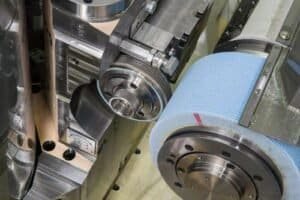
Injection molding for low volume production sits in the middle of several viable processes. CNC machining wins when tolerances are very tight, materials are engineering-grade plastics or metals, and design changes are still likely. 3D printing wins when speed matters most and surface finish or isotropic strength is secondary. Vacuum casting works well for appearance models and short runs, but material performance and repeatability are usually below molded parts.
Molding becomes the better choice when you need production resin, consistent part-to-part quality, and a realistic path to scaling if demand grows. It is especially effective when the design is mostly stable and the geometry would be time-consuming to machine repeatedly.
At 6CNC, we see the best outcomes when customers treat process selection as a business decision, not just a manufacturing preference. The cheapest quote can become the most expensive option if it creates tooling rework, cosmetic failures, or supply delays two months later.
A good low-volume molding program is not about forcing injection molding into every plastic part. It is about using it at the point where repeatability, material performance, and total project cost finally align. If your design is stable enough and your quantity is real enough, that point often arrives sooner than expected. The smart move is to check it early, before your prototype process quietly becomes your production bottleneck.