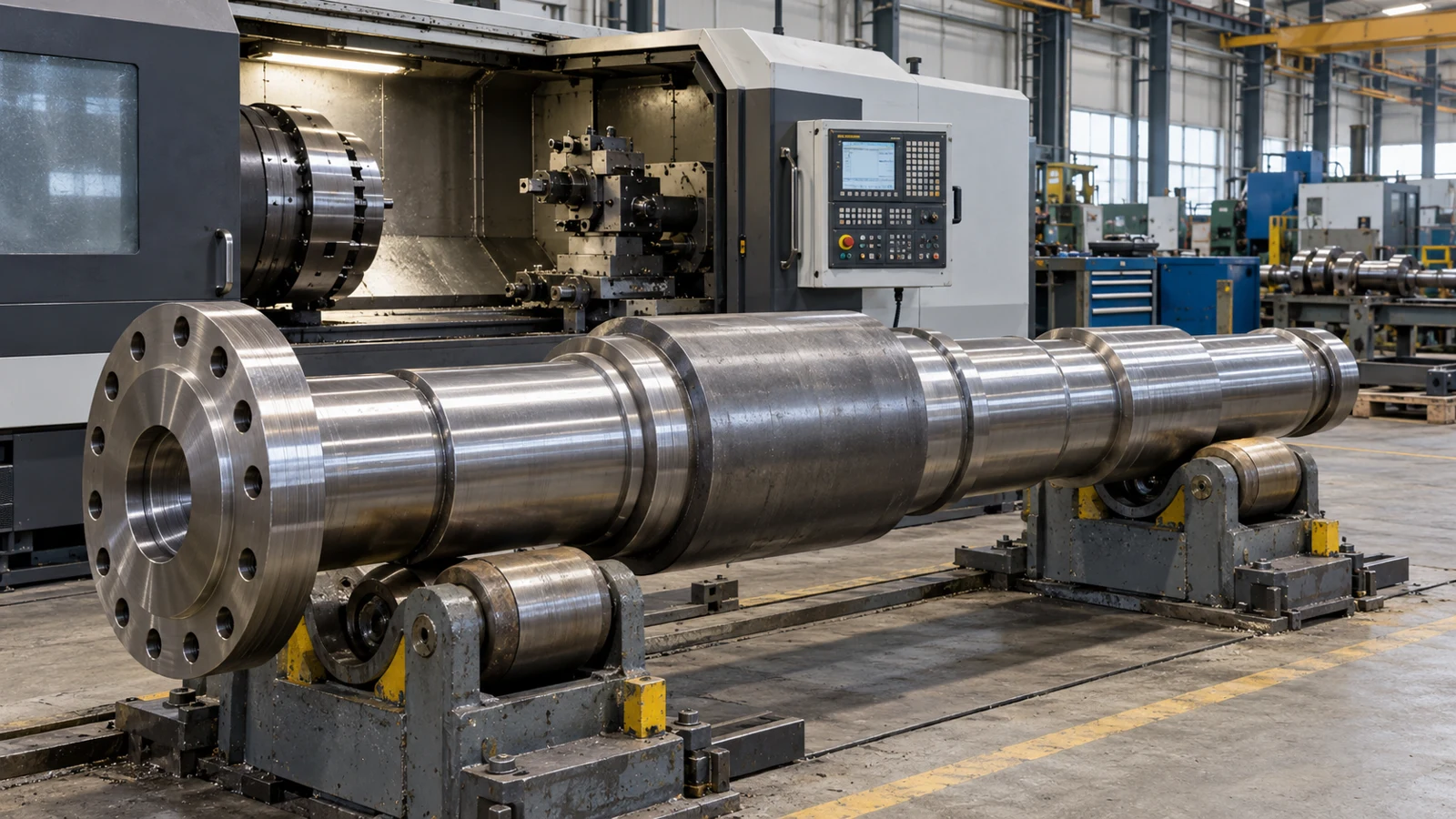
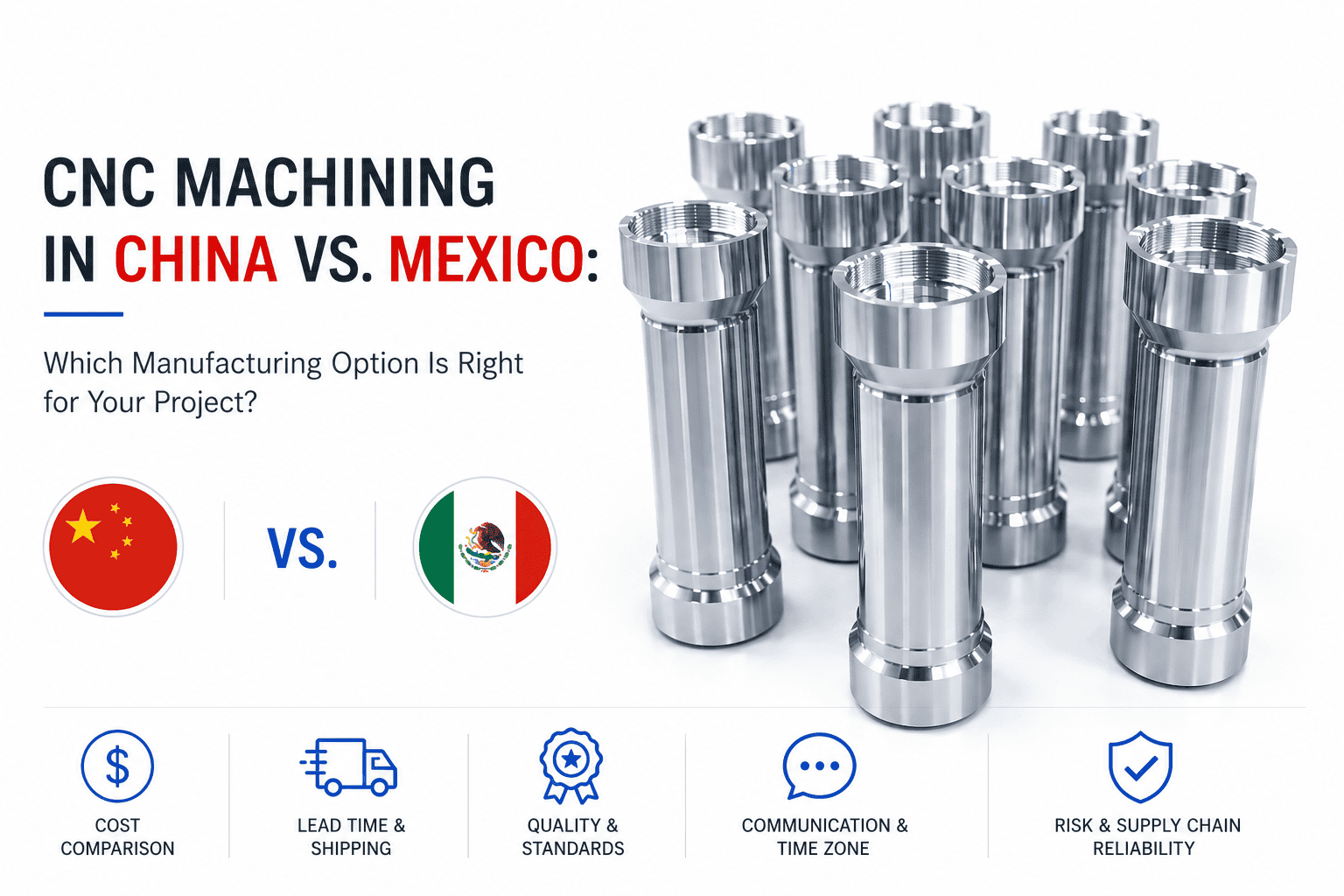
At 6-CNC, we compare China and Mexico the same way a production team should compare any sourcing option: by total landed cost, lead time, quality control, engineering communication, and how well the supplier fits the rest of the supply chain. For CNC work, the cheapest machining quote is often only one small piece of the real decision.
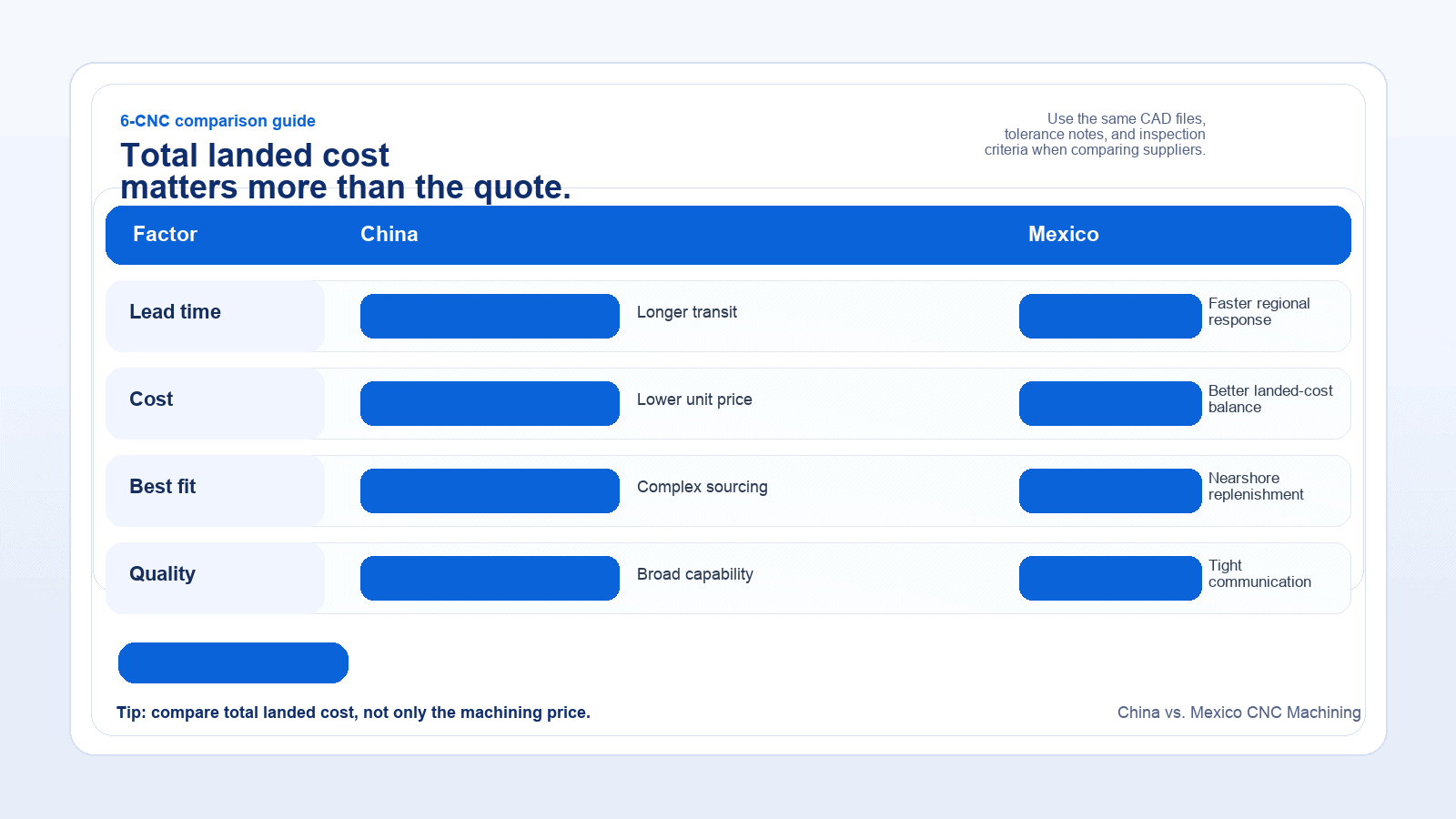
China vs. Mexico CNC Machining at a Glance
Both regions can produce excellent CNC parts. The right choice depends on what matters most for the project: price pressure, freight, speed to market, engineering communication, repeat replenishment, or the ability to bundle multiple secondary operations into one supply chain.
What Actually Drives the Cost
In CNC machining, the quote line that catches your eye is usually the part price. But on a real program, the landed cost can shift meaningfully once you include packaging, freight, customs handling, inspection, warehousing, and the cost of carrying extra stock.
- Machining time: cycle time, setup time, and how much automation the supplier can use.
- Material cost: stock size, alloy selection, and scrap rate.
- Secondary processes: anodizing, plating, painting, heat treatment, assembly, and inspection.
- Freight and logistics: air versus ocean, regional trucking, packaging density, and customs clearance.
- Inventory cost: the amount of stock you must hold to protect your line or customer shipment schedule.
When China Is the Better Fit
China often makes sense when a program needs depth of capability and scale. Large-volume work, complex secondary operations, or a sourcing strategy that bundles several processes into one coordinated supplier network can benefit from the manufacturing density available there.
For many buyers, the real advantage is not only the machine price. It is also the ability to source many part families, finishes, and related services through a mature ecosystem. If your project can tolerate longer transit and you can plan inventory accordingly, China can be a strong option.
- The project has higher volume or repeat demand.
- Several secondary operations must be coordinated.
- Freight can be planned in batches instead of emergency shipments.
- The purchasing team has a clear inspection and revision-control process.
When Mexico Is the Better Fit
Mexico becomes attractive when the sourcing priority is proximity. Shorter routes can reduce lead time, simplify communication, and make replenishment easier. For companies serving the United States or Canada, that can mean fewer surprises and a tighter production rhythm.
Mexico can also improve responsiveness when engineering changes happen frequently. If you expect revisions, urgent orders, or smaller replenishment cycles, a nearshore supplier may reduce the burden on logistics and inventory management.
- Replenishment speed matters more than the lowest possible unit price.
- Engineering changes are likely during launch.
- The customer wants easier communication with North American operations.
- Safety stock and shipping time have a visible cost impact.
What a Good RFQ Should Include
A strong RFQ gives every supplier the same inputs, so the comparison is real. If one supplier gets incomplete information, their number may look low for the wrong reason. The best requests are specific enough to make pricing repeatable and quality expectations clear.
How 6-CNC Evaluates a Project
When a customer sends a drawing package, we normally look at manufacturability first, then risk, then commercial fit. That order matters. A part that is technically cheap to machine can still become expensive if it creates inspection, packaging, or supply-chain problems later.
Decision Matrix
If you are still choosing between China and Mexico, this is the short version:
- Choose China when breadth of capability, scale, and multi-process sourcing matter most.
- Choose Mexico when nearshore responsiveness, shorter transit, and faster replenishment matter most.
- Choose neither blindly until you compare unit price, freight, customs, quality effort, and inventory together.
Frequently Asked Questions
Is China always cheaper? Not always. China can be very competitive on machining price, but freight, inventory, customs, and slower response times can change the picture.
Is Mexico always faster? Usually it is faster for regional transit, but the real answer depends on the supplier, the route, and how ready the supplier is to run your program.
Should I choose based on tariffs alone? No. Tariffs matter, but they are only one part of the landed-cost equation. A complete comparison should also include freight, inventory, and inspection effort.
Can both regions produce high quality parts? Yes. Quality depends far more on process control, inspection, communication, and revision management than on geography by itself.
Need a machining quote?
Send your CAD files, material, quantity, tolerances, and finishing requirements, and 6-CNC can help review the manufacturing path before production starts.
The practical answer is that China and Mexico can both be excellent CNC sourcing options. The better choice is the one that gives your team the right balance of price, lead time, documentation, and supply-chain reliability for the life of the project.