
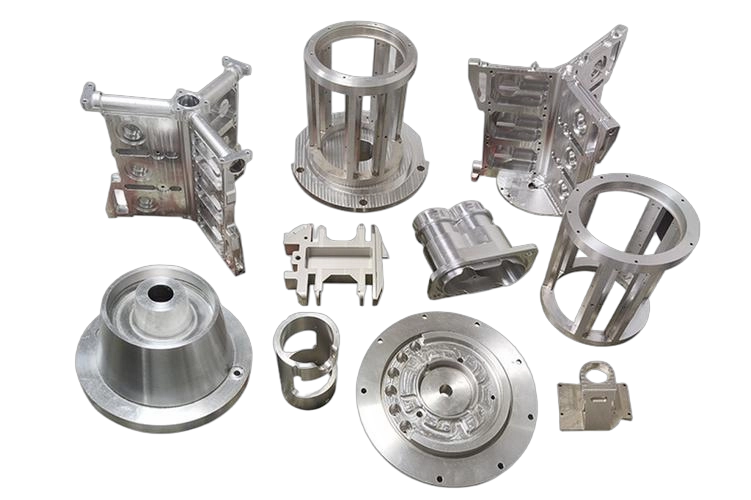
When a new part needs to move from CAD to physical validation in days, not months, low volume CNC machining becomes the practical choice. It gives engineering and sourcing teams a way to buy real production-grade parts without committing to tooling, high MOQs, or long lead times that do not fit early-stage programs.
For many projects, the problem is not whether a part can be machined. The real question is whether it can be machined accurately, quickly, and repeatedly in quantities that make commercial sense. That is where low-volume work sits – between one-off prototyping and full-scale production, with different priorities than either end of the spectrum.
What low volume CNC machining actually means
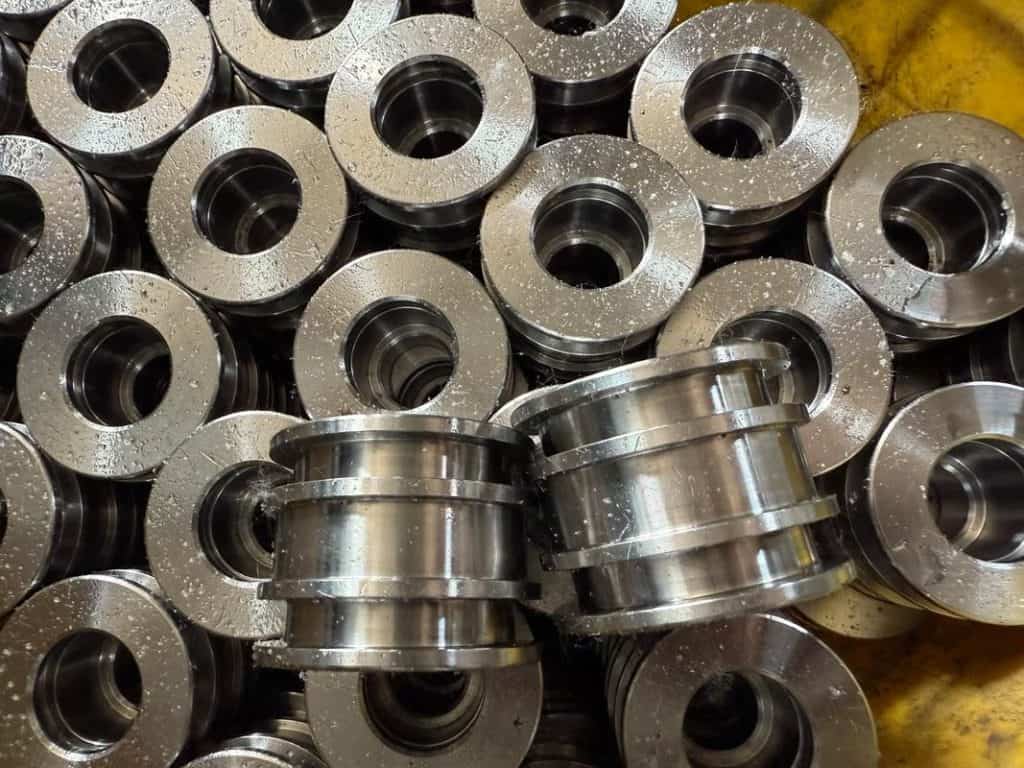
Low volume CNC machining usually refers to the production of a small number of finished parts, often from a few pieces to a few hundred, depending on geometry, material, and program stage. It is commonly used for functional prototypes, EVT and DVT builds, bridge production, pilot runs, service parts, and market-test batches.
The key distinction is that these parts are not rough mockups. In most cases, they are made from production-intent materials and held to real tolerances, surface finish requirements, and inspection standards. That makes them suitable for fit checks, functional testing, customer samples, and limited release products.
This model is especially valuable when demand is uncertain or design revisions are still likely. Instead of paying for hard tooling too early, teams can machine parts on demand, learn from testing, and update the design with much less sunk cost.
Why engineers and buyers choose low volume CNC machining
The strongest advantage is speed without giving up material or dimensional accuracy. A machined aluminum housing, stainless bracket, or POM fixture can be delivered far faster than a molded or cast equivalent when tooling would otherwise be required first.
There is also far less financial risk. If a design changes after the first test cycle, updating a machining program is usually simpler and cheaper than reworking a mold or die. For R&D teams, that flexibility matters more than the lowest theoretical unit cost.
Procurement teams also value low-volume machining because it supports staged purchasing. Instead of buying 5,000 parts before the product is stable, they can order 20, then 100, then 300 as demand and design confidence improve. That approach reduces inventory exposure and gives more control over revision management.
Another factor is part complexity. CNC machining handles many geometries that would be expensive or impractical to tool early. With 3-axis, 4-axis, and 5-axis machining, plus turning, mill-turn, and precision grinding, complex features can be produced with fewer process compromises during the development phase.
Where low-volume machining fits in the product lifecycle
Low volume CNC machining is often treated as a prototype service, but that is too narrow. It plays several roles across development and launch.
In the earliest phase, it supports proof-of-concept and engineering verification. Teams need real material behavior, actual thread engagement, proper mating surfaces, and realistic assembly tolerances. Machined parts provide that data quickly.
In the middle phase, it supports pre-production validation. At this stage, consistency matters as much as speed. A batch of 20 or 50 parts may be used for testing, customer review, fixture setup, or regulatory evaluation. Variation has to be controlled because the parts are being judged as product, not concept.
Later, it often serves as bridge manufacturing. This is common when injection molds, die casting tools, or dedicated fixtures are still in progress, while the market launch date does not move. Machining fills the gap.
It also remains useful after launch for spare parts, custom options, low-demand SKUs, and equipment maintenance components. Not every part belongs in mass production.
Materials and tolerances in low volume CNC machining
One reason low-volume machining is widely used is material flexibility. Aluminum alloys, stainless steel, carbon steel, brass, copper, titanium, PEEK, Delrin, nylon, PTFE, and many other engineering plastics can be processed without waiting for dedicated tooling.
That makes it easier to align prototype and pre-production parts with final-use conditions. If a medical device housing needs biocompatible metal, or an automation component requires wear-resistant plastic, the team can test the correct material earlier.
Tolerance capability depends on part geometry, material stability, datum strategy, and process planning. Tight tolerances are possible, but not every feature should be held to the same level by default. Over-tolerancing increases cost and slows delivery with little functional benefit. A capable supplier should review drawings and identify where precision is essential and where standard machining tolerance is the better choice.
This is where DFM feedback has real value. A small radius, deep pocket, thin wall, or difficult internal corner may be machinable, but not always efficient at low volumes. Early engineering review can prevent unnecessary setup time, reduce scrap risk, and improve consistency across the batch.
Cost trade-offs: when low volume is the better option
Low volume CNC machining is not always the cheapest process per part. If annual demand is high and geometry suits molding or casting, a tooling-based process will usually produce a lower unit price at scale. The decision depends on total project economics, not just piece price.
For low and medium quantities, machining often wins because it avoids up-front tooling investment, shortens launch time, and supports design changes. A part that costs more per unit may still reduce total cost if it prevents a delayed test cycle or a mold revision.
Part design also changes the equation. Simple prismatic components in aluminum may be very cost-effective to machine in small batches. Highly cosmetic plastic housings with consumer volumes may move toward molding much sooner. There is no fixed quantity threshold that applies to every part.
Buyers should also account for secondary operations. Surface finishing, anodizing, heat treatment, thread inserts, laser marking, assembly, and inspection all affect actual cost and lead time. A supplier that can coordinate these steps under one workflow usually reduces project friction, even if the quoted machining rate alone is not the lowest.
What to look for in a low volume CNC machining supplier
For B2B buyers, capability is not just machine count. It is the ability to translate drawings into repeatable output with predictable lead time. That means process planning, fixture strategy, in-process control, final inspection, and communication discipline.
A suitable supplier should be comfortable with prototypes and small-batch production, not only high-volume repetitive work. Those are different operating models. Low-volume projects often involve drawing revisions, mixed materials, urgent schedules, and a need for fast manufacturability feedback.
Inspection capability matters as well. Tight-tolerance parts need measurement methods that match the requirement, whether that means calipers, micrometers, height gauges, bore gauges, CMM inspection, or surface roughness verification. Dimensional control should be treated as part of production, not an afterthought.
Response speed is another practical indicator. For many customers, a fast and technically clear quotation process is the first test of supplier fit. If design questions, tolerance concerns, or material substitutions are identified early, the project usually moves with fewer surprises later. That responsiveness is one reason companies source low-volume precision work from partners such as 6 CNC.
Common risks and how to reduce them
The main risk in low volume CNC machining is assuming that a small batch does not need production-level discipline. In reality, low quantity does not mean low consequence. A batch of ten parts can still stop a validation build if dimensions drift or lead time slips.
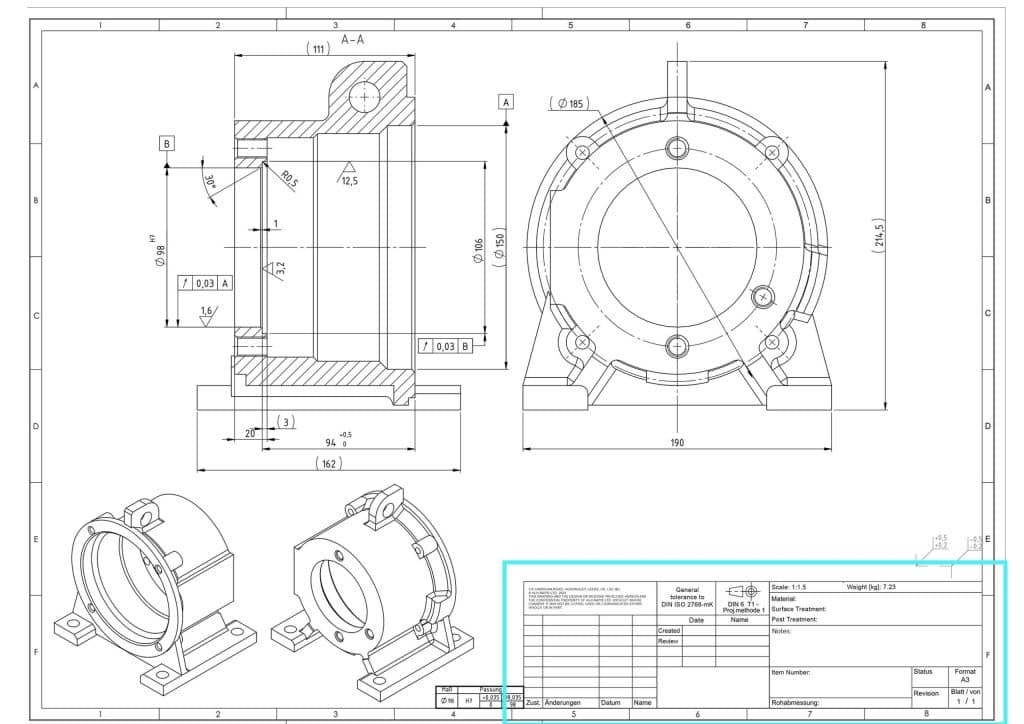
Clear drawings are the starting point. Critical dimensions, datums, material grade, finish requirements, and inspection expectations should be defined precisely. If a note says “machine as needed,” the result may differ from what engineering intended.
It also helps to separate must-have requirements from preferences. If only two surfaces require tight flatness, state that clearly rather than tightening the entire drawing. This improves manufacturability and protects lead time.
For recurring small-batch orders, process consistency becomes more important than one-time speed. Revision control, fixture repeatability, and stable work instructions help ensure that part 3 and part 103 match the same standard.
When low volume CNC machining is the right decision
If you need end-use materials, tight tolerances, fast iteration, and no tooling commitment, low volume CNC machining is usually the right path. It is particularly effective for product validation, custom industrial equipment, bridge production, replacement components, and specialized assemblies where volumes stay moderate.
If demand is already stable in the tens of thousands and the design is frozen, another process may be more economical. But many industrial programs do not begin with that level of certainty. They begin with engineering questions, schedule pressure, and the need for parts that work the first time.
That is why low-volume machining remains one of the most useful manufacturing options in modern product development. It gives teams a controlled way to move forward – with real parts, measurable quality, and fewer decisions made too early.